
Let’s Stop Pretending: Trust Doesn't Mean Anything
It’s the most overused word in business and the least understood.
After all these years of teaching, consulting, speaking, and writing, there’s one thing I still can’t seem to do:
get people to stop using the word trust.
It’s everywhere. In speeches. On websites. In the lobby art of every company that wants to sound like it means well. It’s treated like sacred ground — the foundation of culture, the key to relationships, the proof of goodness.
But everyone who says it is talking about something a little different.
People use trust because they assume everyone agrees on what it means. But we don’t. We can’t. What you mean by trust and what I mean by it are never exactly the same.
It’s personal. It’s situational. It shifts from one person to another, one moment to the next.
You might say, “I trust my doctor,” meaning you believe they’re competent.
Someone else might say, “I trust my doctor,” meaning they believe the doctor actually cares about them.
A third person might mean they trust the system — the hospital, the science, the process.
Same sentence. Three different meanings.
That’s the problem with the word. It sounds shared, but it isn’t. It creates the illusion of agreement when what’s really underneath it is a web of expectations that don’t match.
And those expectations — the ones hiding behind the word — are what actually matter.
When we talk about honesty, competence, fairness, or reliability, we can discuss them, define them, and improve them. But when we say trust, we stop talking. We think we’ve said something profound when we’ve actually said nothing specific.
And because we never clarify what we mean, we build relationships, partnerships, and entire organizations on false expectations. You think I promised honesty; I thought I promised results. We both think we have trust, right up until one of us feels betrayed and neither of us can explain why.
So stop using the word.
Start naming what you actually mean. Say honest. Say competent. Say fair. Say dependable.
Those words can be measured, understood, and lived. Trust can’t. It’s just the sound we make when we want agreement without effort.
And the truth hiding behind it is what really holds people together.
Postscript
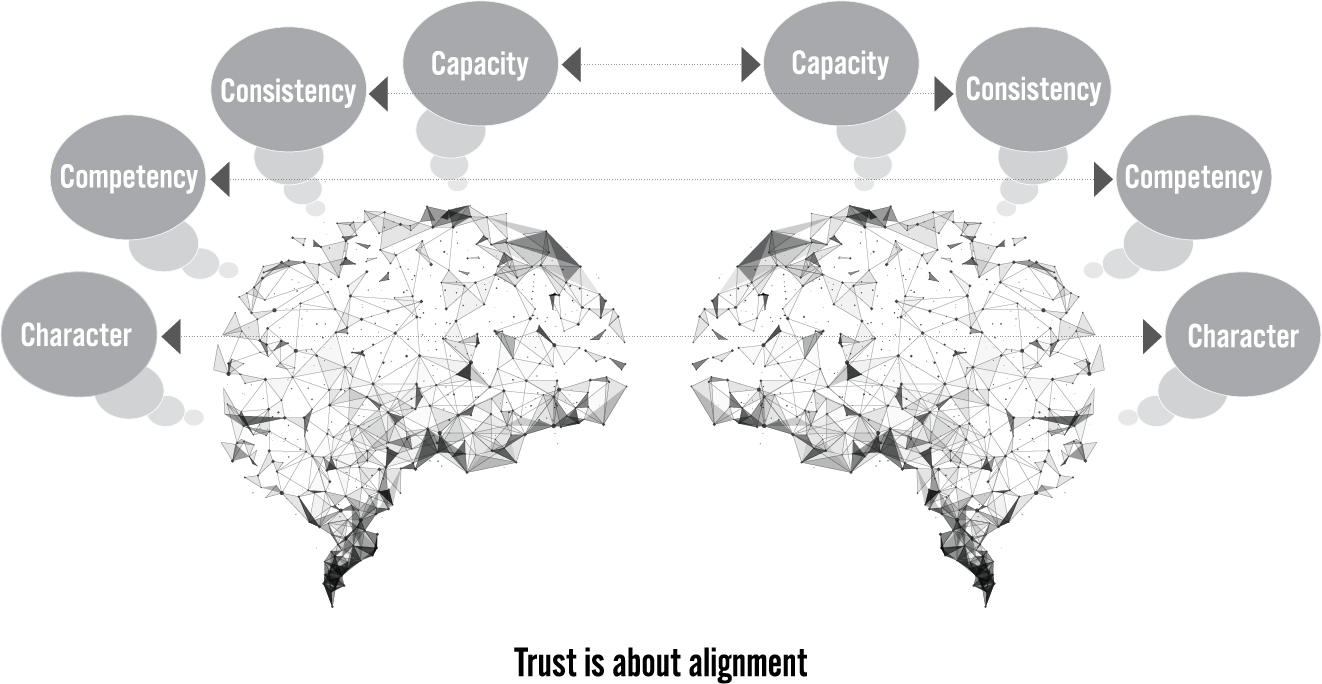
If there’s anything useful left in the word trust, it’s this: it reminds us to look for alignment.
Every relationship—personal or professional—depends on how closely our standards match the standards of the people we rely on. What we call trust is often just that alignment, or the lack of it.
When we say we “trust” someone, what we really mean is that their actions fit the standards we hold in four areas:
Competence, Character, Consistency, and Capacity.
Competence — Do they have the skills, knowledge, or experience to do what’s expected? Trust fails when people promise more than they can actually do.
Character — Will they do it for the right reasons? We judge this by motives, ethics, and fairness — by whether someone’s actions reflect values we recognize as good or decent.
Consistency — Will they keep doing it over time? Reliability builds predictability. It’s hard to work with someone who delivers once but disappears the next time.
Capacity — Do they have enough resources — time, energy, focus, and support — to keep doing what’s expected? Even the most capable person can’t meet expectations if they’re overwhelmed or undersupplied.
Different people value different C’s. Some care most about skill, others about motive, others about follow-through.
When those standards align, we feel what we call trust. When they don’t, we feel uneasy, disappointed, or betrayed.
So instead of asking, Can I trust them? try asking, Which standard matters most to me—and do they share it?
And if you want others to trust you, make your standards visible.
That’s where the real work begins.
Act Your Age
We never stop being the people we used to be. We just carry them forward.
At the Albuquerque airport this weekend, I saw a woman in her late fifties dancing.
Not a timid, self-conscious shuffle, but an honest-to-God, shoulders-loose, head-bobbing, hips-swaying dance to whatever song was playing over the loudspeakers. Her teenage kids looked mortified. You could see it in the way they stared at the floor, silently pleading with gravity to swallow them. The mother didn’t notice…or didn’t care. She was smiling, lost in her moment, drumming invisible sticks on her carry-on.
Then her daughter muttered the universal teenage plea: “Mom, act your age.”
The woman stopped for a second, laughed, and said something I couldn’t hear, but the look on her face said everything. She was acting her age, just not the one the world assigned her.
That’s the thing no one tells you about getting older: at some point, your reflection stops lining up with your internal timeline. There’s a gap that begins, quietly, around thirty. You catch a glimpse of yourself in a store window or an airport mirror and think, Really? That’s me? It’s not denial. It’s dissonance.
Scientists call it subjective age—the age we feel versus the age we are. But the popular term that’s starting to stick is age dysmorphia, and it’s not a disorder so much as a side effect of living long enough to build a rich archive of selves. Somewhere inside, we’re still the person who could stay up all night, who feels the infinite possibilities ahead, who still dances in public without asking permission from our children or our knees.
The research explains it this way:
Thirty actually feels like twenty-five.
Forty feels thirty.
Fifty feels thirty-five.
Sixty feels forty.
After that, the gap narrows again—maybe because time speeds up, or maybe because we finally stop caring.
But for the long middle stretch of life, we are walking around slightly out of sync with the number on our driver’s license. We still feel capable of sprinting, flirting, and making it through the day without something hurting. The mirror and our body insists otherwise, but the brain keeps sending a different message.
And when we see old people, we don’t see ourselves. We see our parents. The ones who seemed so much older, slower, quieter—so much less alive than we still feel inside. We look at them and think, That’s not me. But then a photograph or reflection catches us off guard and there it is—that same posture, that same softening around the eyes—and we realize, uneasily, it is.
So to the young people watching us dance in airports, reading an actual book, or shaking their heads when we wonder what “delulu,” “67,” or “corecore” mean—humor us.
We’re not trying to steal your stage. We’re just trying to get out of your way without throwing out a hip. We really do want to make room for your ideas, your energy, and whatever it is you’re doing on your phones that could change the world. We’re rooting for you.
Just understand, we don’t feel finished. Inside, nothing’s changed for us. The same thoughts, the same ambitions, the same voice that used to say, Where’s the party? —it’s still there. It just needs a nap now and then. You see middle age; we see the same people who still believe they can matter. We’re not clinging to the spotlight. It’s just that our script doesn’t tell us when our scene is supposed end.
So have a little grace.
Because one day, you’ll dance in an airport too, and you’ll understand how it happens. How people get older without ever feeling old.

Where Growth Really Happens
A gardener’s secret to building organizations that actually grow.
You’ve probably never heard of Charles Dowding.
He hasn’t been featured in Harvard Business Review. He’s never sat on a McKinsey panel. He’s not the kind of name that shows up on Bloomberg TV beside a ticker of market updates. You won’t find his book on a “Top 10 Business Reads” list passed around at leadership retreats.
Charles is a gardener. That’s it.
But he may be the most important business adviser you’ll never meet.
Dowding has this simple, radical idea about soil. Most people, he says, garden by feeding the plant—adding fertilizer, digging, dosing, fussing over what shows above ground. He does the opposite. He feeds the soil. Leaves it undisturbed. Lets the living network beneath—the bacteria, fungi, worms, beetles—do what it’s built to do. Healthy soil grows healthy plants. It’s that simple.
I think about this when I sit with executives planning the next transformation. The conversation is almost always about the “plants”: the new strategy, the brand refresh, the product launch, the performance initiative, the development of individuals. What if the real work, the life-and-death work, is underground? The trust and curiosity inside a team. The relationships that pass information quietly across departments. The sense of safety that lets people speak up before things break.
I once consulted with a company that kept “replanting” every two years. New structure, new vision, new buzzwords. Each time, leaders were shocked when nothing took root. They blamed talent, market headwinds, the weather of business. But the soil was dead. Over-tilled, chemically burned by constant fixes, stripped of the quiet life that makes growth possible.
Dowding would have warned them. Feed the soil. The plant will follow.
It’s not glamorous work. There’s no press release for building psychological safety, for noticing and protecting the unseen networks that keep a business alive. But if you’ve ever tried to grow something—a culture, a movement, a business that lasts—you know: the show above ground is only as strong as the life below it.
The best leaders I know are more gardener than engineer. They know when to step back, to nourish what can’t be graphed, to let roots do their slow, invisible work.
And though you’ll never see Charles Dowding at Davos, I suspect he understands your job and your business better than most of the people who claim they do.
Deep Cut: Below The Surface
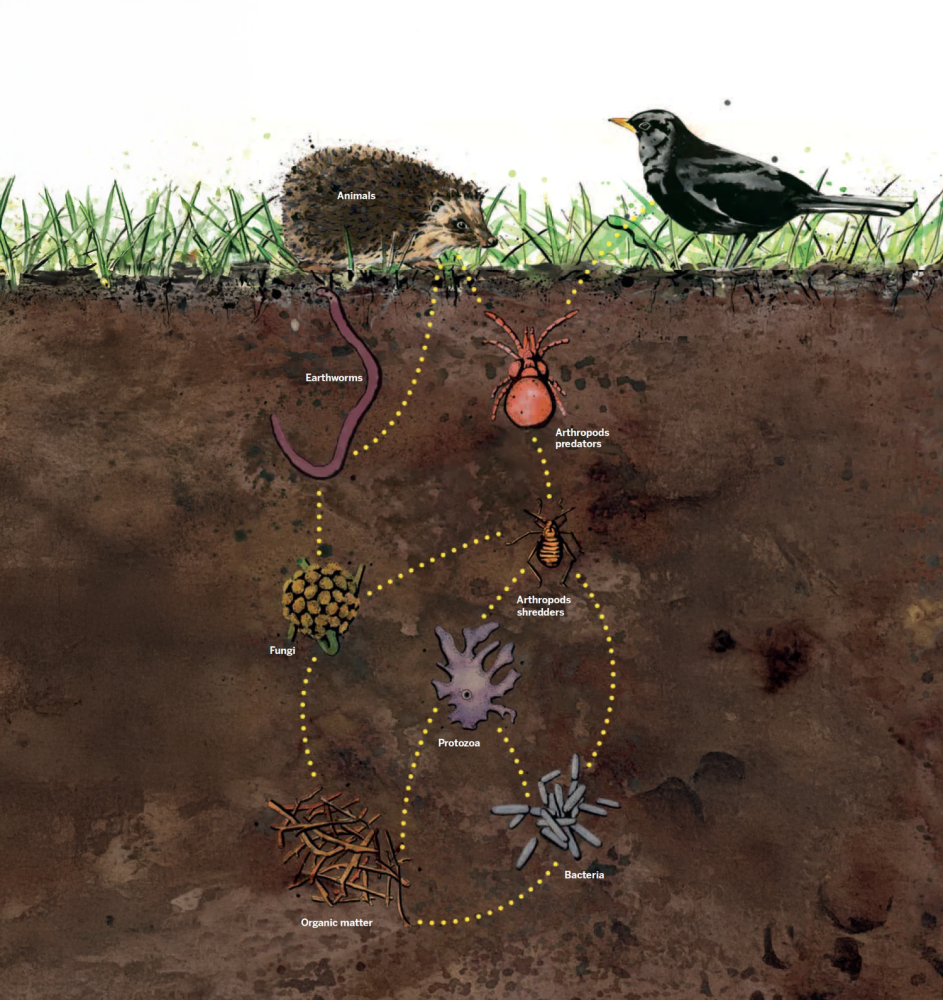
A healthy company, like healthy soil, is an ecosystem. Every role, even the ones no one celebrates, feeds and depends on the others. Damage one part and the whole system weakens.
Bacteria → quiet processors of raw material
In soil, bacteria break down waste and turn it into nutrients.
In business, they’re the back-office processors, analysts, and support teams who convert raw data, transactions, and messy inputs into something everyone else can use. When they “die off”—underfunded, ignored—the whole system starves for clean, usable insight.
Fungi → network builders and connectors
Fungi create vast underground threads, linking roots and ferrying nutrients.
In business, these are the relationship builders—internal communicators, culture carriers, informal connectors—who move ideas and resources where they’re needed. They quietly keep the network alive and unlock hidden opportunities.
Protozoa → refiners and optimizers
Protozoa feed on bacteria and release nitrogen that fuels plants.
In business, think of managers and project leads who consume processed information and convert it into actionable energy for teams. They don’t generate the raw material, but they release its value where growth happens.
Nematodes → regulators and balancers
Roundworms keep populations in check and mineralize nutrients.
In business, these are risk managers, compliance teams, and strategic reviewers. They prune, question, and recycle, keeping unchecked growth from choking the system while freeing up resources for healthy expansion.
Arthropods → shredders and accelerators
Beetles and mites tear leaves apart, speeding decay and nutrient flow.
In business, they’re the troubleshooters and early-stage innovators—the people who take big, unwieldy problems, shred them into smaller parts, and accelerate learning so the system can use what’s been discarded.
Earthworms → openers and enrichers
Earthworms tunnel, aerate, and enrich with castings.
In business, these are the leaders who break up silos, improve flow, and enrich the culture—mentors, servant leaders, and operational designers who make the ground looser and more nourishing for everyone else.
Gastropods → messy but essential converters
Slugs and snails break down waste and bind soil particles, though they sometimes nibble crops.
In business, these are the critics, squeaky wheels, and even competitors inside your walls—the difficult customers, stubborn employees, or loud departments. They can frustrate growth but also process what would otherwise rot and help bind the organization together if handled well.
The point:
A thriving company isn’t a row of perfect plants. It’s the unseen, interdependent life below. Remove the bacteria (processors), ignore the fungi (connectors), silence the nematodes (regulators), and the visible growth withers no matter how much you fertilize.
Feed the soil and your strategy, your product, your future will follow.
The Abbreviation of Everything
We’ve made life faster and easier, but in cutting everything short we risk cutting away the very work that makes us human.
Someone told me recently that they like this newsletter, but don’t have time to read the longer essays.
“It’s okay,” they said. “I feed them into AI. It gives me a short summary, and I still get a few nuggets I can use.”
I said that was fine. And on one level, it is. We’ve always searched for efficiency. We’ve always tried to make life a little faster. Phone calls became texts, then emojis. News stories became headlines. Opinions were limited to 150 characters. Dinners we once cooked turned into food delivered to the door. Goodbyes turned into ghosting.
Now we have machines to finish the job—to compress a book into a page, a meeting into bullet points, a relationship into a feed of updates.
It’s easy to see the appeal: save time, skip the awkward parts, move on. But if you pay attention, something slips away each time we cut things short. Long conversations don’t just fill time. They teach us to really listen, to sit with someone’s silence and uncertainty. Writing our own words helps us figure out what we actually think and feel. Making something for someone builds care and attention into our hands. Staying for the hard goodbye teaches us how to let go with grace.
These are not inefficiencies; they are how humans learn to love, forgive, heal, and endure.
Technology didn’t invent this shrinking, it just made it effortless. And that’s the danger. When the world keeps shortening everything, we start to shrink too: quicker, shallower, easier to move past.
I’m not afraid technology will replace us.
I’m afraid it will reduce us—until the long, complicated work of being human gives way to something short, simple, and hollow. You can see it happening.
Every so often, it’s worth resisting. Read the entire book. Have the whole conversation. Cook the meal yourself. Write your own words. Stay for the goodbye. The long version of life is where we actually become who we are.
The Future No One Is Prepared For...Is Here
We’re making real decisions based on fake crowds. Bots, trolls, and rage merchants can now manufacture outrage and false consensus overnight and leaders who don’t question it risk steering by ghosts.
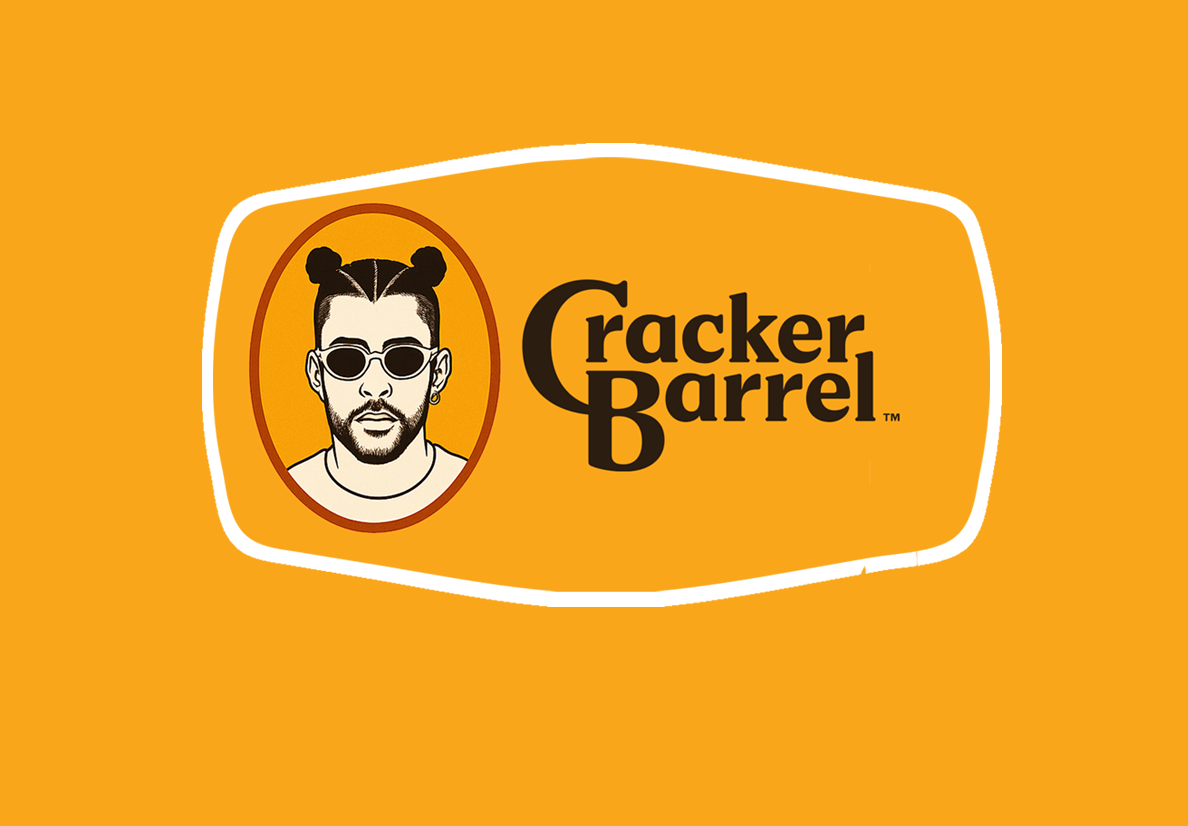
In late August, Cracker Barrel changed its logo. A small thing, really. Companies do this all the time: freshen the look, try to reach new customers, keep up with the times.Sometimes it earns a few groans, a few laughs, but then everyone moves on.
But not this time. This time the change became a battle cry. Social media filled with anger. People took sides: right against left, rural against city, tradition against change.
Over a sign. Over a logo!
The company watched the fury swell. Hashtags called for boycotts. Podcasters and commentators said the eatery had "become woke." A week later, Cracker Barrel backed down and brought the old design back.
Then came the numbers.
More than half of the first day’s outrage posts weren’t from people at all. They were bots — fake accounts programmed to make a few complaints look like a mass revolt. News outlets reported a backlash. Influencers amplified it. Executives saw a firestorm. And an uproar that didn't exist drove real decisions.
And this isn’t an isolated oddity. The same thing is happening right now with a petition to remove Bad Bunny from the Super Bowl halftime show . Fake accounts are inflating anger, media is reporting it as if it’s real, and the NFL is reviewing the decision as if it represents the feelings of actual fans.
We are following illusions. We’re shaping strategies around them, cutting programs because of them, revisiting our values because of them. We are letting shadows steer us.
It’s crazy when you stop to think about it. And you probably have. You’ve watched a sudden wave of anger crash across the internet—over a logo, a diversity initiative, a bathroom policy, a pandemic rule — and thought: Are we really doing this?
That feeling matters. Because what you’re sensing isn’t just noise; it’s a structural shift. Rage-baiting and social distortion aren’t a passing trend. They’ve become part of the operating system of modern life. They’re cheap to produce, powerful to deploy, and they prey on one of the oldest survival instincts we have: look to the crowd to know what’s real.
That instinct built our communities, our cultures and our markets. It’s how humans have made sense of the world for millennia. But in this new environment, it’s been turned against us.
Which is why leaders can’t afford to be complacent—or dismissive—about what’s happening. It’s not enough to shrug and say the internet is a mess. You need to surface this problem inside your own walls. Make it explicit. Have the meeting. Ask your teams, your leaders, your communities, even your families:
How are we deciding what’s real?
Who do we trust when we say “everyone’s talking about this”?
What should make us pause: outrage that erupts overnight, anger that feels unanimous but comes from nowhere, anonymous voices driving the story?
Because this isn’t an emerging problem; it’s here. And if you keep leading with an outdated compass, the one that assumes the crowd and consensus is real, you will keep reacting to ghosts.
Adapt Or Die.

The Cost Of No Shame
We once blushed when we crossed a line. Lately I wonder what happens when no one does.
When I was a kid, I was painfully shy.
Embarrassment followed me like a shadow. One wrong word, one clumsy move, and I wanted to vanish.
I admired the people who never seemed to feel that way. You know the ones. Bold and unshakable, never stopping to wonder what anyone thinks.
I thought they were the lucky ones. Life must be easier, I figured, when nothing makes you shrink.
I don’t admire them anymore.
Because now I see them everywhere. People who seem untouched by self-consciousness. They speak and wound and perform without the faintest sign of discomfort. They laugh at cruelty. They carry on as if nothing costs anything. Embarrassment doesn’t reach them. Shame doesn’t interrupt them. From golf matches to political rallies, from talk shows to social feeds, it’s all confidence without care.
I once imagined life without embarrassment would be freedom. It isn’t. It’s emptiness. A world where anything can be said, anyone can be diminished, and nothing stands in the way of going too far.
I still feel that small turning inside when dignity is under threat...mine or ours. It’s small, but alive. A fragile light. And I hold onto it, because I'm afraid of what it will mean if the light finally goes out.
Olivia
What often holds us back isn’t what we can’t do. It’s what others decide we can’t.
I walk the top of a levee most days, and sometimes I meet people whose stories stay with me. This is one of them.
Of all the walkers and joggers along the trail, one always stood out—a little girl who ran with everything she had. She was tiny, swallowed up by sneakers that were too big and headphones that were too heavy. Still, her arms pumped, her face determined, and she charged ahead as if nothing could hold her back.
Most mornings she flew past me, a blur of motion. And always, several yards behind, came her father. Red-faced, sweating, struggling to keep her in sight. Sometimes he nodded, too winded to speak. Sometimes he grinned through the exhaustion, as if to say, This wasn’t my idea. It was hers.
It became a familiar sight: her pulling ahead, him trying to keep up. Over time, it became part of my routine, a small reminder that no matter what else was uncertain, Olivia would be out there running with all her might.
And then one morning, she wasn’t.
At first I thought it was me. Maybe I had started too late, or walked too quickly, and we had just missed each other. But the next day was the same. And the next. Days went by like that, then weeks. The path felt quieter without her, as if it had been waiting too. When I finally saw her father, he was alone. His steps were slower, his eyes lowered. For a moment, I thought the worst.
“She made the team,” he said before I could ask. His smile was tired, but proud. “Practice starts early. She runs with them now.”
I stood there, relieved and a little ashamed. I had imagined the worst, when I should have expected the best.
You see, Olivia has Down Syndrome, and I know what comes with it. Muscles that tire too quickly. Joints that don’t always hold. Hearts and lungs that can make effort feel dangerous. Balance and stamina that never arrive as easily as they should. By all accounts, pounding out miles on the pavement isn’t supposed to be good for her. That’s one set of limits.
But there’s another set, and it’s worse. They come from us. From the way people see her diagnosis first and her determination second. From the lowered expectations, the assumptions about what she can’t do, the quiet dismissal of what she might. Those are the limits that matter most—the ones she never agreed to and refuses to accept.
Morning after morning, she ran right past those limits. She didn’t wait for permission. She didn’t stop to explain herself. She just ran. And in the end, she ran far enough to earn a place most people never thought she’d reach: a spot on her school’s cross-country team.
Maybe that’s the lesson. Most of us wait for signs, for approval, for someone to tell us we’re ready or good enough. Olivia doesn’t. She just runs and dares the rest of us to keep up.
Way to go, Olivia. I’ll miss you on this path. But I’m so happy you found your own.


Are You Too Fast or Too Slow?
Leaders fail not because they misjudge the future, but because they misread the present.
In September 2020, at the height of the pandemic, I introduced an idea I had been shaping for years: the concept of getting Unstuck.
The timing, I thought, was perfect. Offices were closed. Schools were shuttered. Travel had stopped. Everyone was working from kitchen tables and spare bedrooms, juggling uncertainty and exhaustion. Surely this was the moment when people would want to rethink how they worked, lived, and adapted.
It turns out, they didn't.
Remote work and hybrid arrangements weren’t yet strategies; they were emergency fixes. Artificial intelligence was barely on the horizon. Chatbots didn’t exist. And many industries—finance, law, tech, even parts of retail—were recording their best quarters ever. For them, the story wasn’t disruption. It was persistence. Staying the course. Continuing as is.
Which meant my message—that humans don’t get stuck, we are stuck—collided with the mood of the moment and their perceived reality. People didn’t feel stuck. They felt anxious, stretched, even proud of holding steady. They weren’t imagining transformation when they were still clinging to the hope that “normal” would soon return.
The idea, as it turned out, was right. My timing was wrong.
The irony is that Unstuck grew out of research into how the brain resists change. We don’t leap forward when conditions are uncertain; we grip tighter. Stasis is the default. The brain conserves energy. Thermodynamics favors equilibrium. Movement is costly. Stillness feels safe.
And yet I forgot the very principle I was teaching. I assumed urgency would make people receptive. I assumed crisis would equal willingness.
The result was predictable. I delivered clumsy presentations. I wrote essays that fell flat. I made videos that vanished into the digital void. My audiences weren’t ignorant. They weren’t blind. They just weren’t ready.

The Two Clocks
This is the paradox every leader faces: change runs on two clocks.
The external clock tracks the world outside—markets, competitors, technology, culture. It ticks relentlessly. Miss it, and you fall behind.
The internal clock belongs to the people inside your organization—your teams, employees, even your customers. It moves at its own pace, often slower than leaders would like. It doesn’t budge until people grow weary of the old way, until they have the mental and emotional space to consider something different.
Most leaders watch only the external clock. They see where the market is going and assume their people will follow. They push the what and the how without pausing to ask if the when is right. The strategy looks solid. In practice, it collapses.
In my case, I ignored both. I was too early for the external moment, pointing to a future no one believed had arrived. And I misread the internal one, mistaking survival for acceptance.
What I learned in 2020 is that timing isn’t just calculation. It’s awareness. Connection depends not only on where people are, but when they are.
A manager can introduce a smart new process, but if the team is stretched thin, it feels like a burden. A coach can give the right advice, but if the player isn’t ready, it lands as criticism. A spouse can speak the perfect words, but in the wrong moment they only widen the distance.
This is the challenge every leader faces. The external clock—markets, technology, competitors—ticks relentlessly. But the internal one moves at its own pace. People don’t run on the same schedule as the marketplace. They need signals, space, and sometimes struggle before they can move forward.
An idea is like a seed. Even the strongest will fail if it’s thrown onto frozen ground. The strength of the idea matters. But the state of the soil decides.
That’s why when is as critical as what or how. Too late makes you irrelevant. Too early feels indistinguishable from wrong.
The difference isn’t brilliance. It’s timing.
Tips
Why Timing Fails Us
The challenge is that timing never announces itself. It isn’t written in a quarterly report or forecast model. It hides in subtler signals.
Language shifts. Listen to the metaphors people use. When “back to normal” quietly becomes “new normal,” then simply “different,” minds are loosening.
Behavioral cracks. Watch for small deviations. Change begins not with revolutions, but with hairline fractures—one person experimenting, one team questioning, one assumption challenged.
Emotional fatigue. Resistance peaks at the beginning of a crisis. True openness comes later, when exhaustion sets in and the old ways no longer feel safe.
External alignment. Look beyond your walls. When cultural or technological currents begin to rhyme with your message, the conditions are warming.
These are the signs that the ground is thawing, that the seed you’ve been carrying might finally take root.
In the end, leadership is not just foresight. It is patience. It is empathy. It is knowing the moment.
Letting Go
We aren’t meant to be archives of the past, but architects of what comes next.
Over the summer, I received an invitation to my high school reunion. For a moment, I was 16 again. I could see the faces, hear the voices, even smell the gym floor where we once gathered for dances and games. These were the people I shared everything with—secret parties, first heartbreaks, the terrifying questions of who we were becoming. At that age, they were my whole world.
Until they weren’t.
They are strangers now. I might walk past them in a grocery store and never recognize them. They might stand beside me in an airport and I would feel no flicker of familiarity. The closeness we once had evaporated silently, not with a fight or betrayal, but with time.
It isn’t only high school friends. I think of colleagues I once shared offices with, teammates I sweated and celebrated with, people whose weddings I stood in. Once central figures in my story. Now, ghosts in photographs. All people I no longer know.
We talk about holding relationships together as though it were simple. But it is one of the hardest things we will ever attempt. People change. Circumstances shift. We move, we marry, we parent, we chase careers. To keep a relationship alive requires more than affection. It requires maintenance: time, attention, forgiveness, curiosity. Even then, sometimes it frays anyway.
And it isn’t only people. We struggle to let go of jobs that no longer fit us, of habits that keep us small and caged in, of beliefs that once steadied us but now restrict our thinking and empathy. Each feels like loss because each carries a story of who we once were. To set them down feels like betrayal. But often, it is the only way to move forward.
Still, we resist. Not because we are weak, but because our brain is built for resistance. It craves predictability, the safety of the status quo. Change asks it to work harder, learn new patterns, rearrange connections, delete what it already knows. So it whispers: Don’t imagine better. Don’t let go. Stay here where things are familiar.
And the brain doesn’t stop there. It makes letting go feel painful on purpose. It floods us with the warmth of nostalgia to keep us attached, and it punishes us with discomfort when we try to release what we know. Both are tactics designed to protect its patterns. Nostalgia convinces us the past was golden. Pain warns us not to break away. Together, they keep us from imagining anything different.
And the deck is stacked in its favor. The brain is built more for memory than imagination. Entire regions of it are devoted to storing and retrieving what has already happened, while far fewer are tasked with creating what has never been. Memory is the safe bet, the reliable tool for survival. Imagination, by contrast, asks the brain to gamble—to picture something untested, uncertain, and new.
But here is the hope. Every time we fight that battle, every time we release what no longer serves us, we create space for something better than memory can picture. The future will not be what we once had. It will be different. And in that difference, there is room for joy, for love, for possibility we cannot yet imagine.
Because life shouldn't be a museum of the things we’ve kept.
It should be a workshop for the things we are brave enough to build.
Is That All You Are?
Simplicity makes us easier to grasp and easier to forget.
If you’ve ever seen my presentation on loyalty, you know I don’t start with research. I start with myself.
Personal history, family quirks, professional detours, minor disasters, and a few accomplishments I probably didn’t deserve. It comes out fast, like a highlight reel playing at double speed, with no time to explain what any of it means. Some parts are funny. Some are uncomfortable. And none of it sounds like the way a keynote is supposed to begin.
That’s intentional.
I take the same approach on the About page of my website.Alongside the polished bio, there’s a collection of photos capturing the places I’ve been, the things I’ve loved, and the people I’ve been mildly obsessed with over the years. (Yes, I’m talking about you, Lynda Carter, Wonder Woman, 1975–79.)
And now and then, I do the same thing here, sharing parts of my story in these essays. Not because I think my life is unusually fascinating, but because if I don’t give you something real to work with, your brain will fill in the blanks.
That’s not a flaw. It’s how the brain operates. It’s built to spot patterns and conserve energy. It doesn’t wait to understand people fully—it makes quick judgments. When things get complicated, it looks for shortcuts. And once it finds one, it treats that shortcut as the whole story.
Unless you interrupt it.
Unless you give it something more.
This isn’t about a lack of empathy or interest. It’s simply how the brain works. Our ancestors didn’t have the luxury of getting to know every stranger they met on the savannah. They had to decide quickly—are you a friend or a threat? Safe to approach or better to avoid?
That instinct helped them survive. And even though the world has changed, the reflex is still with us. It continues to shape many of the quick judgments we make about people, groups, and communities.
The difference now is that we’re not just influenced by it. We’re taking part in it. Every time we reduce someone to a single label or define ourselves by just one thing, we make that old reflex even stronger.
Social platforms reward simplicity. Influencer culture demands a niche. Personal brands favor consistency over nuance. Even organizations—companies, nonprofits, entire institutions—start to define themselves by a single value, a single issue, a single message.
We simplify ourselves for speed, for likes, for clarity. But in doing so, we become flat. Predictable. Easier to consume, and easier to dismiss.
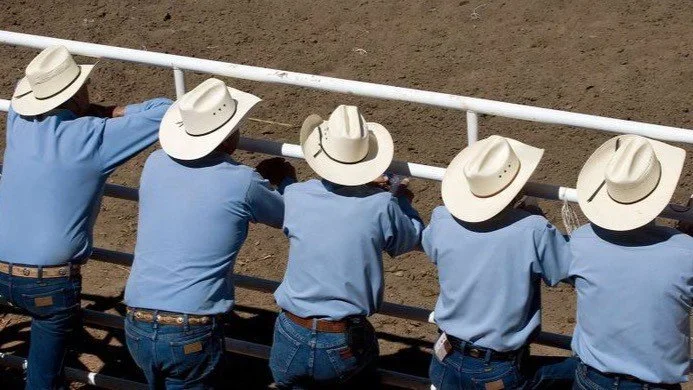
In recent years, I’ve watched politics consume the personal, where what (or who) you represent matters more than who you are. Expensive homes have turned into billboards, their facades draped in slogans and banners, as if the people inside no longer mattered. Only the statement they were making did. Trucks now serve as rolling manifestos, every inch covered in messages meant to declare, provoke, or divide. Hats, T-shirts, flags, and social media posts repeat the same lines, over and over, until it’s hard to tell where the person ends and the ideology begins.
I’ve seen professionals define their entire careers by a single belief or role—“the disruption guy,” “the diversity woman,” “the AI whisperer,” “the empathy expert”—until every post, every panel, every podcast appearance is just a slight variation of the same sentence.
And I’ve come across others who only share content within the narrow confines of their expertise. Nothing about their broader knowledge of their profession, their firm, or even the human lessons they’ve learned along the way. Just endless repetitions of what they already know, presented as if that were all they are.
Organizations often fall into the same trap. Institutions with vast histories and complex missions now speak in a single tone, a single color palette, a single word repeated until it sounds more like branding than belief. Not because that’s the full extent of what they offer, but because that’s all they think the market will notice.
And so I keep coming back to the same question:
Is that all you are?
Because once you present yourself or your company as just one thing, that’s all anyone’s brain will remember. And no enduring relationship—whether personal, professional, or collective—can be built on a single-note identity.
People don’t stay because they recognize you. They stay because they recognize themselves in you.
If you want that kind of connection—with someone walking with you, standing beside you, or supporting what you believe—you can’t let their brain settle for the easiest version of you. You have to show them more. Invite them past the headline. Give them something they can actually hold on to.
This is why I start with identity.
Why I tell stories.
Why I share more than people expect.
Not to be seen more clearly, but to be understood more fully.
Because in a world that constantly demands we define ourselves, declare ourselves, market ourselves, the most radical (and human) thing we can do is refuse to be reduced.
We are not categories.
We are not content.
We are not just one thing.
The Fences We Build
The walls that divide us didn’t appear overnight; they were taught to us, slat by slat, until we forgot what life felt like without them.
I wish we could remember what it was like before we started building fences.
Before we began deciding who counts and who doesn’t. Who should be welcomed and who should be watched. Before we learned to sort people into groups that felt familiar, and push away the ones who didn’t.
When we were young, we didn’t know what made someone “different.”
We noticed, of course. We saw skin and language and customs we didn’t recognize. We heard names we’d never heard before. But we didn’t assign meaning to those things. Not yet. We were curious, not cautious. We asked questions that made adults cringe. We touched what we weren’t supposed to. We stared too long. We hugged without hesitation. We shared our toys with anyone who smiled back. No part of us assumed harm or offense.
That came later.
We didn’t take a class on how to exclude. No one handed us a manual on who to fear, who to mock, or who to avoid. We just learned—quietly, gradually—by watching what others did. We learned it the way you learn to stay warm in winter: one layer at a time.
It often started with a joke whispered just out of an adult’s earshot. A news story where the bad guy had a certain kind of name. A grown-up praying for someone's salvation. A teacher who skipped over part of history. A parent who smiled tightly when someone “unusual” moved into the neighborhood.
It’s not that we were told who to keep out.
It’s that we noticed who never got let in.
So we learned. Which groups were safe to mention and which weren’t. Which questions made people uncomfortable. Which words made everyone laugh—and which names made them flinch, roll their eyes, or mutter something under their breath. We learned to read the room. And eventually, we became part of it.
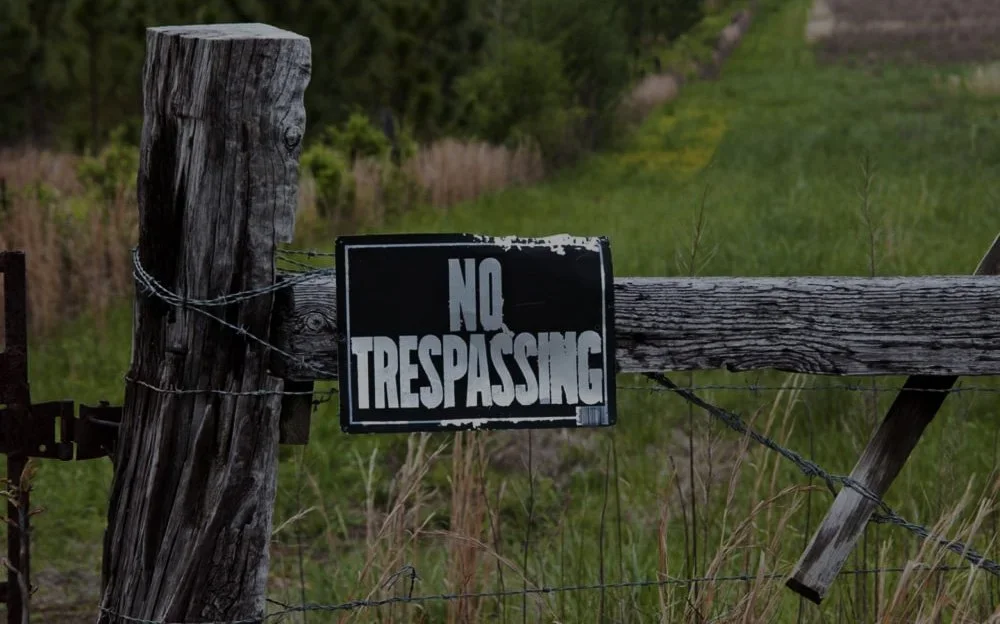
That’s how fences get built, not all at once, but in pieces. A slat of discomfort. A nail of silence. A plank of assumed superiority. And at first, it still feels open. The gaps let light through. We still believe we’re fair, generous, kind. But as the years go on, we add more.
And more.
And more.
Until we’re not looking through anything anymore. We’re just staring at a wall.
We see the consequences now. In laws that separate parents from their children. In bills that punish trans kids for existing. In wars defended by ancient grudges and beliefs that should’ve died centuries ago. In courtrooms where basic rights are debated like opinions. And in ordinary moments when someone’s identity, peace, or joy, is treated as a threat to someone else’s comfort.
And still, we insist it’s about principle when it's really about preference.
That’s the danger of fences. They don’t just keep others out. They keep us in. Inside a version of the world that feels safe only because it’s familiar. Inside a mindset that resists change, not because change is wrong, but because it asks something of us.
Humility. Empathy. Imagination.
We weren’t born with fences.
But we were given the tools to build them.
And every time we refuse to examine what we think we know, every time we choose comfort over curiosity, we add another slat. Another rule. Another quiet reason to keep our distance.
At first, it’s just a frame. A way to feel safe, to organize the world. But the longer it stands, the more permanent it becomes. What started as a guide becomes a barrier. Not just between us and others, but between who we are and who we might have become.
And the longer we live behind it, the more convinced we become that what we see is all there is.
But it isn’t.
The people on the other side of that wall aren’t asking for as much as we’ve been led to believe.
They’re not demanding your life be upended. They’re not trying to rewrite your story.
They’re just asking not to be erased from theirs.
Not feared. Not judged. Not fixed.
Just seen.
And left standing.
Beware Of Parasites
What do landfills, coal mines, and Silicon Valley have in common? More than you think. This essay is about the extraction of land, labor, and now attention and the legal, social, and personal defenses we urgently need.
I’ve known about parasites longer than I’ve studied them.
Not the kind you learn about in biology class. Not the ones with tentacles or Latin names. I’m talking about the kind you can see without a microscope. The kind that take what they need, leave behind what’s broken, and move on without a trace.
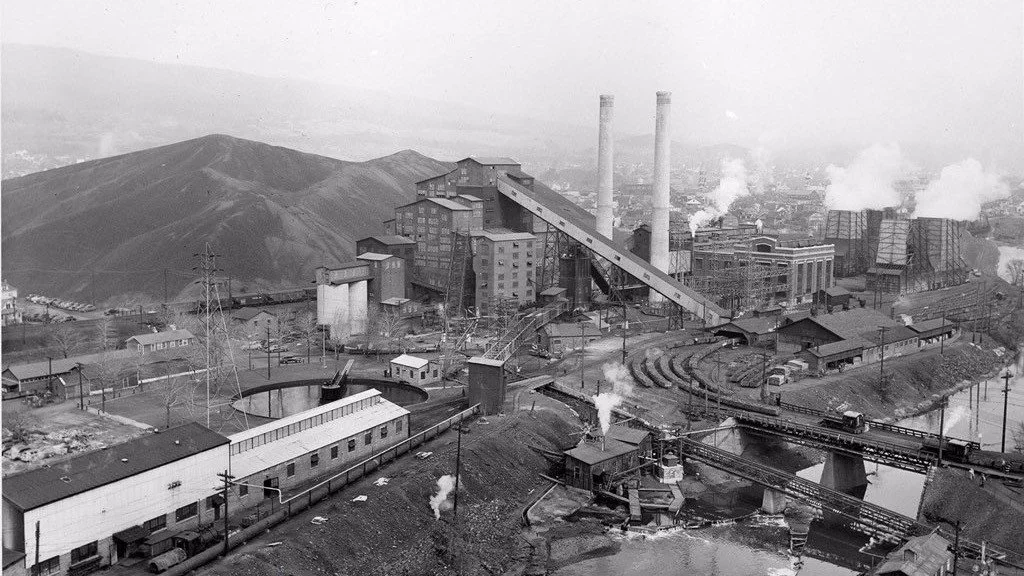
When I was growing up, there was an old coal breaker a few football fields from our house in northeastern Pennsylvania. By then, it wasn’t running anymore. It stood silent, rusted through, its windows broken, its purpose long since fulfilled. Or maybe just abandoned. The trains didn’t come anymore. The coal was gone. But the story was still there—how this place once sorted and crushed and sent the region’s wealth away, piece by piece, to somewhere else.
It had been owned by a man who didn’t live nearby. He didn’t have to. He had workers like my grandfather, who went underground day after day, ten to twelve hours at a time, six days a week, until his body gave out. The breaker closed. The mines shut down. But what lingered wasn’t just the memory of hard work. It was the aftermath. Poisoned soil. Empty storefronts. Families that stayed even after the purpose was gone. What remained wasn’t a community shaped by industry, but one hollowed out by it.
None of it required violence or force. Just distance and money. The kind of disconnection that lets one side keep taking while the other quietly falls apart.
I saw it happen again in my own lifetime. A businessman in our area started dumping junked cars along a creek bed. When that venture was successful, he opened a landfill. Before long, trash from New York and New Jersey was being hauled in by the truckload, dumped into the same valleys and woods where we used to play. It wasn’t loud. It wasn’t fast. But it followed the same quiet hunger I’d seen before. Take what you can while no one’s looking. Leave the mess, the smell, the residue for someone else.
So now, when I observe the transformation quietly unfolding around us—the way our attention is harvested, our choices shaped, our systems and institutions subtly reorganized—I don’t see something new.
I see something familiar.
In the natural world, parasites rarely announce themselves. They do not arrive with fanfare or malice. They are efficient, evolved, and invisible, feeding off a host while pretending to be part of its body. A tick does not knock. It attaches. A parasitic wasp lays eggs inside a caterpillar, whose body nourishes the larvae even as they consume it from within. Nature is full of these arrangements. Elegant, grotesque, and brutally effective.
But parasites don’t just live in the jungle or in petri dishes.
Many now live in Silicon Valley.
Not everyone in tech, of course. But there is a growing subset—a parasite class—that feeds on the systems we rely on without contributing to their health. They build platforms that exploit our attention, extract our data, and monetize our relationships. They claim to serve the user while quietly rearranging the ecosystem to serve themselves.
And like all successful parasites, they hide in plain sight.
The biologist Richard Dawkins once observed that the most effective parasites are not the ones that kill their hosts, but the ones that can control them. There are fungi that make ants climb to their deaths, worms that manipulate a fish’s behavior to make it easier to catch, and viruses that hijack a cell’s machinery to reproduce themselves.
In human terms, that control doesn’t come through force. It comes through frictionless design—a well-timed notification, a feature that nudges rather than commands. It comes from knowing what we’ll click before we do.
The most effective tech parasites don’t make you do anything. They simply make it easy to do what serves them. And hard to stop.
What makes this dangerous is not the technology itself, but the ideology behind it.
People like Peter Thiel, Curtis Yarvin, Elon Musk, Marc Andreessen, and Mark Zuckerberg do not see themselves as parasites. They see themselves as visionaries. Builders. Realists. They will tell you that systems must be broken to be rebuilt. That the future belongs to those with the will to seize it. That democratic slow-walking is no match for exponential speed.
And that’s what makes them so effective.
Parasites, after all, don’t set out to kill the host. But they can. Especially when the host has no defenses.
In biology, hosts are not helpless. Evolution has gifted them with tools: barriers, immune systems, symbiotic allies, and the ability to adapt fast.
We need the same.
Our first barrier must be legal—laws that define what can be taken from us, what can be done to us, and by whom. In nature, the cell wall keeps the organism intact. In society, that job falls to the law. We don’t need more innovation; we need more accountability.
We desperately need attorneys who understand that algorithms can be as dangerous as collapsing bridges. When a structure fails and people get hurt, we hold engineers responsible. But when a platform bankrupts a family or radicalizes a teenager, we let it slide. That has to change. Lawyers are not just defenders of justice. They are the immune system. Without them, the host—all of us—doesn’t stand a chance. (I hope they understand this).
The second line of defense is awareness—a kind of civic immune system. The public needs to understand what’s happening, to recognize manipulation as manipulation. Education isn’t just about coding; it’s about decoding—the ability to see the agenda beneath the interface.
And then we must co-evolve.
Nature doesn’t just fight parasites. It outsmarts them. Hosts develop resistance. They form alliances. They get faster, more flexible, more selective. The healthiest ecosystems aren’t parasite-free. They’re resilient. They know how to keep exploitation from becoming extinction.
The irony is this: many of the technologists we now fear were once seen as symbiotic geniuses. They offered us something we needed—connection, convenience, a way to feel seen. But somewhere along the way, the relationship changed. The connection became addiction. The convenience became surveillance. And being seen became being sold.
This is not a story about villains. (Well, not entirely). It’s a story about imbalance.
Parasites are a natural part of every system. But when the host no longer recognizes the threat, when it mistakes the parasite for a partner, collapse is not far behind.
In biology, there’s a name for what happens when the parasite kills the host.
It’s called a dead end.
In human systems, we still have a choice. We can adapt.
Or we can keep feeding the thing that’s eating us.

Forget Viral. Focus on Contagious
Why do some ideas spread like wildfire while others fizzle on contact? It’s not the brilliance of the spark—it’s the dryness of the forest.
There are few places more humbling than an airport bathroom at 2 AM, unless you’ve also tried sleeping in a hotel bed that’s clearly hosted more people than a minor-league baseball stadium.
I’ve been in both—more times than I’d like to admit—which is probably why I started to think of myself as immune. Not just to illness, but to everything. Germs. Bad luck. Even the after-effects of eating a tuna salad sandwich from a vending machine at a rest area near Monkey Run, Arkansas.
(Yes, I did that. On purpose. And I survived.)
So when I got sick last week, it felt like a betrayal. I didn't contract some exotic illness smuggled in from a far-flung jungle. It was a generic, ambitionless pathogen that wandered into my body, saw no resistance, and made itself at home.
That was the kicker. It wasn’t the virus that made me sick. It was the conditions that let it spread.
This point hit hard while I was curled up in my bed, wrapped in three blankets, and flipping through channels in a half-fevered daze. I landed on an episode of Naked and Afraid.
Two contestants, somewhere deep in the Brazilian rainforest, were trying to start a fire. They had flint. They had technique. Sparks flew with impressive regularity. But nothing caught. The wood was too damp. The air too wet. The fire didn’t fail because they lacked effort. It failed because the setting wasn't right.
Later that same day, I clicked over to the news. Wildfires in Canada were ripping through entire provinces. One spark, and forests went up like they were soaked in gasoline. Miles of dry brush, and a single ember was all it took.
Same ignitor. Different results.
That’s the part we miss.
Too often, we fixate on the spark. We want the post that “goes viral,” the headline that catches fire, the campaign that lights up a boardroom. But sparks are just the showy part. They’re dramatic, sure, but they’re not what makes things spread.
What makes something contagious—whether it’s a fire, a virus, or an idea—is the readiness of the environment. The humidity of the air. The dryness of the wood. The strength (or weakness) of the host.
If you want a fire to move, you don’t focus on the match. You dry the forest. You clear the canopy so the wind can carry the flames. You fill the ground with pine needles and dry brush and trees ready to catch. That’s what makes it run.
The same goes for ideas: if you want your message to spread, don’t obsess over crafting the perfect headline or pitch. Focus on where and how it lands. Find the people who are already open to hear it. Say it in words they can easily repeat. Remove anything that causes hesitation or confusion. Give them more than one reason to care—something they can feel, something they can remember, something they can share. Because ideas don’t spread just because they’re clever. They spread when the environment is ready to carry them.
Building A Tinderbox
Sparks without fuel go nowhere. If you want your work, your message, your offering to move through people, teams, or markets, don’t just work on the idea. Prepare the environment around it. Build A Tinderbox.
Here’s the short version:
Clear the Undergrowth: Make space. If your idea lands in a crowded, tangled space, it won’t move. Focus your message. Choose clear ground.
Dry the Kindling: Find the right moment. People need to be ready to hear your message. Meet them where they already are—mentally, emotionally, situationally.
Catch the Wind: Use the momentum. Don’t push your message uphill. Attach it to movements, trends, and moods already carrying people forward.
Spread Through the Canopy: Don’t do it alone. The fastest spread happens when others help carry your idea because it helps them say something valuable, too.
Watch the Burn Line: Study the spread. Track what caught and what didn’t. Let feedback shape what you send next. Influence grows from iteration.
Want to go deeper?
I’ve turned The Tinderbox into a downloadable strategy guide, complete with examples, prompts, and planning worksheets. Whether you’re sharing an idea, launching a service, or simply trying to get people to care, it will help you design for spread, not just delivery.
https://www.jameskane.com/s/Building-A-Tinderbox-bgtm.pdf
Ideas don’t just need ignition. They need direction.
A Tinderbox won’t make a bad idea great. But it will make a good one go further. It shifts your focus from what you’re saying to what others are ready to carry. From the spark to the forest. From viral potential to actual contagion.
Because your goal shouldn’t be to light something.
It should be to spread something.
Where Creativity Hides: Three People Who Found It
Most people don’t think they’re creative. But creativity isn’t missing—it’s dormant. This essay shares three real stories of ordinary professionals who activated it in unexpected ways.
A few decades ago, scientists began to notice something strange about the brain. Creativity, they realized, didn’t live in one place. It wasn’t confined to the left hemisphere or the right, no matter what a thousand personality quizzes and pop psychology books insisted. And it wasn’t something that just switched on with inspiration.
It was something more fluid—chemical, conditional, and metabolically expensive.
It's that last part, which we don’t talk about enough.
We love the idea of creativity. We praise it in meetings, list it in job postings, and expect it to appear on demand. But wanting creativity isn’t the same as triggering it. The brain isn’t designed to deliver innovative ideas just because we value them. It’s designed to conserve energy, minimize risk, and avoid uncertainty. And in that system, creativity is a luxury—something that stays offline unless it’s absolutely necessary. By default, it’s off.
From an evolutionary standpoint, that makes perfect sense. Creativity demands resources. It takes focus, tolerates ambiguity, and disrupts routine. And because it doesn’t guarantee a reward, the brain won’t activate it unless the outcome justifies the cost. That’s not a flaw. That’s strategy.
Which means the real challenge isn’t coming up with better ideas.
It’s getting your brain to believe the effort is worth it.
Here’s the part most people miss: creativity isn’t rare. It’s reserved. It’s not missing, it’s dormant. And like anything dormant, it needs the right signals to wake up. Not pressure, not praise, but cues. A clearer purpose. A better question. A space safe enough to try something new. When those are in place, creativity doesn’t erupt. It stirs. Quietly. Subtly. In sharper insights, better decisions, and small shifts that seem obvious only in hindsight.
Most people don’t think of themselves as creative. They may have their moments—a clever fix, a new way of seeing something—but they think of creativity as something other people do. Artists. Designers. Inventors.
But that’s not true. We all have the capacity. What most of us lack isn’t talent. It’s activation.
So let me show you what that looks like. Not with theories or famous case studies, but with three people I’ve known for years. None of them work in art studios or innovation labs. They work in ordinary roles, doing work that doesn’t scream creativity. But each, in their own world and in their own way, found a way to turn it on and showed what creativity actually looks like in practice.

A Librarian Walks Into a Meeting…
Julie is a librarian by training, but her expertise goes well beyond traditional library walls. She’s spent more than a decade working across education, technology, and media—building tools, organizing information, managing metadata, and helping people navigate complex systems. Her skill isn’t just in finding answers. It’s in recognizing what people are really searching for...and sometimes what they aren’t.
In 2011, Julie was serving as Chapter president of her professional association. Her job was to organize monthly events—ones that typically featured industry updates, expert panels, and networking opportunities. This was the moment when social platforms like Facebook and LinkedIn were just beginning to feel professionally relevant. And suddenly, everyone needed a headshot.
The problem was, no one had one. Or if they did, it was too formal, too stiff, or too dated to post on a profile.
So Julie did something no one had thought to do. At one of the monthly chapter meetings, she brought in a photographer. Not for publicity. Not to document the event. But so members could get a photo. One they could actually use, one that felt like them.
No one asked for a photographer. But they needed one.
Julie didn’t just add something extra, she widened the lens. And in doing so, she redefined what a professional meeting could offer. It wasn’t about following the agenda. It was about seeing what her members were quietly struggling with and meeting that need before they knew how to ask.
Today, headshot booths are standard. But back then, the idea was unheard of. No one expected their local chapter to solve that kind of problem. But Julie had broadened her view. She didn’t ask what kind of event she was supposed to plan. She asked a better question: What do her members really need? And then she answered it.
Tip 1: Make The Problem Bigger
When you’re stuck, don’t just ask what people say they need. Ask what might be slowing them down, getting in their way, or not anticipating. Think beyond the request. Think beyond the assignment.
We’re often too quick to define what the problem is and then get stuck solving only that. But what if the original question isn’t the real barrier? Broaden the lens. Ask what other frictions, expectations, or hidden needs might be shaping the situation. The most effective ideas often come when you step back far enough to see what others have missed.
The Man with a Hundred Ideas (Ninety-Nine of them bad)
Bill is the kind of person who seems built for failure. Not in any tragic sense, but in his comfort with rejection. He’s personable, funny, and widely respected. But he has a habit of throwing out ideas that often miss the mark. Some are so offbeat they border on absurd. And yet, he shares them with complete conviction.
Then, almost without fail, one of them hits. It’s the idea no one else thought of. So clear and useful it seems obvious in hindsight. A stalled project moves forward. A hard decision becomes easy. Something entirely new takes shape. The room shifts.
People often remember that one great idea. But that’s not where the magic is. Bill isn’t a genius in the traditional sense. He’s a volume shooter. He doesn’t treat ideas like his children—precious and worth protecting. He treats them like prototypes: rough drafts to be tested, tossed, improved, or ignored. His process isn’t about working from a blank slate. It’s about generating enough options until the right one reveals itself. His gift isn’t brilliance. It’s persistence and the willingness to be wrong, again and again, until something clicks.
And that’s the real insight. Great ideas don’t come from caution. They come from motion. The key isn’t guarding your thinking, it’s letting it out. Bill’s gift is his willingness to keep going. He doesn’t wait until it’s safe. He just keeps asking:
“What about this?”
Without ever being discouraged by the response.
Tip 2: Risk Being Wrong
Say it before it’s perfect. Before it’s polished. Before you’ve figured out whether anyone will agree.
The best ideas don’t always walk in wearing a nametag. Sometimes they arrive looking like a mistake. And the only way to find them is to keep showing up, keep speaking up, and, most importantly, be willing to get it wrong.
Most of us were taught to protect our reputations, to share only polished thoughts and well-formed ideas. But that instinct is the enemy of new thinking. The people who create breakthroughs aren’t always the smartest. They’re the ones who keep going, even when their early ideas get ignored, laughed at, or dismissed. If you want better ideas, create more of them. And share before you’re ready.
The Pitch That Changed the Room
Dave worked for a company that sold fire prevention systems. Sprinklers. Alarms. Control panels. They were struggling to get clients to invest in protection upgrades. The feedback was always the same: “We have insurance for that.”
They brought me in to help their sales teams tell better stories—stories that would resonate with potential clients and move them to act. Most of the teams focused on the usual angles: safety, compliance, doing the right thing.
But Dave approached it differently. He stopped talking about what they were selling and started focusing on what the client stood to lose.
When it was his turn to present, Dave opened with two questions:
“Where will your customers go when you’re out of business for 18 months?”
“And how much will it cost to win them back once they’ve settled in somewhere else?”
He didn’t add anything new. He just reframed the message. He turned it so the stakes came into focus.
Tip 3: Add A Frame
In art, the frame doesn’t just hold the picture, it shapes how we see it. A thick frame can make a small painting feel more important. A wide one can give it space to breathe. Shift the frame to one side, and the entire meaning of the piece can change. The artwork stays the same, but our attention shifts. Our perception sharpens.
The same thing happens with ideas.
Creativity isn’t always about adding something new. Sometimes it’s about changing the perspective so what’s already there becomes obvious. That’s what Dave did. He didn’t change the facts, he changed the focus. He reframed the conversation so the stakes were unmistakable.
If you want your idea to land, don’t just explain it. Frame it. Show people what matters and why. Because just like in art, the frame doesn’t decorate the message. It defines it.
For more inspiration, watch this: https://youtu.be/yPNQ4xsaNiY?si=ZHmrMSkkghqVodaq
The Pattern Behind the People
Three people. None of them artists. None of them inventors. But each one profoundly creative in a way we rarely talk about.
Julie asked what people needed before they could name it.
Bill asked what was missing—again and again—until something clicked.
Dave asked what the real risk was—not to the building, but to the business.
None of them waited for the perfect conditions. None of them used the word “creative” to describe what they were doing. But all of them had one thing in common: they warmed up the chemistry in their brains by doing something most people avoid.
P.S.
Julie Cavender—the Julie in the first story—is currently exploring new opportunities. If you’re looking for someone who brings sharp thinking, natural empathy, and the kind of quiet creativity that makes everything better, I couldn’t recommend her more. If you have a place for her talents, reach out Julie Cavender. You won’t regret the creativity you get.

Make Them Want to Hear It: The Art Of The Reveal
Most people rush to make their point. But the best communicators do something else entirely—they build to it. Here’s why that matters, and how to do it.
When I was young, I spent a lot of time in the car with my father. His radio dial never changed. Big band music. NPR. And baseball games when the Yankees or Phillies were playing. He didn’t flip stations. He didn’t look for something new. He only listened to what he liked.
Most of it faded into the background for me, but every so often, in the space between innings or segments, a voice would come through. Calm. Measured. A little old-fashioned, even then.
It was a man who told stories. Not from the beginning. From the middle, or just after. Stories about a boy with a peculiar habit, or a woman in a forgettable job, or a moment in history that seemed insignificant...until it wasn’t.
You didn’t know who or what he was talking about, not at first. Then, slowly, it clicked: it was someone familiar. A public figure. A historic event. But told from an angle you’d never heard before. At the end, he would pause and deliver the name followed by his famous line:
“And now you know…the rest of the story.”
The voice was Paul Harvey, a syndicated broadcaster who slipped in between news and music with stories that were short, quiet, and completely captivating. I didn’t know his name at the time. I just knew I liked the way it felt to be held in suspense like that. I liked how long he waited before filling in the blanks. I liked how it all came together, shockingly, at the very last moment.
Later, I found the same structure hidden in Casey Kasem’s American Top 40 countdown. Tucked between songs, he’d tell stories too—about artists who were overlooked, or songs that nearly didn’t get made. And he’d hold the name until the final line.
When I first read Robert Fulghum’s essays and heard Harry Chapin's music, I recognized it again. Stories that started with crayons and taxi cabs and ended with existential truths about life, love, and what it means to matter. Fulghum’s first career was a pastor. Chapin was a part-time poet. It made sense.
They didn’t give everything away up front. They held something back. Not simply to be dramatic, but because they knew how to keep people listening.
They gave you a reason to stay. A reason to care about what came next.
That idea stuck with me. It shaped how I taught in a classroom, how I speak on stage, and eventually, how I learned to write. I usually start with the ending. I try to find the one line that means the most, then build everything around it. Giving people the feeling that something’s coming and it’s going to be worth it.
Because if you’ve ever tried to hold someone’s attention, for a page, a pitch, or a presentation, you know it doesn’t just happen. You have to earn it.
That, to me, is the essence of a good reveal.
A reveal is not an unnecessary delay and it’s not a trick. It’s a promise. That if you stay with me just a little longer there will be something waiting for you on the other side. Something you didn't expect. Something that shifts the way you see, the way you think, the way you decide what's important.
It’s what a good litigator understands. They don’t open the case with the smoking gun. They lay the ground first. They help the jury understand the stakes, the characters, the reasons. And then, when the key evidence comes, it lands like a verdict.
It’s what a comedian understands. A punchline without a setup is just a sentence. The laughter comes because they’ve led you there with rhythm, with silence, with misdirection. The best ones don’t rush to be funny. They wait until the timing is just right.
And it’s what anyone who wants to be heard must understand. A great magician doesn’t just show you a trick. They first slow your breath. They narrow your focus. They make you doubt what you think you know and then they show you something that feels impossible.
That’s what a reveal can do.
It makes people lean in. It makes them wonder. It makes them believe you know something they don’t and they want to hear more.
When you start thinking in terms of a reveal, you change how you communicate. You stop trying to unload everything all at once. You stop rushing to the point. You start asking yourself: What do I want them to feel just before I say it?
(And here is my reveal. The words I wrote first, before I began this essay):
The goal isn’t just to be understood.
It’s to be remembered.
It Doesn't Add Up: The Truth About Merit
Some say it’s about fairness. Others claim it’s about merit. But when the math tells a different story, who are we really trying to keep out—and why?
I didn’t plan to write this. For a long time, I stayed quiet, watching the conversation twist itself into a spectacle of rage and bad math. I believed, naively, that reason would surface, that facts would speak for themselves, that clarity would eventually win.
But lately, I’ve watched as people who once claimed to defend fairness and merit have twisted those words beyond recognition. What began as a legitimate critique of institutional excess has hardened into a campaign built on false assumptions and bad math. The loudest voices calling for “pure merit” seem curiously uninterested in what the numbers actually show. Instead of questioning a system that can only admit a fraction of the qualified, they attack any outcome that doesn’t match their expectations.
It’s not about fairness. It’s about resentment. Or something far worse.
So rather than let that story go unchallenged, I want to offer another. Not theoretical. Personal. And grounded in something we rarely talk about in these debates: math.
Several years ago, I was teaching at an Ivy League university that’s been in the news quite a bit lately. When people found out, I’d often get the same reaction:
“Oh, I hate that school. My [son/daughter] didn’t get in because of affirmative action.”
Or legacy preferences.
Or international students.
Or athletes.
Or—insert your personal villain here.
Then would come the résumé: perfect GPA, top scores, varsity sports, volunteer work, debate team, musical instrument. The child had done everything right. They were “qualified.” And yes, maybe they were.
But here’s what I know, and what I tried to show my own students.
I once asked them to estimate what their class would look like if every form of affirmative action or diversity consideration disappeared. No race-conscious admissions. No geographic or gender balancing. No legacies, artists, athletes, or international students. Just “pure merit,” as those frustrated parents believed it should be.
It wasn’t a scientific study, just a class exercise. But the results, drawn from their own perceptions and assumptions, were remarkably consistent:
They predicted a class made up of roughly 55% white and Asian men,
35% white and Asian women,
and 10% everyone else—Black, Hispanic, Native American, LGBTQ+, first-generation, disabled, or otherwise underrepresented.
And here’s what I said then, and what I’ll say now:
If you think that reflects fairness or merit, you are wrong.
Not morally or politically. Mathematically.

Each year, about 4 million students graduate high school in the United States.
Rough racial breakdown:
50% White → 2,000,000 students
27% Hispanic → 1,080,000
15% Black → 600,000
6% Asian → 240,000
2% Native, multiracial, or other → 80,000
Let’s assume—conservatively—that only 10% of students in each group meet the most elite standards for college admissions. Top scores. Stellar transcripts. Exceptional activities.
That’s:
200,000 White students
108,000 Hispanic students
60,000 Black students
24,000 Asian students
8,000 students from other backgrounds
Altogether: 400,000 highly qualified students, competing for 1,650 spots at one Ivy League school.
Just one school. One year.
Even if you took the top 1% of those 400,000, you’d still have 4,000 applicants fighting for the same 1,650 seats.
And every group—every group!—would be overrepresented in that 1%.
So let’s stop pretending this is about fairness. Or that someone “took” someone else’s spot.
Colleges, especially elite ones, don’t just admit the top test scores. They never have.
They admit athletes because they need teams. Artists because they want culture. Legacies to honor tradition. Children of donors, celebrities, and politicians because of the power, prestige, and access those names bring. International students because someone has to help pay the bills.
These aren’t distractions from merit. They are part of how institutions have always defined value—strategically, competitively, and yes, often inconsistently.
And for generations, those decisions went unchallenged because the beneficiaries were overwhelmingly white and male. Now that those same tools are being used to open the doors more widely, and suddenly we call it unfair.
Let me put it plainly:
If that Ivy League school in question wanted to, it could fill its 2026 freshman class with 100% Black, 100% Hispanic, 100% Asian, 50% Native American, or 100% LGBTQ+students and still be choosing from the highest tier of academic excellence.
And if they wanted to make it feel “diverse,” they could reserve a few spots for white students. But they wouldn’t need to!
Because if you selected on merit alone, every group has more than enough excellence to go around.
So, imagine a freshman class made up entirely of students from one demographic or gender—Black, Hispanic, Asian, Native, LGBTQ+, Women. Some people would assume the school had lowered its standards, handing seats to the undeserving. But maybe the issue isn’t who got in. It’s who we assumed wouldn’t.
Because the numbers are there. They always have been. And excellence was never limited to one kind of student.
The real debate isn’t about merit. It’s about the discomfort some people feel when excellence shows up in places they didn’t expect.
And now, institutions that have worked for generations to build thoughtful, balanced, and inclusive communities are being punished for doing so.
Policies are being rolled back. Legal decisions are reversing decades of progress. And invaluable research money that funds medicine, engineering, science, and innovation is being cut under the false banner of “restoring merit.”
It doesn’t add up.
Not in logic.
Not in ethics.
And certainly not in math.
The Last Thing We Choose
When life strips everything away, what you choose to hold onto says everything. This is the story of a woman, her changing hats, and the quiet power of remembering who you are.
Most mornings, when I’m home, I walk the same stretch along the top of a levee. It’s not much to look at—cracked blacktop, a slow-moving river, open space on either side. But it’s familiar. It doesn’t change. And lately, that’s what I’ve come to appreciate.
When the world feels uncertain, it helps to be in a place where you don’t have to think about what’s next. Your feet know the way, and your mind is free to notice what you’d usually miss.
Like a woman. And her hat.
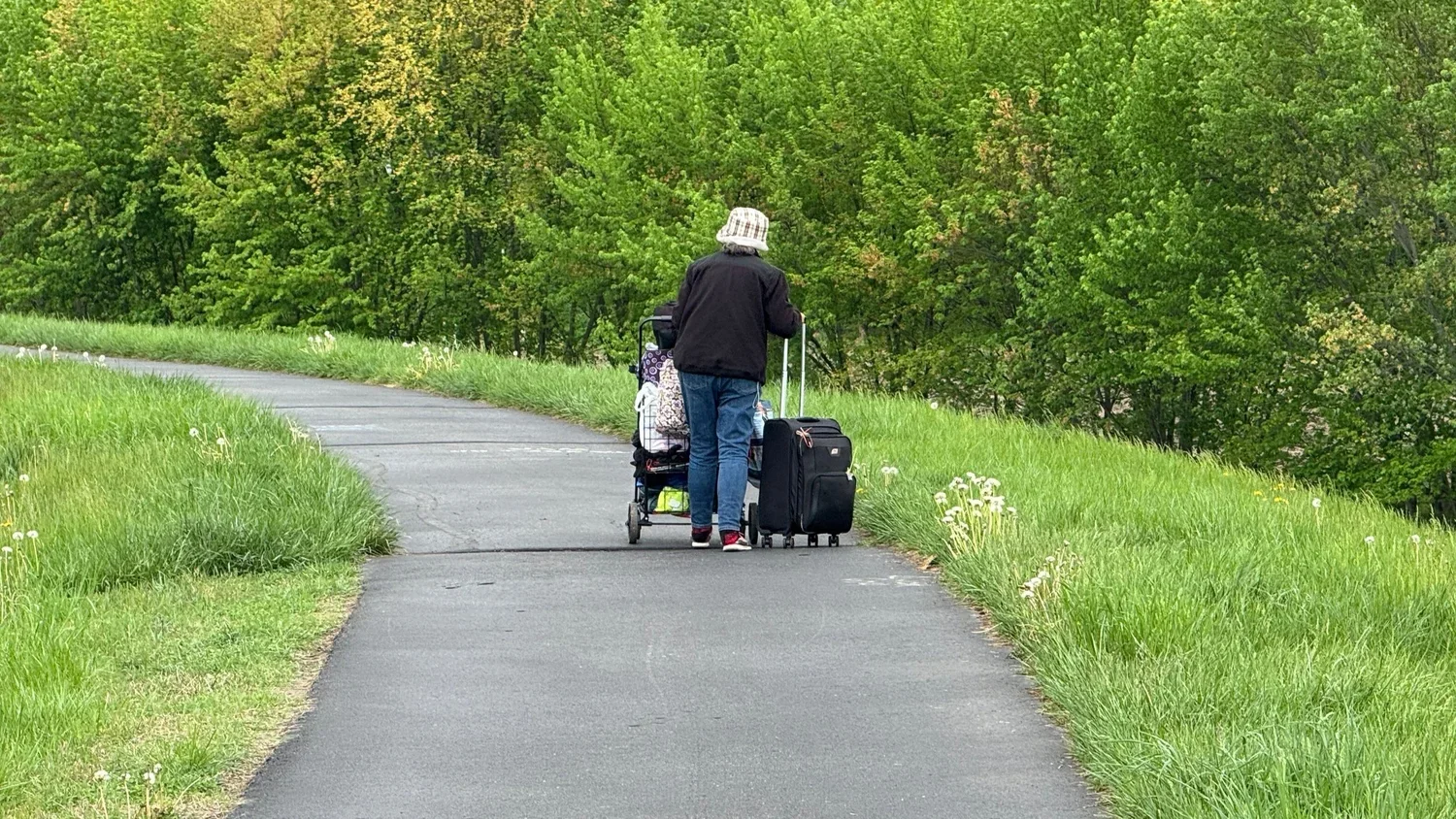
I see her often on the path, though I don’t know where she comes from or where she’s headed. She pushes a shopping cart and pulls a suitcase, both packed with what looks like everything she owns. She wears too many layers for the weather, probably because she has nowhere else to keep them. Her face is hidden behind a surgical mask and a wide-brimmed bucket hat pulled low. She doesn’t speak. She doesn’t look up. For a long time, I only felt pity when I passed her. She was always there, but always just out of reach, like someone the world had quietly let go.
One morning I noticed something different. Her hat. It wasn’t like the one I remembered. The shape was the same, but the fabric wasn’t. This one was pale blue. The next time I saw her, it was yellow corduroy. Then one with pineapples. Later, sequins.
I didn’t think much of it at first. But over time, I realized it kept happening. The cart stayed the same. So did the suitcase and her clothes. But the hat changed. Every time.
In a life reduced to necessity, almost everything she carries is there because it has to be. But the hats—those are different. She has many, and she chooses a different one each day. Not for warmth. Not for fashion. But because it’s still her decision to make. And that makes them more than clothing. They’re a quiet declaration—of identity, of intention, of what she refuses to give up, even now.
Not meant for anyone else, only for her. To say: These are mine. This is me.
Not to hide her. Not to shield her. But to help her remember who she is inside.
And when I see her now, I don’t think of her as separate from nature, but as part of it— adapted to an environment that offers her little. The cart is her den. The suitcase, her shell. The layers of clothing, her insulation. The mask, her camouflage. But the hat, that’s her plumage. Her expression. Her self. The one visible thread of the person she hasn't surrendered.
I’ve come to believe that what we choose when we have almost nothing left says more about us than what we choose when we have everything.
Most of what happens to us—natural disasters, economic shifts, illness, betrayal, politics, loss—is beyond our control. But inside all of that are small, defiant decisions we still get to make. And those decisions, especially under pressure, reveal not only who we are, but what we care about.
That’s true for people. It’s also true for institutions.
Lately, we’ve watched organizations, businesses, and leaders retreat from who they once were. Some stay silent when they should speak. Some bend their values to match the mood of the room. Others walk back what they claimed to stand for. They tell themselves it’s survival. They call it strategy. But most days, it looks more like surrender. Or maybe just revelation —what they always believed, now out in the open.
But real survival doesn’t usually look polished. It looks improvised. A tree growing sideways, not because it wants to, but because that’s where the soil is. A fox sleeping in a roadside drain. A bird weaving a nest from plastic and string. You don’t look at those things and feel pity. You look at them and feel awe. Because they’ve made a life out of what was available and refused to disappear.
She is no different.
She isn’t making a statement. She’s making it through. And in the middle of that, she’s still choosing something that reflects her. That’s what stayed with me. Not her silence. Not her burden. But that daily act of expression in a life the world has tried to erase.
Tomorrow, I’ll walk the same path again. I’ll pass the same trees, the same cracks in the pavement. And if she’s there, I’ll notice the hat she’s wearing, whatever felt most like her that morning. It may be the only thing that still does.
And I’ll place my faith in another of nature’s imperfect but tenacious survivors. The kind who doesn’t just endure, but refuses to forget what’s worth enduring for. The kind who holds onto what matters most—consistently, stubbornly, and without needing anyone to notice.
Even now.
Even still.
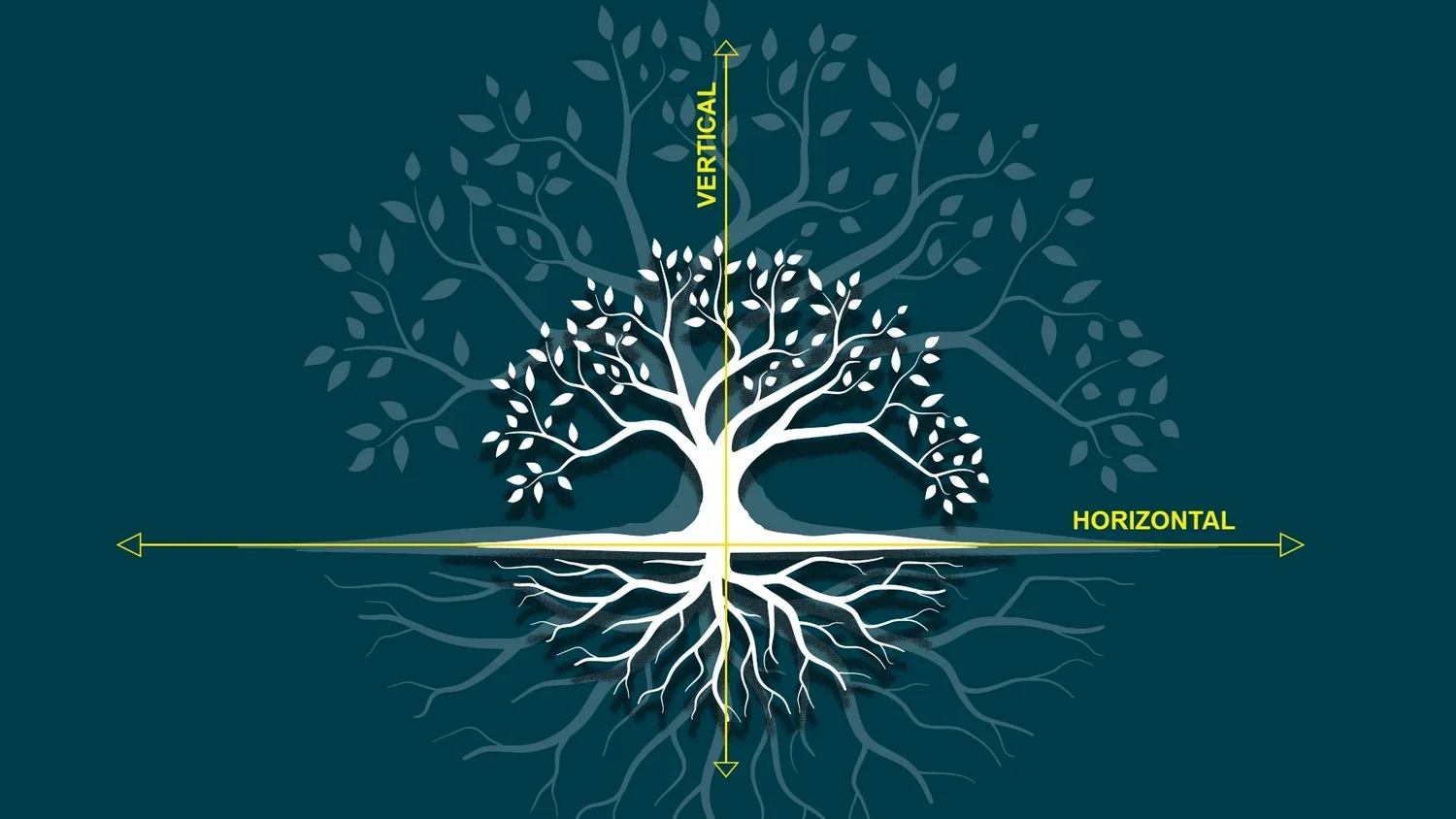
Build Up. Build Down. Or Disappear Sideways.
Everyone talks about building a network—but what happens when yours forgets you the moment you step away?
I’ve never been to a networking event.
Not once. No rooftop mixers. No speed-mentoring circles. No early morning “power breakfasts” where everyone pretends not to notice the undercooked eggs or the existential dread. But I understand the assignment. You show up. You make small talk. You hope someone remembers you later for something other than the shrimp cocktail incident.
The problem is we don’t usually build networks. We build mirrors. People who are exactly where we are—same titles, same industries, same responsibilities, same pace. They move through similar systems, speak the same language, and validate the version of ourselves we’re trying to hold together. It feels like connection. But it’s really alignment—temporary, circumstantial, and fragile. The moment one of you steps away, the link thins. The moment both of you do, it disappears.
That’s the part no one prepares you for: how quickly it can all vanish.
You step away—maybe for a few months, maybe longer. A child is born. A parent needs care. Your body demands attention. Or maybe you just stop. The world got too fast, or too loud, or too meaningless and you decided to pause. You planned to come back. You assumed your place would still be there.
But while you were gone, things shifted.
The people you used to work with moved on. Some got promoted. Some left the profession. Some discovered Peloton and personal reinvention. The roles changed. The org chart redrew itself. And the network you thought would hold you quietly adapted to your absence by erasing it.
Not out of cruelty. Out of design.
Horizontal networks—the kind most people build—don’t hold up when things stop moving. They’re built on shared timing, momentum, and mutual visibility. As long as everyone is active and aligned, they work. But once someone steps away, even briefly, those connections start to fade.
That’s when you realize: what you needed wasn’t familiarity. It was continuity.
Not more peers at your level, but people in different places—those who still remember your work, and those who are rising into roles where your name still matters.
Because the people beside you won’t always be beside you.
And at some point, neither will you.
That is why vertical networks matter.
They offer something horizontal ones cannot: stability through change.
A vertical network connects you to people at different stages of power, experience, and perspective. And not just colleagues, but clients, strategic partners, former advocates, and future collaborators. Anyone whose memory, trust, or trajectory might one day intersect with your return.
It is not built on shared timing. It is built on shared investment.
Upward connections, such as mentors, senior colleagues, or long-standing clients, are valuable not just because they have more influence, but because they have seen more cycles. They understand how industries reset. They have watched people leave and return. And because they remember what you contributed, rather than just your job title, they can reintroduce you when you need it most.
Downward connections are just as important. These are junior colleagues, emerging professionals, or early-career employees who are already shaping the future of your workplace. They are learning tools you may not fully understand. They are building influence in places you are not yet looking. And they remember who treated them with respect, who answered their questions, and who made time when it was not required.
In practical terms, vertical networks create insulation against career volatility. They keep your name in motion, even when you’re not in the room. They make sure your reputation isn’t tied to a moment in time, but to a pattern of behavior.
Most importantly, they give you something horizontal networks can’t: a way back in.
Because eventually, you will step away. Or they will.
Sometimes you leave and come back. Sometimes you never leave at all, but the people around you do. They retire, reinvent, reprioritize. They exit the industry entirely. And suddenly, you’re the one still standing, but surrounded by strangers.
And when that happens, it won’t be the peers who bring you forward. It will be the people above and below—those who saw more than your presence. They saw your value.
And they remembered.
Five Tips To Staying Relevant (Before It's Too Late)
1. Connect Upward with No Agenda
Reach out to someone senior you’ve lost touch with. Not to ask for anything, but to let them know how something they once said or did shaped you. Remind them that their impact was real. People remember those who remember them.
2. Invest Downward Before It’s Strategic
Start mentoring someone younger, earlier, or less visible. Not because they’ll pay it back now, but because one day, they’ll be in the room you’re no longer in. And they’ll remember who made time when no one else did.
3. Replace Check-Ins with Value
Instead of asking “Can we catch up?”, send a thoughtful insight, article, or note that shows you’re paying attention to their work or world. Vertical relationships aren’t sustained by updates. They’re sustained by usefulness and memory.
4. Track Who Leaves. Then Stay in Touch
When someone you respect steps away—retires, relocates, or pivots—don’t drop the thread. Those are the people with long-term memory and long-range perspective. They’re often the ones who can reintroduce you when you need it most.
5. Build for the Person They’re Becoming
Don’t connect with people just for who they are now. Think about who they’re becoming. That intern? Future partner. That analyst? Future investor. See their trajectory and give them reason to keep you in theirs.
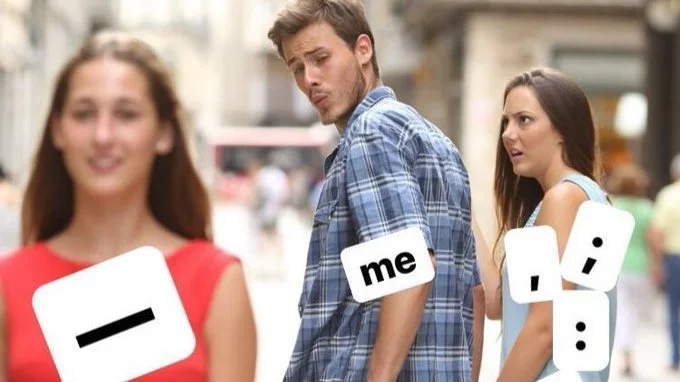
How AI Stole My Em Dash (and Possibly My Soul)
What if the one punctuation mark that finally made your writing feel like you… suddenly made everyone think you were a bot?
It’s Me. I Swear
For reasons no teacher could ever adequately explain, I never learned how to use a comma. It’s not that I didn’t try. I diagrammed sentences. I circled predicates. I stayed after class. But no matter how many worksheets I completed, I never understood why one sentence earned a comma and another didn’t. It all felt arbitrary, like teenage crushes or the price of avocados.
So, at some point, I simply gave up. Not on punctuation entirely, just on the rules. I discovered that if I wanted a pause—a real, weighty pause—I could just put one in. Right there. With a comma. And if one didn’t feel like enough, I could add another. Or three. I became the Jackson Pollock of punctuation, flinging commas across the page with abandon. Some sentences had more commas than vowels. You could practically hear me breathing through them.
It all unraveled several years ago when a development editor looked up from my pages the way people look at a taxidermied pet and muttered, ‘Wow. There are a LOT of commas in here.’
Her name was Amanda, and she was kind in the way food critics are: direct, vaguely amused, and unabashedly judgmental. She introduced me to the em dash.
I had seen it before, lurking at the edge of legal documents and British literature. It looked like a minus sign that had gone through a growth spurt. But Amanda used it like a scalpel. It sliced through my bloated sentences offering space, clarity, and just the right amount of drama. A breath, but without the wheeze.
I fell in love.
I began dashing everything. Thoughts, detours, full paragraphs. It was like discovering a button on the thermostat labeled ‘Make Guests Leave Faster.’
Life was good.
Until a few weeks ago, when a friend sent me an email with the line: “You know AI loves the em dash, right?”
I blinked. “What?”
“It’s kind of a giveaway. When I see too many, I assume it’s ChatGPT.”
I stared at my screen, gutted. Not because I doubted her, but because I could suddenly imagine AI reviewers everywhere, circling my em dashes like red flags and muttering, “These stories are too human to trust. Too clean to be real.”
Have I become a real person mistaken for a bot? Would I have to abandon the one punctuation mark that truly understood me—just to pass as human?
I tried alternatives: the semicolon (smug and overeducated), the colon (aggressively tidy), sentence fragments (moody, prone to exaggeration and bad grammar). And don’t get me started on the ellipsis. Nothing worked. Nothing breathed like the em dash. Nothing gave me the same power to wander mid-thought and still be welcomed back at the end of the sentence.
So I’ve made peace with it.
I’m not a bot. AI hasn’t cracked the way I write...yet. So yes, I still do this the old-fashioned way, because I like to. I like the work of it, the mess of it. I’m just a man with unresolved comma trauma and a deep, possibly diagnosable love for pauses that linger a beat too long. I do it in person, on stages, and in writing. If AI wants to borrow that—fine. Let them scan my work. Let them doubt my humanity.
But let’s be clear: I was microdosing em dashes before AI could string together a sentence without sounding like it was raised by a refrigerator manual.
Soon, it’ll be nearly impossible to tell what’s real and who’s real. The essays we read, the people we follow, the voices we trust—they might all be simulated, optimized, and branded in Helvetica. I don’t know where that leaves authenticity, or if anyone will still care once the fakes get good enough.
Still, it feels weird that AI took the em dash before it took anything else. Like it knew exactly where to hurt us—or at least me—first.
Black Holes and the Silence That Surrounds Them
We don’t always see what’s pulling us off course. But we feel it—in the silence, the tension, the things we keep orbiting but never name. This isn’t about astronomy. It’s about us.
If you have been reading my essays for a while, you know I rarely end where I begin. I often start with something from the natural world and end up somewhere inside our own. This one is no different.
In space, a black hole forms when a star collapses under its own weight. The outward pressure—the energy that once held it up—fails. What’s left is an object so dense, so heavy, that nothing can escape its gravitational pull. Not matter. Not even light. Black holes don’t make themselves visible. They reveal themselves through what happens around them. Light bends. Matter spirals. Time slows. Everything within its proximity distorts. They don’t shout. They pull.
Once you learn that, you start noticing how often the universe recycles its lessons.
Because we live among black holes, too. Not the cosmic kind, but the emotional, organizational, and cultural ones. They form when something central collapses—an idea, a relationship, a truth—and no one addresses it. It becomes easier to adjust, to work around it, to lower expectations, than it is to name what fell apart. And so we orbit. We bend. We distort.
Some of these black holes are deeply personal. Others are shared. But the pattern is always the same: the collapse is quiet, and the pull is enormous.
The loss of a child. Black hole.
The fear of being replaced by a younger colleague. Black hole.
A founder’s outdated vision that still controls every decision. Black hole.
The project no one believes in anymore, but no one dares to end. Black hole.
A traumatic event a team “moved on” from too quickly. Black hole.
A family member everyone tiptoes around. Black hole.
The silence after negative feedback. Black hole.
The moment the mission lost its meaning. Black hole.
They don’t always feel dramatic. But they pull just the same. Meetings grow quieter. Energy dims. Communication warps. Eventually, we stop trying to escape the gravity and just settle into orbit. We call it culture. Or legacy. Or tradition. But really, it’s inertia. We stop moving forward because something collapsed, and we pretended it didn’t.

So what do we do?
Astronomers can’t see black holes directly. They detect them by observing what happens around them—the swirl of light, the distortion of space, the accelerated motion of matter. It’s not the black hole itself that reveals the truth. It’s the way everything nearby reacts to it. That’s how we find ours, too. We look for the energy that’s missing. The ideas that fade. The people who step back. The silence that spreads in rooms where something once lived.
Start by observing the edges. Don’t look for what’s missing, look for what’s distorting. Pay attention to where energy vanishes, where people stop talking, where tension thickens but no one can name the source. Ask what conversations never seem to happen. Ask who stopped showing up fully. Ask what subjects always get redirected.
Then, name it. Not with blame. Not with fanfare. But with clarity. "This thing happened, and we never dealt with it." "This rule has outlived its purpose." "This silence is costing us." Naming a black hole doesn’t fix it, but it pulls the truth back into the room and that changes everything.
Sometimes the gravity breaks when it's simply acknowledged. Sometimes it takes new leadership. Sometimes it takes time. But nothing shifts until someone stops spinning and says, "Wait. Why are we still orbiting this?"
Black holes don’t erase what came before. They mark where something powerful once existed—something that shaped us, maybe even defined us. But they are not a destination.
At some point, we have to stop circling what’s gone.
Not to forget it. Not to undo it. But to remember that movement is not the same as progress and gravity is not the same as direction.