ABOUT JAMES
-
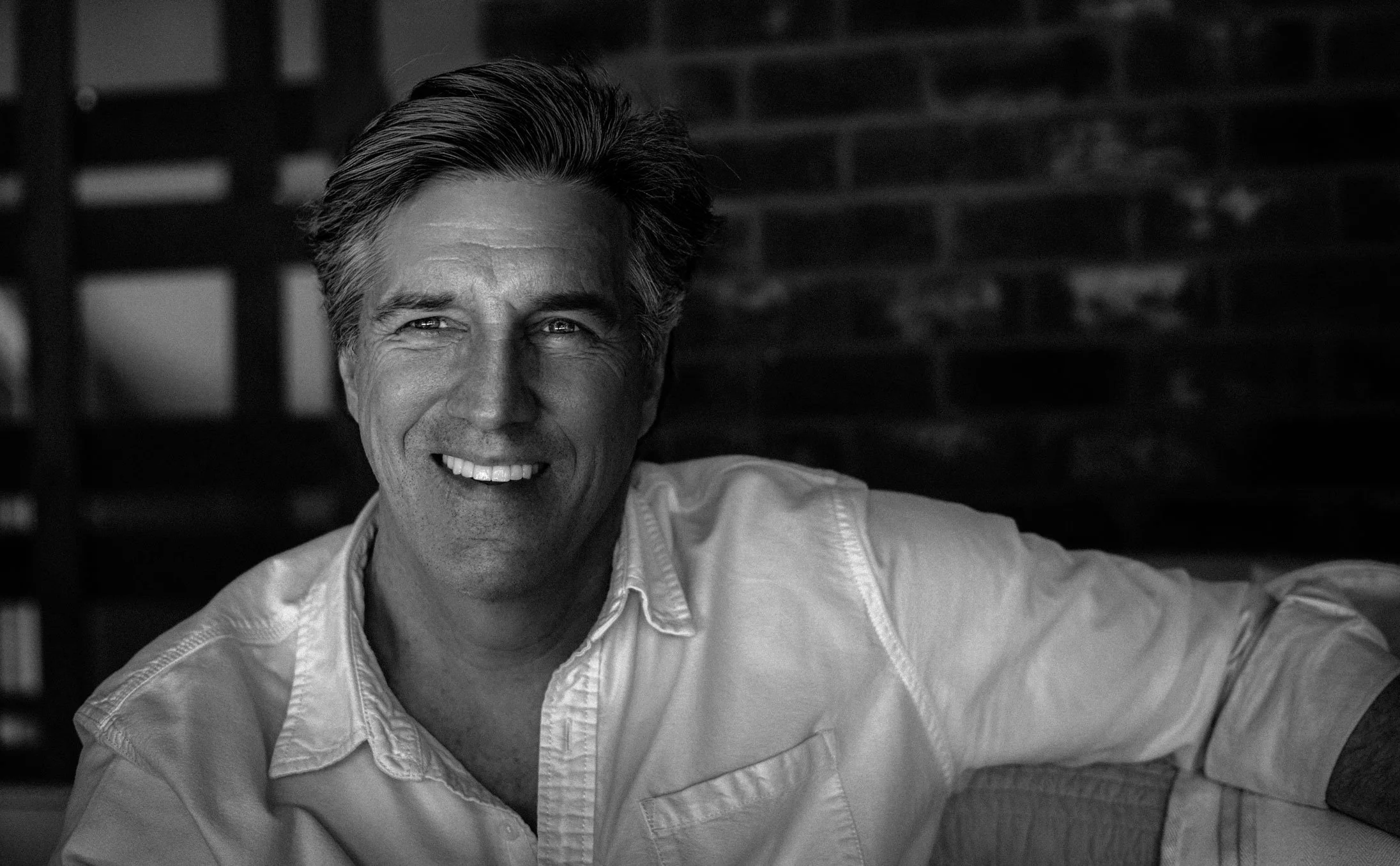
James is a cognitive scientist who has spent nearly thirty years studying connection—why we attach ourselves to people, organizations, cultures, ideas, and ways of doing things, and why some become so difficult to leave. His research treats connection as a biological function rather than a sentiment, exploring the same underlying forces that make our most valuable relationships endure and keep us attached to things we have outgrown.
James has tested that research with 67 Global 1000 companies, delivered more than 500 keynotes and workshops around the world, and taught at Harvard, Washington University in St. Louis, and Penn State. His LinkedIn newsletter, Adapt or Die, has been recognized as a Top 50 digital publication by several outlets, including Sociable and Good Trade. Today, he describes the two sides of connection as Sticky and Stuck: what makes something worth holding on to, and what it takes to let go.
-
Sunday Dinner
My siblings and I used to get the same question from almost every boyfriend or girlfriend brave enough to sit through our family’s Sunday dinner.
“Why is your family always arguing?”
This confused us.
“We don’t argue.”
Apparently this was difficult to reconcile with what they had just witnessed, which usually involved eight people talking at once, someone pointing a fork for emphasis, and my father introducing a subject that had successfully ruined family gatherings for centuries.
Politics was reliable. Religion was even better. Money and morality could get you through dessert.
If everyone happened to agree, Dad would take care of that.
He had a remarkable ability to discover a deeply held conviction he had never previously expressed, usually because nobody else at the table held it. I’m not entirely certain my father believed everything he argued. I’m fairly certain he considered consensus a sign that someone wasn’t trying hard enough.
But we weren’t angry.
That was the part outsiders had trouble understanding.
*
In our house, disagreement wasn’t conflict. It was conversation. You could challenge an idea without challenging the person who had it. You could be certain about something at 5:30 and considerably less certain by 6:15. Nobody stormed away from the table. Nobody stormed away. Leaving meant someone else got the last word.
It took me years to understand what my father had actually taught us.
He wasn’t teaching us to argue.
He was teaching us not to become too comfortable with an answer.
The Romantic Meets the Scientist
I grew up suspicious of answers that arrived too easily. I wanted to know whether things were really what they appeared to be. Whether explanations everyone accepted would survive closer inspection. Whether something different might become visible if you simply walked around to the other side and looked again.
This would have made for a perfectly respectable intellectual life if I hadn’t also turned out to be a romantic.
I like the explanations I found in novels and poems and songs. I like believing a house can feel like home. That certain people simply belong together. That we can fall in love with a city. That loyalty means something. That there are people we cannot imagine leaving and places we cannot quite explain wanting to return to.
I have spent an unreasonable amount of my life listening to writers and musicians assure me this is all true.
Still, I believed them.
Then science came along and made everything more complicated.
*
It wasn’t enough for me to know that connection felt like chemistry or instinct or magic. I wanted to know what was underneath it.
Why this person and not that one? Why this place? Why this group? Why do we become fiercely devoted to certain people, organizations, communities, and ideas while remaining completely indifferent to others?
And eventually an even more interesting question occurred to me.
If connection is powerful enough to hold us together, could the same force also hold us in place?
Why do we remain attached to relationships that no longer make us happy? Why do organizations preserve ways of working everyone agrees no longer work? Why do cultures perpetuate behaviors nobody consciously chose? Why can an old idea defeat a better one simply by having seniority?
The poets weren’t wrong.
But it wasn’t magic either.
And, inconveniently, I wanted to know why.
So That’s Where I Went Looking
There were patterns underneath all of it. Human beings reduce risk. We conserve effort. We notice what is familiar. We attach value. We form expectations. We learn what to approach and what to avoid. We repeat what works, sometimes long after it has stopped working.
Understanding those things didn’t make connection seem less remarkable to me.
It made it more remarkable.
*
There is certainly no shortage of advice about human connection. We are told to be authentic, vulnerable, empathetic, present. We should build trust, create belonging, discover our purpose, communicate better, and, if there is still time before lunch, find our why.
Some of that advice is useful. Most of it isn’t.
But Sunday dinner left me with an unfortunate habit.
I still want to know why.
If trust matters, why? If belonging changes us, how? If loyalty forms, what are we actually becoming loyal to? If culture shapes behavior, what is doing the shaping? If people resist change, what exactly are they trying to protect?
*
So I studied cognition and neuroscience. I spent time in classrooms and laboratories trying to understand what happens beneath the experiences we casually explain with words like chemistry, instinct, culture, loyalty, and love.
Not because I wanted to replace those words.
I wanted to understand what made them real.
And once I started looking there, subjects that had always seemed separate began to look surprisingly connected.
People.
Culture.
Change.
Possibility.
I don’t really think of them as four subjects anymore.
They are different chapters of the same story.
*
We spend our lives forming connections to people, places, groups, ideas, routines, beliefs, and ways of seeing the world. Some become the most valuable things we have. We protect them, invest in them, and organize our lives around them.
Others remain long after their value is gone.
And the fascinating part is that the forces responsible for both are remarkably similar.
The things that make us sticky can also make us stuck.
That realization has left me with two questions I’ve been chasing ever since:
What makes something worth holding on to?
And what does it take to let go?
Those questions have taken me into laboratories and classrooms, organizations and communities, and conversations with people all over the world. They’ve led me into fields I never expected to study and toward questions I didn’t know enough to ask when I began.
There are credentials behind all of that. Degrees. Universities. Research. Books. Essays. Years of work. They’re elsewhere on this site if you came looking for them.
They matter.
They’re just not really where the story began.
That happened at a dinner table, with a father who wouldn’t let an easy answer survive dessert and a family that somehow never realized it was arguing.
(For the record, I still don’t think we were.)
-
HE HAS NEVER BEEN BOWLING.
Not once.
James has lived long enough to visit 42 countries, speak to audiences around the world, raise a son, write books, and develop an internationally recognized body of research without ever putting three fingers into a communal ball and throwing it at ten defenseless pieces of wood.
HE READS ABOUT 100 BOOKS A YEAR.
This sounds impressive until you consider what it actually means.
While other people have been attending barbecues, learning pickleball, watching entire seasons of television, maintaining friendships, and apparently bowling, James has been sitting alone turning pages.
One hundred books a year is less a reading habit than a failure to participate in society. A lifestyle he relishes.
HIS MOTHER WAS IRISH.
Which naturally made her an authority on cooking in the same way that being French makes you an authority on drywall.
James grew up believing burnt and dried out were legitimate flavor profiles, meat was supposed to require prolonged chewing, and cheese occurred naturally in individually wrapped plastic squares.
HE DOESN’T USE AN ALARM CLOCK.
James has never owned an alarm clock and has never used the alarm on his phone.
Before going to sleep, he simply decides what time he would like to wake up and, somehow, does.
5:30. 6:15. 4:47.
His brain apparently accepts appointments from itself.
This is especially irritating because scientists have spent billions of dollars studying the human brain while James has been lying unconscious in a hotel room performing a trick that should require either laboratory supervision or an exorcist.
He has no explanation for it, which is concerning, since explaining the brain is more or less what he does for a living.
HE ONCE MET JAMES TAYLOR.
He shared a green room with one of the great singer-songwriters of his generation, and asked what James still considers the dumbest question of his life.
He will tell you the question if pressed.
He would prefer not to be pressed.
HE SPENT PART OF HIS CHILDHOOD COLLECTING DEAD BIRDS.
On his walk home from grade school, James would occasionally find a dead or dying bird and carry it home because he believed he could nurse it back to health.
There were several problems with this plan, including his age, his complete lack of veterinary training, and an unusually flexible interpretation of the word dead.
The birds did not recover.
HIS PHYSICS PROFESSOR WORKED ON THE MANHATTAN PROJECT.
One of James’s college physics professors had worked on the Manhattan Project.
This put James in a classroom with someone connected to one of the most consequential scientific achievements of the twentieth century. A man who had helped unlock the secrets of the atom was now personally explaining physics to him.
James got a D in the class. He blames Dr. Fuchs’s heavy German accent, which apparently made the laws of physics considerably more difficult to understand. The fact that he skipped roughly 80 percent of the lectures is, in his view, the sort of distracting detail that has no place in a serious investigation.
HE HAS VISITED 42 COUNTRIES.
“Visited” is doing considerable work in that sentence.
James has been to 42 countries and can tell you surprisingly little about many of them. What he can tell you is that airport baggage carousels are internationally standardized instruments of despair, convention centers everywhere appear to have been designed by the same committee, and hotel ballrooms from Singapore to Stockholm all contain approximately the same chair.
He has flown halfway around the world, been driven directly from an airport to a hotel, spoken in a room without windows, slept, and returned to the airport.
Technically, this counts as international travel.
Other people come home from Paris with stories about the Louvre.
James can tell you the AV team was excellent.
HIS DIET HAS SHOWN REMARKABLE RANGE.
James is now a pescatarian, which suggests a sophisticated adult who has carefully considered what he puts into his body.
There is little evidence of this in the historical record.
From first grade through his senior year of high school, James ate the exact same lunch every school day: ham and cheese on white bread with a Tastykake.
For twelve years.
Other civilizations have collapsed in less time.
At no point did James apparently become curious about what the children at the other tables were eating. This is particularly troubling given that curiosity would later become one of the central subjects of his work.
AND SOMEHOW, THIS BECAME A CAREER.
A painfully shy kid who carried home dead birds, ate the same sandwich for twelve years, earned a D from a Manhattan Project physicist, has never bowled, wakes himself through some unexplained neurological witchcraft, and wasted his one private conversation with James Taylor now travels the world studying human behavior.
There may be a lesson in that.
James has spent most of his career warning people not to become too confident in the conclusions they draw from limited evidence.
His biography may be the strongest evidence yet.
And…if you know, you know.