
Familiar Strangers
There are people in my life I’ve never met.
It took me a while to realize they were in my life at all.
I have a confession to make.
Some of the people I think about most are people I’m not quite sure what to call.
I’ve never met many of them. Others I once knew well. Friend might be the right word for a few. For others, even that doesn’t quite fit.
What they have in common is simpler. I recognize them.
If that sounds strange, I thought so too, until I realized how many of us have relationships exactly like that.
Especially these days.
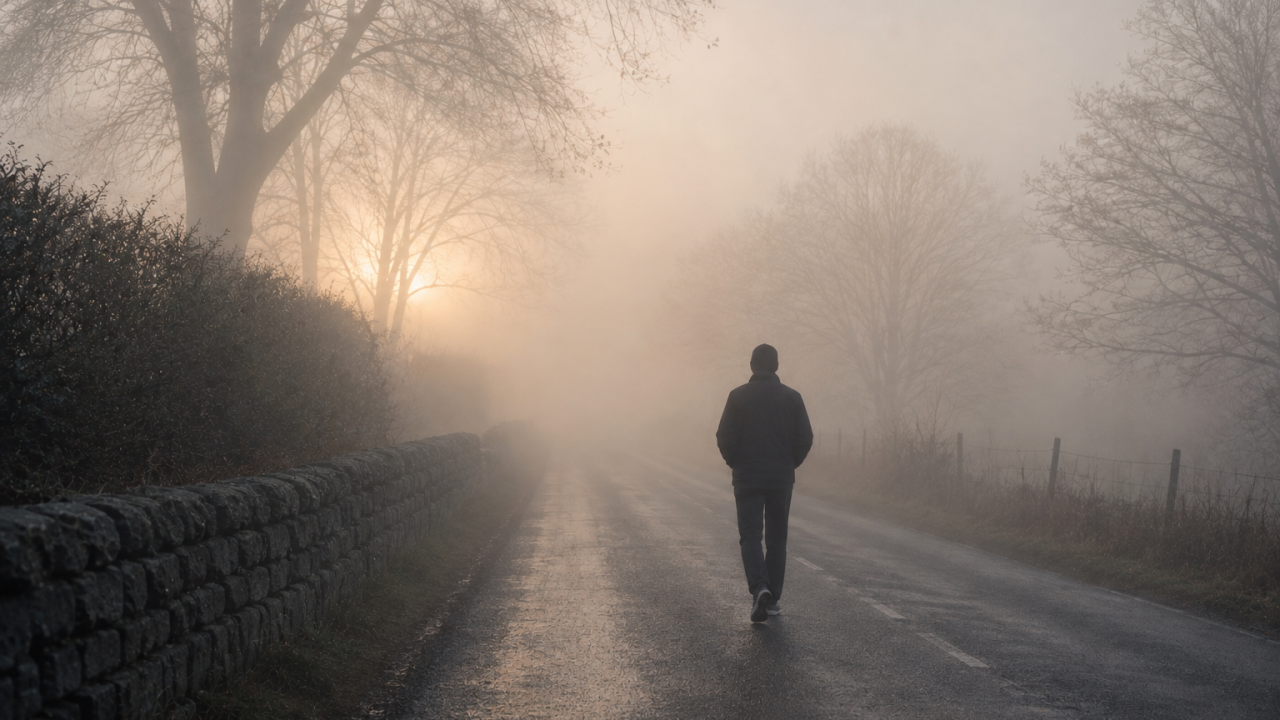
Every morning, long before most people are awake, I walk seven miles along the same route. For years I thought I was walking alone.
I wasn’t.
There are people I pass so often they’ve become part of the walk itself. We exchange a wave, a nod, sometimes a good morning, and continue on. I know almost nothing about them.
But if one of them disappears for a while, I notice.
At first, I assume we’ve simply missed each other. Then I begin inventing reasons. And every now and then another possibility slips in. Maybe something happened.
I’m not owed an explanation. But their absence tells me something their presence never did.
They’re more important to me than I ever realized.
What I experience on my morning walk isn’t unique. It happens in this space all the time.
There are names I recognize the moment they appear beneath something I’ve written. Some belong to people I’ve been fortunate enough to spend time with. Others belong to people I’ll probably never meet. Somewhere along the way, the distinction stopped mattering.
So many of you have shared pieces of your lives with me, or at least let me know who you are. The highs and lows, the struggles and celebrations, the ordinary moments and the ones that changed everything.
And when one of those names disappears for long enough, I don’t wonder where the reactions and comments went.
I wonder where you went.
I’ve never known quite what to call these relationships.
“Followers” has always sounded a little narcissistic.
“Contacts” belong in an address book.
“Connections” feels too fragile.
“Subscriber” has all the intimacy of a utility bill.
None of those words quite describe what develops between us. Then again, maybe friendship has always been a bigger category than we’ve allowed it to be.
I’m beginning to think we’ve underestimated it.
The world we’ve built is creating more of these relationships than ever before. We work remotely. We meet through screens. We change jobs, move away, retire, and sometimes discover that the last time we saw someone in person was the last time we would ever see them at all.
And yet they don’t necessarily disappear from our lives.
I hadn’t fully appreciated what these places have given us. There was a time when changing jobs, moving away, or simply growing older meant people eventually disappeared. Someone could be your best friend for four years of high school and, twenty years later, become someone you wouldn’t know how to find.
That happens less now.
We aren’t necessarily close anymore. Nobody is asking us to help move a couch or wondering why we didn’t come to the wedding. Instead, we remain part of one another’s lives. A new job. A grandchild. A photograph from a vacation. A difficult year. Enough to know that someone who once mattered is still out there.
The relationship didn’t survive unchanged. But it didn’t disappear either. I’m grateful for that.
I may not know your address anymore. I may not know where you work, or even what city you live in. Yet I still know a little about the person you’re becoming.
We know more about one another’s lives than ever before, and less about where in the world those lives are unfolding.
Maybe these places haven’t replaced relationships. Maybe they’ve simply become another place where relationships continue.
Which makes me think we haven’t been valuing the smallest gestures.
A name you recognize. A thoughtful comment. Someone returning after being gone for a while. They seem too small to matter.
Then again…so does a wave.
And that’s really why I wanted to write this.
You may think you’re simply reading something I wrote. That an occasional comment, the click on a “like,” or returning to read another essay doesn’t amount to much.
But somewhere along the way, you became part of my life.
I recognize your names. I’m glad when you come back. I’ve learned from you, laughed because of you, disagreed with you, and been encouraged by you.
And when you show up, I notice. Not because I expected anything from you.
Because your presence has become part of this other path I walk.
I still don’t know exactly what to call what we have. I’m beginning to think I don’t need to. I just wanted to say something we probably don’t hear often enough.
Thank you.
For showing up. For returning. For becoming part of my life without either of us ever planning for that to happen.
Maybe, for a few of you, I’ve become one of your familiar strangers.
I hope so.
Help Wanted (Not)
I heard someone confidently explaining how another perfectly capable adult should live.
I have been working on becoming a better person.
So far, this has mostly involved helping fewer people.
I realize this sounds less like personal growth and more like something a parole board would note with concern. But hear me out.
I have learned that people need considerably less of my help than I once imagined.
(Shocking, I know.)
The funny thing is, I don’t think I’m unusual.
Most of us carry around the conviction that we’d improve other people’s lives if they’d just give us five uninterrupted minutes. We’d organize their kitchen differently. We’d raise their children differently. We’d vote differently. We’d marry someone else entirely.
We don’t just have opinions. We have plans for people.
The urge to help is especially powerful around technology.
Young people see anyone over fifty holding a phone and immediately assume there has been an accident.
“Do you need help?”
“No.”
“You know you can just swipe up.”
“Yes.”
“Here, let me show you.”
At which point they take the phone from someone who once performed his own taxes using a pencil and begin swiping and pinching at the screen as if demonstrating fire to a medieval farmer.
The owner stands there politely, watching a complete stranger reorganize his digital life.
There seems to be an age at which other people decide you can no longer be trusted with electronics. I’m not sure what it is, but apparently it arrives before your AARP card.
Older people are no better.
They hear someone under thirty talk about politics, careers, marriage, money, or just about anything, and you can actually watch the advice forming.
The head tilts.
The eyebrows lift.
A hand lands gently on the younger person’s shoulder.
“Can I offer you some advice?”
No. You may not.
Not because the advice is necessarily bad. It may be excellent. You may possess the accumulated wisdom of seventy years, three marriages, two bankruptcies, a bypass, and something involving a timeshare in Aruba.
Keep it.
Nobody wants wisdom nearly as much as people with wisdom want to distribute it.
This surprised me because I always assumed helping was good. The older I get, the more I suspect that helping is sometimes less about solving another person’s problem than securing a speaking part in it.
There are exceptions, of course.
If someone is trapped beneath a refrigerator, help them. Nobody pinned beneath a Frigidaire is thinking, I really need to work through this myself.
Everything else is less clear.
We see someone doing something incorrectly and feel compelled to intervene. But incorrectly according to whom?
Maybe they like spending twenty minutes figuring out the parking app. Maybe they want to vote for the candidate you think is an idiot. Maybe they want to marry Kevin.
Everyone has a Kevin.
You can explain Kevin. You can produce charts about Kevin. You can invite three former Kevins to testify.
They are still going to marry Kevin.
And perhaps they should.
Because mistakes are part of living. Some of the most important things I know came from doing things people specifically advised me not to do.
The irritating part is that many of those people were right. But being right doesn’t mean they should have stopped me.
There are lessons you can be told and lessons you have to learn, like ordering the fish because the waiter quietly asked, “From here?” and you mistook concern for hospitality.
That belongs to you.
Obviously, there are people who need help and cannot ask for it. We should notice them. We should probably become much better at noticing them. This is the inconvenient exception that ruins an otherwise perfectly good theory.
But most of the time, when I see someone struggling, I try something radical.
I wait.
If they need me, I hope I’m paying enough attention to know it.
Otherwise, I let them be. I let them choose. I let them marry Kevin.
And when I hear someone say, “Can I offer you some advice?” I simply say, “No.”
Then I walk away before either of us has the opportunity to become a better person.
What Did You Make Today?
There is a way to quiet your nervous system and replace that persistent feeling that the world is happening faster than you can keep up.
It’s so ordinary we rarely notice it anymore. And yet, as children, we did it every day.
When my son was young, I spent my afternoons standing outside his school, waiting with the other parents for the final bell.
As they came out, most of us asked the same question.
“How was your day?”
The answers were predictable.
Fine.
Good.
Often just a shrug.
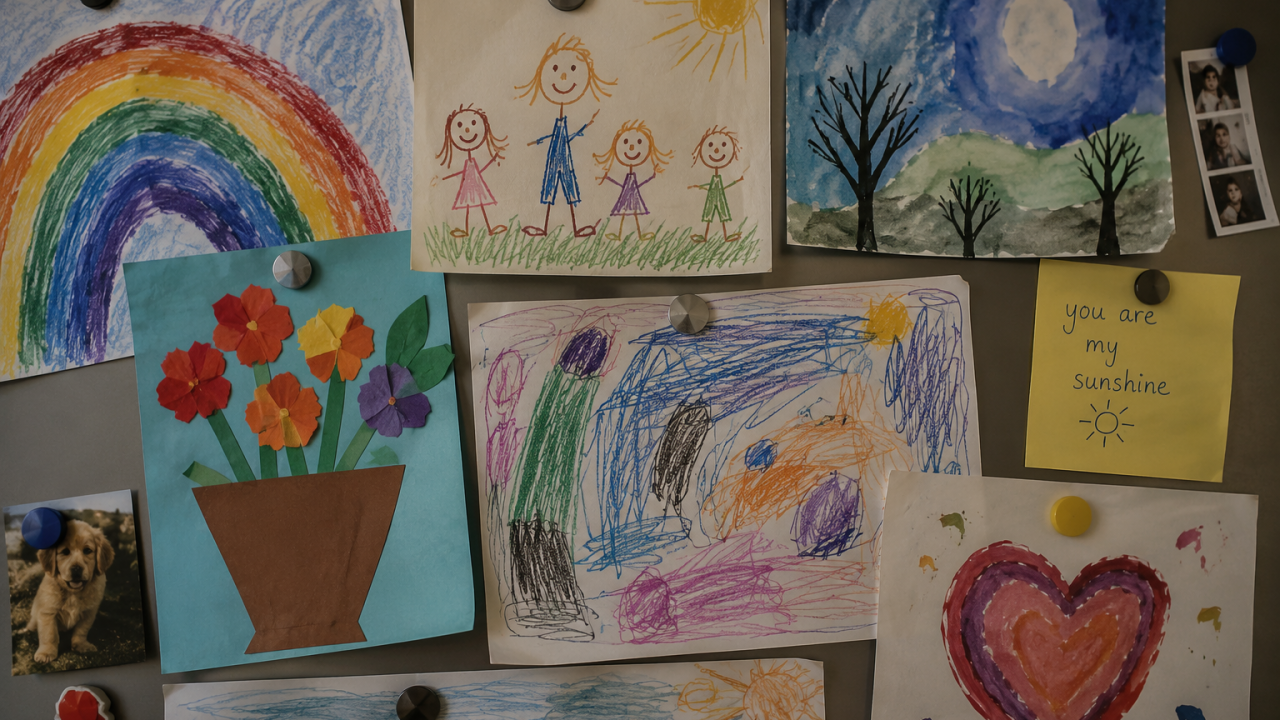
Then one afternoon I overheard a mother ask her daughter a different question.
“What did you make today?”
Not what did you learn. Not what happened. Not who did you sit with.
What did you make?
Her question lodged itself in my brain.
I repeated it to my son the next day and in the many years that followed. Long after elementary school. Long after I was the one waiting outside for him. Even now, when just checking in, I ask: What did you make today?
Because some questions aren’t really about childhood. They’re about the kind of existence you’re trying to build and the role you play in shaping it.
Most of life encourages us to think about what has happened to us rather than what we have made happen.
We wake up and immediately begin receiving things. News. Messages. Opinions. Advertisements. Requests. Warnings. Predictions.
The world arrives fully formed before our feet hit the floor.
Some days it can feel as though everything important is being decided somewhere else. By people we have never met. Inside rooms we will never enter.
The future of our jobs. The future of our country. The future of our children’s lives. The scale of it all can be overwhelming.
There are forces large enough to alter entire industries, while most of us spend our mornings deciding whether a cup of yogurt qualifies as lunch.
I think this is why so many people feel anxious. Not because they have too much to do. Because they have begun to lose sight of what they can do.
That mother’s question stays with me because it points in another direction.
What did you make today?
Not what happened. Not what went wrong. Not what somebody else decided.
What did you make?
The answer doesn’t need to be impressive. You can cook a meal. Paint a landscape. Quilt a blanket. Hang a shelf. Create a song. Take a photograph. You can make someone feel welcome, make them laugh, make progress on something difficult, make good on a promise, or make a stranger’s day just a little easier.
The thing itself is almost irrelevant.
What matters is that making requires participation. Agency. It requires the belief that your actions can alter the shape of things, even slightly.
The cognitive explanation is that our brains didn’t evolve simply to understand the world around us. They evolved to discover whether our actions can change it. Every small act of making answers that question: I did this…and something happened. When the brain detects that relationship between action and outcome, it lowers its guard. The body releases less stress because it no longer feels completely at the mercy of its surroundings.
We stop being passengers in our own lives. We get to steer, even if only a few degrees at a time.
It’s why I write every week.
Not for the likes. Not for the followers.Not to teach. Not even to inspire.
I’m grateful when an essay does those things, but they aren’t why I sit down.
I write because making something reminds me that I still can.
I like wrestling with an idea until it finally says what I mean. Finding the right rhythm. The sentence that suddenly feels true. The phrase that makes me feel something before I ever ask anyone else to.
For an hour or two each week, I’m not simply reacting to the world.
I’m making something, and whether it's good or bad, I can't imagine letting AI do that for me.
When I think back to that schoolyard, I wonder if the mother who asked the question intended any of this. Maybe she simply wanted to know what her daughter had done in art class. But I prefer to think she understood something larger.
Children are not born believing that life happens to them.
They touch things and rearrange them. They imagine things and build them. They leave fingerprints everywhere. They make things without being asked.
Somewhere along the way, many of us lost that gift. We started allowing others to make everything for us.
Maybe the way back begins by continually asking ourselves that mom's question.
What did you make today?
Outposts: The Places We Never Planned To Stay
We spend an extraordinary amount of time deciding where we’re going and almost none deciding where we’ll stop.
I’ve never met anyone whose life turned out the way they planned.
Not an executive whose career unfolded exactly as expected. Not an entrepreneur whose company resembled the one in the original business plan. Not a couple whose marriage became exactly what they imagined on their wedding day.
It's how journeys work.
We set out believing we know where we’re going, without realizing the journey will teach us far more than we ever knew at the start.
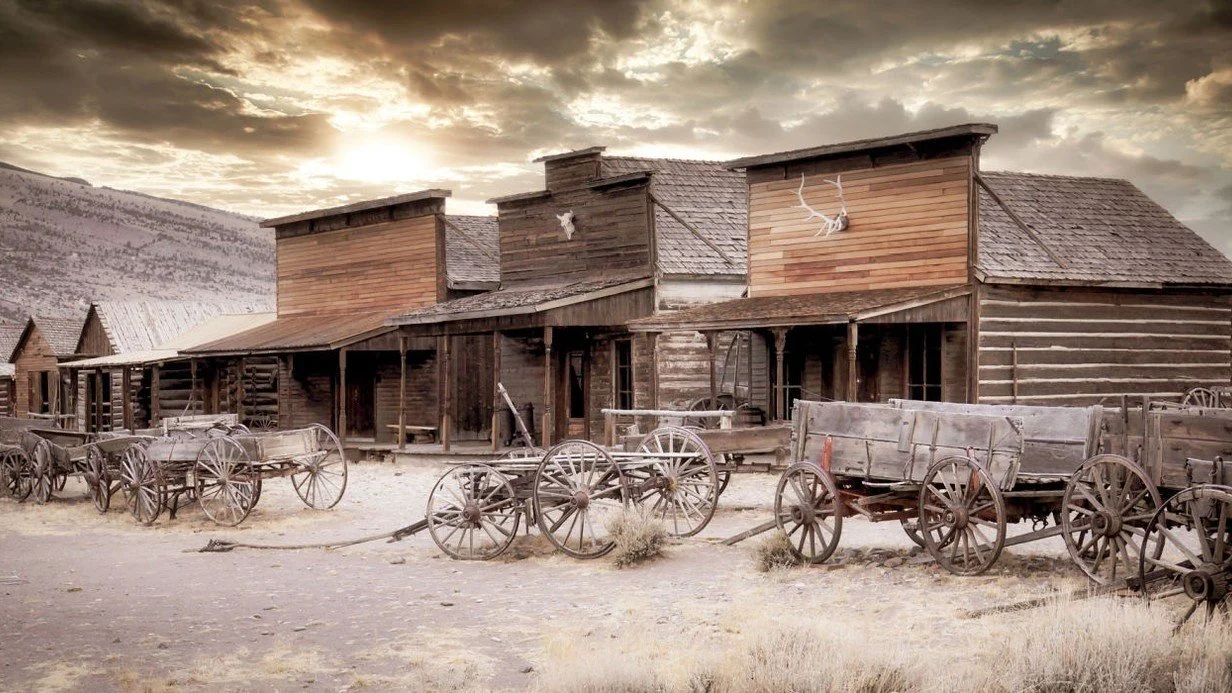
When early pioneers crossed North America, they didn’t simply point their wagons west and keep moving until they reached the Pacific. They built forts, trading posts, and supply stations. Places to stop. Repair. Replenish. Think. And possibly stay.
Most disappeared.
Some became Omaha. Denver. Salt Lake City.
No one planned those cities.
They were outposts.
Places where the journey changed. Territories no one had imagined or had on their map that became more valuable than the destination itself.
Our lives work the same way.
Very few of us end up where we thought we would. The job we only meant to keep for a little while becomes the career we were meant to do. The town we never intended to stay in becomes the home we always wanted. The stranger we never expected to meet becomes the person we couldn't live without.
Looking back, we realize something that was invisible at the time.
We weren’t passing through.
We were arriving.
The irony is that when this happens, people often say we’ve settled. We fell short. Lost our ambition to keep going.
I’ve never understood that.
Who doesn't hope for a settled life? A settled relationship? A settled home? A settled mind?
Why would we tell ourselves not to settle when we may have found the place worth staying?
What surprises me is that we understand this about our lives, but rarely about our organizations.
When companies and firms make strategic plans, they spend enormous effort deciding where they want to go. They define objectives, budgets, milestones, and measures of success. Then they begin moving.
What they never plan are the outposts where they’ll stop.
Not to review a budget. Not to update a timeline.
To think.
To ask whether the journey has revealed something the original plan couldn’t have known.
That’s the difference between a milestone and an outpost.
A milestone asks whether we’re making progress. An outpost asks what we’re learning. One measures movement. The other measures clarity.
Our lives create outposts whether we plan for them or not. Organizations don’t have that luxury. They have to build them deliberately.
The reason is simple. The greatest opportunities rarely arrive looking like destinations. They arrive looking temporary:
A small market that wasn’t in the original strategy.
A customer who doesn’t fit the ideal profile.
A side project that wasn’t supposed to matter.
A new capability discovered almost by accident.
Most organizations walk past those moments because they don’t resemble the future they imagined in the conference room.
The organizations that adapt best do something different. They stop. They look around. They ask what the journey has taught them. And every so often, they discover that the place they thought they were only passing through is exactly where they should stay.
That’s the question every strategic plan should answer before the journey begins.
Not just, Where are we going?
But, Where will we stop long enough to discover whether we’ve found something better?
Because the places that change our lives almost never announce themselves as destinations.
They simply ask us to stay long enough to recognize them.
To say "We found what we were looking for.”
Postscript (A Gift)
Over the past year or so, I’ve watched more and more of my work appear under someone else’s name.
Sometimes it’s a video. Sometimes it’s an article. Increasingly, it’s an AI-generated version trained on my talks, my writing, my voice, or my research.
It has reminded me that creating something original is still hard.
Copying it and calling it your own has never been easier.
That realization changed my thinking.
I could spend my time trying to protect ideas that are becoming increasingly impossible to protect. Or I could spend that same time helping the originals travel farther.
I’ve chosen the second.
I developed this Outposts Field Guide (https://www.jameskane.com/outposts) while helping dozens of organizations rethink the way they approached strategic planning. Feel free to download it, share it with your team, feed it to your favorite AI platform, adapt it, improve it, and use it to build strategies that learn as the journey unfolds.
If these ideas are any good, they were never meant to sit on my shelf. They were meant to travel.
I hope this one finds a good home.
Your Brand Has a Courage Problem
It doesn’t take much for someone to decide who you are. That’s both the danger...and the opportunity.
I'm not an especially patriotic person.
I don't own an American flag. I don’t tear up whenever I hear the national anthem. And I’m certainly not someone who keeps a folding chair in the trunk of my car, just in case a parade breaks out.
My patriotism becomes even harder to summon when sports are involved.
I’ve never watched an international sporting event thinking, My country’s honor is at stake. The whole thing always feels a little theatrical to me. Dream Teams, chest-thumping pride, and of course, the performative chant of “USA! USA!
I prefer rooting for underdogs wherever they live, and am helpless against people who enjoy being themselves.
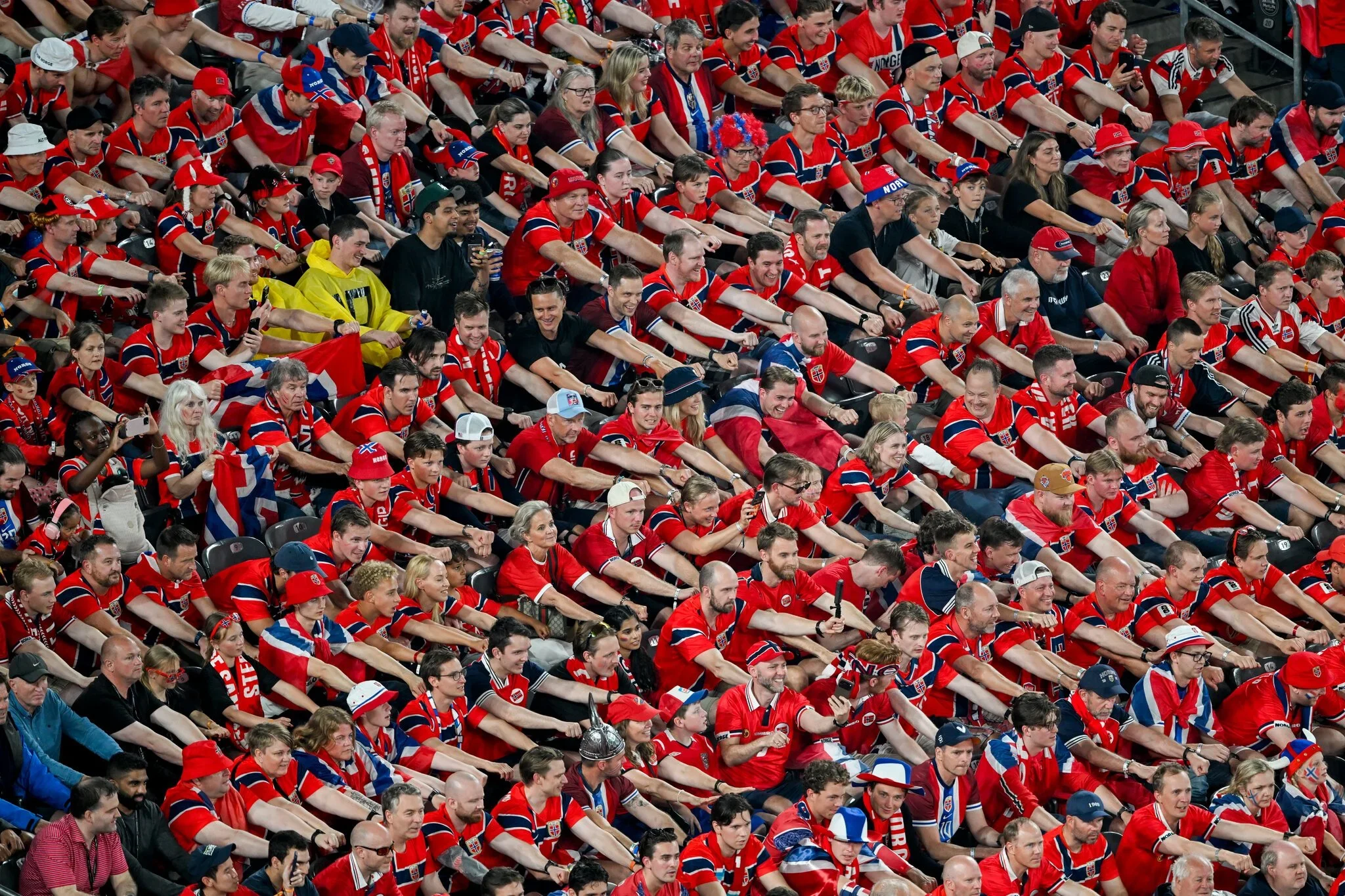
So naturally, during this year's World Cup, Norway won me over.
Their supporters weren’t doing what sports fans usually do. Boasting. Bragging. Trash-talking their opponents.
They were rowing.
Thousands of people, sitting shoulder to shoulder, pretending to power an invisible Viking ship.
They did it in the stands. Outside the stadium. In Times Square. At baseball games. On tour busses, ferries and subways.
Everywhere they went, they rowed.
It was ridiculous.
It was funny.
It was unmistakably theirs.
And somewhere between the strokes and the laughter my brain did what brains do. It made a judgement and came to a conclusion.
Norwegians are fun.
I haven't met many Norwegians and know very little about Norway. But my mind has now written a story about the people of that country.
That’s how reputations are built. How perceptions are built. How brands are built.
Not through slogans or advertising campaigns, but through repeated moments that feel true. Authentic. Genuine. Honest.
Those qualities sound effortless. They aren’t.
Because the moment people know they’re being watched, the temptation is to perform instead of simply be.
Authenticity becomes something organizations try to engineer instead of something they’re willing to reveal. The trouble is, revealing who you are requires courage. And courage is often in short supply.
Spend a little time looking through corporate websites and you begin to notice how alike they all sound. Everyone promises innovation. Everyone is trusted. Everyone puts people first. Everyone is customer-centric. Apparently, they all attended the same branding workshop sometime around 2011.
The language is meant to make them sound distinctive, when the truth is, it has the opposite effect. They’re so afraid of saying something no one else would say that they end up saying exactly what everyone else says.
They choose the safest place to stand and end up in the easiest place to overlook.
Norway’s fans were not trying to look different. That is what made them different. They were not performing a brand. They were expressing a personality.
There is a profound difference between the two. One is carefully manufactured. The other is simply allowed.
I sometimes wonder what would happen if an organization stopped asking, “What should our brand be?”
And started asking, “What part of ourselves have we been too afraid to show?”
I don’t know many organizations willing to ask that question.
Big organizations, especially, become prisoners of their own reputations. Every message is reviewed. Every joke is softened. Every rough edge is polished away. Somewhere along the way, authenticity begins to feel irresponsible and dangerous.
Eventually, “who they are” becomes perfectly safe. And perfectly forgettable.
The Norwegians offered a masterclass in branding without ever meaning to.
They didn’t build a campaign. They didn’t craft a message. They didn’t workshop a positioning statement or write a manifesto.
They just kept rowing.
In the stands. Outside the stadium. In Times Square. At baseball games. On tour buses, ferries, and subways.
Everywhere they went, they gave people the same honest glimpse of who they were.
That’s how I came away believing something about an entire country after watching a few thousand soccer fans. And that’s how the strongest brands are built.
Not by deciding what people should think.
But by giving them something genuine to remember.
And love.
Go Norway!
Who Changed You?
We all carry around the name of someone who changed us. Have you ever wondered who carries yours?
Two weeks ago, François Englert died.
Englert won the Nobel Prize in Physics for helping explain how elementary particles acquire mass through the spontaneous breaking of electroweak gauge symmetry by a scalar quantum field.
If you’re still reading, thank you.
I realize mentioning quantum mechanics in the second paragraph is a bold strategy. It’s right up there with discussing municipal zoning laws on a first date. But stay with me.
Because this is not a story about physics. It's about how François Englert became who he was.
And how all of us become who we are.
Long before there was a Nobel Prize, there was a secondary school mathematics teacher who took an interest in François.
Not someone famous. Not someone who won awards or made headlines.
He was just an educator who noticed a shy but curious student and altered the direction of a life.
I knew that story because I’d seen it before.
My son has a PhD in infectious disease genomics. Like Englert’s parents, I can’t take credit for what he does today. But I know who can.
A high school science teacher.
Like Englert’s mentor, Mr. Wise never earned a doctorate, ran a laboratory, or published a research paper. He simply took an interest in my son, gave him the confidence he needed, and helped him find his path.
Different country. Different generation. Different subject.
The same story.
It’s easy to overlook relationships like these because they rarely seem extraordinary while they’re unfolding.
Someone who looked at you and saw more than you saw in yourself.
Someone who stayed patient while you figured things out.
Someone who cared more about your future than your mistakes.
Someone who gave you the courage to take a step you wouldn’t have taken alone.
Someone who changed your life without ever realizing it.
At different points in our lives, we have been both the student and the teacher. The one who needed someone to believe in us, and the one with the opportunity to believe in someone else.
That second role is easy to underestimate.
We tend to measure our lives by our own accomplishments. But for most of us, our greatest contribution to the future won’t be something we achieve. It will be someone we encourage.
Because very few of us change the world ourselves. Most of us change someone who will.
It's hard to know when you’re standing in one of those moments. One conversation may be routine for you and unforgettable for someone else.
One expression of confidence you barely remember may become the reason another person changes careers, masters a new skill, starts a business, keeps going when they were ready to quit, or discovers what they want to do with the rest of their life.
Change has a way of turning all of us into both teachers and students. Which brings me back to François Englert.
History remembers the Nobel Prize.
He remembered the man who made it possible.
“Get That Giraffe Off The Court!”
Some of the most important words in our lives are also the ones we examine the least.
When I was in eighth grade, I scored sixty points or more in several basketball games.
There was a simple reason. I was six-foot-one and most of the boys I played against hadn’t reached five-foot-five.
At that age, eight inches isn’t a measurement. It’s an advantage.
Parents complained to my coach. They complained to the referees. They even heckled my parents and asked to see a birth certificate.
They wanted a level playing field, and to them, one unusually tall kid was proof the game wasn’t fair. To them, the solution seemed obvious. Remove me.
A year later, I learned why their solution wasn’t that simple.
I had grown another inch, but suddenly that inch didn’t matter much. I was still tall, but no longer unusually tall. I was still skinny, the way most freshmen are.
One night my coach sent me into a game with a simple assignment.
Guard Mike Munchak.
If you know football, you know the name. He would become an All-American at Penn State and eventually a Hall of Fame lineman for the Houston Oilers.
At the time, he was simply the biggest human being I had ever stood next to on a basketball court.
I remember him setting a pick on me. It wasn’t dirty or malicious, but I can still remember the feeling of running into him. It felt less like another player and more like a brick wall that had somehow learned to dribble.
Laid out on the court, I understood something I hadn’t in eighth grade.
Against those younger kids, I had been the unfair advantage.
Against Mike, he was.
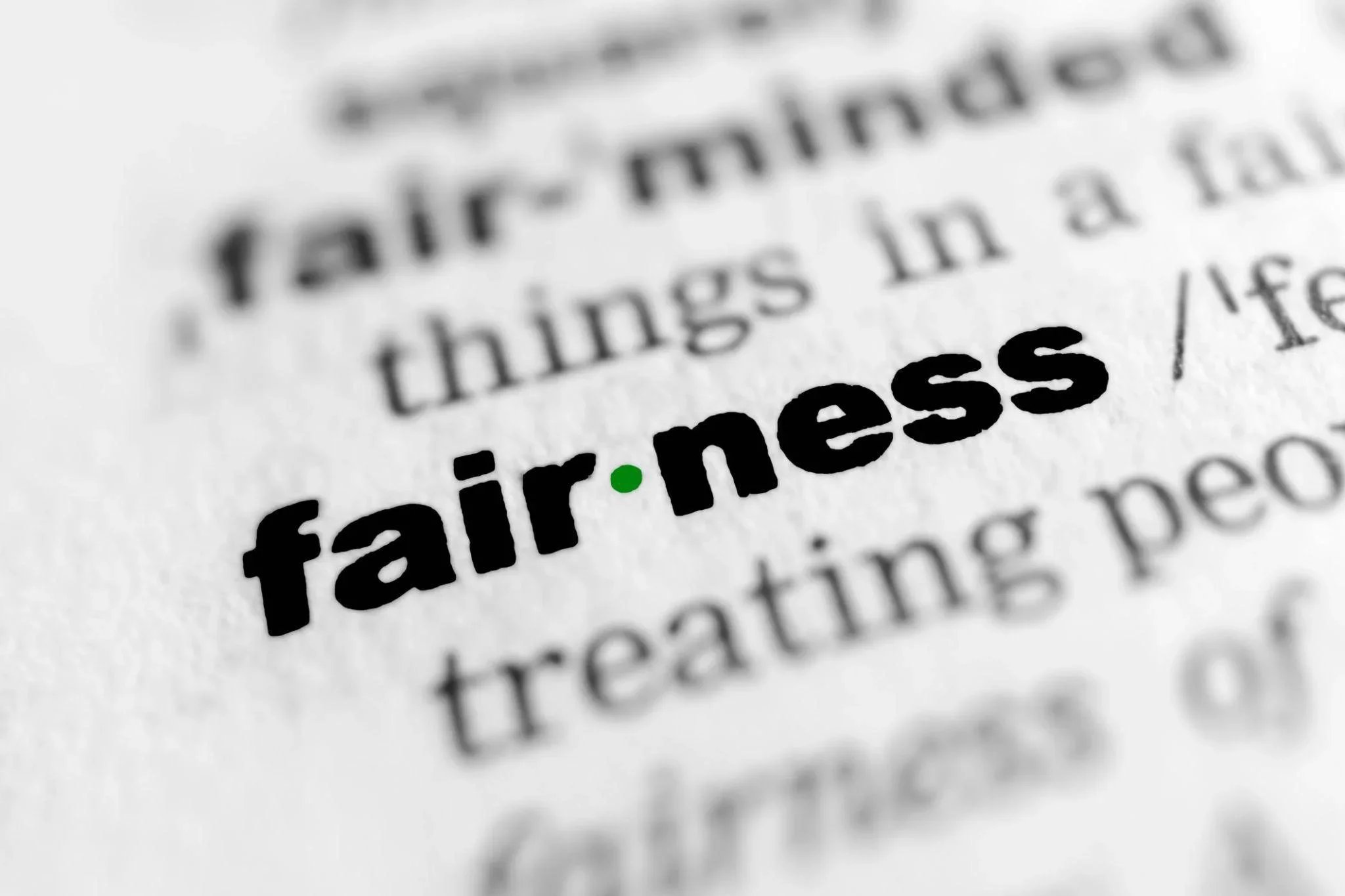
I’ve been reminiscing about those times recently. Not thinking about basketball. Thinking about fairness.
A different type of court brought that word into the national conversation last week, and almost instantly, everyone seemed certain they knew exactly what it meant.
It caught my attention because I’d heard it being used against me. In eighth grade, I was told I made the game unfair. A year later, I heard the same about Mike Munchak. Neither of us had cheated. Neither of us had broken a rule. We simply arrived on basketball courts with bodies that were different than everyone else's.
It happens every day.
Parents worry that someone else’s advantage will cost their child a starting position, a college scholarship, or maybe even the professional career they are certain is waiting. (It's not.) So, they want that obstacle removed.
What they don’t realize is that they will never level the playing field. There is always another advantage waiting. Remove the tallest player and someone else is quicker. Remove speed and someone else is stronger. Remove strength and someone else sees the game better.
It's never fair. But neither is the word.
Most words aren't
Fairness. Merit. Justice. Freedom. Equality. Leadership. Innovation. Culture.
They’re useful words. But also dangerous because they often become substitutes for the thinking they’re meant to inspire.
We stop turning them over in our heads. We stop looking underneath them. We forget to ask what we mean by them, where they fit, where they don’t, and whether they are carrying more weight than a single word was ever meant to carry.
Sometimes the smallest words ask us to do the biggest thinking.
Like fair.
We divide athletes by age because we believe that makes competition fairer. We divide them by sex and gender for the same reason. Some sports divide competitors by weight, others by skill, disability, or experience.
None of those systems creates a level playing field.
They simply reflect our judgment about which differences matter and which ones don’t.
My eighth-grade opponents wouldn't tell you the field was level. Nor would those who had to go up against Mike Munchak.
The order created to make life fair is an illusion. It always has been.
I’ve written before about the importance of asking better questions. That’s what granularity is. It’s the discipline of resisting the first explanation long enough to discover a better one.
Culture. Leadership. Innovation. Diversity. Inclusion. Trust. Strategy. Fairness
We say the word, nod as though we understand one another, and move on.
But just as there has never been a perfectly level playing field, there has never been a perfectly complete word.
Words, especially those we build decisions around, shouldn’t end important conversations. They should begin them. The moment one word feels like an answer, it’s time to ask another question.
It's only fair.

Some Things Never Change
We have a habit of becoming fascinated by what’s new.
Sometimes that makes us forget what actually matters.
Every day, I hear someone say the world has changed.
Maybe so.
But go back just six years. Before Covid. Before we all became interior designers specializing in Zoom backgrounds. Before every conversation found its way to artificial intelligence. Before every expert seemed convinced that everything we knew about business had just become obsolete. When life felt a little more predictable and a little less apocalyptic.
What were clients, customers, and members looking for then?
Someone who understood the problem. Someone who could solve it. Someone who charged a fair price. Someone worth going back to.
Now ask the simpler question.
What are they looking for today that's any different?
...I'll wait...
Better yet. Go back six hundred years.
A woman walks into a bakery with a few coins in her hand. Her family needs bread for supper. She doesn't ask how the oven works. She doesn't ask where the flour came from, or how it was kneaded. She wants to know when the bread will be ready, how it will taste, and what it costs.
The oven may have mattered to the baker.
The bread is all that mattered to the customer.
And that's all anyone has ever wanted. Someone who understands the problem. Someone who can solve it. Someone who is fair. Someone worth coming back to.
The tools may be different. The conversations aren't. Technology often changes who solves the problem and how. But it never changes what people expect from the one who does.
So now, I watch organizations pour more money and resources into the newest tools, and less into the things that have always mattered most. And I know one thing as surely as I know anything.
They are going to lose.
History is littered with shortcuts that promised to replace the hard work of becoming attentive.
None of them did.
The woman never cared about the oven.
She cared about the bread.
Just like today. Just like yesterday. Just like tomorrow.
Remember that and you'll be fine.
Congratulations, You’re Forgettable
If you follow the crowd, read this. If you avoid the crowd, read this. Sooner or later, everyone has to decide what they’re unwilling to become.
I read somewhere between sixty and eighty books a year. There is nothing remarkable about that; plenty of people read more.
The strange part is that I only read books published in the current year.
If a book came out in 2026, I'll read it. If it came out in 2025 and I missed it, I won't.
If it was published in 1983 or 1883 and universally recognized as a masterpiece, I will step over it on my way to a mediocre new release written by an author I never heard of.
I’ve been told this is strange.
I’ve also been told it’s irrational, limiting, and evidence of some undiagnosed condition that requires a specialist and several prescription medications.
They're right, and I can't defend it.
Maybe it's a mild form of OCD. Maybe it's my way of trying to stay current. Or maybe I enjoy discovering an idea before everyone else.
When I tell people this, they usually look at me the way you might look at someone who admits they keep a second refrigerator exclusively for mustard. Not dangerous. Not criminal. Just concerning.
But over the years I've realized something: everyone has a thing.
A friend started an album collection in 1972 and organizes each record, not by year, but by color. My roommate in college unplugged every appliance in our apartment before leaving in the morning. I once knew a woman who watched movies only after reading the spoilers. Uncertainty made her uncomfortable. She treated plot twists the way bomb squads treat suspicious packages.
None of it makes sense. All of it makes sense. Because people are strange.
At least they used to be.
Lately it feels as though the world has become engaged in a massive project to remove all of our weirdness. Every app promises optimization. Every influencer promises a system. Every plastic surgeon promises a face we have all seen before. Every technology promises to eliminate friction.
The message is always the same: there is a correct way to live, a correct way to think, a correct way to eat, a correct way to look, a correct way to work. A correct morning routine, a correct workout, a correct supplement, a correct answer. All that remains is for you to stop being yourself long enough to adopt it.
And I have noticed that none of the people selling these systems ever seem particularly happy. They always look exhausted. Their lives appear to consist of measuring things and then posting about the measurements.
"Here is my sleep score."
"Here is my recovery score."
"Here is my hydration score."
At some point, someone will announce that their digestive system is operating at peak efficiency. There will be charts. There will be metrics. Someone will inevitably write a book about it. Mel Robbins will have them on her podcast. Everyone will applaud.
The people I have admired most in my life were never efficient. But they were memorable.
My father would answer a simple question in a way that required refreshments. If you asked what time it was, there was a good chance you’d hear about a watch he owned in 1974 and the man who sold it to him. (I inherited this "gift.")
My aunt collected things nobody else would have noticed. Not valuable things. Not rare things. Just objects that, for reasons known only to her, deserved a second chance.
My former neighbor spoke to the plants in his garden. He worried about them. He photographed them. He checked on them after storms. I’ve known marriages that received less attention.
None of them were optimized. All of them were unique. Their oddities were not flaws; they were signatures. The things that made them difficult to understand were often the same things that made them worth knowing.
Maybe being weird serves a purpose. Maybe it is evidence that something inside us has resisted standardization, a reminder that we are not products moving through an assembly line. We are people. Unique people. Inconsistent people. People who read only new books, or old books, or no books at all. People who do things for reasons they cannot fully explain.
I worry that we are becoming so obsessed with efficiency that we are sanding away the rough edges that make human beings distinct.
We are automating our writing. Outsourcing our thinking. Filtering our faces and our emotions. Following identical routines, consuming identical content, repeating identical opinions. Social media promised self-expression and somehow delivered everyone a uniform.
We claim to celebrate individuality but embrace technologies that are specifically designed for conformity.
The world will keep trying to make us more efficient. Organizations, especially the big ones, will follow the same playbooks, use the same tools, and repeat the same ideas because that’s what everyone else is doing.
Maybe they’ll win.
I’m not betting on it.
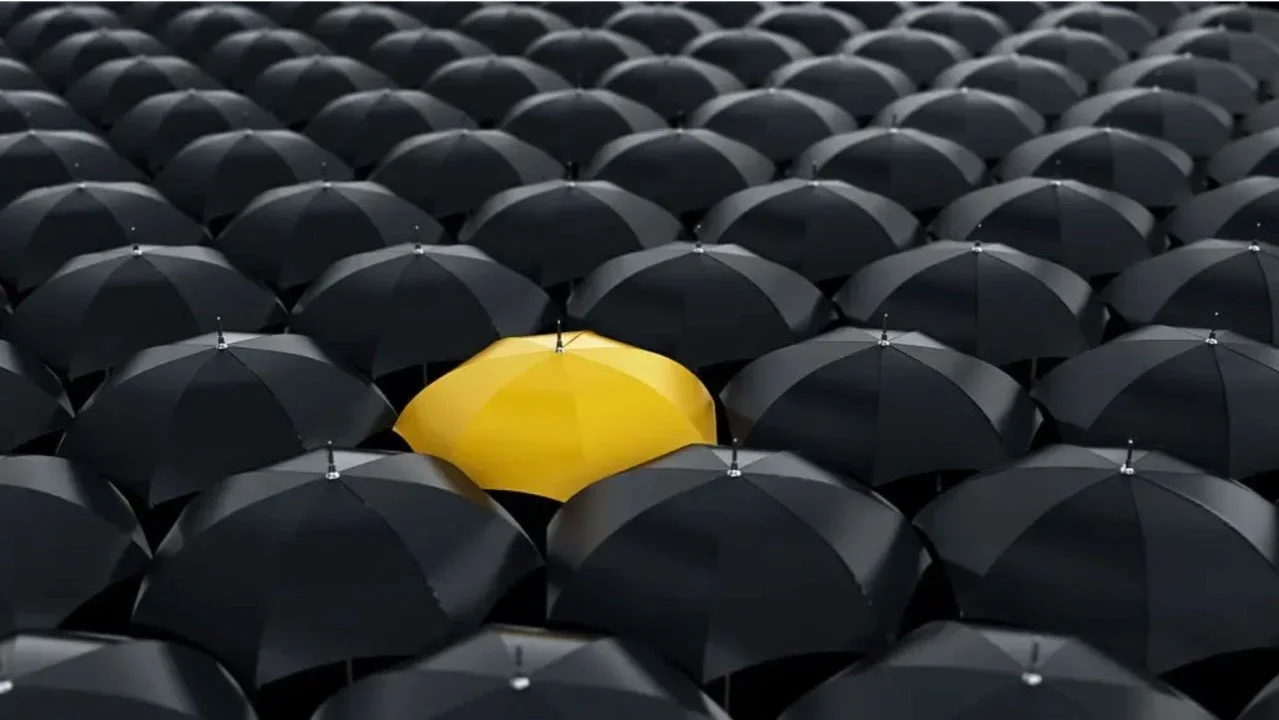
Because when everyone becomes interchangeable, the advantage belongs to those who remain interesting and unforgettable.
I Quit
Most people think they know what quitting looks like. I’m not so sure.
“I quit.”
Most leaders dread hearing those words.
They imagine an employee walking into their office, closing the door, and announcing they are leaving. Exit interviews follow. Questions get asked. What happened? Could this have been prevented?
But there is a different kind of quitting they should fear even more. And if I’m right, it will be accelerated by those two letters everyone suddenly seems unable to stop talking about.
The trouble is that this kind of quitting doesn't announce itself. Nobody submits a letter. Nobody clears out a desk. Nobody updates their LinkedIn page.
It begins the moment someone decides that further effort is unnecessary.
Last week, I wrote about an essay I shared with two friends. One encouraged me to publish it. The other responded with a question.
“So what?”
At first, I thought they disagreed. Now I think they were both warning me about the same thing.
Resignation.
The first saw resignation in the reluctance to speak up. The second saw it in the refusal to step up. (Further effort is unnecessary.)
Both reminded me of a certain type of troublemaker that lurks inside organizations.
Every office has a person who makes everyone else fantasize about a minor electrical fire.
Not a serious one. Nothing tragic. Just enough smoke to end a meeting before they can ask their next question.
You know who they are. The presentation is over. Everyone has agreed. People are already reaching for their phones and thinking about lunch when a hand slowly rises into the air.
“Can I ask something?”
No. You cannot.
You have already asked something. Four somethings, actually.
Yet these people persist. They want to know why we’re doing it this way. They want evidence. They want to revisit assumptions everyone else worked very hard to stop thinking about fifteen minutes ago.
They are exhausting.
But they are also the reason so many bad ideas never become disasters.
Technology, organizations, and markets are now moving to exterminate these instigators. Accept this. Trust the system. Stop fighting the current. Much of modern life is organized around reducing effort. We celebrate speed, convenience, and efficiency like medieval villagers celebrating the arrival of indoor plumbing.
Friction is increasingly treated as the enemy.
So, more and more, answers arrive before we have spent time wrestling with the questions.
It is difficult to challenge a conclusion that appears to be supported by an ocean of information. It is difficult to keep asking questions when chatbots and agents are designed to produce answers instantly. It is difficult to believe your judgment matters when every screen around you suggests that someone (or something) has already done the thinking.
The result is not obedience. It is resignation. The quiet surrender of curiosity, imagination, and responsibility to participate in the difficult work of figuring things out.
(If you need something to concern you, start with this.)
Which brings me back to my friend who asked, “So what?” She wasn’t questioning whether something was wrong. She was refusing to let the conversation end there.
If you are leading people, there will come a day when nobody raises their hand. That is the day to panic.
Because most organizations worry about the people who quit and leave.
Today, they should worry more about the people who quit and stay.

Who is all this for?
Not long ago, someone asked if my silence over the past several months meant something was wrong. I told them yes. This essay is the result.
A few weeks ago I wrote an essay and sent it to two friends whose opinions I value. The first loved it. She told me she wished more people would say these things out loud. The second responded with a question that has followed me around ever since.
“So what?”
She wasn’t being dismissive. She wasn’t disagreeing. She simply wanted to know what I hoped the essay would accomplish.
At the time, I wasn’t sure how to answer.
The essay was a long catalog of frustrations. Artificial intelligence. Social media. Billionaires. Politicians. Influencers. Consultants. The growing feeling that much of modern life is being redesigned by people who understand how to capture attention, extract value, and optimize systems but seem remarkably uninterested in whether the result leaves human beings happier, healthier, wiser, or more connected.
Everything in the essay was true, or at least true enough to me. Yet her question lingered because it exposed something I hadn’t recognized while writing it. The essay described what I was angry about, but not what I was grieving.
It took me several weeks to understand the difference.
Like everyone else, I have spent the past few years surrounded by predictions about artificial intelligence. Depending on which expert is speaking, it will save us, destroy us, liberate us, impoverish us, enlighten us, replace us, or somehow accomplish all six before lunch.
The predictions themselves don’t bother me nearly as much as the enthusiasm with which they are delivered. Entire professions are discussed as though they were obsolete appliances waiting to be hauled to the curb. Careers that once took decades to build are reduced to inefficiencies in need of technological correction. Human beings become variables in a spreadsheet.
What finally struck me was that these conversations are not taking place in a vacuum.
Somewhere a high school or college student is trying to decide what to study. Somewhere a recent graduate is refreshing job listings for the twentieth time that day, searching for experience nobody seems willing to give. Somewhere a young couple is holding a newborn child and wondering what kind of world awaits them. And while they are trying to imagine a future, the rest of us seem strangely eager to explain why that future may not have much use for them.
Imagine being eighteen years old and hearing that every day.
The profession that interests you may disappear.
The skills you are learning will become irrelevant.
The work you hope to do will soon be done by machines.
The opportunities available to your parents will never exist for you.
Then imagine hearing all of this delivered with a shrug.
What surprises me is not that so many young people feel anxious. What surprises me is that we seem surprised by it.
When I was younger, the future was uncertain too. There were recessions, layoffs, failures, and disappointments. But beneath all of it was an assumption that there would be a place for us somewhere. We worried about finding it, not whether it existed.
Increasingly, that invitation feels absent.
We tell young people they are the future, but much of our behavior suggests otherwise. We remove entry-level positions and call it efficiency. We reduce mentorship and call it productivity. We celebrate technologies that eliminate opportunities for newcomers before they have the chance to become experienced enough to matter. Then we wonder why so many feel adrift.
Work has never been solely about earning a living. A first job is one of the ways a society welcomes someone into adulthood. It is where competence becomes confidence and where contribution becomes identity. It is where an older generation quietly communicates an important message: We need you. Come learn. Come help build what comes next.
Every healthy society extends that invitation.
Every healthy society creates room for the people who follow it.
Lately, I worry that we are becoming more interested in optimization than obligation. We speak endlessly about innovation but far less about inheritance. We celebrate what technology can do while spending remarkably little time discussing what young people are supposed to become.
Perhaps that is why my original essay never felt complete. I thought I was writing about artificial intelligence, but I wasn’t. I thought I was writing about politics, social media, and modern culture, but I wasn’t. Those were only symptoms.
What I was really writing about was the growing sense that we are asking young people to inherit a world that no longer seems particularly interested in making room for them.
That strikes me as both unfair and dangerous.
A society can survive technological disruption. It can survive economic change. It can survive political turmoil. What it cannot survive indefinitely is convincing the next generation that they are unnecessary.
People have asked whether my several months of silence means that I am sick, the answer is yes.
Not physically.
Not of artificial intelligence.
Not of change.
Not even of progress.
I am sick of hearing adults discuss the future without remembering who will live in it.
The Moment We Stopped Learning
Our discomfort with ignorance begins early. Embracing not knowing may be the most important skill for parents, educators, and leaders in a rapidly changing world.
There’s a story we like to tell about childhood.
It goes like this: children learn quickly because they are growing quickly. Their brains are expanding, their bodies developing, everything is scaling at a rate that will never happen again. Of course they learn more between one and six than at any other point in life. Look at the physical evidence.
It’s a neat explanation.
It’s also the wrong one.
Because if learning were simply a function of growth—of biological expansion—then adulthood would look very different. A thirty-year-old, with a fully formed brain and decades of accumulated experience, should be capable of intellectual leaps that dwarf anything a three-year-old could manage.
But that’s not what we see.
What we see is the opposite.
A three-year-old learns a language. A five-year-old builds a working theory of the world—physics, emotion, intention—out of almost nothing. And then, somewhere after six, the curve flattens. Not completely. But unmistakably.
So something else must be happening.
Consider the difference not in capacity, but in posture.
A child under six has a peculiar relationship with ignorance. She doesn’t experience it as a gap. She experiences it as a starting point. Ignorance isn’t something to fix. It’s something to use.
Watch how a young child asks questions. Not cautiously. Not selectively. Relentlessly. “Why?” is not a request for information. It’s a strategy. It’s how she moves through the world. Each answer isn’t a conclusion; it’s a trigger for the next question.
Now imagine an adult in a meeting doing the same thing.
They wouldn’t last long.
Somewhere along the way, ignorance changes its meaning. It becomes social. It becomes visible. It becomes risky. You stop asking questions not because you’ve run out of them, but because you’ve become aware of what those questions signal.
“I don’t know” stops being a doorway. It becomes a confession.
There’s a moment when learning changes.
It tends to arrive around the same time school does. Grades appear. Gold stars. Report cards. Eventually diplomas, then titles. A system takes shape. It measures what you know, rewards how quickly you can show it, and keeps a careful record of both.
A six-year-old begins to understand that knowledge has status. That knowing things gets rewarded. That not knowing things—especially in public—doesn’t.
And once that shift happens, everything else follows.
Before six, learning is expansive. It is driven by ignorance. After six, learning becomes compressive. It is driven by the need to eliminate ignorance...quickly, quietly, and preferably out of sight.
We stop exploring what we don’t know.
We start managing it. Hiding it.
Here’s the paradox.
The period of greatest intellectual growth in our lives is not the period when we know the most. It’s the period when we are most comfortable not knowing.
And the moment we lose that comfort, the nature of our learning changes, not because our brains stop growing, but because our relationship to ignorance does.
If intellectual development truly followed physical development, adulthood would be a time of staggering cognitive expansion. We would be endlessly experimental, wildly curious, constantly dismantling and rebuilding our understanding of the world.
Instead, we become efficient. Competent. Certain.
Which is another way of saying: careful.
Careful about what we don’t know. Careful about what we ask. Careful about how we appear.
So the real story isn’t about growth at all.
It’s about restraint.
Between one and six, there is very little standing between a child and her ignorance. No filter. No shame. No performance. Just a direct, unmediated engagement with what she doesn’t understand.
After that, layer by layer, things get added. School. Evaluation. Comparison. Identity.
And with each layer, ignorance becomes harder to access, not because it disappears, but because it becomes something we learn to avoid.
The tragedy, if there is one, is not that we stop learning the way children do.
It’s that we mistake the reason.
We tell ourselves we’ve outgrown that phase. That it belonged to a time when we were still developing.
But the truth is simpler, and a little more uncomfortable.
We didn’t outgrow it.
We learned to stop.
Learning to Stand on Level Ground
The world isn’t collapsing. It’s reshaping itself. The real question is whether those who once benefited most from the old order are willing to evolve with the new one.
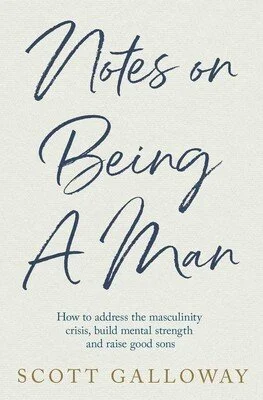
Scott Galloway is one of those people who likes to say “studies have shown.” He speaks in charts and conclusions, the kind of language that lets him pretend he’s simply delivering the facts, even when he’s already decided what those facts should prove. For the past year, he has been telling audiences that men are in crisis. Now he’s written a book about it, Notes on Being a Man, as if the problem were so urgent it needed a permanent place on the shelf.
I don’t object to him having an opinion. People have opinions all the time—messy, contradictory, half-formed. What I object to is the part where opinion gets dressed up as science, especially by someone who doesn’t seem to understand the difference. The things Galloway calls data often feel more like longing in numerical form, a kind of nostalgia you can plot on a graph. A desire for the world he remembers, where men understood their place and weren’t asked to share it.
And maybe this is the point—that challenging his argument isn’t really about him. It’s about the way people cling to an old world even as it slips out from under them. This newsletter has always been about that problem: adaptation. The uncomfortable idea that equality isn’t decline, and fairness isn’t loss, except to those who benefitted from the imbalance.
Galloway’s version of events is simple. Boys are falling behind in school. Men are leaving the workforce. Marriages are ending. Suicides are rising. He describes these as signs of something specifically wrong with men, something unprecedented and alarming. A collapse. A crisis.
But none of this is new. None of it started with men. Certainly not white men. These patterns have been part of other people’s lives—women’s lives, Black men’s lives, the lives of poor families—for generations. Their pain never produced a crisis narrative. Their struggles were simply absorbed into the background of what society calls “normal.”
Men have long made up the majority of people in prisons, shelters, and obituaries. When those faces were Black, the story was about personal failure and responsibility. When they turned white, it became a crisis rushed into the spotlight. The suffering didn’t change. The lens did.
Even Galloway’s use of data obscures more than it clarifies. He points to suicide rates as proof that young white men are in unique danger. But girls and young women attempt suicide at roughly the same or higher rates. The difference is the method. Boys use more lethal means, which turn despair into death more often.
He also points to homelessness as evidence of male decline. It’s true that men make up the majority of the unhoused, but that statistic misses the hidden cost of survival. Many women avoid homelessness by staying in toxic or abusive homes. Safety traded for control. Their suffering doesn’t disappear; it just becomes harder to see. They trade one kind of risk for another: danger for a roof, silence for a small degree of control. Their endurance is invisible because we don’t count the people who suffer quietly, behind walls.
Galloway’s deeper argument is that men once held a natural place in the world, and that something essential has been taken from them. But that place wasn’t natural. It was constructed over centuries. The achievements of men have been held up as examples of hard work and personal responsibility; often ignoring the fact that much was underwritten by centuries of unpaid Black labor, the exploitation of the poor, and the constrained ambitions of women. What felt like order was simply power arranged to look inevitable.
From the moment they can walk, boys are taught the hierarchy. Don’t cry like a girl. Don’t run like a girl. Don’t throw like a girl. It sounds like advice about toughness, but it’s really about superiority. Don’t lessen yourself. Don’t lower yourself. Don’t be like them. A steady whisper that to be compared to a girl isn’t merely an insult to boys; it’s a warning. They learn early that tenderness is weakness, that emotion is danger, that power is safety. By the time they become men, inequality isn’t just a system, it’s an instinct. So when equality finally arrives, it doesn’t feel like justice; it feels like demotion.
What Galloway calls decline is just disorientation. Men trying to find a place in a world that no longer revolves around them. But discomfort isn’t oppression. It’s the beginning of evolution. The ground hasn’t vanished; it’s simply leveled (or, at least, trying to). The traits that once defined masculinity—control, dominance, emotional isolation—don’t function well in a world built on connection. The skills men were taught to avoid—empathy, collaboration, fairness—are suddenly the ones that matter.
Equality was never going to feel gentle. Change rarely does. Every species resists transformation until resisting becomes too costly. This supposed “crisis” is simply resistance in plain view. A refusal to adjust to a world that no longer hands out worth according to gender.
But adaptation offers something better than nostalgia. The world doesn’t need men to reclaim a place that was only ever available to them. It needs them to imagine a new one: defined not by possession, but by contribution; not by dominance, but by cooperation.
The directive is the same as it has always been: adapt or die. Not in the physical sense, but socially, relationally, culturally.
Some men can long for a past that only ever worked for them. Or they can step into a future where strength is measured by the willingness to change.
Scott Galloway and others have it wrong: the world isn’t conspiring against men. It’s simply continuing without those who refuse to move with it.
The Companions We Take For Granted
In a world obsessed with growing faster and standing out, there’s wisdom in the things that grow slowly, stay rooted, and hold their place.
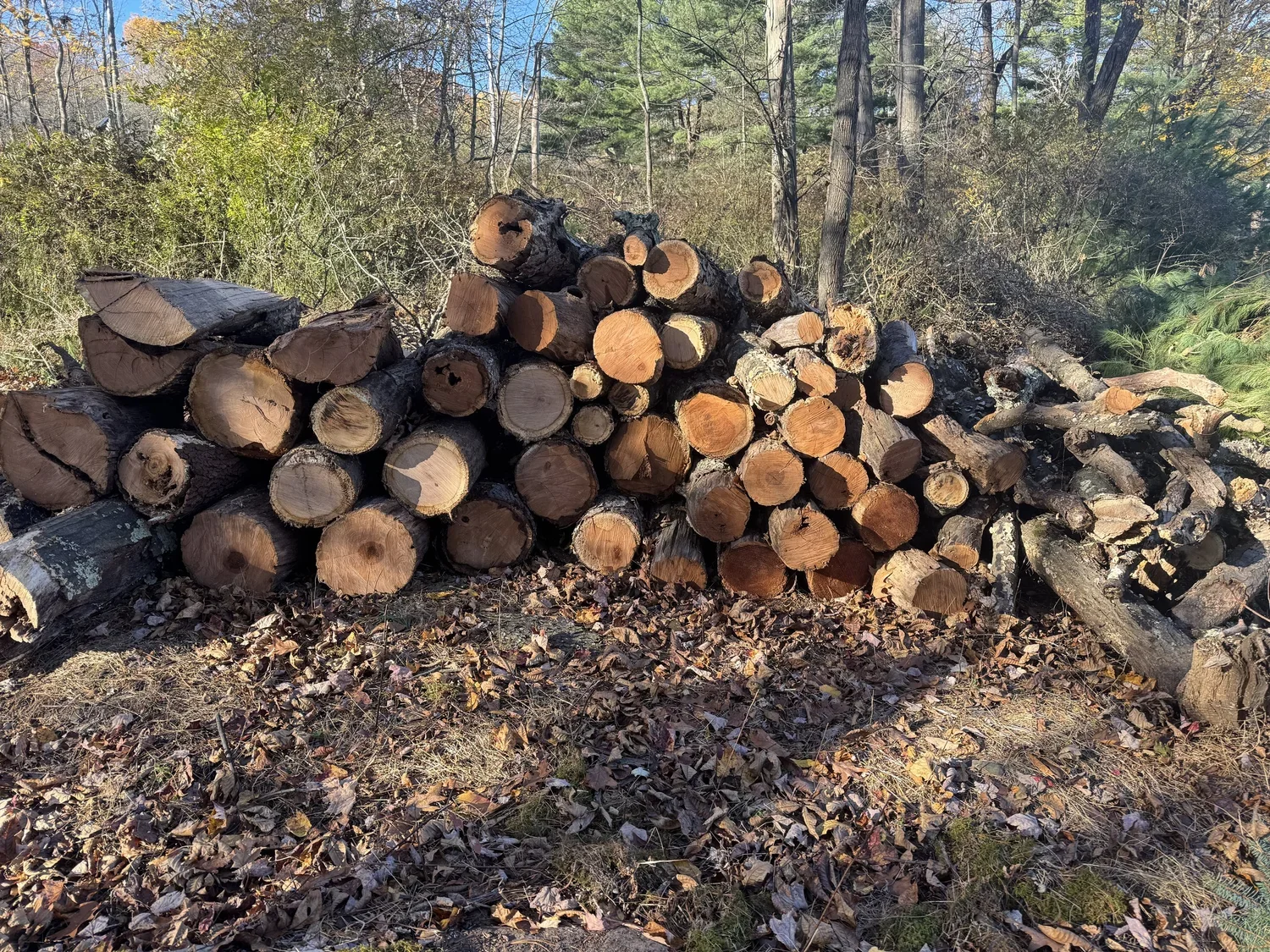
Over the past few weeks, I’ve had to cut down several trees in my yard.
Some were dying, some were leaning too close to the house, their roots loosened by years of rain. It felt necessary. But when the work was done, the yard didn’t feel safer. It felt emptier.
I stood among the stumps, looking at the rings that marked their years. Each circle told a story. Good seasons and bad, wet summers and dry ones, storms survived, winters endured. They had stood through it all, quietly doing what trees do. And then, one morning, I stopped them.
Most of us, at some point, have had a relationship with a tree.
Sometimes up close: the ones we climbed as children, swung from, or hid behind. Sometimes at a distance: the one outside your window that caught the first snow or the last of the evening light. The one we gathered around in photos, like a silent but essential member of the family.
When we’re young, a tree can feel like a friend, a companion that listens without interruption. You sit beneath it to read, to think, or to be alone in a way that doesn’t feel lonely. Later, when you’ve outgrown climbing, it becomes an accomplice, the wingman on a teenage date, offering shade, a place to sit, somewhere to carve initials and symbols when words feel too risky. And after that, it becomes a witness, steady and unchanging, holding its place while the rest of your life keeps moving.
It’s a quiet kind of friendship, the kind you only realize mattered once it’s gone.
Thinking about all this, I started to wonder about loyalty.
Dogs are the ones who get credit for it, and they deserve it. They greet us like heroes, love us through our flaws, forgive us again and again.
But when I think about what truly stays with us, I’m not sure dogs should hold the title alone. Trees have been loyal too.
They don’t wag their tails or follow us from room to room. They don’t need us to notice them. They just stand, patient, steady, giving. They shade our homes in summer, block the wind in winter, and clean the air we breathe. They offer color in spring, fruit in autumn, and a place to rest all year long.
They expect nothing in return.
If loyalty means showing up every day and quietly making life better, then trees have been the most faithful companions we’ve ever had.
Scientists say that trees talk to one another, not in words but through their roots. A network beneath the soil connects them, letting them share water and nutrients, even warnings of danger. When one tree is sick, the others feed it. When a young one struggles, the old ones send it sugar through the ground.
The forest, it turns out, isn’t a collection of individuals. It’s a family. A community.
Meanwhile, we live in a world that has forgotten that truth. We’re told to stand out, to get ahead, to grow taller than the rest. We’ve confused height with worth, competition with purpose.
But trees know something better.
They grow upward when they’re young, reaching for the light. But as they age, they grow outward, thickening, strengthening, deepening their roots. They stop trying to take all the light for themselves. They learn to hold it, and share it.
That’s not weakness. That’s wisdom.
Every autumn, they let go of what no longer serves them. They don’t call it loss. They call it renewal. And every spring, they start again, quietly, without ceremony.
It’s the simplest act of resilience I know.
Maybe that’s why I’m writing this, because I didn’t want to just cut them down and walk away.
They did more for me than I ever noticed. They cooled my house, shielded it from storms, and gave my son a place to climb, a place to grow up. They painted new pictures outside my window every season. They stood guard through every change, through years I barely remember now.
Maybe this is my way of saying thank you—for the shade, for the air, for the stillness, for the lesson.
That sometimes the truest friends don’t walk beside you. They stand beside you.
And they hold their place.

That’s Weird! The Brain’s War on Different
We like to believe we’re open-minded, but the moment something looks different, our brains start protecting us from it.
Every so often, I do a thought experiment that works better in slides than in writing. Mostly because the reaction is instant—the laughter, the confusion, the disgust. But let’s try it here.
First, imagine a plate of spaghetti and meatballs, followed by an ice-cream cone for dessert.

Would you eat that?
Of course you would.
Now picture an ice-cream cone filled with spaghetti and meatballs, beside a plate of ice cream and a slice of garlic bread.

Would you eat that?
Most people recoil.
They grimace. They shake their heads. They say it’s gross.
And yet, from a nutritional and digestive standpoint, the two meals are identical. Same ingredients. Same sequence.
So what’s the difference?
It’s weird.
And that’s the thing about our brains. They don’t like weird. They’re built to seek recognizable patterns, to conserve energy, to fill in blanks using what they already know. Predictability is efficient. Novelty is expensive. Weird, therefore, feels dangerous.
That instinct once kept us alive. But today, it does something else.
It makes us suspicious of anything that doesn’t look familiar.
It’s why some people practically hyperventilate at the sight of a rainbow flag.
Why legislators push aside all other business to debate bathrooms and pronouns for a group that makes up a fraction of one percent of the population.
Why a kid with a purple mohawk and black lipstick gets side-eyed in a coffee shop for the crime of self-expression.
Why someone with autism or in a wheelchair still draws stares as if their conditions were contagious.
It’s why I’ve had to quietly push my own internal STFU button on airplanes when someone mumbles to another passenger, “Take the goddamn mask off.”
Weird, to them, means wrong.
But here’s the irony: you can’t be curious about some things and closed-minded about others.
The brain’s reluctance doesn’t work that way. It’s a global setting.
If you train it to reject what it doesn’t recognize, it will do that everywhere—in your politics, in your workplace, in your relationships, in your ideas.
That’s why you won’t eat spaghetti from an ice-cream cone.
It’s why you resist learning a new system, trying a new tool, or doing something in a way that feels unfamiliar.
Your brain isn’t protecting your taste. It’s protecting your patterns.
The world is only going to get weirder.
Technology will bend what we think of as normal. Culture will keep redrawing its boundaries. People will keep showing up in ways that challenge our assumptions.
So practice being curious and open to novelty.
Because the next decade will belong to those who can look at the unfamiliar, and instead of flinching, lean closer with wonder.
And if you ever doubt that, make yourself a spaghetti-and-meatballs sundae.
Then see which part of you wins. The critic or the risk-taker.
Only one will serve you well.
If Only There Were A Button...
A simple fix for a world that won’t stop talking.
I did not plan to write this. I planned to sit quietly in the back of a car on the way to the airport, zoning out like a responsible adult. Instead, my driver decided the ride was an emergency town hall meeting, and it was his turn to take the podium.
For forty minutes he delivered a monologue about how civilization is teetering on the edge, citing sources that included “common sense,” “everyone knows,” and “you can look it up.” The list of culprits included Democrats, trans people, Black Lives Matter, lawyers, the medical establishment, immigration, Cardi B, California, and a surprising grudge against Taco Bell. At one point, I realized this was not a conversation. This was a hostage situation.
When he didn't take the hint that I wanted him to stop, I began fantasizing about a single button that could deliver my feedback instantly and universally. A less-than-polite but clear reminder that not every thought needs to escape someone’s mouth.
This essay is about that button.
I have reached a stage in life where my most fervent innovation idea is not a flying car or a universal cure for disease. It is a button. On social media, on our phones, on our TVs, everywhere that humans feel compelled to share a thought. Labeled, quite plainly, STFU.
The world has made astonishing advances in communication technology, all seemingly designed to give people more places to express themselves. There are now millions who wake up every morning determined to share their opinions on everything from the geopolitics in Uganda to whether lizard-people have infiltrated the government. Some insist there’s a secret branch of physics that “proves” the Earth is flat. Others claiming sunscreen causes athlete's foot.
These are often the same people who believe cultural sophistication comes from a weekend at an outlet mall and whose medical expertise is based on a cousin who once shadowed a dental hygienist for half a day.
This is precisely why a simple “thumbs-down” no longer feels adequate. Thumbs-down is something you reserve for a mediocre talent-show performance, not for someone connecting the price of eggs to whatever Taylor Swift is doing. The STFU button would give us a necessary midpoint between polite indifference and the desire to throw your phone into a lake.
Because the problem is not just your uncle posting conspiracy theories from a basement full of expired canned goods. The loudest offenders are often the ones paid to share their certainty.
The STFU button would certainly apply to presidents, cabinet officials, and politicians, and to cable news hosts and guests who shout for a living as if the fate of the nation depends on their volume.
It should also cover sports analysts for whom the entire meaning of life can be traced to a tight end’s hamstring injury, billionaires convinced that their bank account qualifies them to explain humanity, and business leaders who congratulate themselves for caring about workers, provided those workers do not ask for things like time off or oxygen.
This includes the well-known Wall Street bankers who deliver “back in my day” speeches about returning to the office while ensuring their young employees can’t afford to live anywhere near it.
There are the inane podcasters opining about the structural flaws of food stamp programs, pausing only to plug tickets for their next MMA cage match. The 20-year-old fraternity bros who learned about feminism last week but are now ready to present their findings to Congress. And the “wellness” gurus selling mushroom dust that promises you will live longer than the Galápagos turtles.
There are others, of course:
The crypto evangelists who claim getting rich is easy while asking their mom for gas money.
Former high-school classmates now offering bold new strategies for nuclear disarmament, despite barely passing sophomore history.
TikTok life-coaches who record every moment of their “quiet morning routine.”
Adults who explain science by beginning with “As a parent…”
Tech wizards convinced the only thing standing between us and utopia is their app that is still in beta.
The CEO who calls himself a visionary for finding new ways to cut payroll.
Some voices would break the button.
And yes, I fully acknowledge that such a button would almost certainly be used on me. I write essays like this one. Occasionally, I have a thought that is misguided or tedious or simply too long for anyone to care about. I am prepared to accept a STFU now and then. Democracy, after all, demands sacrifice.
The idea is not to silence the world. It is to restore a baseline of sanity. A friendly reminder that not every passing notion should be broadcast to billions. Sometimes the greatest contribution a person can make to society is to be quiet. Say nothing.
If someone would just add that button, I promise to listen more. Or at least hit mute on myself occasionally. Everyone wins that way.

The Future Needs Lawyers, Not Investors
When profit tries to own justice, we all lose something that cannot be bought back.
For most of my career, I helped large corporations. Organizations that had hierarchies, five-year plans, KPIs, and entire departments dedicated to making sure no one ever colored outside the lines. Then, a little over a decade ago, I was introduced to the world of law firms.
It felt like landing on a different planet.
Nothing worked the way I expected. Lawyers were entrepreneurial and self-directed, loosely tethered to the firm around them. They shared a roof, a brand, and a set of resources, but underneath it all were hundreds of independent businesses moving in parallel. WeWork before there was a WeWork. They could leave whenever they wanted, take their clients with them, and rebuild across town without missing a beat. The structure rewarded autonomy more than alignment.
It made me wonder how long a system like that could hold, and whether someone or something would eventually try to make it more controlled, more measurable, more like every other business.
That moment seems to have arrived. Private equity spotted an opportunity, and law firms, stretched by rising costs and talent pressure, are tempted by the promise of order. Efficiency sounds good. Profitability sounds even better.
Private equity is famous for streamlining organizations that have grown complicated or inefficient. The pitch is appealing. Better systems. Cleaner operations. Stronger margins. Many industries, worn thin by rising costs and market competition, see these promises as a lifeline.
The consequences arrive later.
Look at industries where PE has already made its mark. Independent healthcare facilities, local media, public housing. Revenue goes up and so do prices. Staffing goes down and so does care. What used to serve a community now serves a spreadsheet. Long term value gives way to short term extraction.
This is capitalism operating precisely as designed. Which is the problem.
Because the legal profession cannot be treated like a retail chain or a dental clinic. It plays a very different role in society.
We are living in a time defined by forces that no longer pretend to serve us. Artificial intelligence already influences decisions that determine our finances, our freedoms, and our futures, while those responsible shrug at the impossibility of oversight. Governments collect intimate data faster than they can protect it, claiming security as they erode privacy. Technology companies surveil our lives with a level of precision once reserved for intelligence agencies, extracting profit from our fears, desires, and vulnerabilities.
Meanwhile, the climate destabilizes under the weight of corporate indifference, and the same actors who accelerated the crisis now seek to monetize the remedies. Space is no longer an arena for exploration but yet another battleground for power. Data has become a weapon used against the very citizens who generate it. And misinformation is deployed as a deliberate strategy by political and commercial interests that benefit from division, confusion, and doubt.
These systems are not accidentally dangerous. They are intentionally exploited.
They grow stronger while ordinary people grow more powerless.
Most of us do not have the resources to fight back against any of this. We have no shareholders or lobbyists to advocate for us. We have no control over the systems reshaping our lives.
Except through the law.
The law turns vulnerability into a legal argument. It says a person can confront a company that has violated their privacy. It says a community can demand accountability when their land or water has been harmed. It says even the most powerful actors must follow the rules.
In other words, the law converts fear into agency.
Which is why the incentives of those who control law firms cannot be ignored.
Lawyers might not describe themselves as guardians of democracy. They negotiate deals and analyze precedents. They file motions and chase deadlines. The work looks ordinary from close range.
But the consequences are extraordinary.
When a parent sues a corporation because their child was harmed, a lawyer makes that possible. When citizens challenge government overreach, a lawyer stands with them. When privacy is compromised, when contracts are weaponized, when power becomes predatory, lawyers intervene.
No one else can do that. Not effectively.
This is why the rise of private equity in law should make all of us nervous.
PE rewards what is measurable. Billable hours. Lower costs. Scalable offerings. It rewards stability over experimentation. It rewards safe matters over risky ones. And risky matters are often where the public good is on the line.
Imagine a world in which law firms hesitate to take a case because the financial outcome is unclear. Imagine a world where precedent is never challenged because challenges are too expensive. Imagine a world where the most difficult problems are ignored because the return on solving them is too small.
This is not hypothetical. It is the natural result when fiduciary duty flows upward to investors rather than outward to society.
Private equity optimizes systems. The law is not a system to optimize. It is a safeguard to preserve.
The irony is that lawyers already possess what society most needs right now: the ability to slow down the march of unchecked power. They know how to ask the hard questions and force real answers. They have the tools to confront what frightens the rest of us. They are, in a very real sense, the last line of defense against forces that would overwhelm human rights, privacy, autonomy, and justice.
So the question becomes: who will decide how lawyers show up in the future.
Investors or citizens.
Quarterly returns or generational responsibility.
Efficiency or courage.
Because if investors are allowed to determine the answer, the rest of us may learn too late what a world without courageous lawyers really looks like.
So, You Want To Be A Speaker?
How one USB stick and an Escape key nearly ended my career. Twice.
People sometimes ask me for speaking tips.
I think they expect something about commanding the room or harnessing their inner power, a phrase that sounds like it should involve crystals and a moon calendar.
I only have one tip:
Use your own computer.
I learned this the way we learn most truths in life—through humiliation witnessed by hundreds of strangers.
The first incident happened when a conference asked me to deliver my slides on a USB drive to the AV team behind the stage. This sounded shady, but they said it was “not negotiable,” a phrase usually reserved for ransom demands.
Backstage, I found the technicians in charge: a married couple clearly rehearsing the final scene of their marriage.
The wife angrily snatched the USB from me, while the husband offered his feedback on her entire personality.
After three insults and one very creative hand gesture, she turned and stormed away.
I admired her.
In fact, rooted for her.
It wasn’t until she was fully gone that I realized she was still carrying my presentation, now en route to somewhere far from the ballroom and presumably close to a courthouse.
I had ten minutes. Ten minutes to replace 45 carefully designed slides with… what, exactly?
Shadow puppets?
An interpretive dance?
A TED Talk about the importance of adapting when the universe steals your thumb drive?
Somehow, I managed. I delivered the entire presentation with absolutely nothing on the screen. Just me, talking, while a giant rectangle of glowing void reminded everyone how much more interesting a single picture of literally anything would have been.
It wasn’t my finest hour, but at least the screen stayed pure and innocent.
I wish I could say the same for what I now call The Nashville Incident.
There, a well-meaning AV guy was assigned to run my presentation from his own computer. Everything worked beautifully, which is exactly how betrayal always begins.
I relaxed. I trusted. I stopped looking for the exits.
Rookie mistakes.
Halfway through the program, he must have hit the wrong button—the button that opens the gates of hell—because suddenly my window minimized and his screen became the show. His entire browser displaying multiple open Pornhub tabs blossomed across the forty-foot display behind me. Each one representing a distinct category of human curiosity and possibly two felonies.
I had no idea. Not at first.
The audience, however, was fully informed.
Now, keep in mind that no one in the room knew it was his computer.
All they saw was me. The keynote speaker there to talk about Human Connection and apparently introducing them to a form of “networking” that requires consent forms and a warning label.
These were not the connections they were expecting.
After a few minutes of hiding behind his table like a meerkat hoping to avoid jury duty, the AV guy finally resurfaced and restored my slides.
And there I stood. Still miked, still spotlighted facing a difficult decision:
Pretend nothing happened, or clarify to the room that none of those “team-building activities” were mine.
I won’t tell you which choice I made. But my contract now includes a rider that simply reads:
I only use my computer. No exceptions.
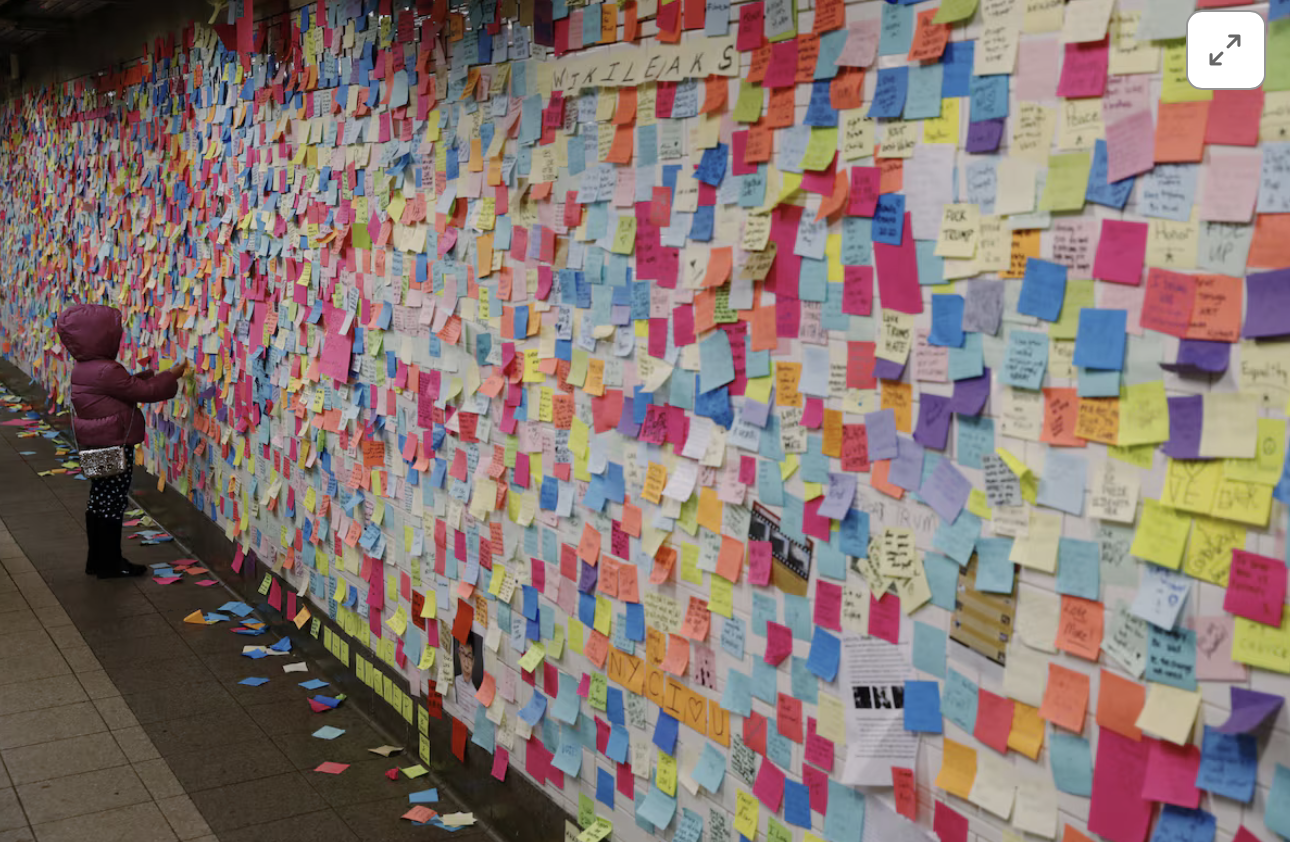
How to Stand Out When Everyone Has the Same Information
The future doesn’t belong to those who know the most, but to those who know what matters.
In Forbes recently, an article asked, “When Knowledge Is Free, What Are Professors For?”
It made me cringe and I took it personal, but it’s the kind of question that makes the Tech Bro pulse quicken. That intoxicating fantasy that experts are obsolete, that we’ve all become our own teachers now. Who needs a PhD when you’ve got ChatGPT and Wi-Fi?
You'll hear the same refrain from their cult-like followers repeating with evangelical confidence: Do your own research. Find your own sources. It’s all out there. Just Google it.
Let’s throw some cold water on this.
Everyone knows that the secret to staying healthy and in shape is not a secret at all: eat right and exercise. Simple. And yet the global fitness industry is worth $100 billion. Why? Because knowing what to do isn’t the same as knowing how to do it — or doing it well, consistently, and in the right context.
The same is true of everything. Information isn’t wisdom. Access isn’t understanding.
The fantasy at the heart of the Tech Bro religion is that because many answers exist, expertise no longer matters. But data without discernment is just noise. Algorithms can serve up every published study on climate change, human behavior, or the origins of consciousness, but they can’t teach you how to interpret those findings, weigh their credibility, build on their insights, or recognize the flaws disguised as facts.
That’s what experts do. They don’t hoard knowledge; they filter it. They don’t make learning inaccessible; they make it meaningful. The same is true for those with deep experience—the people who’ve made real decisions, lived with their consequences, and learned what the data can’t teach. They bring context, intuition, and pattern recognition. The kind that only comes from time, mistakes, and mastery.
The truth is that free information hasn’t made expertise obsolete; it’s made it indispensable. The world doesn’t suffer from a shortage of data. It suffers from a shortage of judgment.
And that’s where the opportunity lies.
If you lead an organization, stop trying to sell what anyone — or any algorithm — can access. AI has already made knowledge instant, searchable, and astonishingly comprehensive. What it hasn’t made is wise.
Sell that.
Sell judgment. Make that your secret sauce in a world overflowing with information. Build teams that can interpret, synthesize, and decide, not just collect or repeat. Build services that offer discernment, not data. Market the rarest and most valuable human skill left: the ability to know what matters, and what doesn’t.
Because in an age where everyone has access to the same knowledge, the winners won’t be those who know the most. They’ll be the ones who understand it best.
Postscript: Not Sure How To Sell Judgement In A World That Loves Technology?
Consider the following messages:
Would you hand the keys to a Lamborghini to a 17-year-old and his friends?
Would you want the king of Bitcoin managing your retirement account?
Would you trust a surgical intern, even one at the top of their class with masterful robotic skills, to do your heart surgery?
Technology can save you money. Judgment saves your reputation.
When the pattern breaks, a mind is more useful than a model.
You get the point. All of you who are experts in marketing, messaging, and advertising can take it from here.
Going Home
This is a story about the comfort we cheer and the loss we ignore.
Lately, the word home has been everywhere. It runs through headlines and broadcasts, and is spoken with tenderness by reporters on the edge of tears. We’re shown reunions—families holding each other again, people falling to their knees, disbelief turning into joy. The world watches and calls it good.
But not every homecoming looks like that.
Because somewhere else, the forgotten are going home too. To the same word, but not the same world. They return to dust and twisted iron, to a street that no longer remembers its name. They walk through what’s left, trying to find where the kitchen was, where laughter used to live. There are no reporters waiting there. No applause. Just the sound of wind moving through what used to be walls.
And then there are the others—those being sent home. To countries they’ve never seen, to languages they can’t speak, to borders drawn by people they’ve never met. They step off buses and planes carrying small bags and a hope that someone might recognize them. But no one does. They are told this is home, even though nothing about it feels that way.
The word home is now fractured. For some, it means safety and joy. For others, it means loss. One word holding two opposite truths, depending on who gets to say it.
It’s strange, the way the world celebrates one kind of return while ignoring another. The way going home can mean freedom for some people and exile for others.
A house can always be rebuilt. But a home...that’s different. A home is a promise. It’s the quiet understanding that you’re allowed to stay, that you’re wanted, welcome, and that your life is secure within its walls.
That promise now feels conditional, granted to some, taken from others, depending on whose grief the world chooses to see.