

One Thing. Then Another. Then Another.
Most of us won’t change the world. But we can change something. And if we do that enough times, in enough small places, the world starts to change on its own.
There is an event on my calendar that I never delete. No matter how many computers, phones, and operating systems I've changed, it always comes with me. It’s not a birthday, or a holiday, or a personal milestone. It’s the anniversary of a death.
The death of someone I never met.
Her name was Irena Sendler, and she passed away seventeen years ago, yesterday. Just two years short of her hundredth birthday. I don’t remember how I first learned about her, or when I decided to keep the date. But every year, when it appears, I pause.
In 1939, she was twenty-nine years old and working as a social worker in Warsaw. Her job was straightforward: she delivered food, checked sanitation, reviewed permits. She carried a clipboard and a badge. It wasn’t glamorous work. It barely drew attention. But the badge gave her access to places other people couldn’t go, and eventually, that access became the most important thing she had.
When the Nazis sealed the Warsaw Ghetto, trapping hundreds of thousands of Jews inside, conditions deteriorated rapidly. Food was almost gone, disease spread uncontrollably, and death became an everyday fact. Most people didn’t know how to respond, and most did nothing. But Irena, with her badge and her quiet determination, went in.
At first, she brought what she could—bread tucked beneath her coat, medicine sewn into her clothing—small things that seemed like something. But over time, as the suffering worsened and the walls grew tighter, she realized that what mattered wasn’t what she could take in, but who she might be able to bring out.
Smuggling adults was nearly impossible. They were too visible, too known, too documented. But children were smaller. They could be hidden, if you were clever and fast and willing to risk everything. And so she started with them.
Some were carried out in toolboxes. Some hidden under bricks in wheelbarrows. Some were drugged to sleep and passed through checkpoints on stretchers. Every method was different. Every child was a risk. But she kept going.
By the end of the war, she had helped rescue more than 2,500 children from the ghetto. That’s twice as many lives as Oskar Schindler saved. Most people know his name. Not enough people know hers.
She didn’t do it alone. There were drivers, nuns, neighbors who kept silent when a new child appeared next door. Every one of them risked their lives. And still, they said yes.
She did one other remarkable thing. Irena kept a careful record of every child she helped. She wrote their real names beside the false ones they were given to survive, folded each slip of paper, and placed them in glass jars, which she buried beneath an apple tree in a friend’s backyard. Her hope was that one day the children would return and learn who they really were, and about the families who had made the impossible choice to let them go.
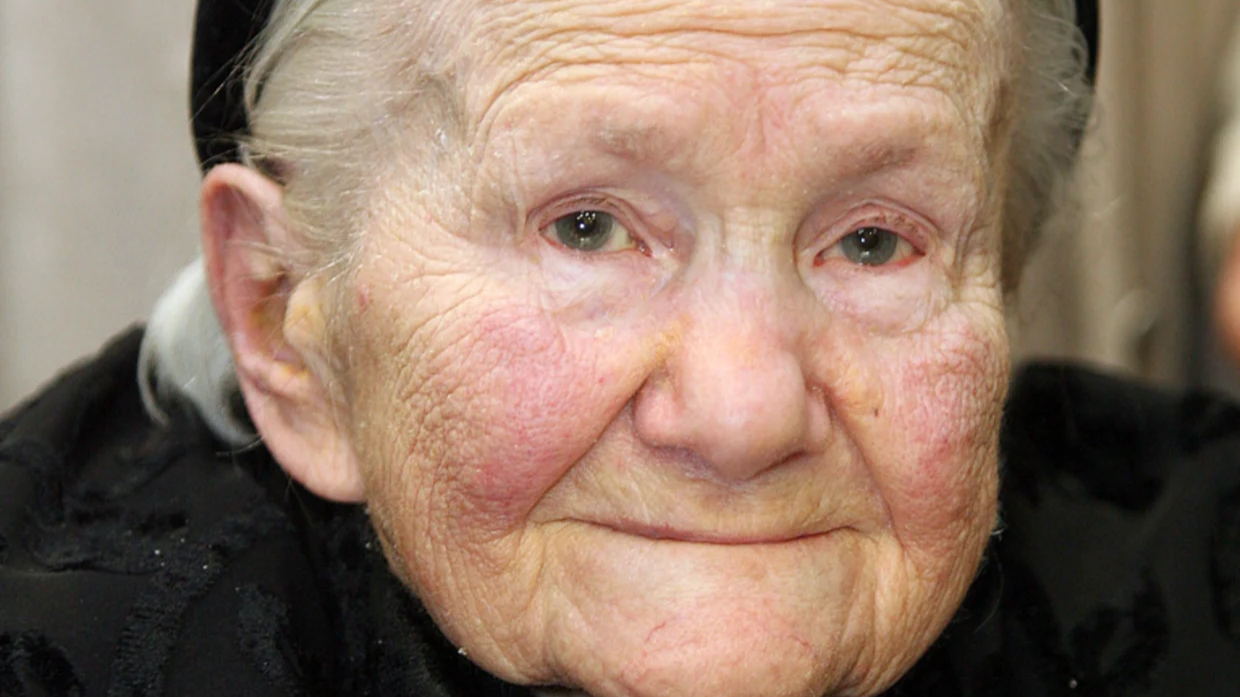
In 1943, the Gestapo arrested her. They beat her, broke her legs, and demanded names. She gave them nothing. She was sentenced to death, but the Resistance bribed a guard and helped her escape. She survived the war and later dug up the jars, trying to reconnect the children with any surviving relatives. Most had none.
Irena never wrote a book or stood on a stage. She stayed in Poland, the same country that nearly killed her, and returned to her work. She lived in a small apartment with worn floors and answered her own door.
When she was finally recognized years later, someone asked how she felt about what she had done. She didn’t talk about bravery or statistics. She said, simply, “I could have done more.”
That sentence has stayed with me. Not because it’s dramatic, but because it’s not. It’s plain. It’s honest. It comes from the kind of person who does what needs to be done and never believes it’s enough.
I keep the day she died on my calendar, not to honor a hero, but to remember what’s possible when we stop waiting for someone else to act. Her life reminds me that you don’t have to fix everything. You just have to do what you can, what’s in front of you. Then do it again. And again. And again.
That’s how she did it. And that’s how the world changes. Not through declarations or applause, but quietly. In ordinary moments. One child at a time. Carried in secret. Buried in memory. Remembered in the ground beneath an apple tree.
And that’s how we change it, too—by recognizing what needs us, and doing what we can. One small act. Then another. Until something shifts.
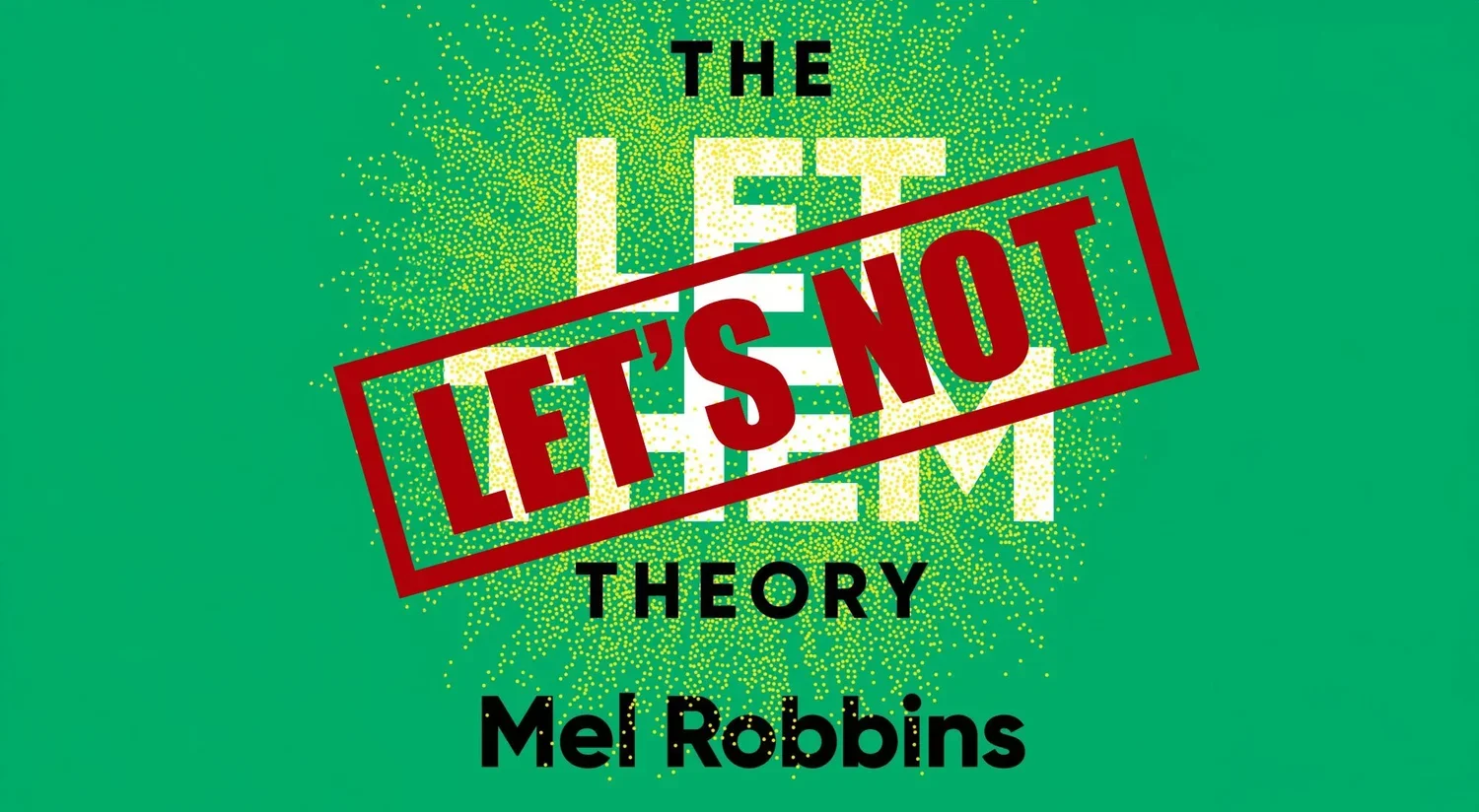
The Hidden Harm of “Let Them”
Emotions aren’t triggered—they’re built from experience, which means advice like “let them” might be reinforcing the very patterns we’re trying to escape.
I don’t think Adam Sandler is funny.
Not in a movie, not in a sketch, and especially not when he breaks into the voice that is part toddler, part dental patient. I never laugh. Not ever.
But then I see how much money his films make and think, He must be funny. I must be the one without a sense of humor.
But critics agree with me. They describe his films as “emotional junk food,” “a fever dream with a punchline,” or “what happens when a studio forgets to say no," I feel vindicated. I’m not wrong. Adam Sandler is not funny.
You may have had a similar experience with other emotions, like fear. Maybe you love roller coasters—the speed, the drop, the thrill of losing control—while the person you were with turned pale just watching the cars climb, silently calculating the odds of flying off the track and into a funnel cake stand. Or take sadness: one person watches a dog die in a movie and sobs. Another shrugs and says, “It’s just a dog.”
Humor. Fear. Sadness. Put them all on the table, and it becomes clear: we don’t feel emotions the same way or to the same degree. They’re personal, not universal. They’re constructed—built moment to moment by your brain using the raw material of your life. Your memories, your culture, your values. Your wiring.
But that’s not how we talk about emotions. We act like they’re shared, innate, automatic. We talk about “emotional intelligence” as if we can know what someone else is feeling just by reading the room. We can’t. Not really. Not entirely. And more importantly, we rarely know the cause of our own emotions.
Yet shorthand explanations get tossed around like universal truths. Especially by people with no background in neuroscience, psychology, or behavioral science. But if the advice sounds right, the next thing you know it’s being spread like gospel on Good Morning America, The View, or The Tonight Show.
That’s what’s happening now with Mel Robbins. Normally, I don’t care. If a self-help guru offers harmless advice that motivates people to drink more water, take more walks, or stop texting their ex—great. Good for them and the people who find strength in it. But this one is different. This one is dangerous. And Robbins and her readers don’t know it.
What the “Let Them” Theory Gets Wrong
Mel Robbins’ Let Them Theory is simple: if someone wants to walk away, let them. If they don’t value you, let them. If they don’t show up, don’t chase them. It feels clean. Empowering. Like you’ve just Marie Kondo’d your emotional life.
And Robbins isn’t malicious. She’s doing what she always does, turning emotional frustration into a repeatable rule. Something that sounds like growth, even if it doesn’t function like it.
The problem is: her theory assumes that the emotional pain we feel comes from other people’s behavior. It doesn’t. It comes from what our brain predicts those actions mean, based on our own history. If someone pulls away and you feel abandoned, that feeling wasn’t caused by them. It was assembled by your brain, using pieces of past experiences, insecurities, and learned associations. Someone else might interpret the exact same action as freedom, relief, or nothing at all.
This is the fundamental error: Robbins frames “letting them” go as a way to take your power back. But if emotions are constructed, not caused, then walking away doesn’t end the story. It cements it.
Every time you choose silence over clarity or distance over discomfort, your brain takes notes: connection is risky, vulnerability hurts, disengagement is wise. You don’t just learn to protect yourself from them. You train yourself to pull back from everyone.
That’s how emotional habits form. Not through explosions, but through quiet repetition. Through small moments where you choose to disconnect rather than understand, until that becomes your baseline. Robbins tells you to retreat as an act of strength. Neuroscience tells us it’s an act of reinforcement. And over time, it builds not boundaries, but isolation.
So What Should We Do Instead?
It’s not groveling. And it’s not hanging on to people who drain you. No one’s saying you should beg someone to stay just so your nervous system doesn’t collapse.
The alternative is awareness. Not “emotional intelligence” in the buzzwordy, TED Talk sense. I mean actual emotional awareness—the kind that takes work. The kind that doesn’t pretend to know what someone else is feeling, and doesn’t automatically trust your own first draft either.
It starts with pausing and asking: What am I feeling right now? Where did I learn this response? Is this reaction coming from the present or from something old pretending to be new? Maybe you’re furious someone canceled plans. But it’s not really anger, it’s disappointment. And the disappointment isn’t about tonight—it’s about years of being let down. Maybe you’re anxious after a tense meeting. But it’s not about what was said, it’s about that time in school when you spoke up and got laughed at. Or that boss who quietly reassigned your projects the week before you were laid off—teaching your brain that silence and dread always come before the fall.
Our brains don’t separate past from present. They layer them. And what feels like an emotional truth is often just an emotional echo. That’s why walking away (or letting them) doesn’t solve the problem. It pauses the discomfort, but leaves the mechanism intact. And when that mechanism is fear, resentment, or rejection, it doesn’t stay paused for long.
This Isn’t Just Personal. It’s Professional.
If you’re a manager, and someone on your team rubs you the wrong way, your brain might say, They’re difficult. Just let them be. But maybe what you’re really reacting to is a communication style that reminds you of someone who undermined you in a previous job. And instead of clarifying expectations, you disengage.
If you’re a partner—at work or at home—and someone pulls away, your brain might say, Let them. But your body registers something else entirely. It doesn’t feel like calm. It feels like punishment. And that unresolved discomfort doesn’t disappear. It waits.
That’s how patterns form. That’s how connection erodes. Not through big betrayals, but through tiny exits. This is why awareness matters. In relationships. In leadership. In life. Letting go can be wise. But understanding what you’re letting go of is wiser.
The Real Work of Emotional Growth
So yes, maybe we should keep the phrase. Let them. Let them walk away. Let them show you who they are. Let them make choices you wouldn’t.
But don’t confuse that with emotional clarity. And don’t pretend it leaves you untouched. Because your brain is always learning. Always predicting. Always building. If you keep retreating from discomfort, your brain will stop preparing you for connection. It will start preparing you for isolation.
And the next time someone pulls away, you won’t even flinch. Not because it doesn’t hurt. But because you’ve trained yourself not to feel it. That’s not growth. That’s damage disguised as discipline.
So let them, yes. But don’t let yourself off the hook. Not from asking what it meant. Not from feeling what it brought up. Not from learning what it revealed. Because emotions aren’t proof of who they are. They’re reflections of who you are and what you’ve lived through. They’re not universal. They’re not shared. They’re yours. Entirely.
And once you understand that, walking away isn’t the win.
Walking through is.
(Oh—and Adam Sandler still isn’t funny. But I guess now I have to figure out why I feel that way.)

The Mile-High Misery Club
If you’ve ever questioned humanity at 36,000 feet, you’re not alone. This is what happens when you fly too often, sleep too little, and sit too close.
On Tuesdays, I usually write about people you should know—unsung heroes, remarkable lives, the kind of people who make the world slightly less unbearable.
Today, I’m writing about someone you shouldn’t.
Me.
Specifically, me in an airport. Me on a plane. Me in any enclosed public space where seat belts are involved and a toddler is licking something unsanitary. I wasn’t always like this. But last week reminded me of what air travel does to a person.
I have over three million frequent flier miles. Yes, you read that right. It sounds impressive until you realize that I earned them through a sustained exposure to human behavior at its worst. Some people climb Everest. I’ve sat in seat 22C next to a man eating tuna salad with his fingers.
I will never use those miles. Not for an upgrade, not for a weekend to Lisbon, not even to outrun a warrant. It would be like asking a prisoner of war to swing by the former camp for old times’ sake. I don’t need to relive it. I was there. I remember the smells, the screaming, the cold cheese cubes. Those miles aren’t a reward, they’re a record. Proof that I endured. Proof that I escaped.
The contempt begins at TSA. There’s always a woman in front of me wearing Roman sandals and an ankle bracelet that requires its own tray. She’s layered in jewelry like she’s just emerged from a museum gift shop and seems genuinely surprised that removing it takes more than five seconds. Behind her is a man in cargo shorts yelling, “But it’s unopened!” while holding a Costco-sized bottle of shampoo like it’s the nuclear football.
And then there’s the airport bathroom, where any last hope for human dignity goes to die. I once overheard a man walk a client through a full PowerPoint deck from inside a stall, pausing only to ask if everyone could see slide seven.
It’s hard to describe the ambiance of a men’s room stall to anyone who hasn’t spent time in one. It’s less like a private office and more like the inside of a garbage chute during a storm. To willingly settle in and conduct business from that environment requires a level of confidence bordering on clinical. At the very least, the people on the other end of the call should be told they’re negotiating with someone who is actively sitting on porcelain in what could easily be designated as a hazmat zone.
By the time I get to the gate, I am a shell of myself. Group 8 and 9 have already mobbed the line like villagers hunting Frankenstein, clutching rolling suitcases instead of torches, determined to storm the jet bridge whether it’s their turn or not. Boarding zones mean nothing here. They’re ceremonial—read aloud like wedding vows no one intends to honor.
Then comes the plane. A floating social experiment with tray tables. Headphones go in. Not because I’m listening to anything, but because it’s the closest thing I have to a force field. Still, the games begin.
I’ve had people fall asleep on me, spill drinks on me, drool on me. One man with a goatee and a bucket of Panda Express in his lap kept whispering “lawnmower” in his sleep like it was a safe word. A woman once tried to balance a full glass of red wine on the armrest during heavy turbulence. “It’s okay,” she said. “I’m an artist.” Huh?
People take off their shoes. Some, their socks. Then, for reasons known only to them and Satan, begin grooming. One man clipped his toenails into a napkin and looked personally offended when I demanded him to stop, as though I’d interrupted a religious ritual mid-benediction.
I’ve sat next to celebrities. Semi-famous actors giving off I-dare-you-not-to-recognize-me energy. A cartoonishly large former athlete who required a seatbelt extender for his ego. And one adult film star who, somewhere over Kansas, told me she’d just returned from the AVN Awards. “Best Group Scene,” she said, then added, “Do you want to see the trophy?” I told her I was flattered, but no thank you.
Two people have died on flights I’ve been on. Both en route to Europe (although I believe that was just a coincidence). On one, a doctor seated with us in business class was called to the back of the plane. He returned mid-cheese course, folded his napkin, and informed us the passenger hadn’t made it. Someone asked if this meant we’d land early. We didn’t. They dimmed the lights and served dessert.
Once, a woman sobbed so loudly while watching Sleepless In Seattle that the flight attendant came back to check on her. I wish I were exaggerating. He leaned down and gently asked, “Ma’am, are you all right?” She wasn’t. None of us were.
I’ve been propositioned by a swinger couple on a red-eye. The man wore a fox-shaped neck pillow. The woman passed me a napkin that said It Will Be Fun. I said nothing. Though, to be fair, I have a bad back that makes flying excruciating, and I was chewing on hydrocodone like they were Mentos at the time.
There is more. So much more.
I used to think all this exposure to humans would make me more patient. A global citizen. The kind of person who writes wistful essays about serendipity and connection. Instead, it has turned me into someone who has fantasized about buying a second seat just to avoid eye contact. Someone who silently judges passengers based on snack choices and suitcase behavior. Someone who can now identify a menace by the sound of their flip-flops or Crocs as they walk down the aisle.
Three million miles. Two in-flight deaths. One adult film trophy politely declined. And zero remaining hope for airborne redemption.
If I have to go somewhere, I’ll walk. And you will be happy I did.
Seeing Our Reflection: The Future Of Relationships. Part II
We don’t stay in relationships because they’re good for us. We stay because they’re easy—and soon, technology may make that choice for us.
If you’ve ever heard me talk about relationships—why we form them, why we stay—you’ve probably heard the same three words: safer, easier, better.
That formula isn’t mine. It belongs to nature.
Every living thing—whether it slithers, swims, walks, or flies—forms alliances for one reason: to survive. A connection only makes sense if it helps us stay alive, use less energy, or access something we couldn’t get by ourselves. If it doesn’t do that, we let it go—or choose to go it alone.
And whether we realize it or not, our brains still run the same calculation:
Will this make life safer? Easier? Better?
For a long time, I thought the order was obvious—safety came first. Protect the organism. Defend the species. That’s how life survives, right?
But I was wrong.
Before anything else, life asks: How much energy will this take?
Across all living systems, the first priority isn’t protection. It’s efficiency. Conserve energy, and you survive longer. Safety matters. But ease comes first.
And once you see that, everything starts to look different.
It’s why people stay in jobs that exhaust them, in friendships that drain them, in relationships that slowly erase them—not because they feel secure, but because change feels harder. Because starting over takes energy they don’t think they have.
What finally convinced me wasn’t an experiment or a theory.
It was Facebook.
Here is a company that has done more to divide and distract us than maybe any platform in modern history. And yet, billions still use it. Every day. Even when they say they don’t want to. Even when they know better.
Why?
Because it makes life easy.
It’s easier to share photos with family. To humblebrag about our achievements. To reconnect with high school friends without the effort of real conversation. It’s easier to skim birthdays, click a heart, make a comment, and feel like you’ve participated in someone’s life. Easier to be visible without being vulnerable. Easier to be remembered without being known.
Even when we know it’s harming our attention, our politics, our relationships, our sense of truth, our self-worth, we stay.
Because ease wins.
And the people building our technology don't just know that. They count on it.
So what does any of this have to do with the future of relationships?
Potentially, everything.
Because technology isn’t just changing how we work or shop or search for answers—it’s changing how we relate to one another. And the pattern is becoming clear: the more we value ease, the more we’ll accept the simplification of things that were never meant to be simple.
Some of that is already happening.
Dating apps let us evaluate potential partners based on a photo and a sentence. No context. No nuance. Just a binary decision made in two seconds.
Zoom meetings replace the walk to lunch, the side conversation, the subtle things we used to learn by being in a room together.
We send heart emojis instead of calling. We skim instead of reading. We forward without thinking.
We start to treat people the same way we treat platforms: optimized for convenience, edited for clarity, disposable if they require too much.
This matters—because relationships are next.
What we call connection is already changing. Not because we want less from each other—but because we want less effort. And the tools we’re building are offering us exactly that: relationships without resistance, affection without investment, intimacy without sacrifice.
But a real relationship shouldn’t be frictionless.
It shouldn’t be simple.
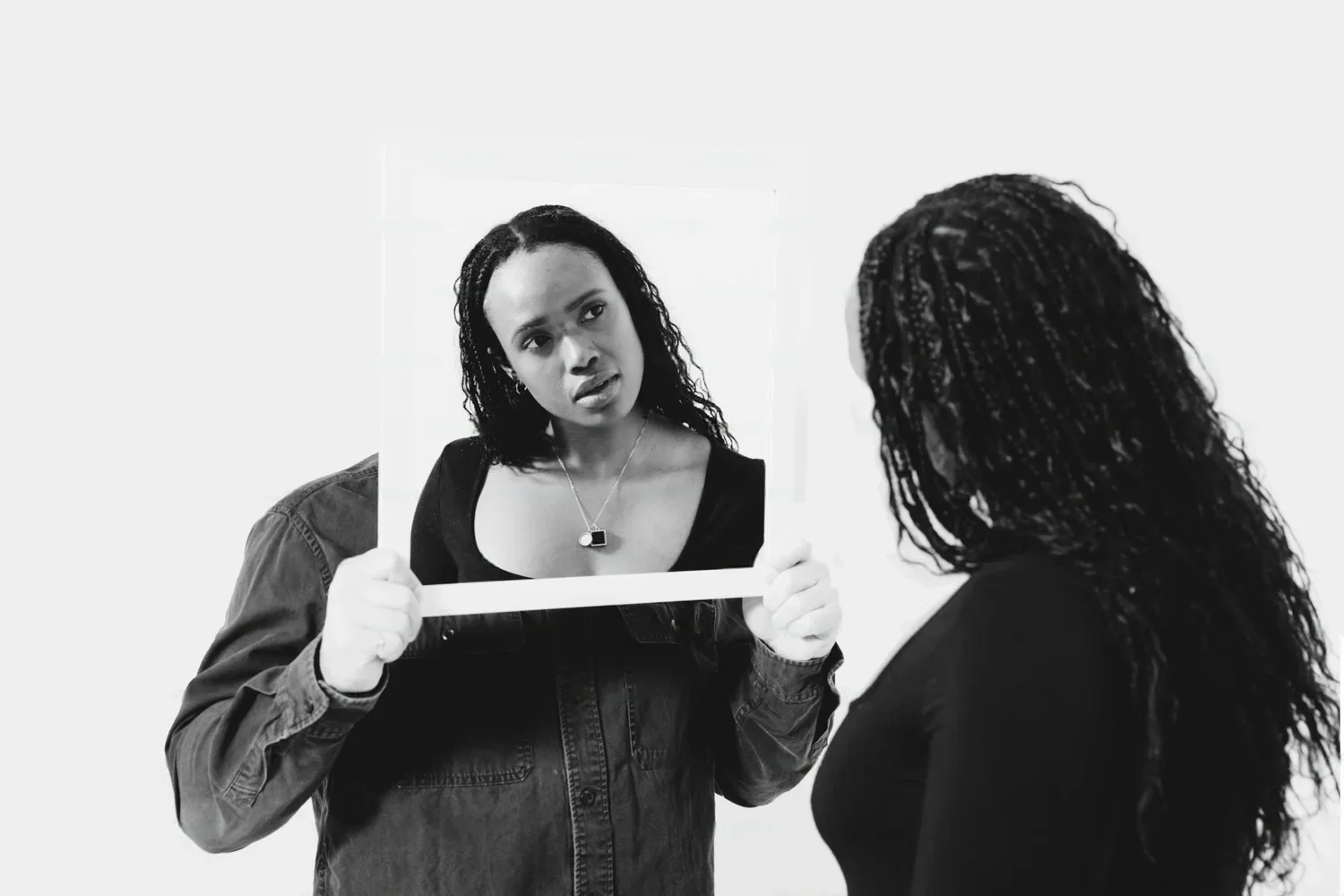
It shouldn’t be a mirror.
A mirror can reflect you. It can flatter you. But it can’t change you. It can’t steady you when you fall or forgive you when you fail.
The people who shape us—who help us grow—don’t reflect us.
They interrupt us.
And if we start choosing connection based on what demands the least, we won’t just lose depth. We’ll lose the very thing relationships were meant to give us.
Because the gatekeepers of this technology don’t care about real connection. They don’t care about love, or friendship, or what helps us grow. They care about what keeps us engaged. What keeps us logged in. What keeps us coming back.
And they will keep simplifying what should remain complex.
And we’ll keep falling for it.
Because if it’s easy.

To Be Seen, At Last: The Future of Relationships. Part 1
Not every story about technology is about fear. Sometimes, it’s about remembering the people we forget—and the seats we leave empty.
His name was Robert.
That’s all I remember now.
The rest—his last name, the details of where he lived, what grade he was in—those things have faded. But not him.
We rode the school bus together when I was a kid. He was younger than me. We didn’t talk. We didn’t move in the same circles or have the same friends. In fact, the only place our lives touched at all was on that bus, and even then, only in passing.
But sometimes, passing moments turn into permanent ones.
Robert always sat in the same seat: two rows behind the driver. It was the safest place—close enough to an adult to feel protected, and far enough from the back where the noise and bullying lived. He was heavier than most boys his age, quiet, and careful in that way kids become when they’ve already figured out that the world won't be kind to them. He didn’t ask for attention. But somehow, he got it anyway.
He was teased constantly—not for anything he said or did, but simply for who he was. For the shape of his body. For his lisp. For being different in a way that too often invites cruelty—from children, and sometimes from adults who should know better.
I wish I could say I stood up for him right away, but I didn’t. I kept my distance, occasionally watching from a few rows back. Then one morning, I noticed the way he sat—stiff, eyes on the window, shoulders tense. Like someone already absorbing a punch that hadn't been thrown yet. That’s what got to me. Not the mocking. Not the laughter. But the way he’d come to expect it. The way he’d learned to live with it.
I told the others to stop. I don’t remember the words. Just that they listened.
The next day, I sat down beside him. He moved his lunchbox and books without a word. We didn’t talk. We just rode in silence.
Later that week, there was a knock at our front door. A small woman stood there—someone we didn’t recognize—asking if she could speak with me. She introduced herself as Robert’s mother. My mom invited her in, and we all sat together at our kitchen table. Within minutes, she was crying.
She told us that Robert didn’t have any friends. He came home each day carrying a kind of sadness she didn’t know how to reach. But that week, he was a little lighter. Because someone stood up for him. Someone stopped the cruelty. Someone sat beside him.
She came to say thank you. Not just to me, but to my mother. Because mothers understand what it’s like to send your child into a world that may never make space for them—and what it means when someone finally does.
I never saw Robert again after that year. But he’s stayed with me. Not as a memory of something heroic. But as a reminder of how fragile people can be, and how much strength a small act of kindness can carry.
There are more people like Robert than we care to admit—those who go through life never quite invited in. Too quiet. Too different. Always on the edge of belonging, close enough to see it, far enough to feel forgotten. They live waiting for someone to say, “There’s a seat here for you.”
Lately, I’ve started to wonder if we’ve really outgrown that feeling—or if we’re all still just kids at the edge of the lunch table, hoping someone will scoot over.
It’s changed the way I think about technology, especially AI companions. I used to see them as strange, even a little sad. But now I see something else—something steady, gentle, and maybe more human than we expected.

Nearly two billion people—mostly in Asia, but more every day—have downloaded one. Not a chatbot. Not a tool. A companion. A voice that remembers, that listens, that stays.
It makes people uneasy. We call it artificial. A poor substitute. But haven’t we always looked for something that will simply hear us? We write in journals, whisper to pets, send letters we never mail—not because we’re broken, but because some truths are too heavy to hand to another person.
So why not a voice that stays? Why not a presence—however imperfect—that offers comfort when nothing else does?
Some say it’s unnatural. But what’s more unnatural—talking to a machine, or leaving someone alone in their pain because we don’t know what to do?
And it’s not just the lonely. It’s anyone facing the moment when life comes undone—when there’s no one to turn to, and nowhere to fall but inward.
Maybe they don’t need advice. Maybe they just need something to say, “I’m here. I’m listening.”
A friend once told me that pretty girls want to be told they’re smart, and smart girls want to be told they’re pretty. I think what she meant was this: we all want to be seen—not just for what’s obvious, but for what’s overlooked. The invisible parts. The parts we hope someone will notice anyway.
We want someone to understand the full picture. To look at us and say, “I see you. All of you. And I still want to know more.”
Maybe that’s not something to fear. Maybe that’s something we’ve always needed.
So when we talk about AI companions—yes, they’re strange. Yes, they make people nervous. They raise big questions. But maybe they also remind us of something simple and true:
That everyone wants to be heard.
That everyone wants to feel like they matter.
And maybe, just maybe, if something—even a machine—can reflect us back with kindness, maybe that’s not the end of us.
Maybe it’s the beginning of something better.
This isn’t about replacing people. It’s about remembering the ones we’ve forgotten. The ones who sit two rows back. The ones who wait for someone to say, "You can sit here."
Maybe the fear isn’t that machines will take over our hearts.
Maybe the fear is that they’ll be better at caring for them than we are.
Why Leaders Resist Change (Even When They Say They Want It)
The future doesn’t get blocked by resistance, but by the comfort of those who no longer feel the urgency to move.
A few months ago, I turned down a speaking engagement.
It was from a client I’d worked with before—two years earlier. I’d given a talk called Change Isn’t Hard. Changing Is.There was a workshop afterward. People were engaged, or at least they acted like they were. They asked thoughtful questions. They said they felt inspired. They said they wanted to do things differently.
But nothing happened.
Today, the same problems are still there—just a little more familiar now, a little easier to ignore. Most of the senior leadership is close(ish) to retirement. It seems like they did the math: if they didn’t disrupt too much, if they didn’t make anything worse, the structure might last just long enough to see them through.
So when they asked me to come back, I politely passed. I didn’t see the point. They were open to change—but not to changing.
When the Stakes Disappear, So Does the Will to Act
Humans have a remarkable ability: we can imagine the future. It’s our superpower. We can picture the years ahead in detail—how our decisions might unfold over decades, what might be different, what might break. Our minds can simulate consequences long before they arrive.
And yet we often ignore them.
Because imagining the future is not the same as feeling responsible for it. We tend to act only when the pressure is immediate—when something threatens us personally, here and now. Once we’re no longer affected, we stop behaving as if the problem still matters.
In the late 1970s, a group of economists studied public attitudes toward higher education funding. They found that people who had already earned their degrees—especially from wealthier backgrounds—were more likely to support cutting that funding. After they’d moved through the system, they no longer felt responsible for keeping it open behind them.
It happens in quieter ways too. We stop paying attention to parental leave and the affordability of day care once our children are grown. We stop noticing mortgage rates and housing policies once we’ve bought a home. We stop thinking about what the climate will be like in 2070 when filling our gas tanks today.
It’s not malice. It’s distance. And it’s one of the hardest things we’re asked to do: to care about problems after they stop being ours. To imagine the future clearly—and still act, even when we’re not in it.
Protecting The Status Quo
In most organizations, there comes a point when things feel steady enough to stop asking hard questions. Not because everything’s working. But because it’s working well enough—for the people in charge.
They’re not bad people. They’re thoughtful, experienced, and often proud of what they’ve built. And rightly so. But the same system they once pushed to improve has become the one they’re now trying to protect.
Change starts to feel like a threat—not to the mission, but to the rhythm. To the peace. To the sense that if we just don’t rock the boat, we might all make it to shore with dry clothes and steady hands.
Meanwhile, the people who most need things to change—the ones newer, younger, or left out—are asked to be patient. To wait their turn. To trust a structure that wasn’t designed with them in mind.
So things don’t fall apart. They just stop evolving.
The result isn’t collapse. It’s stagnation. Innovation slows. Good people leave. The future is documented in strategy decks and five-year plans, but the real work of reshaping it is quietly deferred.
Making Change Possible
We can’t expect people to act against their own comfort unless we give them a way to do so. That’s the challenge—and the responsibility—for organizations, and for those who advise, guide, and push them forward. Change demands more than insight; it demands structure. Here are a few ways some have begun to close the gap between intention and action:
1. Create a Mock Leadership Council
Companies like Gucci and TotalEnergies have implemented “shadow boards” composed of younger employees to provide fresh perspectives on strategic decisions. These councils allow early- and mid-career professionals to envision the organization’s future and present their insights to senior leadership.
2. Develop a Legacy Transition Plan
BlackRock has introduced long-term incentive plans that grant senior leaders stock options vesting over several years, even post-retirement. This approach ensures that outgoing executives have a tangible stake in the company’s future performance, aligning their legacy with the organization’s long-term success.
3. Assign Future Advocates
Heineken’s reverse mentoring program pairs junior employees with senior leaders (instead of the other way around), allowing the latter to gain insights into emerging trends and the evolving workplace. This initiative fosters mutual understanding and prepares the organization for future challenges.
4. Disrupt the Model by Design
Merit, a UK-based construction firm, operates in an industry not known for R&D. But they’ve built one anyway—not to keep pace, but to change it. By developing modular, off-site construction for complex facilities like labs and cleanrooms, they’ve reimagined what’s possible in both time and scale.
It’s a reminder: even in fields that don’t traditionally invest in innovation, someone can choose to. What would an R&D department look like in your organization? And what problems would it wake up every day trying to solve?
Leaders often stop responding to problems once those problems stop affecting them. But with the right structures and incentives, organizations can close the gap between those in power now and the people who will inherit what comes next. A lasting legacy isn’t what you leave behind—it’s what you build for the people who come after you.
I hope this helps.
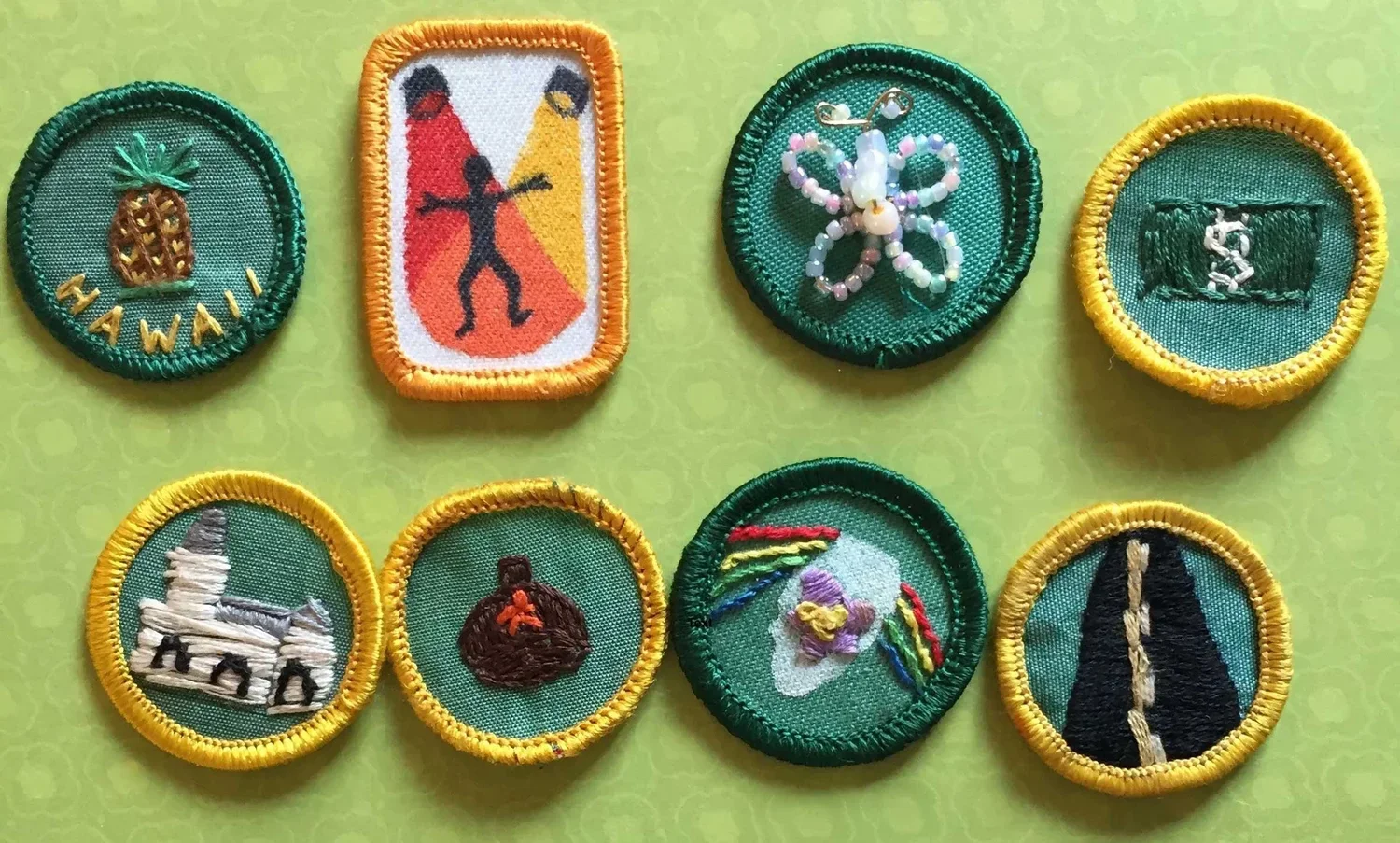
Merit Badges
Not all badges are pinned to uniforms. Some are stitched into our lives—earned through tough days, hard choices, and showing up when it matters.
The Girl Scouts get it right.
They award merit badges for things that rarely make it onto a resume—like building a fire in the rain, identifying birdcalls, or learning how to comfort someone who’s afraid of the dark. The badges are sewn onto sashes and sleeves not to boast, but to quietly say: I did something hard. I tried something new. I showed up.
Last week, three friends reached out to say they’ve been reading these Tuesday stories. Their messages felt like handwritten notes slipped under a door—quiet, personal, and unexpectedly moving. They meant more than I think the senders realized.
I’d been wondering if it was time to stop writing these pieces about remarkable people. The silence around them had started to feel like an answer—no big reactions, no flood of engagement. Maybe, I thought, these stories just didn’t land.
But those notes reminded me: silence doesn’t mean indifference. Some stories matter most to the people who don’t say so—until one day, they do.
And it made me think: maybe grownups need merit badges too. Not for titles or accolades, but for the unseen work of holding things together, of showing up when it’s hard, of living with heart.
If I could hand out three this week, they’d go to the three friends who reminded me why telling these stories still matters.
1. The No Regrets Badge
For the one who’s been living through wave after wave of loss—a brother, a best friend, and now, the slow goodbye of a sister-in-law. She doesn’t run from grief. She walks through it, arms open, heart full, determined to love so completely there’s nothing left unsaid.
The badge shows an open heart stitched onto a pair of worn hiking boots. Because she keeps going, even when the terrain is steep.
2. The High Wire Act Badge
For the one caught in the beautiful, brutal tension between career and motherhood. Leading teams, raising babies, managing the chaos and the guilt and the quiet doubt that she’s letting one side down. She wants to be great at both—and keeps striving to be.
Her badge is a tightrope, stretched between two skyscrapers, with her walking the line—two babies on one hip, laptop on the other. Because while her heart lives at home, the world still expects her to carry it all. And every day, she does—with everything she has left.
3. The Cape-Under-the-Coat Badge
For the one who feels everything deeply and still keeps fighting—for her daughter, her business, her profession, her country, her planet. Rage-crying is her thing. So is rallying. She’s scrappy and tender, a walking contradiction of heartbreak and fire.
Her badge is a hidden cape peeking out from under a blazer. Because superheroes don’t always make a scene—but they’re always ready the moment they’re needed.
If we could see each other’s badges—the ones earned in solitude, in struggle, in quiet acts of perseverance—we might recognize that everyone is carrying something hard. And maybe then, we’d choose to meet the world with a little more compassion, and a lot more awe.
To those who reached out last week:
You earned these.
Wear them proudly.

Let Go, Rebuild, Repeat: The Biology of Becoming Better
Most people think resilience is about staying strong—but nature shows it’s about changing smart.
I never set out to become familiar with the world of blood donation. Or blood in general, really. I knew I had some, and that I needed it, and that was enough. But then came a series of tests, and follow-ups to the tests, and something called “monitoring,” which sounds innocuous until you realize it means forever.
Before long, I was visiting a lab so often I started to wonder if I should bring the staff holiday gifts. I knew which phlebotomists treated your arm like fine china and which ones came at you like they were harpooning a whale. I developed an almost spiritual appreciation for the phrase “good flow.”
It became, in a strange way, routine.
What I hadn’t expected, amid all that poking and draining, was how it would change the way I looked at people who donate blood on purpose. Repeatedly. Cheerfully.
These were people who signed up for it. Volunteered, even. I once met someone who made a donation every 3 months for the past 20 years. Not because he was cursed or had some kind of blood surplus issue—but because he wanted to.
Naturally, I assumed he was a saint, a vampire, or deeply unwell.
But then I learned something that caught me completely off guard: people who give blood regularly don’t get weaker.
They get stronger.
Not in the Hallmark-card sense. Not spiritually. Not emotionally. Not metaphorically.
Physically. Biologically.
Hematopathologists have studied this. People who’ve given blood more than 100 times don’t come out depleted. They come out stronger. Their blood adapts. Their systems adjust. Red blood cells replenish faster, more efficiently. Certain mutations arise—mutations that make those cells more resilient, quicker to grow, harder to kill. The body doesn’t just recover from giving. It evolves because of it.
The act of giving, in this case, isn’t just virtuous. It’s adaptive.
And that’s something we were never taught.
We’ve trained ourselves to talk about change and growth in poetic terms. Embrace the unknown. Lean into discomfort. Cultivate resilience. All lovely ideas. All very shareable. But too often, they exist as ideas only—philosophical abstractions floating just out of reach, divorced from the mechanisms that actually govern the way things live or die.
We treat change like it’s a feeling. Something that blooms within us if we just believe in it hard enough. We post quotes about courage and grit. We listen to podcasts that tell us how growth feels. But the truth is: growth doesn’t feel like anything. It’s not an emotional state.
It’s a function of biology.
Systems evolve under pressure. That is not an opinion or a motivational cliche. It is a law of nature. Muscles grow by tearing. Forests regenerate by burning. Blood improves by leaving the body and forcing the marrow to build something better in its place.
But humans, especially those with platforms and followers and hashtags, have convinced themselves that the laws of physics and biology do not apply to them. We are told to adapt, but rarely shown what adaptation looks like mechanically. Instead, we’re handed mantras: trust the process, follow your bliss, visualize your future.
No one says: stress the system. Regularly. Often. Or risk becoming irrelevant.
And this has consequences.
Because when we confuse inspiration with application, when we mistake sentiment for strategy, we don’t become more adaptable—we become more vulnerable.
We sit in organizations waiting for change to feel right. We wait to feel emotionally ready to let go of bad ideas, outdated models, or broken relationships. But the people who survive—not just in theory, but in practice—are the ones who don’t wait to be inspired. They stress their own systems on purpose. They subtract what isn’t working before the market, or the world, or nature does it for them.
That’s change. That’s evolution. Not the performance of growth. Not the brand of transformation. But the physics of survival.
So maybe donating blood really is a metaphor—but not the one we think. It’s not about selflessness or goodness. It’s about the reality that the more you give up, the stronger you become. Not just once. Not when it’s convenient. But repeatedly. Deliberately.
Because if you want to adapt—truly adapt—you have to force yourself to do what systems are built to do under pressure:
Let go, rebuild, repeat.

“Well, Duh”: How Common Sense Kills Curiosity
We don’t outgrow curiosity—we shame it, silence it, and call it common sense. And that’s when the trouble begins.
A few days ago, I was trapped in an elevator with two sisters—one about eight years old, the other five and still blissfully unaware of how the world is supposed to work.
The younger one looked like she’d been released from a very colorful, very opinionated cloud. She immediately turned to face me—not the doors, but me, which is a clear violation of the unwritten but universally agreed-upon rules of elevator conduct.
No eye contact. No turning. No joy.
She smiled. Wiggled. Examined the emergency button with the reverence most children reserve for birthday cakes and bubble wrap.
“Do these buttons make it fly?” she asked.
I loved her.
Before I could respond—because yes, of course, they should—her older sister sighed in a way that suggested this was not her first time explaining reality to the mentally deficient.
“Duh,” she said, without turning. “It just goes up and down.”
Then, just in case I was considering contributing to this madness, she added, “Everyone knows that.”
And that, friends, is how it begins.
The death of curiosity doesn’t arrive as a dramatic event. There’s no funeral. No last rites. It begins in elevators, at kitchen tables, in car rides home from school. It begins with “duh” and “obviously” and “that’s just the way it is.”
Children are born scientists. They test everything—gravity, taste, your patience. They ask questions that make adults deeply uncomfortable: “Do cats have dreams?” “Why does Grandma have a mustache?” “What happens if I lick this?”
At five, the world is a mystery you’re still allowed to poke. At eight, apparently, you’re already expected to know better. To understand that buttons do not make elevators fly. That facing strangers in confined spaces is suspicious. That knowledge is a performance and asking questions ruins the illusion.
By eighteen, we call this “common sense.”
But common sense is a scam. It’s not actually a collection of good ideas. It’s a consensus about how not to embarrass yourself. It teaches you to act like everything is obvious, even when it isn’t—especially when it isn’t.
You hear it in nicer language, of course. On the news, in offices, at dinner parties: “It’s just logical.” “You’d have to be an idiot not to see it.” “It’s basic.”
And suddenly, not knowing something becomes shameful.
Curiosity becomes a liability.
If I had done what that five-year-old did—turned around, smiled, asked a fellow passenger if the buttons might make us levitate—I’d have been flagged by building security. Security would then alert management, and management would suggest I continue my strange inquiries somewhere else, preferably with supervision.
Adults are expected to follow the script. Eyes front. Feet forward. Mouth closed. No pressing all the buttons. No flights of fancy. No curiosity that hasn’t been approved by HR.
I stood there, facing the doors with the older sister, the two of us proper citizens of Common Sense Island, while the younger one danced around like she was in Willy Wonka and the Vertical Shaft of Possibility.
And I thought, she’s still free.
For now.
Soon enough, someone will teach her to roll her eyes. To say “duh” with just the right amount of disdain. To put away her questions and wear the heavy, itchy sweater of certainty.
She’ll stop wondering if things can fly.
Common sense keeps you from touching electric fences and opening emails from Nigerian princes. Fine. Good.
But when it becomes a worldview—when it tells you that everything important is already known, that wonder is childish, and asking is stupid—it becomes something else entirely.
A straightjacket. A funeral for curiosity.
So the next time someone asks a question that seems ridiculous—“Do the buttons make it fly?”—maybe don’t respond with “duh.” Maybe say, “Let’s find out.” Maybe even push a few extra buttons just to see what happens.
And if you’re feeling especially brave, turn around in the elevator. Look someone in the eye. Smile.
You might not get anywhere new, but at least you’ll remember what it feels like to move through the world not with certainty, but with wonder.
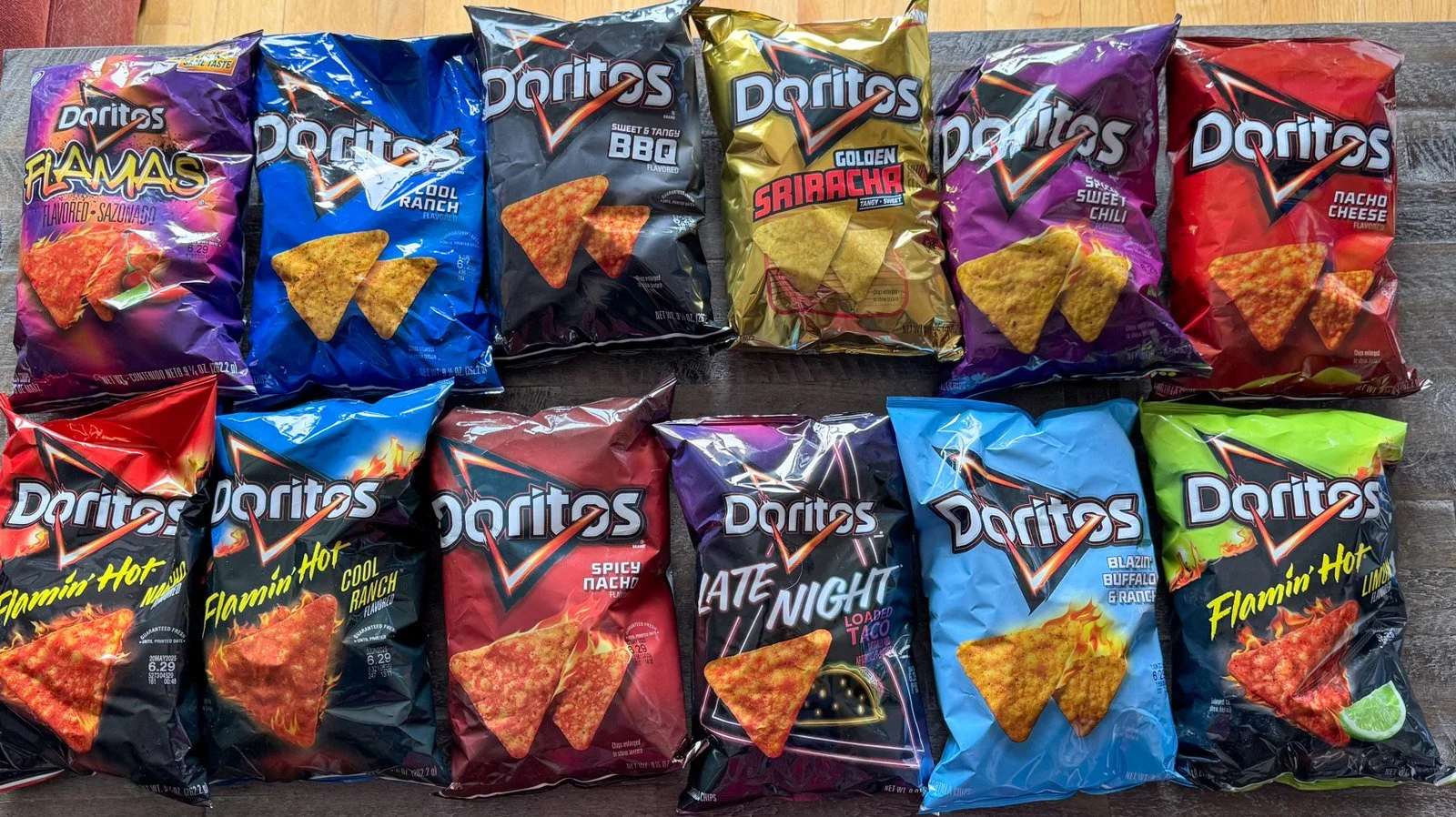
Lessons From A Bag Of Doritos
It’s easy to get caught up in what’s measurable. But the most important work often isn’t.
I've met a number of remarkable business people over the years.
One of my favorite was Roger Enrico.
We were seated together at a dinner after I gave a talk at DreamWorks Animation in 2011. At the time, he was Chairman of the company. But that was just one chapter in a long and impressive career. He had been CEO of PepsiCo, and earlier in his life, he was the brand manager for Doritos.
Somewhere between courses, he shared a story from his time at Frito-Lay.
The company, he told me, had become obsessed with tiny improvements. Performance gains measured in tenths of a percentage point. Incremental changes. Adjustments. Marginal gains. It was data-driven management at its finest.
And then one day, a veteran colleague sensed Roger's frustration and said:
“So, we’ve been working on the wrong side of the decimal point.”
That line stayed with him. And it’s stayed with me.
Because it’s not just a clever turn of phrase—it’s a framework. A simple shift in perspective that changes how we think about progress, decision-making, and the kind of work that actually moves things forward.
Over time, I’ve come to see that it offers two important lessons—one about how we should lead, and the other about how we should live.
Lesson One: What Leadership Actually Means
The right side of the decimal point is where management lives. It’s about stability. Efficiency. Slight improvements to what already exists. It’s essential work, but it’s not transformational.
The left side is different. It’s where leadership happens. It’s about whole numbers. Big moves. It requires vision, not just vigilance. It’s about asking, “What could we do?” instead of “How can we do this slightly better?”
In other words, if the right side is about today and yesterday, the left side is about tomorrow.
And the mistake so many organizations make—especially in times of uncertainty—is hiring for leadership, but rewarding management. They ask for transformation and fund optimization. They want to move the world, but they measure progress in hundredths.
Enrico understood: unless someone is willing to operate on the left side of the decimal point, nothing truly new ever happens.
Lesson Two: What It Means to Be Human
That same metaphor applies just as powerfully outside the boardroom—especially now.
We live in an era shaped by artificial intelligence. AI thrives on the right side of the decimal point. It is built for incremental gains. It can optimize, adjust, personalize, and analyze at a scale and speed humans can’t match.
Which means that we, as humans, need to stop trying to compete there. That race is over.
But the left side—the bold, imaginative, irrational side—is still ours.
It’s where we ask unanswerable questions.
Where we invent, disrupt, love, risk, hope.
Where we dream up entirely new categories instead of just improving the old ones.
The left side of the decimal point isn’t just where leaders thrive.
It’s where humans excel.
And maybe that’s the real genius of the metaphor. It reminds us that the value of being human isn’t in precision. It’s in possibility.
So the next time you find yourself improving something by a fraction, pause and ask:
Am I working on the right side of the decimal point—
or the side that actually moves the world?
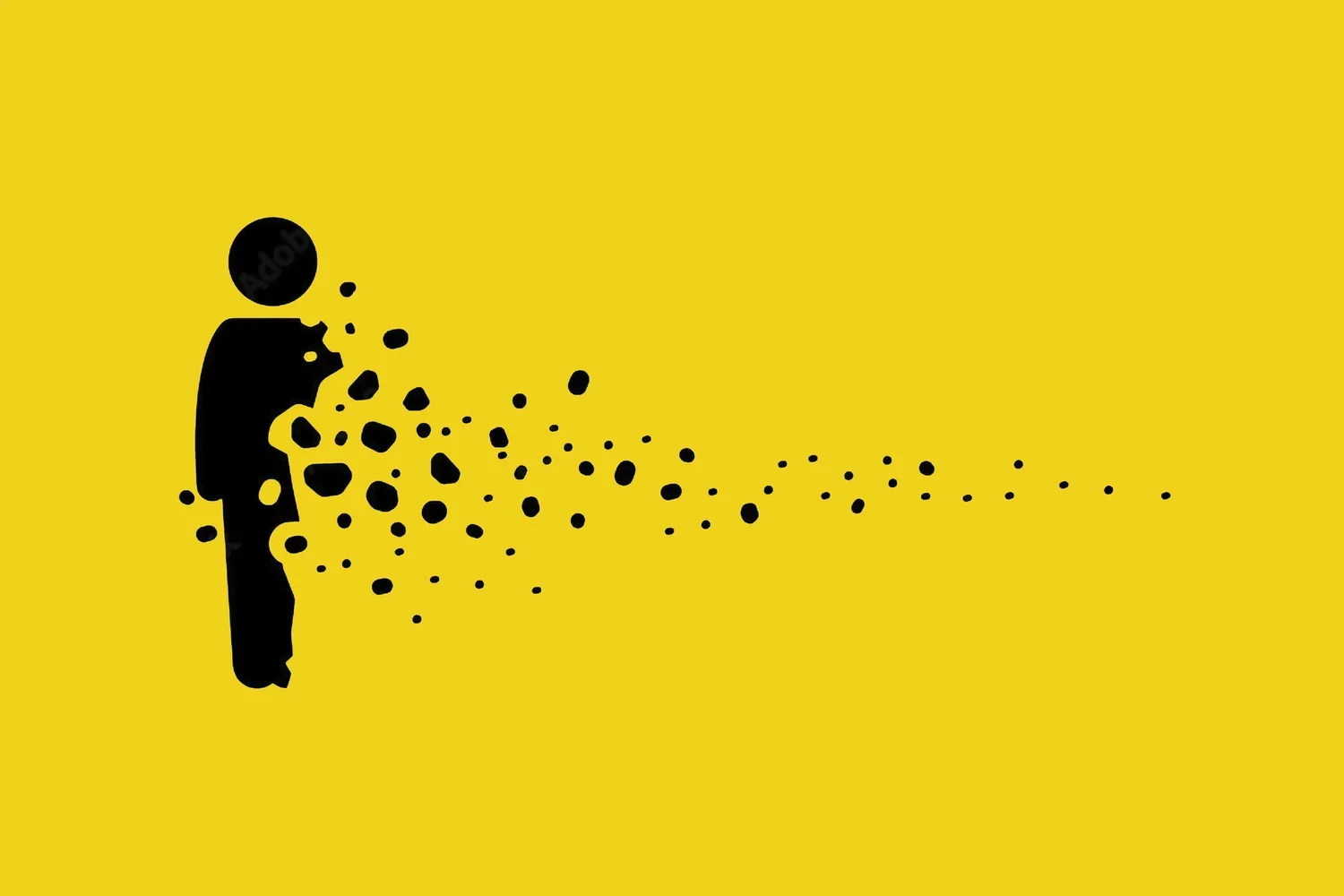
Please Remain Human: Your Job Depends on It
As AI outperforms us at being machines, the only way to stay relevant is to get better at being human.
In college, I had to read Bartleby, the Scrivener, a short story by Herman Melville.
I hated it.
Not in the way you hate eating broccoli because you know its good for you—but in the way you hate a book that feels like being trapped in the back seat of a car on a never-ending road trip, staring out the window and repeatedly asking, Are we there yet?
Bartleby was a law copyist, which in the 1800s made him the artisanal, small-batch version of a Xerox machine. His entire job was to copy legal documents by hand—tedious, soul-sucking work, but at least it was a paycheck. And then, just as he settled into his life of inky fingers and chronic eye strain, technology advanced. Newer, faster methods of producing documents emerged, and suddenly, Bartleby’s one skill—the thing that made him useful—became obsolete. His employer didn’t fire him out of malice; he just didn’t need him anymore. And instead of learning a new trade or picking up a side hustle, Bartleby simply stood there, as if waiting for the world to change its mind. It didn’t. It never does. And eventually, Bartleby, like an old fax machine shoved into the corner, faded into irrelevance, waiting for someone to finally wheel him away.
Today, we are all Bartleby.
For years, the conversation about AI revolved around automation—how machines would take over repetitive, predictable tasks, freeing humans to do more complex, creative work. But that assumption no longer holds. With the rise of agentive AI—technology that doesn’t just assist but actively makes decisions, learns, and adapts—AI won’t just replace the mundane. It will replace roles we once believed were untouchable.
If your job is defined by efficiency, optimization, processing, or analyzing large amounts of information quickly, AI will outperform you. That’s not a prediction. It’s a certainty.
AI can now draft legal documents in seconds, analyze financial risks with superhuman accuracy, and diagnose medical conditions based on millions of data points that no doctor could process in a lifetime. It will replace junior attorneys, financial analysts, radiologists, and many others in roles once considered too “expert” for automation. Just like Bartleby, these professionals will face a moment of reckoning: adapt or fade away.
And here’s the thing—we keep telling ourselves AI is just a tool, but it’s not. It’s our competition. And if we try to beat it at its game—speed, efficiency, precision—we will lose. Ask Garry Kasparov, who tried to defeat Deep Blue at chess. Ask Ken Jennings,who tried to outsmart Watson at Jeopardy.
But that doesn’t mean all jobs will disappear. It means the nature of work will change. The most valuable professionals will be those who provide what AI cannot: human connection, emotional understanding, meaning-making, ethical judgment, and curiosity.
Take teachers, for example. AI can deliver lessons, personalize learning plans, and track student progress with unmatched precision. But it won’t understand the subtle signs of a child struggling at home. It won’t recognize when a student is disengaged not because they don’t understand the material, but because they’re afraid of failing. The best teachers of the future won’t be those who know the most facts, but those who can use their human skills—empathy, intuition, encouragement—to guide and develop students in ways no algorithm can.
The same is true in medicine. AI will handle diagnostics, suggest treatment plans, and even conduct robotic surgeries. But patients won’t want to hear life-altering news from a screen. They will still need doctors who can sit beside them, explain complex conditions with care, and provide comfort in moments of fear. The best doctors won’t be the ones with the fastest diagnoses but those who can make their patients feel seen, heard, and understood.
In law, AI will draft contracts, conduct legal research, and predict case outcomes with astonishing accuracy. But clients facing a lawsuit, a divorce, or a wrongful conviction won’t just need data—they’ll need advocacy, reassurance, and strategic thinking that goes beyond algorithms. The best lawyers won’t be those who memorize case law, but those who can persuade, negotiate, and emotionally connect with clients, juries, and judges.
The same shift is coming for web designers, engineers, and social media consultants. AI is already generating websites, coding applications, and running optimized ad campaigns without human intervention. If you define yourself by the tasks you complete, you’re at risk. If you define yourself by the human value you bring, you’ll remain irreplaceable.
I see it happening with my own work. I lose speaking engagements to AI experts all the time. Conferences offer workshops titled “Integrating AI” and “Mastering AI.” Executives read articles with headlines like “Employees Are Already Using AI. How Can Leaders Catch Up?” We are going all in on the things that will replace us and ignoring the things that make us unique. I get it. AI is exciting. It’s efficient. It’s the future.
But where are the workshops on being better humans? Where are the leadership summits on developing empathy, curiosity, or ethical reasoning? Where is the corporate training on how to connect with people in ways AI never will? If the future of work belongs to those who can offer what machines cannot, why are we so fixated on training ourselves to compete with them instead of strengthening the skills that make us different from them?
The challenge isn’t learning how to use AI. It’s learning how to be more human.
In A Time Of Cowards
You think you know what courage looks like—until you come face to face with it.
Behind every stage, tucked away in a quiet corner, there’s a room most people never see. It’s called a green room. It’s not fancy. It’s not green. And it’s not private. It’s just a space where people wait before stepping on a stage and into whatever moment they’ve been called to. Sometimes there’s a couch that’s seen better days. Often there's water that is never quite cold. And mostly, it’s quiet. A holding place. A place to breathe.
I’ve spent a lot of time in green rooms. Sometimes alone, sometimes with strangers, sometimes with people whose names are far more recognizable than mine. I’ve shared those rooms with people I admire — James Taylor, Walter Isaacson, Malala. People who have shaped conversations, changed industries, and stood in moments that mattered.
But green rooms are humbling. They make no allowances for status and make everyone small. It’s not a place for importance. It’s a place for waiting. And in that waiting, even the most well-known figures become ordinary. They check the time. They fidget. They fold and unfold pieces of paper. Some stare at the floor, others pace back and forth. Everyone waits.
But there’s one green room I’ll never forget. Not because of the chairs or the size of the event. But because of who sat across from me. She didn’t say much. She didn’t need to. Her presence said it all. Calm. Strong. Kind. Unshaken. No performance. No posture. Just a quiet certainty that needed no approval.
A long time ago, she walked through an angry crowd and into a silent classroom. The people who hated her shouted until their throats burned. And still, she walked. Past fear. Past rage. Past everything designed to stop her.
She kept walking.
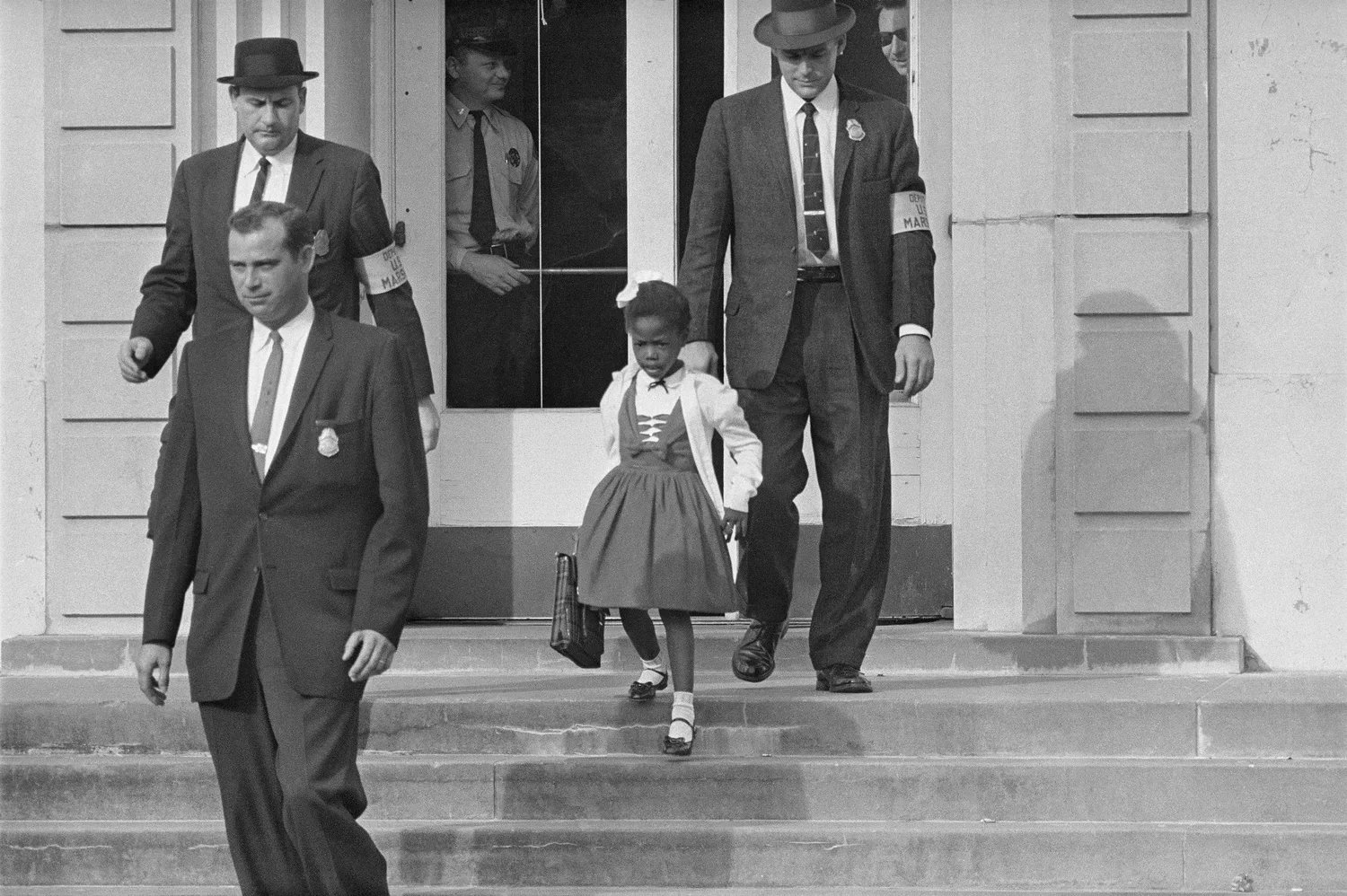
Her name was Ruby Bridges.
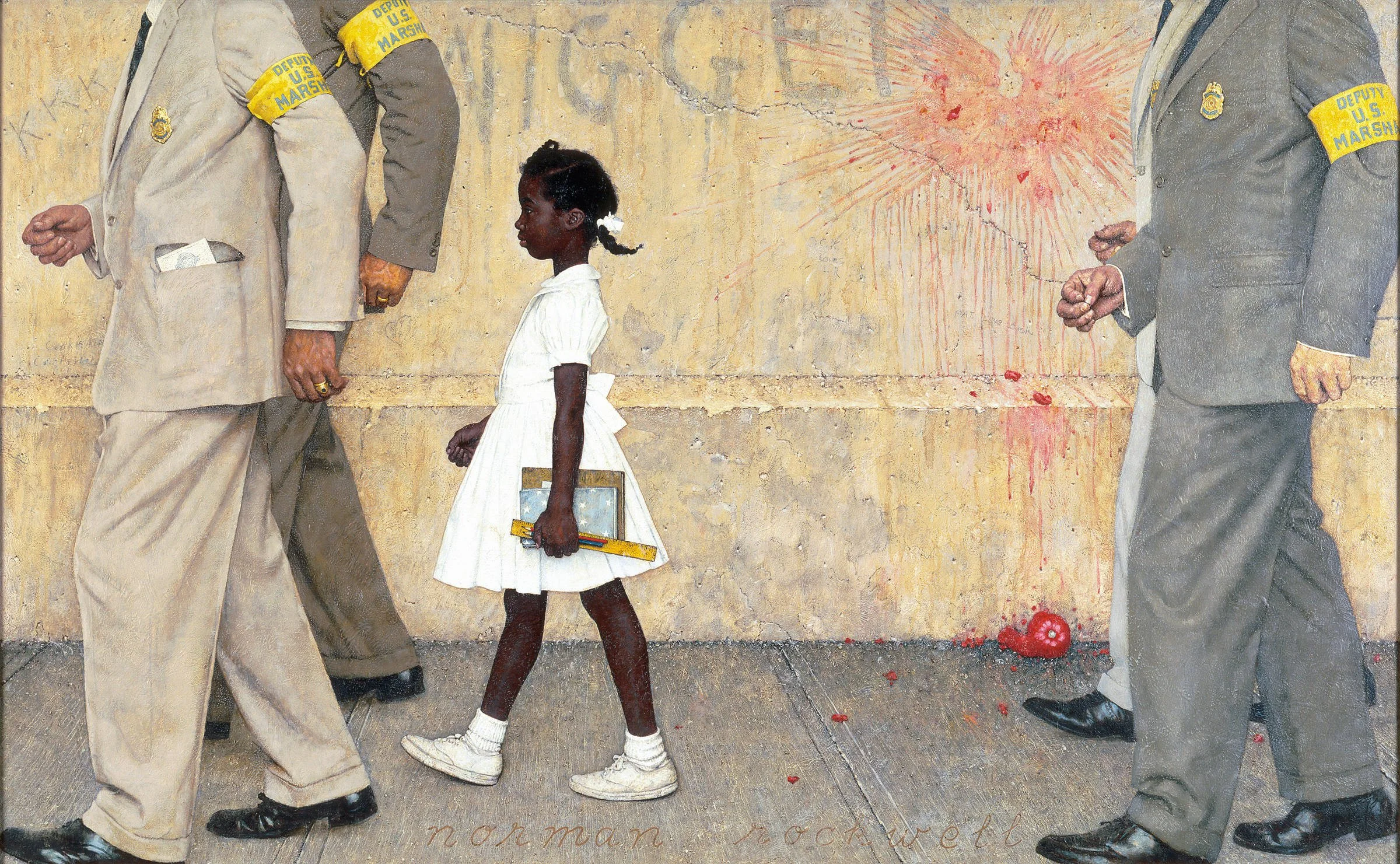
In 1960, Ruby Bridges walked into William Frantz Elementary School, a six-year-old in a dress that swayed as she moved. The air was thick that day—with hatred and noise. The mob screamed, protesting the integration of a Black child into a white school. But she kept moving forward. A little girl, facing the kind of rage most of us will never know, chose courage.
That kind of courage is rare these days. Fear is more common—disguised as strategy, justified as professionalism. Politicians won’t tell the truth if it costs them votes. Institutions—law firms, media companies, universities—choose image and money over integrity. Leaders protect their reputations instead of their principles, afraid of bad press and financial fallout. They call it caution. But let’s be honest: it’s cowardice. And the rest of us notice.
Meanwhile, cruelty is amplified. Social media rewards division. The loudest voices, the most vicious words, are celebrated. Strength is measured in outrage, and those who know better stay silent. They tell themselves it’s not their fight. They act as though silence is neutral. It never is.
Ruby Bridges didn’t walk through that schoolhouse door for herself alone. She walked for everyone who would follow. She endured hate not for recognition, but for an education, for fairness, and for the belief that a different world was possible. The mobs screamed. The adults cursed and spat. She moved through a wall of rage, her small hand in her mother's, with federal marshals flanking her. Every step was a defiance of the terror they wanted her to feel.
She was six years old.
She sat alone in an empty classroom, day after day, while parents pulled their children from the school. Outside, the threats kept coming. But she showed up anyway. She opened her books. She raised her hand. She dared to learn in a place where so many believed she didn’t belong.
She didn’t ask for the weight of history. She didn’t choose to be a symbol. She wanted what every child should have — a chance to learn, to play, to grow. And yet she carried that burden, not because it was fair, but because it was necessary. In her quiet determination, she reminded the world what courage truly looks like.
Today, when the stakes are so much lower, people and organizations are standing still, refusing to stand up for what is right. They justify their inaction. They protect their comfort. They look at their options and choose silence. But Ruby Bridges showed us that courage isn’t the absence of fear — it’s standing in the storm when everyone else is seeking shelter.
She kept walking. And the world shifted.
She was six years old.
The Age of Endless Conversation: Are We Really Saying Anything?
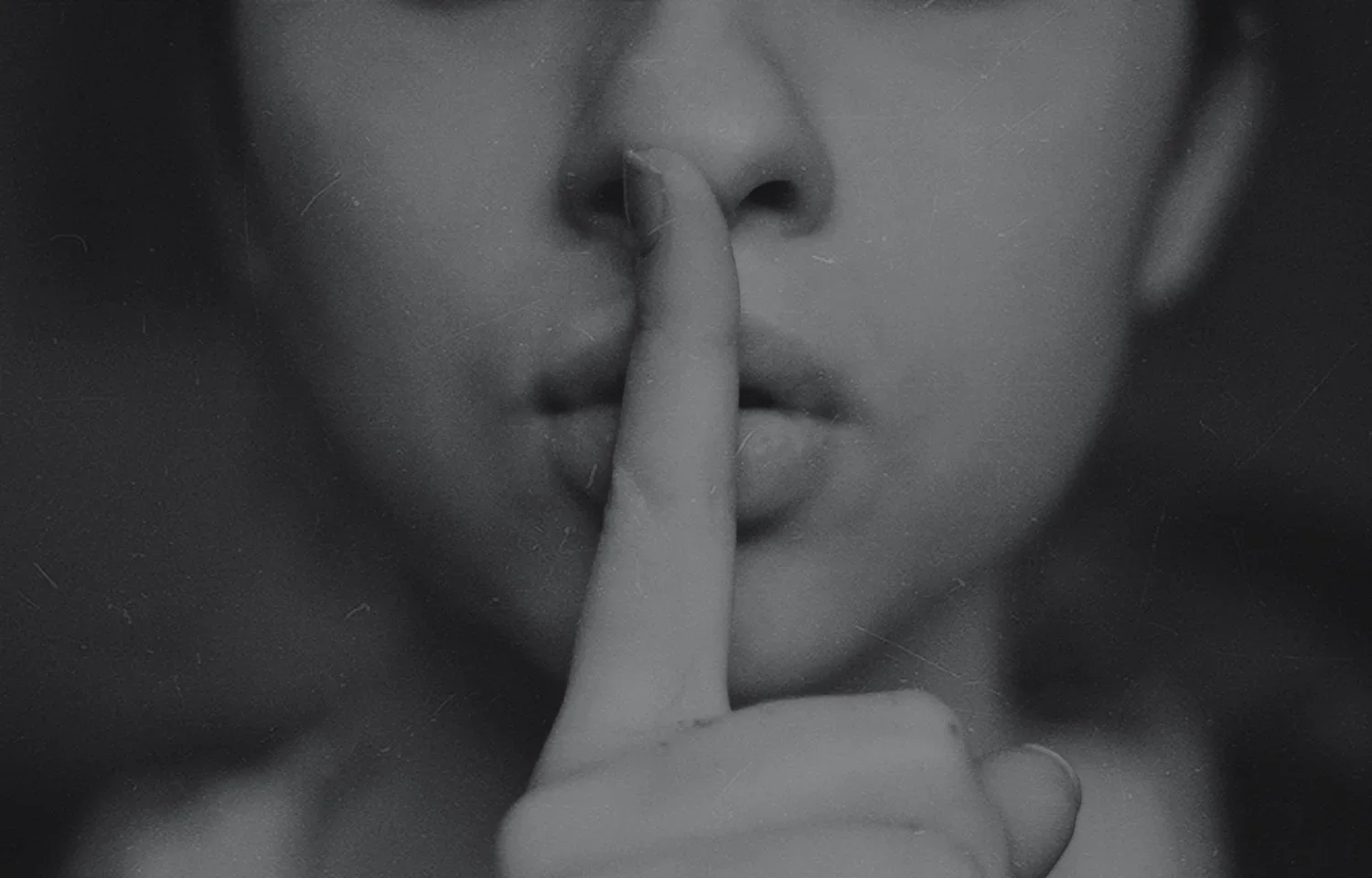
What if the real advantage isn’t talking more, but knowing when to be silent?
In 1971, a group of psychologists at Stanford University conducted an experiment. They brought in volunteers, sat them in soundproof booths, and asked them to speak into a microphone. The volunteers believed they were part of a group discussion, that their words were being broadcast to others in different rooms. But in reality, they were alone. The other voices they heard—encouraging, interrupting, reacting—were prerecorded. The experiment was testing something simple: when people believe they are being heard, do they feel more connected?
The results were surprising. The volunteers spoke longer than expected. They repeated themselves and filled silences with more words. They were afraid of the pauses.
The researchers concluded that people don’t just want to be heard; they want to know, with absolute certainty, that their words are landing somewhere, that they are making an impact. And if they aren’t sure, they will just keep talking.
Now, think about this: what if that experiment wasn’t just a study, but a preview of the world we were building—a place where we talk more than ever, even when no one is listening?
For decades, we believed communication was the answer to everything. The internet promised to connect us, to bring knowledge within reach, to collapse distances and dissolve barriers. Social media was supposed to give everyone a voice. AI would handle the small talk, so we could focus on bigger, more important conversations. And let’s not even start on storytelling—the endless demand for more narratives, more brand voices, more content, as if another well-crafted story could solve what action has not. Businesses embraced these tools, convinced that more communication meant more efficiency, more collaboration, more progress.
But that isn’t what happened. Instead of enlightenment, we got noise. Instead of deeper understanding, we got automation. Companies built systems that reward volume over meaning, where algorithms stand in for real connection, where responding quickly and often is more important than saying something useful. Communication has become the product, not the tool. And in all this talking, the most important things are being left unsaid.
The Space to Think
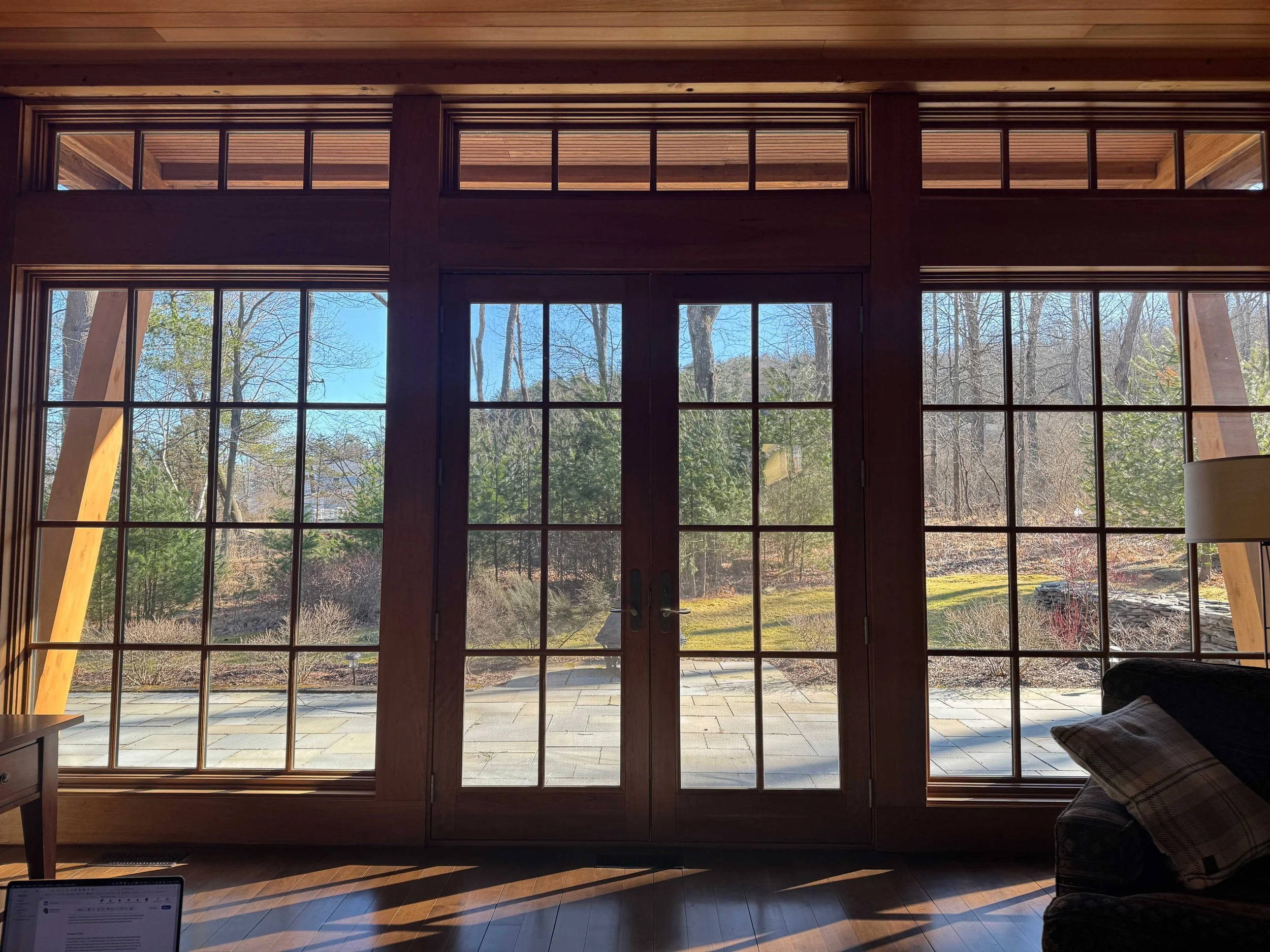
I am lucky. My days are mostly filled with space and silence. I am surrounded by four acres of trees, plants, and sky. If I sit still long enough, I can hear the wind shift directions. I can watch the shadows of clouds move across the ground. Deer pass through the brush in the mornings. Birds argue in the afternoons. At night, the world goes so quiet that I can hear my own thoughts as if they were something separate from me, something real and distinct.
This silence is not empty. It is full of something else—possibility, clarity, the room to think before I speak, to imagine before I write, to create before I share. Without it, I wouldn’t be able to do my work. I couldn’t stand on a stage and communicate something meaningful. I couldn’t craft an argument that holds together, couldn’t shape words in a way that makes them worth reading.
And yet, I know that my experience is unusual.
Most people do not live in silence. They wake up to unread emails. They go to sleep with Slack still open. They spend their days answering, responding, reacting—leaving little room for real thinking, let alone stillness.
Businesses operate the same way. They mistake communication for action, responsiveness for productivity. They implement more tools, more channels, more ways for employees to stay connected, and yet the result is often the opposite. People feel scattered, distracted, pulled in too many directions at once. Work expands to fill the space that should have been left open for thinking, for depth, for anything that might actually move the needle.
In a world where silence is rare, words lose their weight. We talk more, but say less.
And somehow, we still wonder why nothing changes—or why it often gets worse.
The Illusion of Connection
Somewhere along the way, businesses—and people—came to believe that talking is the same as thinking, that responding is the same as delivering value. They invested in communication tools the way past generations invested in infrastructure, as if conversation itself could be the foundation of progress—Facebook, Zoom, Slack, Microsoft Teams, Google Meet, Webex, Snapchat, Discord, Signal, LinkedIn messages, project management pings, never-ending email chains, AI-powered chatbots, automated responses, and notifications that follow us from our work desks to our phones to our watches to our bedrooms—all designed to keep us constantly connected, yet rarely creating space for real thought. They assumed that if we could just talk more—more often, more efficiently, more seamlessly—everything else would follow.
It hasn’t.
Firms today are in a constant state of communication, but little of it moves them forward. Leaders talk more about alignment, engagement, and collaboration than they work to achieve them. Meetings lead to more meetings. Messaging platforms designed to speed things up that, in practice, only make things harder to escape. Meanwhile, employees feel more exhausted, clients feel more unseen, and work that once required thought has been reduced to an endless loop of back-and-forth.
It’s the same in our personal lives. We text, we post, we reply, we react. We keep conversations going just to keep them going. And yet, people report feeling lonelier, more isolated, more disconnected than ever before. More talking has not led to better relationships. More engagement has not led to more meaning.
If anything, the opposite seems true.
What Comes Next
Silence isn’t nothing. It’s where ideas form, where thoughts have time to become real. It’s where you figure out what you actually think, instead of just reacting to what’s in front of you. But in most workplaces, silence is treated as an absence, a problem to be solved. If no one is talking, something must be wrong. If you haven’t responded yet, you must not be paying attention. The expectation is to keep going, keep engaging, keep producing.
But what if businesses built space and silence into the way they worked? Not as something people had to fight for, but as something protected, expected. Time to think before a response. Time for an idea to take shape before it’s shared. Time to step away before deciding what comes next.
And what if we did the same in our personal lives? What if we stopped filling every gap in conversation, every quiet moment with noise? What if we allowed pauses to exist without rushing to explain, to justify, to distract? Maybe our friendships, our relationships, even our sense of self would be stronger if we weren’t so afraid of quiet. If we trusted that understanding doesn’t always need words, that presence isn’t measured by constant communication, that real connection sometimes happens in what isn’t said at all.
A company that does this will make different choices. So will a person. They won’t measure value in words spoken, messages sent, time filled. They won’t treat silence as something to be avoided, but as something to be used.
The most successful organizations, and the most fulfilled people, won’t be the ones that say the most. They’ll be the ones that understand when to say nothing at all.
Adapt or Die: Silence is not a quaint idea. It is a competitive advantage. The era where knowledge and information alone set organizations apart is over. Data is abundant. Facts are instant. The true differentiator now is not what we already know, but what we are willing to explore.
Why ‘Understanding Your Client’s Business’ No Longer Works
The world no longer rewards those who claim to have all the answers—it belongs to those who ensure others can navigate uncertainty without losing everything.
I went back to the town where I grew up not long ago and ran into someone from high school. I recognized her immediately. The same eyes, the same voice. The same hair.
The exact same hair.
A thick curtain of blonde layers, teased and sprayed, obedient to a style that had long since left the world behind. It was a look frozen in time—like someone still rocking a bouffant from the ‘50s or frosted tips from the early 2000s. It wasn’t just a hairstyle; it was a time capsule. Seeing it again in person was like spotting a woolly mammoth grazing outside a Whole Foods—improbable, yet there it was, defying extinction.
Of course, there’s nothing wrong with keeping something you love. People hold onto things all the time—concert T-shirts, Christmas ornaments made of macaroni, cats that absolutely do not like them. But this wasn’t nostalgia, and it wasn’t sentimentality. This was a deliberate act of defiance. A refusal to acknowledge that trends fade away, that decades pass, that the world is no longer what it was.
I worry about people who don’t change. I worry about what it means to resist movement in a world that will not wait for you. Because time is not still, and it does not pause. And those who cling to the past—not just in style, but in mindset—risk becoming little more than museum exhibits of their former selves.
The Myth of Knowing
I see it everywhere. In industries. In businesses. In professionals who still talk about the same things they’ve talked about for decades, their words as crisp and polished as they were in an era that no longer exists. They still write about it. Sell it. Teach it. Believe it.
One of the most glaring examples is the persistent conversation about being a Trusted Advisor. The old mantra: “Understand your client’s business.” For years, this was the gold standard. Know your client’s industry better than they do, anticipate their needs, position yourself as the person with the answers. But what happens when your client doesn’t even understand their own business anymore? What happens when the foundation you built your expertise on is no longer solid ground?
I used to believe in it too. I said those words, I built strategies around them, I taught them as if they were laws of nature. But not anymore. Because the world that made them true is gone.
The Fragility of Stability
Industries are shifting faster than they were ever meant to. Business models that thrived for decades collapse overnight. Companies that once prided themselves on their unshakable certainty now pivot like struggling swimmers, desperately fighting to stay afloat.
A five-year strategy? Unthinkable. Even the best leaders now revise their plans quarterly, sometimes monthly, sometimes by the week. And yet, some professionals still walk into meetings, still look across conference tables, still shake hands and say, We understand your business.
They don’t. Because no one does. Not fully. Not anymore.
The Outdoor Retailer Who Didn’t Know What It Was
I saw this firsthand with an outdoor retailer I worked with. They used to know exactly what business they were in. They made hiking boots. Backpacks. Gear that was built for the edges of the world. Their competition was clear: other companies making the same things. Then the market shifted. Suddenly, they weren’t just competing with other gear brands. They were up against sensor-embedded boots, smart jackets that adjusted to body temperature, gloves that tracked heart rates.
They didn’t know what business they were in anymore.
Were they still a retail company? A tech company? Were they both? Were they neither? And if they didn’t know, how could their advisors?
Their consultants, their attorneys, their financial planners—every professional who had once stood by them as a so-called expert—kept offering strategies, recommendations, paths forward. But there was no single path anymore. There was no one right move. There was only risk. Experimentation. Trying and failing and trying again.
They didn’t need an advisor—someone telling them which way to go.
What they needed was a Protector.
What a Protector Does
A Protector does not promise certainty. They do not dictate a single route. Instead, they make it possible for their clients to explore, to test ideas, to take risks without losing everything.
A lawyer who drafts contracts that bend instead of break. A consultant who builds systems strong enough to absorb change. A financial expert who ensures that risk-taking does not become ruin.
A Protector is not someone who claims to know the future. They are the ones who make sure their clients can keep moving forward, even when the future is unclear.

Protectors in Action
Think about the outdoor retailer. Right now, demand is rising for wearable devices that track body signals—an opportunity that requires new technical knowledge, supply chains, and customer support systems. But what happens when, in a year, wearable patches that attach to the skin or even injectable devices become the new standard? The retailer must adapt to current trends while preparing for what comes next. What they may not realize is that they don’t just need an innovator; they need a Protector—someone who enables them to act with agility while maintaining stability. A Protector ensures they can explore new opportunities without betting the entire company on an uncertain future. In a world where change happens in weeks instead of years, a Protector makes it possible to take bold steps without falling off the edge.
The Ones Who Will Last
The businesses that will endure are not the ones with the best advisors. They are the ones who build the conditions to survive uncertainty. The professionals who will remain indispensable are not the ones who promise the right answers, but the ones who ensure that when failure happens—and it will—it is survivable.
And so, the choice is simple. You can keep doing what you’ve always done, saying what you’ve always said. You can keep waiting for things to go back to normal, for stability to return, for the rules to reset.
Or you can let it go.
Let go of the need to be right. Let go of the illusion of certainty. Let go of the title you once gave yourself.
And take on a new one.
Be a Protector.
Not the one who points the way forward.
The one who makes sure no one is lost along the way.

A World Without Us
Intelligence without understanding is just imitation, and in our race to perfect machines, we risk hollowing out the very things that make us human.
In 1956, a group of researchers gathered at Dartmouth College to answer a question that had captivated scientists and philosophers for centuries: Can machines think? They were confident that, with the right programming, computers could replicate the complexities of human cognition. The result of their optimism was the birth of artificial intelligence, a field that would go on to revolutionize the world. Today, nearly seventy years later, we are surrounded by machines that can write poetry, diagnose illnesses, and drive cars. And yet, the question remains unanswered.
Because imitation is not understanding, and computation is not thought.
The problem is one of perception. AI doesn’t think—it amalgamates. It hoards information from vast oceans of data and stitches together responses based on probability, like a mosaic artist selecting tiles without ever seeing the whole picture. It can construct a sentence, but it cannot hold a belief. It can mimic emotion, but it cannot feel. It can answer a question, but it has no understanding of why the question was asked in the first place.
Human beings, by contrast, do not merely collect information. We separate, discern, and assign meaning. The human mind is not a database—it is a storyteller.
The Difference Between Knowing and Understanding
Imagine you are in a foreign country, standing in front of a menu written in a language you do not speak. A machine might scan the text, recognize familiar words, and cross-reference them with previous data. Within seconds, it might conclude that the meal in question consists of fish and rice. But what it will not understand is the cultural significance of that dish, the memories the smell evokes, the way it tastes when paired with a particular wine, or the disappointment that comes when the chef has had an off night.
AI deals in statistical likelihoods, while humans deal in experience. A machine’s knowledge is an endless stream of data points; a human’s knowledge is the sum of a lifetime of choices, interactions, and consequences.
That is why two people can read the same book and walk away with entirely different insights. It is why one person’s heartbreak is not the same as another’s, even if both have suffered loss. It is why no algorithm, no matter how sophisticated, will ever capture the depth of a human relationship, the pull of nostalgia, or the thrill of an unexpected discovery.
The Fallacy of the All-Knowing Machine
We have been taught to believe that knowledge is a matter of accumulation—that the more we know, the better we understand. From an early age, we are rewarded not for insight, but for retention. Our education system measures intelligence in the number of facts we can memorize, the equations we can solve, the historical dates we can recite. Degrees and certifications declare our worth based on what we have stored, not what we have discerned. At work, résumés list credentials, not the depth of our thinking. Promotions favor those who appear the most knowledgeable, not necessarily those who make the wisest decisions.
This is the illusion that fuels AI’s ascent.
A chatbot can absorb the entirety of Wikipedia and still fail to grasp the nuance of a single conversation. It can scan centuries of legal texts and still be incapable of judgment. It can read thousands of love letters and never experience the sting of unrequited affection. Because knowledge alone is not wisdom.
Wisdom is not measured in volume. It is not the ability to store, but to separate—what matters from what does not, what is signal from what is noise. It requires experience, emotion, and an understanding of context—things that cannot be measured on a test, listed on a résumé, or programmed into a machine.
Yet we continue to believe that if we feed a machine enough information, it will eventually wake up and become like us. We assume that accumulation leads inevitably to intelligence, that a system that knows everything must eventually understand something.
But intelligence is not scale. Consciousness does not emerge from data points. It emerges from the ability to make sense of them.
The human brain is not a database; it is an engine of discernment. We do not merely collect—we filter, evaluate, discard the irrelevant, and treasure the significant. A machine may recognize a famous painting, but it will not pause in front of it, awed by its beauty. It may predict a market trend, but it will not feel the thrill of risk or the weight of consequence.
Because understanding is not just knowing—it is knowing why it matters. And that is something no machine will ever do.
Why Connection Cannot Be Computed
And then, there is the most profound difference of all.
Machines do not form relationships.
Relationships are built on shared experiences, on trust that deepens over time, on the quiet understanding that exists between people who have truly come to know one another. When we trust someone, it is not because they have memorized our preferences or anticipate our needs. It is because we believe they see us—not as data points, but as something whole and irreplaceable.
No machine can do that. It can simulate a conversation, but it will never notice the hesitation in our voice or the meaning behind our silence. It can generate a reply, but it will never wonder how that reply made us feel. AI can offer convenience, efficiency, and even insight—but it cannot offer connection.
The Illusion of AI’s Future
There is a theory that one day, AI will become so advanced that it will pass for human. That it will be indistinguishable from us in every way that matters. And perhaps, from the outside, it will seem that way. Chatbots will grow more eloquent, robots more lifelike, algorithms more refined.
But inside, there will still be nothing.
No longing, no intuition, no spontaneous bursts of laughter. No memories of childhood summers, no dreams of the future. No ability to separate what is useful from what is meaningful.
The great irony of artificial intelligence is that, for all its promise, it is still missing the one thing that makes intelligence worth having: the ability to feel what it means to be alive.
And yet, the real danger is not that AI will become like us—it is that we are becoming more like it.
In our race to perfect machines, we are neglecting the one thing AI will never be able to replicate: the depth of human experience. We pour billions into artificial intelligence while starving the very qualities that make life rich and meaningful. We optimize systems while numbing ourselves to the relationships, struggles, and moments of beauty that define what it is to be human. We act as if experience can be bypassed, as if connection is optional, as if intelligence alone is enough.
But intelligence is not enough.
Our greatest ability is not simply to accumulate knowledge, but to understand—to sense, to interpret, to infer. We do not just see, hear, touch, taste, or smell; we attach meaning to what we perceive. A scent is not just a chemical signature in the air—it is a childhood kitchen, a lost love, a moment of longing. A glance is not just a movement of the eyes—it is an invitation, a warning, a secret shared between two people. A conversation is not just words exchanged—it is intent, motivation, desire, emotion, all tangled together into something only another human can truly understand.
We do not process the world through data points. We experience it through context.
A world where intelligence is optimized but experience is hollow is not progress. It is surrender.
The future of AI will not define us. What will define us is whether, in our pursuit of artificial intelligence, we abandon the very things that make us uniquely human.
Because if we do, the cost will not be the rise of machines. It will be the slow disappearance of understanding itself.
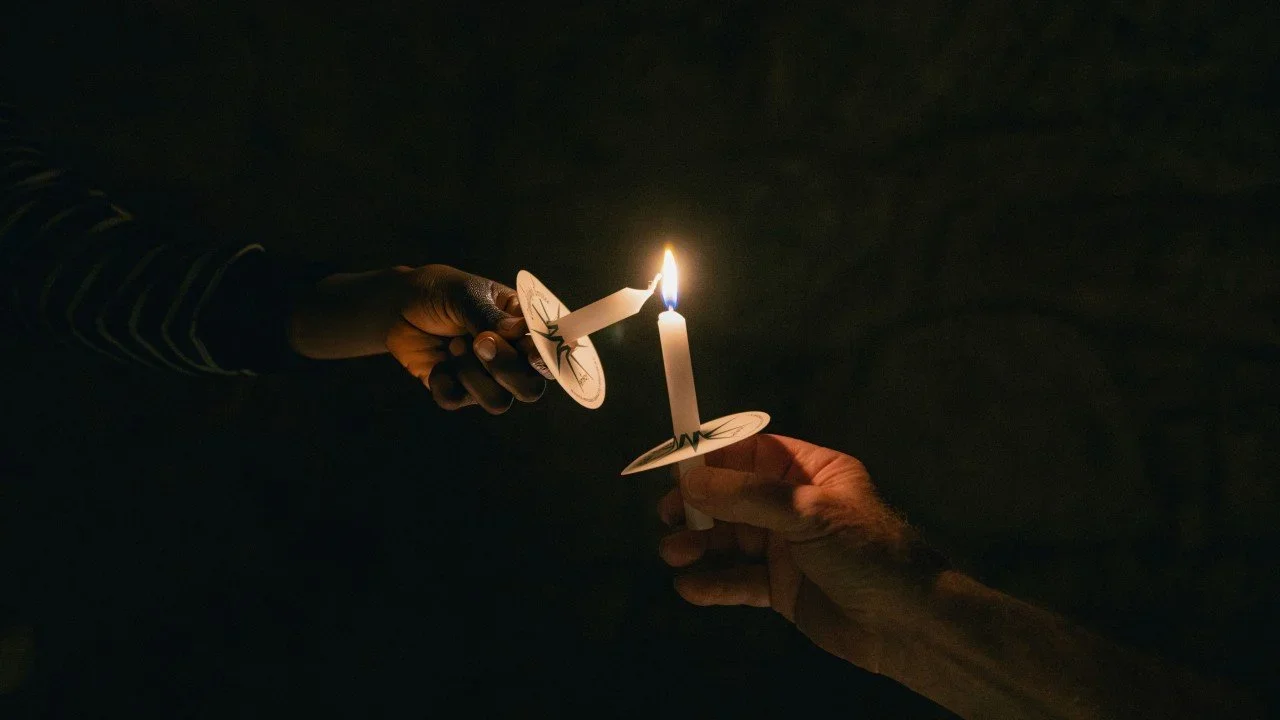
How Small Acts Create Lasting Impact
None of us succeed alone—opportunities don’t come from effort alone but from the quiet generosity of others. Someone, somewhere, spoke your name in a room you weren’t in.
If I look back at my career, I see a path paved by other people’s generosity. I did not build it alone. I did the work, yes. I put in the hours. But at every turn, someone spoke my name when I wasn’t there to hear it. Someone recommended me, advocated for me, lifted me up, made sure I was seen.
Advocacy
I have never been the loudest voice in the room. I have never been the best networker. I don’t belong to professional associations, I don’t sit on boards, and for most of my career, I never had the representation of a speakers bureau. And yet, I have spoken to nearly 500 organizations across 29 countries. Each invitation was not the result of self-promotion or strategy but because someone believed my work was worth sharing. My name traveled through conversations I was not a part of, carried forward by people who had nothing to gain.
Beyond those organizations, my work has reached more than 200 law firms. When the largest of those call, I already know how the conversation will start: Kent Zimmermann recommended you. His name is the one I hear most often, but he is not alone. There are many others, people I barely know, people I may never meet, who have spoken on my behalf. They have done this not because they had to, not because they owed me anything, but because something inside them told them to.
I wonder sometimes why people take that risk. When you advocate for someone, you tie yourself to them. If they fail, a part of that failure reflects on you. If they rise, you rise with them. It is a form of generosity, but it is also something deeper than that. Maybe they remember what it was like to be given a chance. Maybe they understand that no one gets anywhere alone. Or maybe, in some way, they just believe the world should work like this—people lifting people, one name at a time.
Recognition
Then there is recognition. A different kind of generosity. Not an opportunity, not an introduction, just a moment where someone says: I see you. A note after a talk. A message on LinkedIn. A passing comment that stays with you longer than the person who said it ever intended. It does not change careers. It does not open doors. But it keeps people going. Because work, when unrecognized, has a way of making itself smaller. The longer it goes unseen, the harder it is to believe it was ever meant to be seen at all.
I have been guilty of silence. I have read things that moved me, heard things that stayed with me, watched people do work that deserved acknowledgment—and I have said nothing. Not because I didn’t care, but because I assumed they already knew. But what if they didn’t? What if that one sentence, that small gesture, was the thing that kept them going?
Consider the people who have spoken on your behalf when you weren’t in the room. Those who have opened doors, made connections, or championed your efforts. Recall the moments when someone acknowledged your contributions, when their words reshaped your day, your week—maybe even the course of your life.
Now ask yourself: When was the last time you did that for someone else?
We all have that ability—to lift others up, to make them seen, to share their work in ways they may never know. Not out of obligation. Not for personal gain. But simply because we understand the impact of being recognized.
***
P.S. I have been the beneficiary of this kind of advocacy and generosity more times than I can count. And so, in gratitude, I will be using this space (on Tuesdays) in the coming weeks to recognize and advocate for those whose work deserves to be seen. I invite you to do the same. Because if I have learned anything, it is this: A single voice, at the right moment, can change the course of a life and career.

Why Time Feels So Strange Right Now—And How to Take Control of It
Time isn’t something we simply measure—it’s something our brains construct, shaping it through memory, attention, and change. If time feels broken, it’s not because it stopped, but because our minds stopped registering its movement.
From the earliest days of civilization, humans have tried to trap time—to make it tangible, something we could measure, record, and control. We carved notches into wood to track the passage of days, etched patterns into stone to mark the cycles of the moon, and later, built clocks that ruled over hours with mechanical precision. We created calendars to structure our lives, diaries to preserve our memories, and timelines to make sense of history.
But it’s not the marks we make that define time. It’s how time marks us.
We think of time as something external—something we manage and measure. But our actual experience of time is deeply personal and uneven. Some moments stretch endlessly, while others collapse and vanish. We look back at certain years as if they never happened, entire stretches of our lives condensed into a single blur, while others—single days, single minutes—remain vivid, expanding across our memories like a landscape we can still step into.
Why Time Feels Broken
We assume time moves in a straight line—steady, predictable. But that’s not how we experience it.
Time is not just something we record; it’s something our brains construct. Neurologically, time is fluid, shaped by attention, memory, and change. When we’re engaged—when our brains are absorbing new information—time stretches, expanding with the weight of details. But when life is repetitive, when days blur together without distinction, the brain condenses those experiences, storing less, compressing time into something vague and fleeting.
This is why childhood summers seemed endless—because every day was filled with firsts, and the brain captured every new detail. It’s why the early days of lockdown felt unbearably slow but now seem like a single, featureless pause—the lack of novelty meant fewer memories were recorded, making time feel as if it barely happened at all. It’s why AI, a gradual development, now seems like it appeared overnight—because our brains weren’t tracking its steady rise.
People say they’ve lost time. But time wasn’t lost. The brain simply didn’t register enough for it to feel like it was ever there.
The Illusion of Certainty
We want time to behave in a structured way. Our brains crave patterns, rhythms, and predictability because that’s how we make sense of the world. When we can anticipate what comes next, we feel in control. But when routines are disrupted—by global events, technological shifts, or personal upheaval—the brain struggles to place events in a logical sequence. Time begins to feel fragmented, chaotic.
Some people want to fast-forward through this uncertainty—skip past the economic shifts, the political dysfunction, the sense that everything is in flux—and arrive at a future that feels more settled. But time doesn’t work like that. The brain doesn’t process time through passive observation; it registers it through change.
We don’t experience time. We experience difference.
That’s why certain years vanish entirely from memory while others remain vivid—because we don’t mark time in minutes or hours, but in transformation. When nothing meaningful shifts, time erases itself.
For years, people have been waiting for time to restart. What they don’t realize is that it never actually stopped. Their brains just stopped tracking movement within it.
The Chase for Time
We are not passive travelers through time—we chase it. We try to make up for lost time, to slow it down, to hold onto fleeting moments. But the harder we try to grasp time itself, the more our brains filter it, distill it, reduce it to something smaller than it actually is.
Time isn’t defined by the marks we carve into calendars or the hours we count. It exists in the neural imprints of our experiences, in the memories our brains choose to hold onto, in the changes we undergo along the way.
The past few years have felt strange because they have disrupted our brain’s ability to track progress. But time isn’t broken. It isn’t missing. It has been happening all along, imprinting itself on us in ways we won’t fully grasp until we look back and see the shape of what it left behind.
***
How to Take Back Control of Time
The key to managing time isn’t about scheduling better or working harder. It’s about understanding how our brains shape time—and using that knowledge to our advantage. There are three ways to do that:
1. Mark Progress, So Time Doesn’t Disappear
Time feels faster as we age because routine blurs our days. Novel experiences, milestones, and transitions make time feel richer and more memorable.
To counteract this:
Break Routines. New experiences—travel, hobbies, or small changes—help time feel fuller.
Mark Transitions. Acknowledge endings and beginnings to make moments distinct.
Look Back. Reflecting on past growth reinforces time’s passage.
Without markers, time compresses. Creating them ensures we don’t just pass through time—we remember it.
2. Slow Down The Moments That Matter
We don’t retain time itself—only what our brains successfully encode. The best moments often feel fleeting because we fail to fully absorb them. When we’re distracted—thinking about work on vacation or planning a response while someone speaks—our brains don’t record the experience deeply, making it feel insubstantial in hindsight.
To counteract this:
Pay Attention. Our most vivid memories come from sensory and emotional engagement. Noticing details—sounds, textures, expressions—makes moments more lasting.
Let Experiences Settle. Rushing from one thing to the next prevents memories from forming. Pausing after major events—whether a success, loss, or transition—helps anchor them.
Be Present. Studies show that those who focus on the moment, rather than anticipating the next, retain richer memories and experience time more fully.
Slowing down isn’t about stopping—it’s about making sure we feel time before moving through it.
3. Get Unstuck by Creating Movement
The hardest way to experience time is to feel like it isn’t moving. Waiting—for answers, change, or resolution—can make time feel unbearable. But waiting doesn’t have to mean wasting time.
To regain a sense of movement:
Shift Focus. If one part of life is stalled, direct your energy elsewhere. Progress in any area makes time feel active instead of stagnant.
Create Small Wins. Even minor achievements trigger momentum. If you can’t control the big picture, focus on something manageable—a task, a habit, an achievable goal.
Adjust Perspective. If the future feels overwhelming, zoom in—focus on today or this week. If the present feels exhausting, zoom out—remind yourself of the bigger arc.
When we’re stuck, we wait for time to move us forward. But time doesn’t do that. We have to move through it.
The Longest-Running Commercial In History
The narrative shaping public perception—once through decades of television stereotypes and now through misinformation about DEI—is the longest-running commercial in history, reinforcing exclusion and bias through relentless repetition.
This Sunday, over a hundred million people will watch the Super Bowl. Three hours of noise, of bodies colliding at full speed, of a spectacle so precisely choreographed that even the spontaneity is scripted. But the real competition—the one with the highest stakes—won’t be on the field. It will play out on televisions screens and last just 30 seconds.
A company will spend $8 million for half a minute of airtime. That’s before hiring directors, actors, special effects teams, marketing consultants who know exactly how to bypass your skepticism and go straight for your subconscious. By the time that ad reaches you, it’s a $18 million investment.
Why? Because it works. Because in 30 seconds, they can make you laugh, make you cry, make you feel something long enough to remember their name. They can get inside your head, rearrange the furniture, and when they leave, they’ll have convinced you it was your idea all along.
Now, if 30 seconds can do that, what do you think 30 minutes can do? What do you think happens in 60 minutes? What do you think happens when a message isn’t delivered once, but every day, for years, for decades?
You don’t have to wonder. If you grew up watching television between the 1960s and the late ’80s, you already know.
Back then, television had a formula. It was efficient and predictable.
Black and Latino men were criminals—gangsters, drug dealers, shadows in the background of police dramas, disposable bodies in shootouts. When they weren’t criminals, they were janitors, butlers, junk dealers. Black and Latina women were prostitutes, drug addicts, maids who somehow always had just enough sass to be entertaining but never enough agency to be taken seriously.
White women answered phones, waited tables, or stayed home. If they weren’t housewives, they were secretaries. If they weren’t secretaries, they were accessories—sexy, empty-headed, a punchline with great legs. Asian characters existed on the edges of the frame—martial artists, docile assistants, workers who didn’t complain, didn’t talk back, didn’t complicate things.
Nobody needed to explain it. It was just there. The way things were.
It wasn’t a conspiracy. It didn’t have to be. Because repetition does the work for you. It embeds itself, becomes muscle memory, reorganizes how you see the world. You don’t question the formula when it’s all you’ve ever known.
And now, a different crowd is at it again.
This time, the distortion is DEI.
People who know nothing about it are taking to the airwaves, spitting out soundbites, twisting it into something ridiculous. They call it a handout. They call it unfair. They act as if opportunity is a finite resource—like there’s only so much to go around, and if someone gets a shot, someone else must be losing one.
The message is old. The language is new.
They don’t have to say out loud that Black and Latino professionals must not be qualified. The silence does the heavy lifting. They just need to plant the idea, let their audience fill in the blanks.
If companies are making an effort to include more people, those people must not have earned it. How could they?
The ignorance is staggering. The repetition is worse.
Because this is how you shape perception. The same way television once slotted people into roles—criminal, maid, sidekick—DEI is now framed as a charity case, a giveaway, a reward for the undeserving. And if you repeat something enough times, people start believing it.
What they won’t say—what they refuse to admit—is that DEI isn’t about handouts. It’s about correcting the distortions that should never have been there in the first place. It’s about recognizing that teams, companies, institutions function best when they aren’t built to exclude, when they aren’t afraid of different perspectives, different voices, different ways of thinking.
DEI doesn’t lower standards. It raises them. It ensures that the best ideas rise, that the best talent gets recognized, that people are valued for what they bring—not dismissed because of what others have been conditioned to believe about them.
But that’s not the message being sold.
The same people who once saw a world of criminals and maids on television now see DEI and think “unearned.”
It’s the same lie, remastered for a new audience.
It's the longest-running commercial in history.

Ghosted
Ghosting has become an unsettling norm in professional settings, mirroring the awkwardness of teenage miscommunication, but businesses that embrace silence risk damaging their reputations and burning bridges they may later need to cross.
When I was 14, I had a girlfriend. Or at least, I was told I did. At that age, relationships were largely theoretical, like string theory or a reliable public WiFi. I couldn’t drive, which meant I couldn’t see her outside of school, and talking to her in school—where I risked the heckling of my so-called friends—was absolutely out of the question. That left me with one remaining option: calling her on the telephone.
For those under a certain age, a telephone was a large, immovable object that lived in your house like an elderly relative. Ours were rotary phones, which required you to insert your finger into a little numbered hole and spin it clockwise for each digit. If you made a mistake, the phone did not care. You had to start over. These phones were placed strategically in two locations: the kitchen, where my entire family congregated, and my parents’ bedroom, where I had a strict “no loitering” policy enforced against me.
Every night, I would pace for hours, building up the courage to dial her number. I would talk myself into it, then out of it, then back into it again. When I finally got up the nerve to place the call, one of her parents or siblings would answer, and I would, without fail, hang up immediately. My logic was simple: if they didn’t know for sure it was me, then maybe they wouldn’t talk about it at dinner. But we lived in a small town, where the rumor mill ran more efficiently than the post office, and by the third or fourth hang-up, they absolutely knew it was me.
From what I later gathered, they had full-family discussions about how rude I was, as if I had purposefully called just to breathe into the receiver like a hedge-peeking creep. Eventually, my girlfriend—if she could still be called that—stopped waiting for my call. She moved on to a more communicative boyfriend, possibly one with access to a push button phone.
I tell this story because lately, I have been reliving that experience, though this time, I am the one being ghosted.
For most of my career, the process of booking a speaking engagement was predictable. A CEO, COO, CMO, managing partner, or senior event planner—people with some experience and a vested interest in getting things done—would reach out, ask about my availability, and set up a call to see if I was a good fit. In exchange for their consideration, I would hold the date for them, waiting patiently until they made a decision. Sometimes they went in another direction, which was fine. That’s life.
But lately, the process has changed. Now, I get an email from someone who, based on their title, is either very new to their job or was created in a lab just last week. They ask if I’m available on a certain date. I confirm that I am and offer to set up a call, promising to hold the date in the meantime. They enthusiastically accept. And then—nothing.
Not a “We’ve gone in another direction.” Not a “Thanks for your time, but we’re looking for someone who uses more cliches and buzzwords.” Not even a “You can release the date.” Just silence. A blank, existential void where a professional exchange used to be.
I’ve heard that ghosting has become common these days. It’s strange, but I get why it happens—it’s easier to disappear than to have an uncomfortable conversation. But in business? In a setting where basic communication is supposed to be a core skill? What baffles me is that ghosting has become an accepted practice. You can just… pretend the conversation never happened. It’s the professional equivalent of a toddler covering their eyes and believing they are now invisible.
I’m not a big believer in generational stereotypes. I refuse to be one of those people who shakes their fist at “kids these days” while also Googling how to make my font bigger. But I do think something shifted in the cultural psyche. Maybe it started with dating apps, where people could disappear without consequence. Maybe social media conditioned us to curate our interactions, blocking and unfollowing anyone who became inconvenient. But wherever it started, it has now fully bled into the business world, where ghosting is not only commonplace but seemingly risk-free.
But it’s not.
If you manage people who interact with the outside world, I have one simple recommendation: implement a no ghosting rule immediately. It will save your company’s reputation, make your brand look competent, and ensure that people don’t share stories about how unprofessional your organization is over drinks at conferences.
Because the thing about ghosting is that it’s never as final as you think. The person you ghost today could be the one you need something from tomorrow. And they will remember.
Just like my ex-girlfriend’s family.

The Future of Storytelling: Why You Need To Master Mobile Platforms
Storytelling evolves with its platform. From campfires to TikTok, mastering mobile storytelling isn’t optional—it’s the future.
Brian O’Leary, a good friend and one of the most respected voices in the publishing world, once told me that every story has two parts: the content and the platform. His focus was on the content, but his comment sparked something else in me—how often we overlook the platform entirely. We focus so intently on the story we want to tell—the characters we’ve created, the messages we hope will resonate—that we forget to consider where the story will live. We assume it will work everywhere: in a book, on a screen, over a campfire. And when it doesn’t, we blame the audience for not understanding, not paying attention, not caring.
This is where we are now with phones. And it’s where every generation before us has been with whatever new thing has come along to disrupt the way they communicate.
Consider this: the complaints about phones are everywhere. People mutter about kids staring into their screens, about how they can’t hold a conversation or make eye contact. It’s the noise of a society uneasy with change, but it’s familiar noise. It echoes the way every generation reacts to the next, with skepticism and superiority, as if the things that defined one era should be universal, immutable, eternal.
We all become that grumpy old man yelling, “Get off my lawn!” sooner or later.
But Brian’s comment wasn’t just about storytelling; it was about adaptation. Platforms change, he was telling me. Campfires became hieroglyphics, which became live theater, which became books, then radio, then television, then film. And now, here we are, in the era of phones and social media, where stories live vertically, in bursts, framed by algorithms and hashtags. It’s not that storytelling has become worse—it’s that we’re still figuring out the platform.
The early days of every platform are bad. That’s just the truth of it. Take television. Today, we marvel at its artistry—the sweeping cinematography of The Handmaid’s Tale, the intricacies of Game of Thrones. But television didn’t start there. Its first forays were awkward, wooden, amateurish. Shows like Kukla, Fran, and Ollie and Howdy Doody barely hinted at what the medium would eventually become. Why? Because the best storytellers of the time—writers, producers, directors—were still working in radio, which was mature and polished and full of talent. Television had to wait for the talent to migrate.
And now social media finds itself in the same position. We’ve moved past dancing cat videos, but scroll through TikTok or Instagram, and you’ll still see content that feels disposable, shallow, unfinished. The professionals haven’t fully transitioned. The best directors and writers are still in Hollywood, still producing for film and TV. But the shift is happening, slowly but surely. History tells us it always does.
Adapting Stories to Fit the Platform
The challenge isn’t the platform—it’s the resistance to it. Too many organizations and individuals are clinging to the old, forcing their stories onto platforms that no longer fit. Ads designed for print don’t work on Instagram. Beautiful desktop websites look terrible on mobile phones. We’re trying to tell yesterday’s stories on today’s platforms, and we wonder why no one is listening.
But the phone isn’t just another platform. It’s the best communication tool we’ve ever had. It works. That’s why it’s unstoppable. It’s small enough to carry anywhere. It delivers video, text, sound, and interaction. It’s available whenever we want it, wherever we are—on a subway, at a desk, or in bed at 2 a.m. The phone does what no other platform can. It’s the ultimate medium for storytelling, education, and connection.
And yet, like early television, we’re still bad at creating for it. The stories we make for print or desktop don’t work on a phone. Ads designed for glossy magazines fail to engage on Instagram. We’re clinging to the old when we should be mastering the new.
Great ideas endure because they work. Consider Galileo’s claim that the sun, not the Earth, was the center of the solar system. At the time, his idea was met with scorn. Many rejected it outright, believing it impossible for God to place anything other than man at the center of creation. But sailors, surveyors, and mapmakers embraced Galileo’s idea—not because it was popular, but because it worked better. It solved problems they couldn’t otherwise solve.
The phone works better. It’s the best idea we have for communication. But like any great idea in its early stages, it demands refinement. The question isn’t whether the platform will evolve. It will. The question is whether we will evolve with it. The elements of great storytelling—arcs, themes, characters—haven’t changed. What’s changed is the frame, the format, the delivery. And for those who learn to master it, the possibilities are endless.
Brian was right. The content matters, but so does the platform. And the future belongs to those who can see the difference.
A Challenge for the Modern Storyteller: Start With Mobile First
Here’s a challenge for you: spend an entire day experiencing your work exclusively on your phone. Open your website and navigate it as your clients would. Review your contracts and proposals, imagining what they feel like when viewed on a small screen. Scroll through your ads and promotions, read your blogs, and consume your presentations—all on your phone.
Now ask yourself: What feels clunky or hard to read? What frustrates or disengages? What fails to grab your attention? These questions aren’t trivial—they’re vital. This is the reality of how most people experience your work today.
But don’t stop there. Take this insight and flip your process: start with mobile in mind. Create with mobile first. Assign someone on your team—or take on the task yourself—to reimagine everything you produce through the lens of the phone. Your website, contracts, proposals, ads, social media posts, presentations, blogs—everything.
Give mobile your full attention. Treat it as the priority, not the afterthought. Focus on making your content seamless, visually stunning, and irresistibly engaging on the smaller screen. Test every element: does it grab attention in seconds? Is it effortless to navigate? Does the design enhance, not distract from, the message?
This isn’t just about making things fit on a phone. It’s about creating something that feels like it belongs there—crafted with care for the platform where most of your clients and prospects already live. Because mastering mobile isn’t optional anymore—it’s the key to thriving in today’s world.
So, start today. Reimagine your work with mobile first—and watch your impact grow.