

Stars
While stars captivate our imagination, it’s the forgotten electrons—those that never became stars—that create the breathtaking auroras. As our culture idolizes celebrities, we should remember that remarkable brilliance often comes from the overlooked and underestimated.
After the ignition of the Big Bang nearly 14 billion years ago, the universe was nothing more than a white-hot cloud of protons and electrons drifting into space. It was an inferno that would remain that way for 380,000 years before eventually cooling down enough to allow those basic elements to stick to one another whenever they collided. The accidental impacts would create the first hydrogen atoms that later formed the hearts of stars, and much later still, the hearts of you and me.
Not every one of those electrons found a new home, though. The universe expanded so quickly that some never connected with an available proton. They ended up drifting aimlessly into what we think of as dark, empty space. But it isn’t empty at all. It is filled with those lonely leftover particles that never became stars.
When we look up at the night sky, it’s always the stars that spark our imagination. They represent less than 4% of the observable universe but get 100% of our attention. We are fascinated by stars, not only those we find in space but the ones that live among us here on Earth.
I saw a thread on Twitter the other day from someone who was questioning the casting decisions of Hollywood and television. They wondered when being famous, formerly famous, or infamous became a requirement for any actor who wanted a job these days. I didn’t check the tweeter's bio to see if they were a disgruntled performer airing their frustration, but I understood what they meant. The deference given to stars is no longer limited to stage or screen. It has become almost mandatory for just about every profession and for many of life’s pursuits.
Most CEOs were barely known until Jack Welch and Lee Iacocca showed them that being a celebrity executive was far more lucrative than actually doing their job. This quickly spread to the legal, medical, technology, and science communities where stars are revered, even when their work and skills are not. Famous chefs, fitness trainers, and real housewives get six-figure books deals while talented, unknown writers toil away in obscurity. Some of the most brilliant people I know have given TedTalks that few have seen, while famous “thought leaders” spread bad, outdated, or unsupported science to millions of viewers on the very same platform.
None of it may seem fair, but that is the appeal of stars. They shine so brightly against dark, unassuming backgrounds that they become impossible to ignore.
There is an exception to that, however. Two, in fact.
In March or September of most years, if you travel as far north as say Alaska, Iceland, or the Laplands of Scandinavia, or south to Tasmania, New Zealand, or Antarctica, you will see a light show in the sky more magnificent than any star has ever performed. For those who have witnessed an aurora, it is an encounter they will never forget. Watching the ghostly green luminescence sway above your head, undulating like a sheet in the wind, as it changes colors to pink, then violet, then white, then back to green again will take your breath away. There is nothing in nature like it and nothing any star could ever match.
The irony, of course, is that auroras occur when those forgotten electrons—the ones that failed to become stars—combine with oxygen in the atmosphere at just the right time, in just the right place, and find their voice. Those tiny, unremarkable particles work together to do things their larger celestial cousins cannot.
As our culture continues to become more enamored by stars, I hope organizations take notice of auroras. They are reminders that when you give the undistinguished and lesser-known among us just a little bit of space and oxygen and a climate that can regulate their moves, spectacular things can happen.

The Birds & The Bees Revisited
Collaboration can be challenging, but nature offers a lesson in ‘pollen dosing.’ By strategically limiting central resources, you can encourage a more connected, collaborative network where people must rely on each other for success—just like bees and flowers.
There is an episode of “The Simpsons,” when Bart gets the birds and the bees story all wrong.. “The sun is out, birds are singing, bees are trying to have sex with them — as is my understanding …”
Bart isn’t the only 10-year old who doesn’t get the metaphor. Every kid who had to sit through “the talk” with a parent and decipher what any of it meant walked away just as confused. It turns out, though, they had good reason. The story is wrong. At least the bees side of it.
In order to reproduce, flowers need to pass pollen from the male anthers of one flower to the female stigma of another. Since they can’t do it themselves, they rely on bees to do it for them. (Here is where the traditional version of the story — the one we all learned in grade school and most still believe today — takes a wrong turn.) As the bees climb onto or into the flower and suck up its nectar, they end up collecting pollen on their legs. They then move from flower to flower leaving a little bit of that pollen on each new plant they visit and…tada…pollination takes place. Sex by deception.
For 300 years, this was a perfectly good explanation for how the process works. It is simple, easy to understand, and for everyone who has had something stick to their shoe without knowing it, very relatable. But there is a hole in the theory. Bees eat pollen. Nectar gives them energy, but pollen is where they get their protein and other nutrients. So, why would they leave any lying around? Why wouldn’t they remove the nectar from a single flower and then return to their hive where they can groom themselves of all the loose pollen stuck to their legs? Why move from one flower to another and risk losing this valuable source of nutrition?
It turns out that flowers didn’t evolve to be deceptive, at all. What actually happens in pollination is not chance, dumb luck, or trickery. It’s strategy.
Bees move from one flower to the next without stopping to groom because of a phenomena known as ‘pollen dosing.’ Each plant secretes only a small amount of nectar at a time forcing the bees to visit several other flowers in order to receive a full meal. They never get enough food from one, so they have no choice but to interact with many. The bees get what they want. The flowers get what they want. A collaborative network is the result.
*
Collaboration does not come easy. Of all the organizations I have worked with over the years—big and small—it is the one challenge they have in common. Getting people to work together, to share knowledge freely, to learn from and help one another, and to share resources is a source of endless frustration for managers and leaders. But it shouldn’t be surprising. Some risks come when collaborating with others—financial risks, social risks, risks of exposure, and even risks to one’s reputation, position, or status. And so the safer bet is often to resist cooperating and instead go it alone.
It’s not a simple problem to solve, but maybe flowers can help. Instead of hoping, tricking, or incentivizing your teams, groups, offices, or entire organizations to work together, you might want to give ‘pollen dosing’ a try. By eliminating (or at least limiting) central resources where everyone can get all the answers they need, you can build a more connected network by “forcing” individuals to rely on the people around them for help. As managers and leaders, you can do the same. Rather than being the only shoulder to lean on, the only sympathetic ear to listen, and the only voice offering advice, you can limit the amount you give and force your people to get what they need from others. That doesn’t mean abandoning them or neglecting your role as a leader. It’s just acting more strategically.
Like a flower with a bee.

Drifting Away
The moon is slowly drifting away, a poignant reminder that clinging to the past can hold us back. As we say goodbye, let’s embrace the future with curiosity and courage, building on what we’ve learned to explore new horizons.
No one knows where our moon came from.
Most astronomers and astrophysicists believe that a “protoplanet” collided with Earth around 4.5 billion years ago, leaving a chunk of itself behind.
The skeptics of that theory say, ‘no way! They argue that the Earth would have suffered too much damage from such a collision and could never have survived the impact. What they claim makes more sense is that the moon is simply an asteroid that got stuck in the Earth’s gravitational web and couldn’t get away.
Well, couldn’t get away…quickly.
The moon IS leaving us, going back to who knows where, drifting off at about a half an inch every day. At that pace, it will a take a while before it’s out of our sight, but eventually, the moon will be on its own and we Earthlings will be empty-nesters.
Last week, Marina Koren, the science writer for The Atlantic penned a story about the moon’s slow and steady exit that was later picked up by publications around the world. It was surprising to see how distraught so many were over the article. After all, Marina wasn’t breaking any news. Scientists have been aware of the growing distance between the Earth and the moon since 1848. But writing about it now seemed to strike a nerve. Maybe we’ve hit a breaking point. After everything else we’ve lost over the past eighteen months, the thought of losing the moon, too was probably more than most could handle.
*
When President John F. Kennedy said in 1962, ‘We choose to go to the moon in this decade and do the other things, not because they are easy, but because they are hard’ he was being an optimist. He wasn’t naive or pollyannaish about the challenges that would have to be overcome in order for the project to succeed. In fact, he referred to them later in that same speech:
But if I were to say, my fellow citizens, that we shall send to the moon, 240,000 miles away from the control station in Houston, a giant rocket more than 300 feet tall, the length of this football field, made of new metal alloys, some of which have not yet been invented, capable of standing heat and stresses several times more than have ever been experienced, fitted together with a precision better than the finest watch, carrying all the equipment needed for propulsion, guidance, control, communications, food and survival, on an untried mission, to an unknown celestial body, and then return it safely to earth…and do all this, and do it right, and do it first before this decade is out — then we must be bold.
Kennedy wasn’t just talking about doing something that had never been done before. He was suggesting the creation of things that didn’t yet exist. He had to ignore both the skeptics who wanted to calculate the improbability of the mission and the critics who questioned the need.
At the time, C.S. Lewis, the acclaimed author and lay theologian adamantly opposed space travel on philosophical grounds claiming that the separation of Heaven and Earth needed to be maintained and that man had no right to enter God’s domain until called. That argument sounds silly today after six decades of exploring the Universe. But the attitude — that we should put restrictions on our curiosity, have limits on our knowledge, and preserve the consistency of the status quo — persists. It is the type of thinking that surrounds us today; stifling growth, discouraging change, and making progress virtually impossible. It is also what gives root to racism, sexism, classism, homophobia, xenophobia, anything and everything that doesn’t align with a particular dogma, doctrine, tradition, or belief that is set firmly in the past.
*
Nostalgia— the sentimental affection and wistful attachment we have to history — may seem like a harmless mental exercise. But the consequences that come from romanticizing the past and selectively editing our memories are profound and fraught with risk. So many people today are allowing nostalgia to cloud their thinking. They reminisce about the good old days, want things to be great again, and can’t wait to return to normal. They are effusive about a previous era that never existed and look to restore a world that was never real; one constructed by their imagination. They look to myths and ideology to guide them, believing that everything important that was knowable has already been discovered, and is enshrined in authoritative sources such as ancient writings, historical documents, cultural principles, organizational practices, and established customs. The nostalgic thinkers are so enamored with the past that they become pessimistic and incurious about the future.
Sixty years ago the moon was our source of joy, excitement, intrigue, and adventure. We lusted after it, wrote songs and poetry about it, and relentlessly pursued it. Today, it is barely an afterthought. Mars is now the relationship we crave and the object in space that gets all of our affection. But that’s OK. Falling in love with Mars would not have been possible without first learning about love from the Moon.
It’s the way life works. Or should. We can take our experiences and build upon them. Expand our understanding. Correct our mistakes. Change our direction. Be curious about what is ahead and not try to relive what we left behind.
*
The moon is leaving us. We should say our goodbyes, thank it for everything it taught us, then take those lessons and look forward to our next magnificent adventure. And not look back.

Offering A Hand
Our hands bear the marks of our lives—scars from building, protecting, and loving. As we focus on thinking and talking, we often forget the power of doing.
I have three scars on my right hand.
As fair warning, you should know that if an essay or blog post begins with the sentence “I have three scars on my right hand” there is a fairly good chance that some gory details will follow. I’m just saying.
The most prominent of the three is at the base of my thumb in that soft bulgy area called the thenar eminence. I once shot a 10 penny nail from a pneumatic nail gun through that spot. Of course, I can say it was an accident, but that would suggest there was some random misfortune that caused it instead of my own stupidity. I didn’t plan on firing a 3” metal spike through my hand at 134 feet per second. But I didn’t take the necessary steps to prevent it either. So calling it an accident seems a little too generous.
I was building a house at the time. It was the second of three that I have either constructed from the ground up or renovated over the years. Although I don’t own or live in any of them anymore, that scar is a reminder that I built a few things in my life that are beautiful; things that will still exist and hopefully give joy and inspiration to others long after I am gone.
My second scar is just above the radial longitudinal crease; the area between my thumb and index finger. For all you palm readers out there, it runs along my lifeline, which seems appropriate given how I got it.
In college, I was a bartender at a somewhat shady neighborhood tavern not far from campus. The place was a dive by most standards, but it would get a lot of locals and graduate students who preferred to get away from the more popular drinking spots that were crammed with undergrads on weekends. That made for an interesting mix of personalities which led to an even more interesting mix of discussions fueled entirely by large quantities of alcohol.
One night, a very drunk girl came in looking for “THAT WHORE WHO STOLE MY BOYFRIEND!” After spotting her target sitting at the bar with friends, the girl pulled out a butcher knife and headed in our direction with a clear look of purpose on her face. In the only Batman moment of my life, I jumped across the bar and tried to grab Miss Congeniality’s arm but ended up grabbing the knife by the blade instead. I didn’t notice the deep gash in my palm until all the excitement had died down and someone suggested I go to the hospital. When I wiped away the blood and could see a bone inside my hand, I agreed it was probably a good idea.
In the end, there was no trial and no one went to jail. The District Attorney took into consideration both the emotions and the Vodka that led to the incident and the girl was sentenced to community service. I look at that scar and like to think of the two lives it may have saved.
The third scar is the smallest, but the most significant of them all. I got it when I caught my finger between the chain and the chain wheel of my son’s bike while trying to make a repair. This one is not like the others. It's more of a puncture in my skin that is harder to see the older I get and the more weathered my hands become. I don't like that it's disappearing because of all the scars I’ve developed in my life, that one I wear most proudly.
In most cultures, there are visual symbols of marriage—couples In Western nations wear wedding rings, Tibetan women wear aprons, Amish men wear beards, and Hindu women wear bindis. But no markers are necessary when proving to the world that you are a parent. Just look at our hands and notice the scars. They may be small and faded, but they are there. They were created by a lifetime of picking up and laying down, of holding hands, changing diapers, trying shoes, doctoring knees, blowing noses, wiping tears, giving hugs, scrubbing dirt, cleaning rooms, doing laundry, making sandwiches, and repairing bicycles.
My son is all grown up now and on his own. He doesn't need my hands the way he used to but knows they are always here for him if and when he ever does.
We spend so much time focused on our brains, on trying to be smart, insightful, and profound in our thinking. We forget how much joy we have gotten from our hands when we use them to build things, protect others, help those who can't always help themselves, and show love.
Our hands are made for doing things and maybe we need more of that these days. Less talking. Less tweeting. Less posting. Less opining. More doing. More hands. More scars.
They will be reminders to us that we actually made a difference.

Don’t Look Back
Like chameleons, humans have a unique ability to look forward and backward at the same time—yet, this mental skill often traps us in the past. To truly grow, we must deliberately choose imagination over memory, embracing new ideas rather than clinging to outdated traditions.
I remember standing in the back of the Reptile House at the Bronx Zoo when an animal handler told my 8th-grade class that a chameleon’s most unique feature was not its ability to change colors, as we all had believed. What made these creatures truly special, he said, was they could move their eyes independently from one another, allowing them to look forward and backward…at the same time!
This blew my mind and stuck with me for many years as I thought about how confusing it must be for chameleons to see what’s ahead of them while never losing track of what they left behind. But then it occurred to me that humans have this same skill. We split our time between imagining our future and recalling our past. Looking forward and backward at the same time.
Of course, there is a difference between a chameleon’s superpower and ours. Theirs is physical. Ours is mental. They use theirs to spot potential predators sneaking up from the rear. We use ours to remember where we parked our car, the names of all those who broke our heart, and the repulsive smell of the Reptile House at the Bronx Zoo.
*
Scientists and philosophers have been arguing for centuries over the essence of being human. What quality or characteristic differentiates us from every other organism that ever existed on this planet? My vote goes to memory. There are other animals that have better recall abilities than we do, but none that shape their entire existence around the moments they already lived. Who we were means as much to us as who we are and who we will become. It’s a uniquely human thing.
Our memories are often a source of comfort. They are what allow us to feel safe and secure around people and surroundings that are familiar. They tie our history to our present and provide a framework for the future using the past as prologue. But they also contribute to our sense of self by connecting us to those who came before; the people responsible for us being here. Remembering our ancestors allows them to live forever, just as our descendants remembering us will allow us to live forever.
That is why we create symbols, customs, rituals, and traditions. They keep our memories alive and make all of us relevant no matter how much time passes. They create a permanence to our existence and give meaning to our lives.
*
But traditions come with a dark side. They can turn us into static thinkers and prevent us from seeing the world and ourselves in new ways. They can hold us down, hold us back, and connect us to a time that no longer exists and never will again.
These past 17 months have shined a light on the stifling effects of tradition and the danger that comes with living in the past. We reject new ideas and new opportunities in favor of the “good old days” that our memory exaggerates. We fear the future because it is an unknown and celebrate the past because it is not.
From a cognitive standpoint, there is a structural reason this occurs. Despite what many of us grew up believing, memories aren’t “stored” as exact replications of events in specific locations of our brain. They are scattered bits of information, spread across billions of neurons, and then reconstructed (never exact or fully accurate) when they are recalled. It is a little like taking a Lego model of the Eiffel Tower apart, throwing all the pieces around the room, and then rebuilding it without any blueprint or instruction manual. Inside our brain, that process requires a lot of space and a lot of energy to make it work.
Contrast that to imagination—the antithesis of memory. The brain process associated with creating something new or conceptualizing something that doesn’t exist is actually more compact and streamlined than recalling something from memory. Imagination is harder to access and explains why it plays a lessor role in our thinking. (There is a reason all of us can spell dog, but few of us can draw one.) Our brains were built primarily to use memory, not imagination. So, when faced with a problem, our chameleon-like brain defaults to looking backward—what it can remember—instead of what’s ahead—what it can conceive.
This is why imagination needs to be a deliberate effort. We have to choose to be curious, choose to be optimistic, and choose to be creative, or else we never will be. We will rely on dogma, ideology, history, and convention to guide us. Our memories will tell us what to do and how to think, just like it always has.
*
“Companies can’t pay a living wage and expect to make a profit.”
“Companies can’t make a profit and expect to be socially responsible.”
“You can’t give one person an opportunity without taking an opportunity from someone else.”
“This is the way we have always taught our children.”
“This is the way we have always paid for education.”
“The climate has been changing since the beginning of time. There is nothing we can do about it.”
“That’s just the way government works.”
“Marriage is between a man and a woman.”
“You can’t identify with a gender. You can only be the sex you were assigned at birth.”
“This is a dangerous neighborhood.”
“Protestors hate this country.”
“This is the way the way we do things.”
“That will never work.”
*
The handler at the Bronx Zoo may have been right about chameleons. Their greatest gift is the ability to simultaneously look forward and backward. But if we are going to mimic them, we would probably be better served learning how they change their colors.

What Do You Mean?
Claude Shannon’s Information Theory revolutionized communication by prioritizing speed and efficiency over meaning. As our digital world accelerates, are we losing clarity and depth in our interactions? Discover how the rapid transmission of information might be stripping away the very essence of our conversations
In the mid-1940s, Claude Shannon, the American mathematician and Bell Labs scientist, discovered what biologists and physicists had known for nearly 100 years prior: it’s easier to transfer information when you strip away its meaning.
Shannon’s Information Theory ushered in the computer era by redefining messaging as a physical order, rather than some ethereal, weightless concept. Most of us would have a hard time describing what information or messaging is other than “you will know it when you hear it or see it.” But Shannon could.
By thinking of information in physical terms, Claude Shannon realized that messages could be processed more efficiently, stored in minuscule spaces, and transferred at rapid speeds. That insight is what makes reading these words on your phone or desktop computer possible. Every image, game, video, and app on your digital devices has been reduced to a binary code made up of nothing more than 1s and 0s. Just bits of information that can be assembled and disassembled at several billion instructions per second.
Shannon’s theory became the standard framework underlying all modern-day communication systems. But not because of any technical or engineering achievement. His greatest contribution was in changing minds about what information actually is and what can clutter it up and bog it down. In order to reduce messages to their smallest, most basic units, information has to be separated from meaning.
Humans attach meaning to what we see, read, hear, or experience by adding descriptors, actions, and intentions as if they were intrinsic attributes. We describe the sky as celestial blue, certain trees as mighty oaks, gravity as an attractive force, and quantum particles as collapsed wave functions. These representations may add a poetic spice to our portrait of the universe, but for Shannon, Newton, Einstein, and others, they simply mucked up the works. The less complicated way of understanding the world is to view it as a math problem.
In the 8o years since Information Theory was first introduced, scores of programmers and technologists have embraced its philosophy and focused almost exclusively on spreading information faster while taking up less space. The data stored on devices you hold in your hand today wouldn’t fit into a roomful of Claude Shannon’s mainframe computers and can be transmitted in a fraction of the time. But true to Information Theory, that has only been possible by cutting out more and more meaning from the messages we send. What we have gained in speed and efficiency has often resulted in a loss of clarity and understanding as the meaning of the message is peeled away or left vague and open for interpretation.
I struggle with this all the time, not only because I tend to overthink everything and look for meaning when there sometimes is none. But because I often forget that the digital language we speak these days was built for rapid transmission and not for any depth of expression. It leaves me confused.
I never know what a thumbs-up emoji, a heart, or even a connection really means. I realize that it is an easy and fast way to communicate something, But I’m always left wondering what that something actually is.
When someone follows me should I follow them back? Or is the relationship purely one-directional where they are hoping I will share some useful information every now and then but have no intention of inviting me into their private and personal world?
Is liking a post a gesture to me or to the content that I make public? Or both? And what about views? Have they now replaced emojis and emoticons as the new measure of engagement? Even if no one adds a comment, answers a poll, or replies to a story, tweet, or post, should the fact that they took the time to view it tell me something about their interest, or is it all just noise? Claude Shannon’s dream of fast, meaningless transmission of information has become my nightmare.
My hope is that as we continue to speed up our world we don’t leave too much of its meaning behind.
Learning To Read Maps
GPS may have made navigation easier, but it also took away our ability to chart our own course. Remember the days of unfolding a map and figuring out your path? Let’s reclaim that mindset—mark your own spot, choose your own route, and take the time to navigate your life’s journey on your terms.
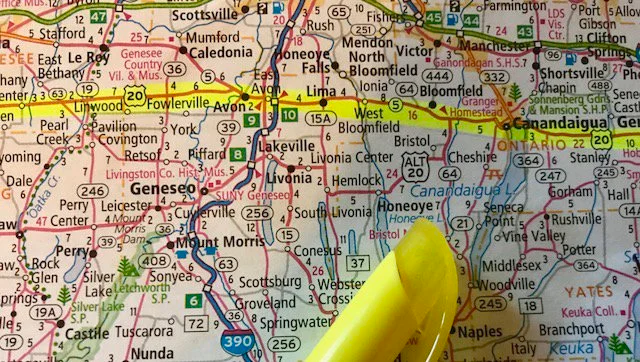
When I was in college, it used to take me about 13 hours to drive home. The trip would sometimes be longer depending on how far I had to veer off Interstate 80 when searching for a bathroom, someplace to eat, or more often than not, a gas station. In those days, car manufacturers cared mostly about building vehicles that were roomy, equipped with AM/FM radio, and able to withstand the impact of a thermonuclear missile. Good gas mileage was never a priority, so seeing drivers frantically searching backroads for a place to fill up was pretty common. Which meant so was getting lost.
If you are under the age of 35, the idea of not knowing where you are, especially while driving a car, is inconceivable. But for the rest of us, pulling over onto the side of a road or into an empty parking lot to look at a map was a normal ritual of every family vacation. Anxious Boomer and Gen X kids around the world watched as their parents struggled to open the 36” square map that was masterfully folded by one of the origami ninjas at the Rand McNally Corporation. Once unfurled, they would huddle over the unruly sheet of paper with its tiny print and minuscule lines trying to figure out where they were, where they wanted to go, and how they were going to get there.
Those scenes have now been relegated to history and will never be played out again. Google, Apple, and Waze have made sure of that. Figuring out where you are, where you want to go, and the best way to get there is no longer something we worry or think about. Someone-or more likely something-will now (and forever) provide us the with direction we need.
And that’s too bad.
When technology replaced the paper map, it did more than make our lives easier and more efficient. It literally reconstructed the way our minds think about wayfinding. Reading a map requires us to reflect and deliberate on where we’re at and where we’re going. It’s a valuable cognitive skill, not only for road trips but for every journey in our life.
But GPS changed all that. Now, we rely on others to tell us where to go and which path to follow. We no longer read our own maps, create our own routes, or choose our own destinations. All those things we would do whenever we were lost or looking to begin a new adventure.
Today, organizations and individuals have trouble finding their place is in this world. We rely on rankings and titles, on blue check marks, thumbs up emojis, and cryptic abbreviations to put after our name. We are ruled to be credible by the number of followers we have or how many stars we receive on Yelp. Where we are, where we should be going, what path we should take, and how quickly we should get there is now decided entirely or mostly by others. We have lost the ability to chart our own course and navigate our own back roads.
I'm not suggesting we bring back paper maps, only the mind that used to read them. Instead of relying entirely on the direction of others, practice marking your own spot, choosing your own route, and taking whatever time you need to get where you want to go.
Why Yvon Chouinard’s decision to give away his company shouldn’t surprise you.
Patagonia’s unwavering commitment to environmental values over profit transformed it into a global leader. By prioritizing sustainability and ethical practices, the company built a loyal customer base, reshaped industries, and proved that businesses can thrive while staying true to their mission.
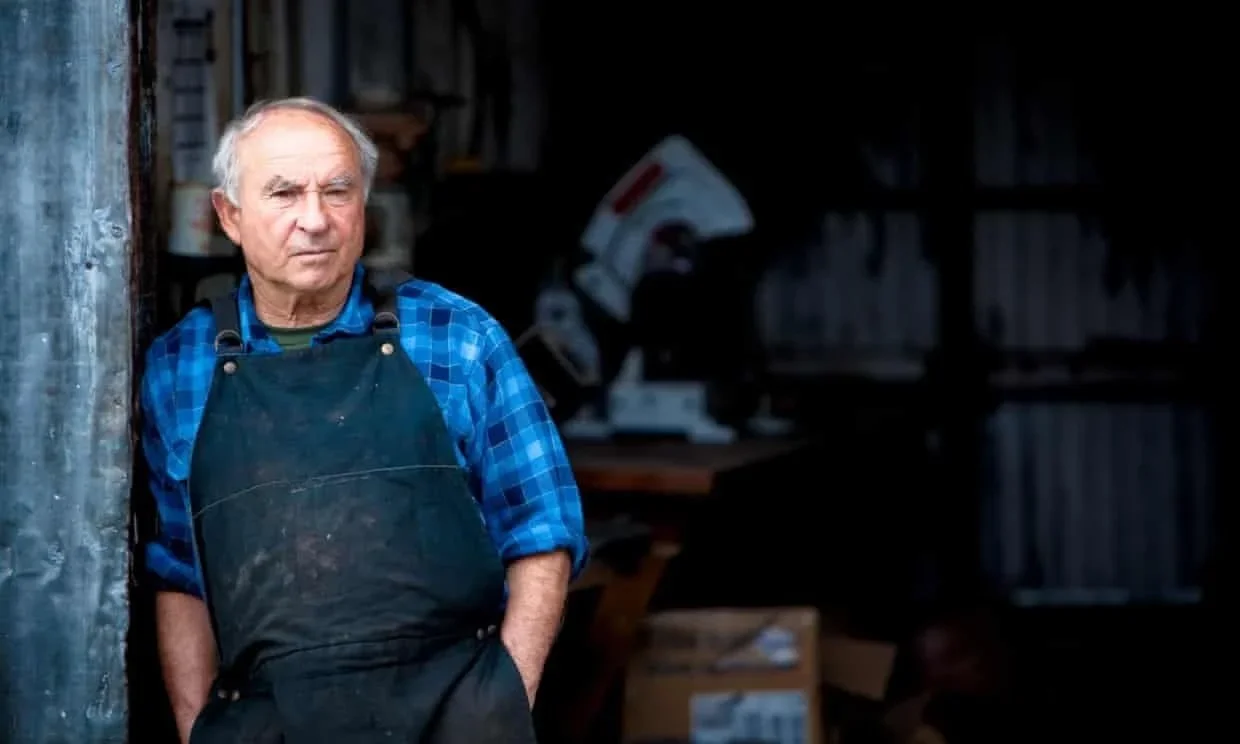
On the most painful day in the company’s history, Patagonia and its founder, Yvon Chouinard, were in crisis. Never before in decades of rapid growth — from becoming the country’s largest supplier of climbing hardware to offering a clothing line that transformed from supplement to all-star — had Yvon laid off a single employee.
But now he had no choice. In a struggling economy, lenders abruptly clamped down on the company’s credit. Patagonia had become so reliant on double-digit grown that a 20 percent increase in sales was a financial blow, compared to years of 30 to 50 percent compounded annual growth. Sales fell short of what they’d prepared for, hired for, expanded for. The company had fallen prey to unbridled expansion and its lender was suddenly unable to cover its mistakes. Yvon had to let go of 120 people, many of them friends who’d been hired over the years. A fifth of his employees were out of a job.
The year was 1991. The day was July 31, what Yvon calls the single darkest day at the company. It was also a turning point for the man who hadn’t set out to do big business. Once a free-roaming mountain climber, Yvon had started with a simple handmade hardware business to support his lifestyle during offseason months. As a young man, he had always loathed the corporate ideal — to grow a profitable business as swiftly as possible, with no regard for its people or product so long as it produces a gold mine for the businessman to enjoy as he retires to a breezy, comfortable golf course lifestyle. Businessmen and politicians were, he thought, the “source of all evil.”
But by 1991, the outdoorsman and one-time blacksmith had forged an unconventional but thriving company, built on goods that his people were proud to make. The core driver was always that they avoided environmental destruction where they could. Early on, despite the popularity of his climbing pitons (metal spikes driven into cracks or seams in rock face), Yvon used an essay in his catalogue to steer climbers away from his best-seller. At Yosemite, he had been shocked and saddened to see how severely the pitons were disfiguring the mountains he loved so much. So he proposed “clean climbing” with aluminum chocks. Soon, chocks sales outpaced pitons and Chouinard Equipment phased out of the product that had delivered its first success. Many more would follow, especially with the addition of clothing for outdoor adventure-seekers; between the mid-1980s and 1995, sales ballooned from $20 million to $100 million. And the company expanded its efforts toward sustainability, too. Employees began recycling paper waste in 1984 and Patagonia became the first to issue catalogues made of recycled paper. In 1986, the company committed to give 10 percent of pre-tax profits to nonprofit environmental groups and, in 1998, it launched its first national environmental campaign, supporting a plan to deurbanize Yosemite Valley. Yvon was a far cry from the corporate glutton who mined for profits only.
And yet, here he was. The company started in the ’70s had become, like others, trapped in the prison of unsustainable growth. Watching natural resources being diminished was becoming his lifelong sorrow, and he saw that his efforts, while better than most, were still too small. It wasn’t enough to undo or slow the damage. Even his own company had become another example of recklessness.
One consultant recommended he sell Patagonia for $100 million. Those dollars could be used for to soothe environmental causes that troubled him so deeply. Or he could stick with it, make changes — even if they were painful or counterintuitive — and redirect the company more fervently toward being a change-maker in worldwide sustainability. He could cash out, or he could rebuild a completely dedicated company.
He took his managers to Argentina, to the wildlands of the real Patagonia, to consider their fate. And it was there, back among the wonders of the natural environment, where they remembered what had brought them all together in the first place. People worked at Patagonia for its values, because it committed to something meaningful, something other than a product or even a business. They worked there because they loved they outdoors and they wanted to protect and care for it. Yvon decided he wouldn’t risk those values again. They would renew a pledge to ignore the pressures of the corporate world and devote the company to the needs of the natural world. Yvon wouldn’t sell. He could do more good with a healthy company, one positioned as a model for others, than with a one-time gift of $100 million to environmental causes.
They committed to do everything possible, no matter how challenging, starting with trimming cost and waste internally, including a closer look at the company’s own environmental footprint — highlighted in detail by a first environmental assessment in 1994. That began an ongoing effort to clean up Patagonia’s supply chain, seeking organic natural fibers and recycled synthetics and avoiding toxic dyes and chemicals. They also would investigate labor practices (the company went on to become a founding member of the Fair Labor Association) that still, today, go as far as interviewing workers on the ground floor of potential suppliers.
Cotton, which contributes millions of metric tons of greenhouse gas emissions annually and is most often grown through genetic modification, emerged as a major culprit in that initial study. It was time to make good on the new promise.
And they did.
In 1996, the company met its goal to switch to 100 percent organic cotton for all sixty-six of its cotton products — an undertaking that took company representatives past existing suppliers, who didn’t have enough organic cotton for the company, and directly to new farmers. Patagonia had to trace fiber all the way back to bales of raw cotton and then had to convince ginners and spinners to handle a natural product with leaves and stems still to be sifted out. The research and alliance-making was tedious, painstaking, and expensive. And, because the line sold successfully, the company was able to influence others in the apparel industry to move toward organic cotton (Patagonia’s buyers even coached Nike and Gap on switching to organic) and it spurred growth in organic cotton farming.
That path, to investigate potentially harmful components and supply chain practices and then to be willing to make pricey, unprecedented changes, became an ongoing process in each step of the company’s design, production, and distribution practices. Shoppers now can explore the materials and manufacturing sources before they make a purchase through the company’s Footprint Chronicles — so someone considering a Lightweight Synchilla ® Snap-T ® Fleece can read about working conditions in the Nicaraguan sewing factory where the jackets are assembled or the energy investments of Portalec, the Patagonia supplier who worked with the company more than 30 years ago to develop the recycled materials branded as Synchilla ®.
But selling better-sourced products wasn’t good enough. Yvon had to search for ways the company could do more to further ground-level conservation efforts. The company continued to support activist causes by hiring like-minded people and by encouraging and responding to grassroots movements. Its financial giving — $79 million in cash and in-kind donations to environmental activists between 1985 and 2016 — is just one element. Patagonia also began offering a “Tools for Grassroots Activists” conference every 18 months to help more people participate in causes that align with its values.
Those environmentally conscious employees were encouraged to act, too. Patagonia’s internship program allowed employees to leave their jobs for up to two months, still receiving pay and benefits as they work for an environmental cause. And under some circumstances, the company would even post bail for employees who jailed during civil nonviolent disobedience. Manpower, education, and support. That’s the level of commitment the company demonstrates in making environmental change.
*
On Black Friday 2011, the biggest retail sales day of the year and the time when most companies flaunt their best deals, a curious advertisement stood out among the flashy promotions meant to froth the crazed consumerism of after-Thanksgiving shopping.
Patagonia took out a full-page ad in The New York Times featuring a shot of its R2 Jacket, a breathable layer of warmth perfect for climbing or hiking and a product made from 60 percent recycled polyester built to be durable and lasting. An ideal gift for the upcoming holidays — only Patagonia advised against it.
In bold type, above the jacket’s image, it printed this request: “Don’t buy this jacket.”
The smaller type explained.
“The environmental cost of everything we make is astonishing. Consider the R2 Jacket shown, one of our best sellers. To make it required 135 liters of water, enough to meet the daily needs (three glasses a day) of 45 people. Its journey from its origin as 60% recycled polyester to our Reno warehouse generated nearly 20 pounds of carbon dioxide, 24 times the weight of the finished product. This jacket left behind, on its way to Reno, two-thirds its weight in waste.
“And this is a 60% recycled polyester jacket, knit and sewn to a high standard; it is exceptionally durable, so you won’t have to replace it as often. And when it comes to the end of its useful life we’ll take it back to recycle into a product of equal value. But, as is true of all the things we can make and you can buy, this jacket comes with an environmental cost higher than its price.”
At a time when most retail companies make their best sales, Patagonia was trying to make a point, one it had emphasized since an essay in a company catalogue in 1991 — the same year Yvon and company leaders renewed their commitment to the environment. The essay encouraged customers not to buy what they don’t need. The idea was this: Even a responsibly made product costs resources. That includes Patagonia products, no matter how much the company works to procure more responsible suppliers and manufacturers. So what’s the alternative to buying new?
One is to discourage needless consuming. Another is to make products that will last longer and then offer to recycle and reuse products that have outlasted their useful life. Another is to create ways for consumers to fix products, rather than buying new. All three are counterintuitive for a retail company, but that’s what Patagonia has done, and not just through editorial efforts. It launched its Common Threads Recycling Program in 2005 and has trained staffers to make repairs either in store or at the company’s Repair Center in Reno, Nevada, now the largest garment-repair facility in the U.S.
Its newsletters push conservation over consumption, too. Often, they focus on a specific cause or idea before they present a product to purchase, if they present one at all. An email from the company might ask subscribers to sign a petition to require stricter EPA regulations on bee-killing insecticides, with a link to join the request rather than one to go shopping. Or it might ask subscribers to add their voices to Department of Interior comment period to protect a national monument. Or it might be a story that puts a smiling face on one of the company’s family farm suppliers. Patagonia doesn’t just say it puts the cause before profits; it employs all facets of the company — from supply chain to management to marketing — to support its stated commitment.
Patagonia ambassador and avid rock climber Jasmin Caton, who’s scaled heights in across North America and in Greenland, France, Greece, Italy, Australia, says the company’s comprehensiveness in making environmental change is what makes it stand out against other, less costly options for gear and apparel. Their efforts — like a recent film “Jumbo Wild: Sacred Spaces and Wild Places,” which documented the push for and against another B.C. ski resort that likely helped land a final denial to developers — go beyond a press release or online petition that other companies might make. “It did a good job of showing that as recreationalists, we have to be stewards and think clearly about how we like ski resorts — but not in every place. It just made people think.” The lengths the company goes to, and the thoughtfulness, overcomes skepticism, too. “I have a wariness with respect to corporations. They will say anything to seem like they are doing groundbreaking work. On an individual level, though, everyone at the company deeply believes in their mission and walks the talk. It’s the furthest thing from greenwashing.”
Many companies have a mission statement; few follow it to the letter or execute the follow-through. Many do good — at least from their appearances — presenting oversized checks to certain causes, but few would be willing to donate 10 percent of pre-tax profits. Some have made efforts to create products with less harmful ingredients to meet consumer demands for more responsible products, but few change their sourcing and pricing before the demand exists. What other companies have ever actively sought a reduction in purchases — whether through a surprising Black Friday advertisement or by ongoing efforts to have buyers get their products repaired, rather than buying new? Patagonia made a pact, and it hasn’t wavered. It exceeds the standards of its customers in quality and durability — but also in its dedication and resolution.
Barry Blanchard, an alpine climbing ambassador since 1991 and a friend of Yvon’s since pre-Patagonia days, isn’t surprised. It reflects the nature-fearing climber he’s known for most of his life. “Yvon’s reason for being in business is to try to promote positive change for the environment. It’s not something he says. It’s something he lives and does.” He didn’t sell when the consultant suggested he should, and he’ll tell anyone, including his customers, to buy used clothes. “If you hang around with the guy, he’s got access to a great wardrobe of outdoor clothes and he does test new stuff, but he also walks the walk. I went to his cabin in Jackson, and they’ve bought all the cutlery and furniture from secondhand stores and outfitted the cabin with stuff where the harm is already done.” He’ll repair his clothes and does what he asks of customers: Get the most use of items that have already been produced (and taken their environmental toll). “If you saw him on the street, you wouldn’t think he was a homeless person exactly, but he certainly doesn’t look like he runs a multimillion-dollar company.”
*
In 2013, Patagonia took on a new task. To prepare, the company assembled plant geneticists, fishery biologists, fisherman, farmers, and chefs.
The opportunity, this time, was not in sporting equipment or clothes, but in food — a source of harmful, polluting practices since the Industrial Revolution. It was starting fresh in new territory, an endeavor Yvon calls the company’s most important so far.
Patagonia sent crews to research agricultural techniques at small farms that compost and find natural alternatives to chemicals. It sent others to rivers, to rediscover ancient ways of fishing with selective-harvest. Still others went to search for farmers raising livestock in more natural ways, with animals that wander free-range and grow without hormones or industrial feedlots.
With Patagonia Provisions, the family of companies now sells eco-conscious foods, an undertaking Yvon hopes to use to encourage older, slower methods of producing nutritious foods. More careful agriculture and harvesting, he says, might be the best way to not just slow the damage consumers inflict on the earth but also to help it heal, following studies that showed that compost could help absorb greenhouse gas emissions in an impactful way — if it’s used more broadly. Of course, Patagonia’s aim is to cause that broader change, the same way the company has done with organic cotton use, recycling, or giving to environmental causes. They will act as explorers and researchers, and use their success and influence to counsel other companies, even competitors. That happened in 2009, for example, when Yvon worked with Wal-Mart executives to launch the Sustainable Apparel Coalition, a group of about 175 retailers, manufacturers, and suppliers. Together, they introduced the Higg Index, a standardized way to monitor the environmental and social impact of supply chains.
The company also helped found 1% for the Planet, a group of more than 1,200 companies and brands that have pledged to give at least 1 percent of annual sales to nonprofit environmental groups; started its own venture capital fund, $20 Million and Change, to support startups with products or ideas meant to produce positive environmental or social change; and worked with four other companies to create a $35 million fund for residential rooftop solar power. Beyond monitoring and minimizing its own environmental footprint, and beyond trying to foster cultural change among consumers, Patagonia has worked to change other companies, even competitors.
*
While Patagonia’s message — and its commitment — have been built around putting environmental needs above profit or growth, it still functions as a for-profit company. Has it been able to stay faithful to its commitment and make money, despite those priorities? In a remarkable way, yes. The efforts to make the company more responsible, internally and through its interactions and influence, have in no way made for a financially weak company. It’s stronger and more sustainable than in 1991. When the Great Recession hit, the company sailed through with sales that grew by 25 percent. In fact, according to a company statement, profits tripled between 2008 and 2014. It has a cause that is integrated into its business model, it has a loyal customer base that supports it even in difficult financial times, and it has achieved growth that far outpaces its peers. By 2015, company sales reached $750 million, and FORBES placed Yvon’s net worth at $1 billion (an accomplishment he eschews).
Patagonia’s efforts are authentic, and they’re seen as such. The work is nonstop and woven through how the company operates and what it demands of any company it deals with. Because it has shown that it can be profitable and still be committed to its cause, Patagonia has influenced others, too — and not just other companies. Entire industries.
Why has it earned such loyalty? People, including consumers, need to know they’re part of something greater than their own life or efforts. With Patagonia, they can be, and they know it’s not something done in a gimmicky, half-hearted, or short-term way. Toms does it by giving to the needy with every shoe you purchase; Warby Parker does the same with glasses. Fashion designer Stella McCartney does it with her animal-free mandate. All three are for-profit entities committed to a cause. Patagonia has shown commitment, and in doing so, it offers purpose that its customers can be part of without fearing their efforts will be abandoned. Similar to the role of consistency in building trust, commitment ensures that a person or organization will continue doing what matters to the people who become loyal — but it goes beyond that. It shows the company or leader will continue to look for new ways to fulfill its promise. Because Patagonia has stayed true to its pledge — and followed through in ongoing, expanding, tangible, and traceable ways — it has created loyalty that upholds a profitable, healthy company. The sense of fulfillment it offers to employees and customers elevates them by connecting them to a grander purpose.
Born To Stay
Bruce Springsteen built lasting loyalty by connecting personally with fans, creating unforgettable moments that made them feel seen and valued. From sharing a baloney sandwich to dedicating songs, his genuine recognition fueled his legendary career and community.
It was a muggy August night in 1978, and Gary Sikorski was cruising around downtown with his buddies, doing the same as most other teens with a free evening in Cleveland’s blue-collar neighborhoods: twisting the volume dial on the car radio to near deafening.
The windows were down on the old blue-and-white Corvair and his pals were crammed in the back, belting out lyrics on a night off from their summer jobs toiling in local factories and machine shops or tending bar. Gary was the lucky one; he worked as an usher at some of the city’s music halls. He’d already heard the man whose music had defined his teenage years, growing up in the rust belt in the ‘70s.
The night he first experienced his music live, he fell to his knees. He still remembers the smell of the carpet and the sensation of being overwhelmed. “The music was so real and alive—sort of unpracticed. You never knew what the band was going to do. It felt like it was happening for the first time.” Once, Gary got so close he caught a black cap the rocker tossed his way. He still has it. That night in 1978, he was about to have his closest encounter yet. The guys with him – high school buddies who called themselves “the crows”— dreamed that, somehow, they could get close to their idol, a rock star who, by then, seemed like he was unstoppable. He was the man they’d gathered a day early for outside a Cleveland bar, to make sure they could get a good seat.
They’d packed sandwiches and snacks to make it through camping out outside the concert venue but abandoned their spots in hopes that they could find the star of the show in a hotel parking lot.
And they did. At the downtown Holiday Inn parking lot, Gary threw the car in park, and they all ran out, slamming doors and sprinting toward the lobby. It was another friend, Scott McLaren, who had the only moment’s hesitation: He couldn’t go empty-handed. He grabbed a baloney sandwich from their stash and joined the others.
The guys were almost too late. Just as they made it into the lobby, they saw him behind closing elevator doors. They shouted out his name and held their breath. What happened next was like a dream.
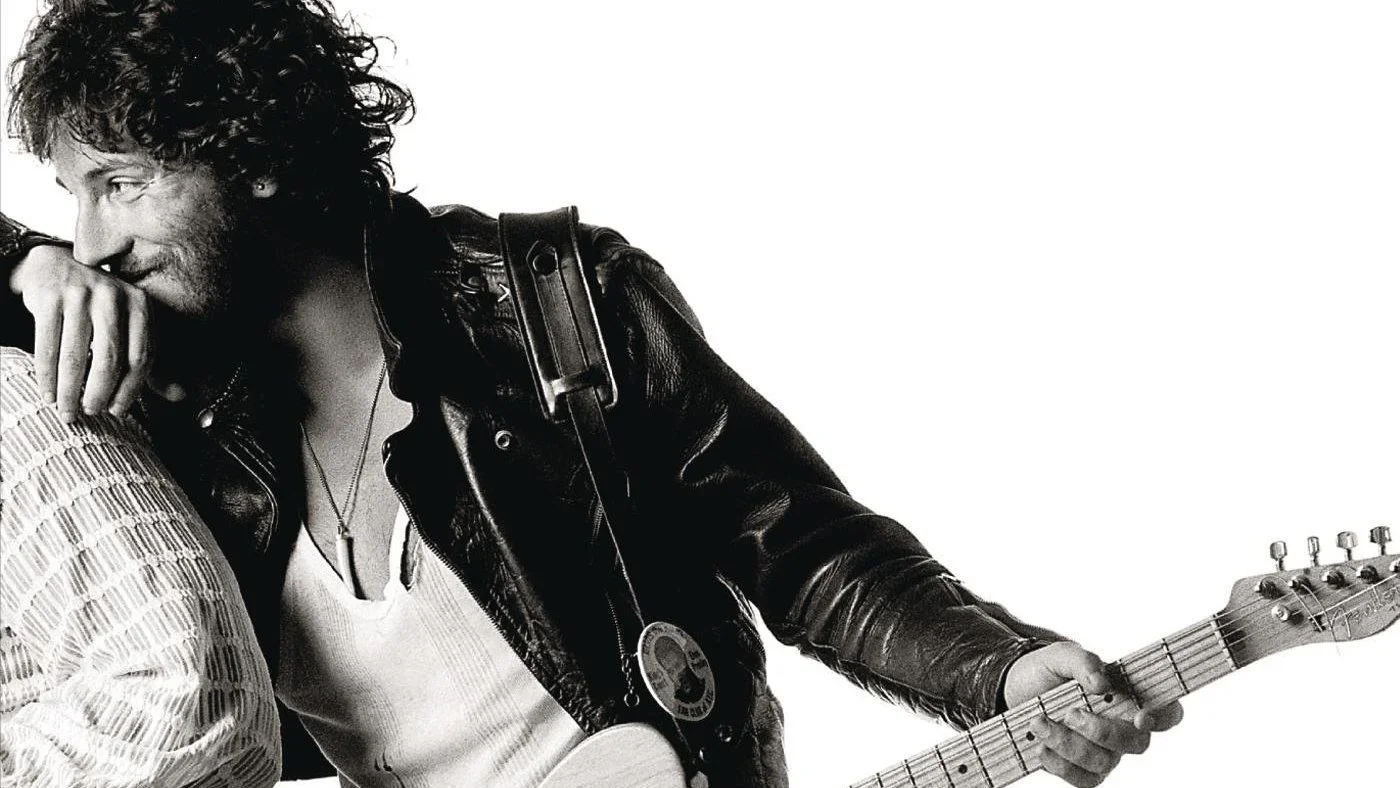
Bruce Springsteen stopped the doors and waved them over.
They talked for a few minutes, the boys from Cleveland in awe that he was taking time with them, even though that’s what they’d hoped for in their hearts. They kept telling him how much they couldn’t wait to see the show the next day. Their idol chatted and signed a few autographs. Then he asked whether there was anything to eat around town at that hour. Scott, remembering his token, offered a baloney sandwich, no cheese. To their amazement, Bruce grinned and accepted the gift, signing a “thanks for the baloney sandwich, Scott” note. As the elevator doors closed again, one of them called out a final request: “Do a song for the Brookpark boys tomorrow.” He paused for a second, “For who?” The guys responded in unison: “The Brookpark boys.”
Their other buddies didn’t believe them when they gathered for the concert the next evening. The band played just two rows ahead of the guys from suburban Cleveland, hearts “beating like a jackhammer” as they saw the band they’d waited three years to see live again. The first three songs had the whole place rattled, shaking with intensity as the singer paced a makeshift runway. Before the fifth song, one they all knew by heart, the singer paused.
Bruce Springsteen—The Boss himself—stopped and dedicated the song “Factory” to a special crew: “Gonna do this for Scott and the guys from Brookpark. Met you guys last night, driving around all night trying to find me.”
Bruce Springsteen remembered them. They felt like the rock stars, on top of the world, if only for a few moments of wild whistling and back-slapping. It was unbelievable.
Most shocking, Gary says, is that, when the same gang gathered six months later for a larger Springsteen show—one with about 10,000 people at Cleveland’s Richfield Coliseum, Bruce spotted them again, in the fifth row this time. He gave another shout-out to the “guys from Brookpark.” “It’s not that we saw him before the show or anything,” Gary says, still with a note of surprise in his voice, nearly 40 years later. “He looked at us and recognized us.”
The guys would follow the band around as often as they could manage for years, together when they could pull it off. Their shared love of Springsteen provided a point of connection as the men finished college and launched across the globe—Tokyo, Boston, Dallas—to pursue careers and start families, Gary says. “A big part of our friendship was music, and especially Springsteen.” When a few of them met up at a small theater show in Rhode Island in spring 2017, their talk went back to that unbelievable August night, as it usually does. That was the night Springsteen, whose lyrics spelled out their families’ lifestyles—their struggles and triumphs—singled them out. “When we were going to see Bruce and the E Street Band, we felt like we were going to see our friends,” Gary says. “A lot of people felt that way.”
Brian Schmuck, another of the guys and one who missed out on the in-person encounter but spent his entire $60 life savings to hawk a ticket outside the show, spent thirty years listening to a recording of the tape from that show, one he says is still the best Bruce Springsteen concert ever. “Every road trip, it was with me, beginning to end,” he said. “You can hear the eruption—‘Scott and the guys from Brookpark’—and you can hear our group, everybody, yelling and my amazingly loud whistle.”
That was 1978, a turning point for Bruce and the band, who had just returned from three years of court-ordered silence. Bruce had hit what seemed like the top; he’d been on the covers of Time and Newsweek in 1975, his songs providing anthems for teens of that era. After the band came back, finally, with Darkness on the Edge of Town, band members focused on the raw intimacy of small, live venues and connecting with the audience with songs that spoke straight to the plight of the working class. Springsteen and his bandmates played longer and harder for their audiences; his hard-working fans spent hard-earned money to see him perform, and he’d give them every penny’s worth with shows that were three or four hours long. Just like he still does.
Moments like the baloney sandwich story—and fan interaction from the stage—didn’t stop after the band had proved they were here to stay or as Springsteen rose to international superstardom.
In a 1981 Musician interview with music critic Dave Marsh, Bruce shared a telling story:
“The other night I went out, I went driving, we were in St. Louis. Got a car and went out, drove all around. Went to the movies by myself, walked in, got my popcorn. This guy comes up to me, real nice guy. He says, ‘Listen. You want to sit with me and my sister?’ I said, ‘Alright.’
“… And he had the amazing courage to come up to me at the end of the movie and ask if I’d go to his home and meet his mother and father. I said, ‘What time is it?’ It was 11 o’clock, so I said, ‘Well, OK.’
“So I go home with him, he lives out in some suburb. So we get over to the house and here’s his mother and father, laying out on the couch, watching TV and reading the paper. He brings me in and says, ‘Hey, I got Bruce Springsteen here.’ And they don’t believe him. So he pulls me over and he says, ‘This is Bruce Springsteen.’ ‘Aw, g’wan,’ they say. So he runs in his room and brings out an album and he holds it up to my face. And his mother says, ‘Ohhh yeah!’ She starts yelling ‘Yeah!’ She starts screaming.
And for two hours I was in this kid’s house, talking with these people, they were really nice. They cooked me up all this food, watermelon, and the guy gave me a ride home a few hours later.
“I felt so good that night.”
He wasn’t annoyed with the fan who asked him first to sit next to him and then to go home with him. He admired him. He said he was courageous. And he said yes to meeting his family and then spent three hours in their suburban St. Louis home—and he left full of gratitude. It made him feel good.
Enjoying people, getting to know them—that wasn’t a performance. It was who he was and who he still is. He’s still known for shows that go hours longer than others and for unforgettable interactions with audiences, like the time in 2014 in Houston when he sang “No Surrender” with a 16-year-old skipping class whose brother held up a “Can We Sing?” sign at a concert. That attitude and the time Bruce takes with his fans—joining a street musician, bringing a fully costumed Elvis impersonator from crowd to stage with him to sing two songs, or switching the couple who’d scraped together just enough to see him from the most distant seats to the very best in the house—are constant reminders of his awareness of others and his recognition of who they really are. That’s how he makes people across generations feel like they belong, like they’ve been rooting for him for years, as Brian Schmuck says. Bruce has been rooting for them right back.
If his music—his Competency—gave Springsteen his star power, his personal connections gave him his staying power. His ability to communicate that he sees fans where they are has inspired the lasting, enthusiastic fans, people who are almost zealous in their devotion to the “Church of Bruce.” That’s a point Linda K. Randall explores in Finding Grace in the Concert Hall, a book that compares Springsteen concerts to church revival meetings in their ability to bring thousands together in some kind of “communion.” Bruce’s goodwill, his kindness, and his willingness to break bread—or sandwiches—with everyday folks have helped to create in fans a sense that they belong with him, and with each other, too. Springsteen creates that belonging not only through lyrics that call out to the working class and music that resonates, but also through his accessibility, through gestures that aren’t impossible to achieve. Other celebrities have done this, but Bruce has done it consistently, for decades. It’s part of what makes him who he is and why people still love him.
In the case of folks like “the crows,” the buddies from Brookpark who still gather to talk music and Bruce, they’ve formed their own sort of communion around the man who took the time to recognize them with his songs and with a personal mention from the stage, twice. (You can hear for yourself at the 21:25 mark: https://youtu.be/L8kUyBoHfTo)
Scott, the now 58-year-old who presented a foil-wrapped baloney sandwich to the Boss, said it’s that accessibility—remembering names and punctuating his concerts with memorable moments—that makes them all feel knit together. “I see the whole band as an inspiration. They were a diverse band and they all never forgot where they came from. You have friends like that, you have friends for life.” Even as the venues got bigger and newer generations found a shared passion for Bruce, Scott says, Bruce has held onto a version of that intimacy that makes him feel like a friend.
“I honestly can’t think of any other performer with that fan base and loyalty through all the years,” he says. “He attracts everybody. Grandfathers will bring their sons and grandsons and granddaughters. He’s firm about his beliefs but also about enjoying the good things in life: family and working hard and being true. You see it in the way he interacts with people. Even if there’s a concert I’ve seen three times on cable, I’ll tune in again because I’ll catch those moments that are just like magic.”
* * *
How did Bruce Springsteen become one of America’s most famous singers and songwriters, a man who’s sold more than 120 million albums worldwide? How did he build a fervently loyal fan base that lasted more than 40 years? He met the three needs: Safer, Easier, Better. Relentless in his perfectionism, he made music that demonstrated his skill, but he also built a solid sense of Belonging. Springsteen fans have found someone who is like them—who understands them and includes them—but also someone who takes the time to recognize who they are. He does that through music that speaks to how they live and also by creating unforgettable on-stage moments where he makes individuals feel recognized.
Bruce became the star he is because he didn’t forget the people who made him a star. It’s the reason you’ll see those who experience over-the-top success in the entertainment industry repeatedly thank their fans. Those who do so in extraordinary ways—and those who put in extraordinary effort to recognize who they are, to understand their situation and sometimes call them out by name—are the most memorable, the ones with true staying power.
Leaders Don’t Predict The Future. They Create It.
Jane Jacobs didn’t just theorize about healthy neighborhoods; she mobilized communities, uniting them in shared purpose. By involving everyone—from her children to local shopkeepers—she proved the power of collective action, creating lasting change in urban development.
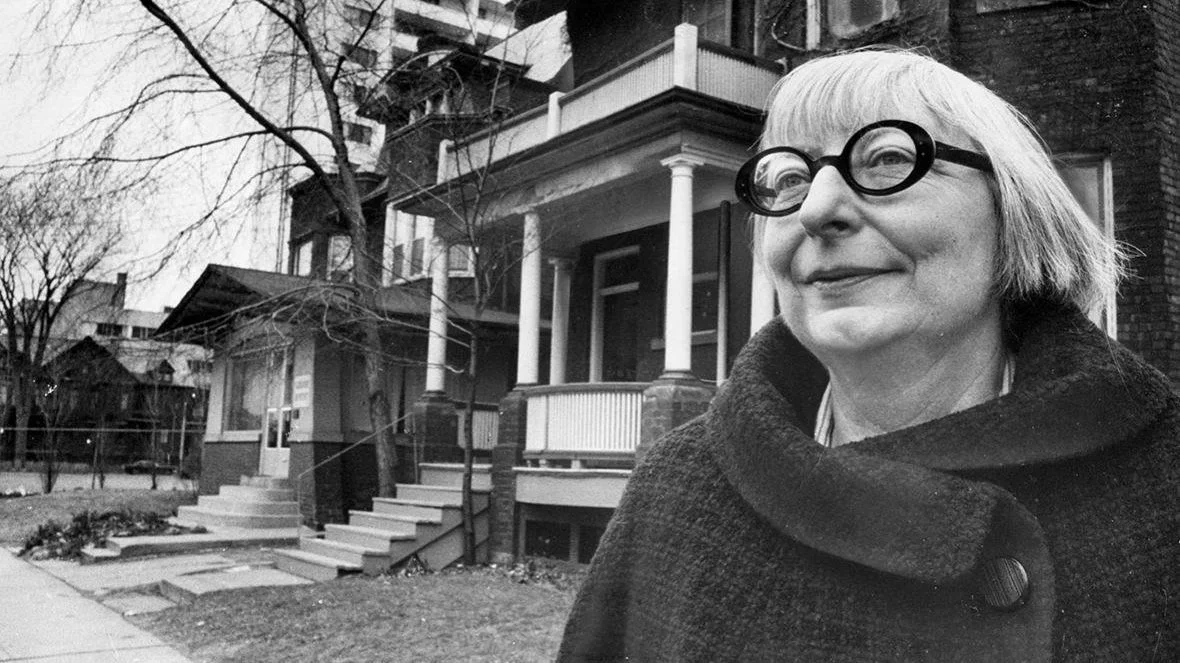
Jane Jacobs didn’t just theorize on what makes a neighborhood heathy. She built an army to prove it.
Little Jimmy Jacobs was worried.
His mother, who later became famous for her urbanist views and activism, was tucking him into bed one night in 1960 when the 11-year-old told her what was bothering him: The family was going to lose the tree they’d planted together on the sidewalk outside their home in Greenwich Village.
The men outside earlier in the day – the same men who’d told Jane they were using paint and chalk to mark the sidewalk for a survey only – had told curious Jimmy of their real work. Manhattan borough officials planned to slash five feet of Hudson Street sidewalks to make another lane for cars. Jane put him to bed and got to work, again. By the next morning, with a petition she’d prepared in hand, she and her three children rushed to the nearest print shop.
But the printer didn’t share their urgency, at first.
He had restaurant menus waiting for his machines and the petitions would have to wait, maybe for weeks.
Jacobs told him the sidewalks would be lost by then – and not just her family’s. The sidewalks would be shorn right outside his shop, too. The paths that brought his patrons in the door would be narrowed. That meant less room for meandering pedestrians and customers and more room for passing cars.
That worked.
Within an hour, they had their copies, ready for Jimmy to take around the neighborhood. Her younger children, Ned and Mary, set up a table with a sign in front of their home. Parochial schools sent copies to parents in kids’ backpacks. Jacobs went back to the influencers she was working with in an ongoing battle to spare Washington Square from traffic. Everyone who could be summoned to participate did so. Soon, Jacobs and others pled their case before the Manhattan borough president, and they won. The sidewalks stayed.
Over the following year, the same “all-hands-on-deck” approach would play out again and again as Jane and her neighbors mobilized to stop arrogant and well-funded city officials from razing and rebuilding fourteen square blocks of Manhattan, including Greenwich Village, in the name of urban renewal. It was a landmark battle that would pit her and her neighbors against the pro-development and pro-expressway titan Robert Moses, who had come to be one of the most powerful unelected city officials of all time. Jane, the mother, the writer, and now the activist, emerged as a leader – a voice – for the community, for the everyday people who would be affected by the plans that distant experts mapped out on paper. The only way they stood a chance was if they banded together in action, only if the community members themselves participated.
As she did with her local printer, Jane Jacobs had a talent for mobilizing people by showing the value of smaller units – a local shop owner, a restaurant, a single sidewalk in Manhattan – by weaving it into the bigger scheme. Jane loved studying systems. She lamented the fact that automobile makers eventually covered vehicles’ moving parts with a metal skirt. She liked to observe how individual pieces fit into a larger whole. She believed in the preciousness and fragility of community ties and networks and the big and small settings that framed and facilitated those ties. It’s a theme she explored throughout her life and from a street-level view in her most influential book, The Death and Life of Great American Cities.
The printer couldn’t be bothered until he realized that the petition protected him and his business. He had something at stake. So he participated. So did Jane’s family. So did the schools, and so did her neighbors. They came together in fellowship for a shared purpose, something that made their lives bigger and better than they could aspire to singlehandedly.
They would do the same in 1961 when they fought to stop the city’s destructive urban renewal plans for Manhattan’s West Village. In one of their counterattacks, the neighborhood activists – mothers and fathers and small-business owners – produced their own study, going door to door and following federal procedure for slum designation surveys. They meticulously documented every building in 14 city blocks, comparing things like soot and noise to other areas of the city using sound recordings, to prove that it was not a slum. Their work, one administrator with the federal Urban Renewal Administration said, amounted to what would have cost the government $50,000 to accomplish.
Assembled as the Save the West Village organization and working under Jane’s leadership, the neighbors – who Moses had characterized during an earlier fight to stop him from building a road through Washington Square as “nobody more than a bunch of mothers” – worked every day and long into most nights, employing every person possible to spread their objection through every possible medium: press conferences, petitions that children carried around the city blocks, leaflets, newspaper advertisements and letters to the editor, and then fundraising efforts that varied from book sales to Christmas wreath vending. “We all had jobs and some of us who were working mothers had two jobs,” Jacobs would say. “Everybody was in on this. Either their second job or their third job was saving the neighborhood.”
They looped in legal help, effectively slowing down powerful opposition until, after months of discouraging setbacks, the group won in October 1961. It happened days after Jane set up a press conference at the village’s Lion’s Head coffee shop, triumphantly raising two fistfuls of documents showing, through forensic analysis, that an architect had been hired to plot out West Village’s redevelopment months before officials publicly announced plans to study it for potential renewal. In other words, the public process was a sham. A deal had been struck already – and studies and public meetings were pretense. The neighborhood “detectives,” as Jane called them, had proven it. Soon after, the city’s Housing and Redevelopment Board members dropped the proposal all together. The “mothers” won.
They won because Jane, one of them, had given them a voice. She believed in the power of community participation and the validity of each patchwork piece of a larger, vibrant system. At a time when absolute trust in expert opinion was still the default, she had the audacity to think that those affected, those smaller units – mothers and neighbors and friends – deserved a say in the outcome and that they together could fight the most powerful metropolitan politicians in the world.
Decades before she shaped her legacy with a belief in the self-organizing power of communities that activists still evoke today, the iconic activist known for thick, black glasses frames and her democratic approach was just another young woman starting out in the big city.
Leaving behind coal-built and union-friendly Scranton, Pennsylvania, an 18-year-old Jane Isabel Butzner, arrived in New York City in the ‘30s when great shifts were just starting to unfold. Cities like New York City and Chicago were competing to be the most modern – a vision that in that decade included flattening slums to make way for gleaming trophy skyscrapers. Anything that hearkened back to the previous century seemed dirty; “modern” designs aimed take the city away from reminders of the glum days of the Great Depression.
Another big change was roaring in, too, faster than any city officials could accommodate: automobile traffic. An ideal solution, it seemed, was to raze the pesky slums, “miserable low buildings” that consumed entire neighborhoods, and pave new highways to ease congestion. Fixing two problems at once.
Arguments over how best to implement those plans continued for the next two decades. City government hurried to put planners in place. Organizations like the Slum Clearance Committee of New York got to work and people like Robert Moses did, too.
Jacobs, bookish from the start, worked her way through freelance jobs and studied at Columbia University, taking special interest in sciences and especially economic geography, but never completing her degree. In 1944, she married Robert Hyde Jacobs Jr., an architect, and the two chose a three-story, “slum building” at 555 Hudson Street in Greenwich Village and renovated the former convenience store that would be their family home through the tumultuous fight to save the neighborhood. She landed magazine work – her first breakthrough was a colorful story about the city’s fur district for Vogue – then eventually found a home at Architectural Forum, a publication where she launched a reputation for expertise in urban design, even before it was called urban design.
Before she ever stepped forward to lead a neighborhood, she was building credibility for years among those who follow architecture and the debates over “slum surgery” as well as what urban America should look like. She was far from an unknown ‘50s housewife, putting down her apron to pick up a megaphone and rally her neighbors. She’d already promoted a people- and context-oriented methodology to dealing with “slums” and she’d been writing about building design and architects, land use and planning approaches, and metropolitan government for years. She’d studied and written about similar issues in Washington, D.C., Cleveland, Philadelphia, Fort Worth, San Francisco, and Baltimore. She’d spoken and earned respect in academic circles, presenting in 1956 at the first Urban Design Conference at Harvard University, a historic event for architecture and city planning. There, she was regarded as one of the most knowledgeable and persuasive people to speak. Even though she was described as a “layman” at the conference, her passion for the human scale affected those present, as noted in a conference summary that said she “pointed out that a supermarket may replace thirty little stores but doesn’t replace thirty little storekeepers and their social place in the community.”
It was her knack for singling out the people behind the plans that first distinguished her in the architectural and urban planning circles. But it was her influence among the community – and her place as someone just like her neighbors – that wielded the most influence when she led their great battles against the lingering effects of Robert Moses. By the time the country reached the 1950s, postwar urban planning was in full swing, with heavy-handed and well-funded efforts to clear whole neighborhoods to make way for something more uniform, something officials thought would be cleaner and more modern.
The term “urban renewal” arose after the U.S. Housing Act of 1954, another powerful federal initiative aimed at clearing out or “improving” slum areas, often by razing and replacing with sterile housing projects. Often, Robert Moses was the hand moving in the background, influencing not just New York City plans but planning processes around the country.
Moses had amassed almost inconceivable power by the end of the war. His appointed – not elected – positions in city government placed him, for a time, behind nearly all the city’s public housing and public works projects as well as highway construction for which he became the champion, helping to craft funding and pro-highway legislation on a federal level for expressways, considered avant-garde at the time.
He shaped and influenced urban policy-making, the kind that favored contractors’ and experts’ interests over those of citizens who were affected and the kind that sidestepped democratic processes to place almost all decision-making in the hands of a few city officials. And he advised Congressmen as they were working out those federal Housing Act laws and later had access to millions in federal and local funding to make his razing-and-rebuilding and highway-paving visions financially viable and, to some, profitable. And, as a proponent of urban renewal and similar concepts, he was comfortably within the mainstream paradigm among urban planners and designers.
Jacobs saw things differently. She saw the city as built by its individual contributors; she appreciated the ground-level view she experienced at home with her children in Greenwich Village, at work in Midtown Manhattan, and on her bicycle in between. She thought it was the participation of the individuals who made for a thriving whole – and that stamping out trouble areas in their entirety and rebuilding did not. She held no official power, no influence over federal or local policy makers, but, as an urbanist and activist, she didn’t take no for an answer. She was able to gather a force around her by showing each person was a part of the whole system, that citizen participation was vital to the survival of their ways of life and that they could form a sort of communion around a common cause.
Those values – that sense of fellowship – led the activists to victory during decisive battles to stop vehicle traffic into the neighborhood’s Washington Square Park in the mid-‘50s; to unravel an attempt to disfigure and rebuild most of the far West Village in an urban renewal scheme in 1961; and next to stop the Lower Manhattan Expressway, a 10-lane expressway and housing project which would have destroyed what is now SoHo. Jacobs, who was arrested for the first of two times in her life during the expressway battle, led the opposition against all three Moses-spawned proposals.
Among the most quoted passages in The Death and Life of Great American Cities, which became a bible for modern urban planning – is her sidewalk ballet.
“Under the seeming disorder of the old city, wherever the old city is working successfully, is a marvelous order for maintaining the safety of the streets and the freedom of the city. It is a complex order. Its essence is intricacy of sidewalk use, bringing with it a constant succession of eyes. This order is all composed of movement and change, and although it is life, not art, we may fancifully call it the art form of the city and liken it to the dance — not to a simple-minded precision dance with everyone kicking up at the same time, twirling in unison and bowing off en masse, but to an intricate ballet in which the individual dancers and ensembles all have distinctive parts which miraculously reinforce each other and compose an orderly whole.”
It is that belief in a working democratic approach to acting together – and her existence as a member, on foot or bicycle, as one of the dancers – that journalist and author Roberta Brandes Gratz says made Jacobs the vehicle for uniting a neighborhood for a common purpose.
“First, there was the Jane Jacobs who became the leader in the village but also the Jane Jacobs who is so loyally followed worldwide,” Gratz says. “I think in both cases, the common thread is that she makes it simple. She doesn’t speak the language of the specialist … She never came across as anyone but one of them, and I think that’s very important. She spoke a common language, so in her interactions with people, she was just another mother and a professional, concerned about her community.”
She included the community – the individuals – in planning and in implementation, and because each could participate, each one enjoyed the hard-won victories.
“We really don’t know what was her idea and what was someone else’s idea,” Gratz, author of The Battle for Gotham, says. “She didn’t want to be the answer, didn’t want to prescribe. The group had the answers. She always said trust the locals. She’d ask you what you thought and had respect for what you would say.”
Jane Jacobs had a purpose, but it wasn’t just hers. It was shared, creating a fellowship of people who worked to achieve what none of them could have done on her own.
~
Because of the effort of those mothers, Greenwich Village – what the city wanted to categorize as “slums” – are today among the most valuable properties on the planet. (A different kind of problem for urbanist).
The twist is that, while she spent much of her adult life studying urban issues and economics, her real impact came when she started including and involving other people. That made her work come to life; that’s how she made a lasting difference.
She could have stuck with writing only, stayed inside the room she’d rented in Greenwich Village to write her book. The book itself could have caught some traction, affected some people’s thinking. It might even still be regarded as an important reference for anyone interested in urban planning. But writing, alone, has its limits. She was sharp and articulate – a wise communicator – and that would win some confidence, some trust.
Because she was a neighbor herself, part of the village, people felt like she shared their identity. That created a sense of belonging.
But those first two steps likely would have fallen short of what it required to mobilize the kind of activism she did – enough to take down the plans of a city titan. She achieved the results of lasting, meaningful loyalty because she met both those criteria – trust and belonging – and then went the last step. She offered purpose, not her own goal and her own work – but a shared goal that was bigger than all of them. That’s what made Jane Jacobs a change-maker, a loyalty winner, and a model for how to ignite a loyal following focused on a common purpose.
Fellowship is where leaders and organizations who strive to do good or present a Purpose often fall short. They’ll donate a sum of money to a cause of their choosing and then hold a check-signing and snap some photos – and they expect to get credit from their clients, customers, members or fans. But those people had little to nothing to do with the donation, other than perhaps patronizing a business with a product or service they needed anyway. To create Fellowship, people have to feel like they are an active part of a shared Purpose. Jane Jacobs placed as much emphasis on gathering ideas and distributing the workload as she did on the cause. She made other people owners in the good work she toiled to achieve. She created the future .
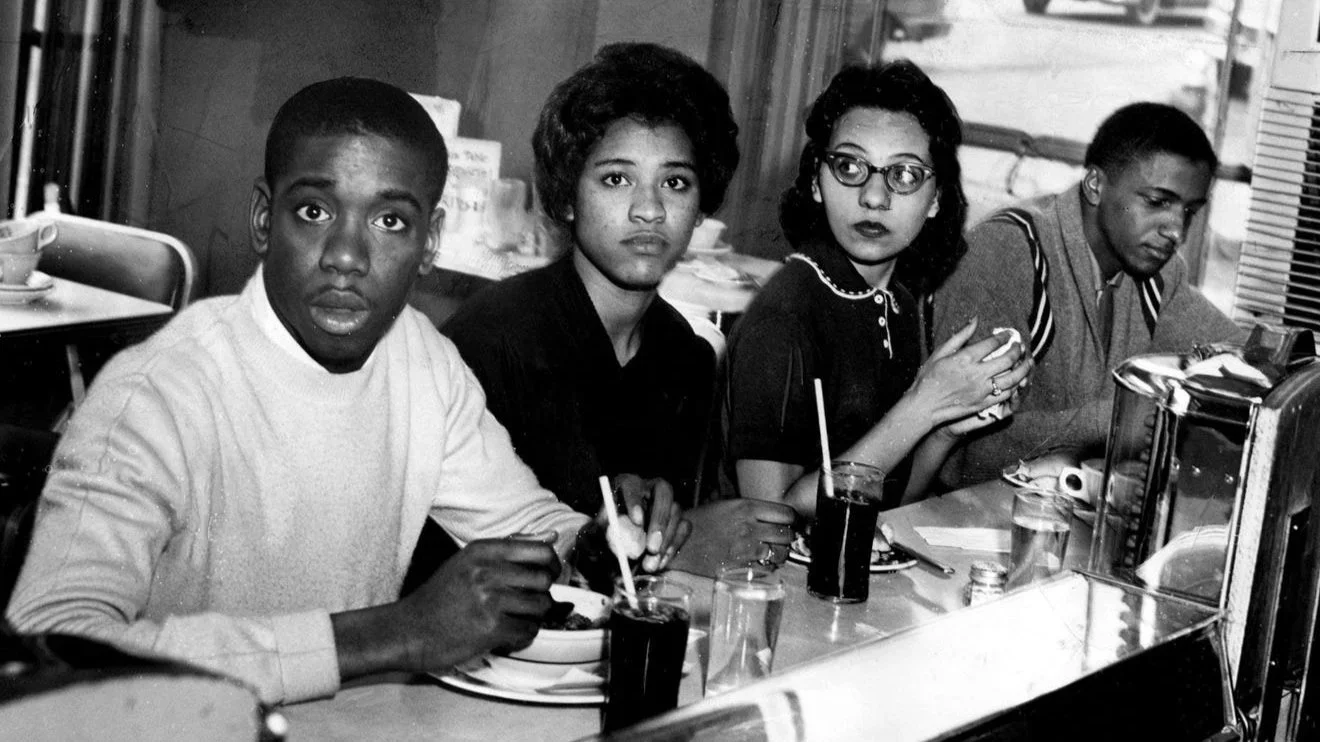
Agapic Energy
Diane Nash, a fearless civil rights leader, transformed from a sheltered Chicago girl to a nonviolent activist who led desegregation efforts and Freedom Rides, embodying the relentless pursuit of justice and equality in America’s fight against racism.
Raised in Chicago with a doting grandmother, Diane Nash had little experience with blatant racism as a girl. She would long remember the first time she was turned away for being African American as a teen. At 15, she placed a phone call to a modeling school. In her introduction, she hadn’t thought to tell the man on the other line that she was black. He posed the question – and when she answered, he told her the school didn’t have the facilities for Negro students.
It wasn’t until she attended a university in Tennessee in 1959 that she saw the daily, overt racism that her classmates and their families endured and what her grandmother must have lived through decades earlier when she was a maid for a white family in Memphis. In Illinois, municipal housing code had restricted where black people could live until 1948. In Tennessee, a state that had enacted 20 Jim Crow laws by 1955, Diane and other students of the same race saw restrictions and segregation all around them.
Attractive and amiable, she looked the part of an unassuming one-time charm school candidate. But the demure exterior outlined in black-and-white photos cloaked composed defiance. Soon after her arrival, she found her way to nonviolence workshops by Vanderbilt divinity school student Rev. James Lawson who, like Dr. King, had studied Gandhi’s principles and orchestrated role-playing demonstrations to prepare students for effective protests. She became a member of the Student Nonviolent Coordinating Committee in Nashville and proved again and again her willingness to press issues, no matter how far she had to go or who she needed to confront. In pearls and a cardigan, she would lead marches of young men and women to sit-ins to demonstrate their opposition to being forced away from white shoppers to eat.
And it wasn’t just talking, marching, or sitting that made her one of the best remembered women to emerge as leaders in the male-dominated Civil Rights Movement. She was willing to risk everything and face danger with the same peaceful but action-taking insistence on what was right.
In one of the most shared images of Diane – her eating with three others at a Greyhound Bus station lunch counter, which was among the first to desegregate – the illusion is one of relative unease but not visible turbulence. In the shot snapped for “The Nashville Banner,” Diane is peering behind her shoulder, as if to watch for what might be coming. Moments later, she would say, a middle-aged waitress came storming from the kitchen brandishing a long knife to drive the photographer out of the restaurant, and then white thugs attacked the two men pictured. This was dangerous work. In 1960, she was jailed for her participation in the sit-ins, but that didn’t stop her, either. She didn’t waver.
After more than 3,000 people marched from Tennessee A&I State University to the courthouse where Mayor Ben West was waiting, Diane Nash stepped forward and asked whether he recommended that department store lunch counters be desegregated. He agreed, and the local newspaper spread the message across town the following morning. Weeks later, Nashville became the first major city to begin desegregating public facilities with six downtown stores opening their lunch counters, finally, to African Americans.
That wasn’t enough, though. This was bigger than a handful of stores. The Nashville Student Protest Movement to desegregate all public facilities continued for another four years. And Nash would spend the next decades of her life continuously fighting for what she believed was right, whether that meant denouncing southern, or northern, racism or rallying to save villagers in the Vietnam War. The goals shifted over the years, but her response did not.
What was her focus, her answer to perhaps the most perplexing and harrowing questions of our country’s history? A non-violent and compassionate – but direct – approach.
Fifty years later, speaking to a university crowd, she would give the driving force behind the Civil Rights Movement a name beyond nonviolence: “Agapic energy.” It was a term she drew from one of the Greek words for love, agape, which denotes love for humankind. When she spoke about the tactics for the movement, she told the packed room at Notre Dame Law School that the first rule was always this: “People are never your enemy.” Like Dr. King and other like-minded leaders, Nash saw the wisdom in un-labeling, instead searching for ways to dissolve identity barriers. She was able to turn enemies into allies by focusing on respecting them while opposing their ideas or actions. She held onto that answer with unmoving focus, with conviction, and so she provided a sense of purpose – a better way - to those who chose to follow her, even on the most perilous paths.
Two years after she confidently pressed for a public answer from Nashville’s mayor, one of Attorney General Robert Kennedy’s top advisors, John Seigenthaler Sr., questioned and pressured Diane, by then an organizer for the Freedom Riders. Seigenthaler, according to his account, told her she must stop Freedom Riders in their journey from Washington D.C., through the illegally still-segregated bus routes, to New Orleans. You can almost hear the quiet calm and clarity in her response to stop the activists: “They are not going to turn back.”
She didn’t argue or make threats – and she didn’t apologize, either. This is how Seigenthaler remembered her reaction:
You know that spiritual, “Like a tree standing by the water, I will not be moved”? She would not be moved. And I felt my voice go up another decibel and another, and soon I was shouting, “Young woman, do you understand what you’re doing? You’re going to get somebody — do you understand you’re going to get somebody killed?” And there’s a pause, and she said, “Sir, you should know, we all signed our last wills and testaments last night, before they left. We know someone will be killed.”
United in focused purpose, the riders were willing to take the risk. No one was killed – though they were injured during mob violence and the Ku Klux Klan firebombed their bus as it was leaving Anniston, Alabama. And Diane suffered, too, in the aftermath. At six months pregnant with her first child, she elected not to fight a possible prison sentence of more than two years for influencing students to participate in the rides. Why? It would have diminished what she stood for. Her thoughts, expressed in an open letter, showed she never let go of the end goal. "I believe that if I go to jail now it may help hasten that day when my child and all children will be free — not only on the day of their birth but for all their lives." The judge in the case sentenced her to 10 days in a cockroach-ridden jail in Jackson, Mississippi.
Her persistence paid off, though she never saw it as a single battle. Two years later, President John F. Kennedy appointed her to a national committee to promote the passage of the Civil Rights Act of 1964. And she played an important role in the Selma right-to-vote movement, which culminated with the Voting Rights Act of 1965. She joined the peace movement to stop the Vietnam War and devoted her life to teaching Gandhi-like nonviolent strategies. She stood for something bigger than any one person and she never backed down.

The Power of Purpose
Ibrahim Abdel Qader and Fares Hammadi were brutally betrayed by a friend whose loyalty to ISIS overshadowed their bond. Their tragic story underscores the perilous power of Purpose, driving even the deepest connections to destruction.
On the morning of October 30, 2015, the decapitated body of 21-year-old Ibrahim Abdel Qader was discovered hanging from a door frame in the foyer of a second-floor apartment in the Turkish city of Urfa. A few meters away, in the adjacent living room, Fares Hammadi dangled lifeless from a light fixture. The two had been brutally murdered hours earlier by four supporters of the terrorist group ISIS.
For police and neighbors, there was never any doubt about who committed the horror. All the tell-tale signs were there: the dozens of stab wounds, the beheadings, and of course, the callous exhibition of the victims, put proudly on display like trophies on a shelf. A video of the attack was released by ISIS later that day providing the graphic evidence of what authorities had already suspected. The two young men were betrayed by a friend whose loyalty to a cause far outweighed any personal affinity he had with them.
Tlas Surur was 19 years old when he joined ISIS in 2012, while living in the northern Syrian city of Raqqa. Like many young people of the region, Surur's activism began the previous year with peaceful protests opposing the Al-Assad government. He marched against the regime’s oppressive security forces and censorship of free speech and teamed with those calling for democratic reforms.
What started as a slow burn of political unrest, however, soon escalated into a firestorm of sectarian and ethnic violence throughout the country. Surur sided with the rebels and became consumed by the contagious revolutionary fervor that was spreading across the Middle East. This was no longer a movement motivated by concerns for freedom, dignity, social justice, and basic human rights. For Surur and many like him, this fight turned into something far greater than his friends, his community, or his country. This was about finding a purpose for his life. It was about finding his soul.
Ibrahim and Surur knew one other growing up in Raqqa. Both had participated in the anti-regime demonstrations, but as the revolution progressed, and ISIS took control of the city, they took different paths. While Surur was enlisting with the jihadists, Ibrahim joined a group of underground citizen journalists called “Raqqa Is Being Slaughtered Silently” (R.B.S.S.). The coalition of activists would secretly obtain evidence of the atrocities being committed by the Islamic State and share it with the world. Using social media, R.B.S.S. members, like Ibrahim, risked their lives to counteract and contradict the sophisticated propaganda that ISIS used to recruit new members, spread its ideology, and threaten all whom it saw as infidels.
In early 2015, Raqqa became too dangerous for Ibrahim and his R.B.S.S. cohorts as ISIS stepped up its efforts to seek out and squash the journalist network. He, along with Fares, and two other members of R.B.S.S. moved to Urfa where they would continue their clandestine work, compiling and publishing information about ISIS and Raqqa from what they believed would be a safe distance. It was in Urfa, where Ibrahim would become reacquainted with Tlas Surur.
As teenagers, Ibrahim Abdel Qader and Tlas Surur were merely acquaintances, but their reconnection in Ufra stoked a new-found and unexpected friendship. While Ibrahim sought refuge in Turkey to escape the threats of ISIS so, apparently, did Surur. After serving with the Islamist militants for years, Surur confided in Ibrahim how he now hated ISIS and defected in hopes of building a new life outside of their reach. He rented an apartment across the alley from where Ibrahim and his family lived, and began to assimilate into the community of other displaced Syrians.
Despite warnings from friends and colleagues who were suspicious of Surur, Ibrahim welcomed the former ISIS agent with open arms. Their closeness in age, the common history they shared growing up in Raqqa, their similar sense of humor, and the passionate enthusiasm they showed for most subjects - from sports to politics - created an indelible bond between the two men. They not only trusted one another, but felt a connection - a sense of belonging - that solidified their relationship. As Ibrahim would soon find out, however, when it comes to loyalty, those two conditions are not enough.
On the night Ibrahim and Feres were killed, Surur invited the two friends to his apartment to have dinner and hang out. It had become a common ritual for these men exiled from their native homeland, a way to find comfort in each other’s company. It was this close bond that Ibrahim and Feres had forged with Surer that most likely caused them to miss or ignore any signs of danger that night. Maybe they never noticed the cardboard and blankets that were covering the apartment windows, and perhaps they never gave a second thought to the unexpected knock heard at the door sometime after they arrived. They had no reason to believe they would be betrayed by their friend.
When Tlas Surur opened his apartment to three of his fellow ISIS combatants, he not only witnessed the butchering of his friends, he participated in the savagery. He inflicted several of the 83 stab wounds found on Ibrahim and the 67 delivered to Feres before standing idly by as their heads were cut off and their bodies disrespectfully hung in the air. It was an act that would be unthinkable to most, but not to Surur or his accomplices or other followers of ISIS. To them, this was merely a necessary step on their journey to salvation. The relationship they sought with their God and their beliefs about a Day of Judgment guided their actions and superseded any human acquaintances or social norms. Their lives were driven by a sense of Purpose and nothing and no one else mattered more.
***
Some of society’s most vexing problems arise from our need for Purpose. The tragic story of friendship and betrayal is one example – but so are others we can find in groups of religious zealots of this century and centuries past. Gang violence happens for the same reason. ISIS and gangs recruit members by offering safety and belonging, but also because they fill a gaping hole we all have. We all need to feel like we are part of something greater than ourselves, and that’s a desire that can overcome even the bonds of friendship and family. In some cases of religious extremism, it can even overpower the impulse to stay alive.
It’s not a force to be taken lightly, but for those who use it to achieve positive change, it can offer a source of healing and comfort for the people who share in your journey. Answer this call for meaning for someone, and you’ll have forged a bond that fulfills one of our deepest human needs.
You…Complete Me.
Steve Jobs’ return to Apple in 1997 marked a turning point, thanks to his partnership with Jony Ive. Ive’s design genius filled Jobs’ creative gaps, transforming Apple’s vision into reality and redefining its future.
WHEN STEVE JOBS WAS ASKED TO RETURN to the helm of Apple in 1997, he was conflicted. Although still bitter from being ousted a decade earlier, he wanted to prove that he could run the company he had founded with Steve Wozniak and Ronald Wayne in 1976. The question for him, however, was whether it was worth the headaches. He was in a better place in his life at that time, leading a fledgling animation company called Pixar, but also at home, where he was able to spend more time with his family. In 1997, Apple was a disaster, burning through CEOs and delivering one bad financial quarter after another, while Microsoft’s Windows 95 was flying off the shelves. It would take a monumental effort to not only return Apple to its former modest glory, but also to take it to the heights that Jobs had always envisioned.
It wasn’t the amount of work that would be required that caused Jobs to hesitate, it was the complexity. Untangling the mess that Apple had become required a mind that Jobs did not have. He was a perfectionist who loathed compromise and small thinking. Apple lacked a clear vision, which he could bring, but managing the uncertainty and the interim solutions were not anything he looked forward to. He would have no desire to sell the products Apple was making at the time because he hated them. And yet, he knew sales would be necessary to keep the company afloat until he could do big things. As Walter Isaacson writes in his biography of Jobs, “(he had a) tendency to see the world in binary terms. A person is either a hero or a bozo, a product is either amazing or shit. But he could be more stymied by things that were more complex, shaded, or nuanced.” Running startups, like Apple in 1976, or NeXT, or Pixar was easy for Jobs because the vision and opportunities of something new far outweighed the limitations of something old -like an established company with an established culture. Luckily, for Jobs, he was about to meet someone who would make his job and decision a whole lot easier.
A few weeks after accepting the interim CEO position at Apple in 1997, Jobs called a meeting of his top management officers to discuss his vision for the company and to evaluate the talent he would be working with. In the room was Jony Ive, the head of Apple’s design team who was on the verge of handing in his resignation. Ive was frustrated by the company’s emphasis on maximizing profit over product design and felt it was time for him to move on. That probably would have worked out fine for Jobs. Although he had never met Ive, Jobs was prepared to replace the entire creative team that had been responsible for producing the “garbage” he felt Apple was making. He would be surprised by Ive, however. After seeing the designs that he had been working on in the Apple studio, Jobs’ reaction was: “F#@$! You have not been very effective, have you?” It wasn’t an insult. Jobs was blown away by the creativity of the work, but amazed that no one else in the company’s leadership noticed it.
Jobs returned to Apple where his rude and demanding behavior was legendary but often misunderstood. Being a perfectionist meant that he had huge expectations for the products they were making and for the people making them. If neither one couldn’t meet his standards, he had no tolerance. This made the early years of Apple frustrating for Jobs and for everyone he worked with. While Wozniak and Wayne, and the handful of other twentysomethings who formed the Apple startup were just kids having fun building computers, Jobs wanted more. Not more of a business, necessarily, just more of what made him feel excited and fulfilled - and that was beautiful design. Jobs was not a designer or an artist, but he had a deep appreciation for both and wanted everyone around him to, as well. The challenge (and vexation) for Jobs throughout his first career at Apple was that no one appreciated simple, beautifully-crafted art the way he did. Not Woz, not his board of directors, and not any of the CEOs brought in to run the company. That would change when he returned in 1997 and met Jony Ive.
Ive was twelve years younger than Jobs and grew up in a different generation on another side of the world. He is shy and polite—a direct contrast to the charismatic, but discourteous, Jobs—but both men had a similar approach to work and a laser focus on goals. More than that, they shared a love of design and craftsmanship. Jobs and Ive grew up with fathers who could build things, leading their sons to become discriminating critics of the manufactured world and the way everyday items were made. The difference was that, while Steve could recognize what was beautiful, he couldn’t create it. Jony, on the other hand, could do both.
That was the piece Jobs had been missing, the element he needed to make Apple the company he knew and wanted it to be from the start. Steve Jobs earned his reputation as a relentless zealot of his own ideas—but a large part of that can be attributed to the fact that he never had anyone who could actually make what he could only envision. It frustrated Jobs and caused him to lash out. He didn’t understand why others didn’t care about beauty and simplicity and elegance the way he did. “It’s just a circuit board. Who is going to see it? Who is going to care what it looks like?” infuriated engineers would ask. But Ive never asked such questions. Like Jobs, he felt like everything that could be beautiful and simple should be.
Clean, simple, and beautiful was the North Star in Job’s life. Not just for the products his company would create, but in his personal life, as well. His Buddhist training gave him a Zen devotion to simplicity that was later supplemented by the design philosophy of the Bauhaus movement, which asserted that there should be no distinction between fine art and industrial design. He wanted that for Apple and all of its products and, with Jony Ive, he could make it happen. Jony Ive made life easier for Steve Jobs: to think and dream and imagine, and most importantly, to make bold moves. He allowed Jobs to focus on the future: What should each product do next? What new things should be developed? None of that would have been possible without the help of Jony Ive. Without finding that extension of himself, there is no reason to believe that Jobs would not have been as frustrated with Apple the second time around as he was the first. Before Ive, Jobs and his team created a string of duds that only the hardest core of computer geek would ever know or remember, such as the Lisa, the 2000 Power Mac G4 Cube and The Apple III. After Ive came the iMac, the iPod, iPhones, and iPad. Jobs—the visionary—was the same guy, but with Ive’s help, that vision was able to come to life.
A few years after Jobs made his triumphant return to lead Apple, Fortune Magazine’s editor-at-large, Peter Elkind, wrote a review of the “new Steve Jobs.” He has become a far better leader, less of a go-to-hell aesthete who cared only about making beautiful objects. Now he is a go-to-hell aesthete who cared about making beautiful objects that made money.” Elkind had it wrong. Jobs always wanted to make beautiful objects that made money. It wasn’t until he got the help he needed from Jony Ive that he actually could.
*
The story of Steve Jobs and Jony Ive is a fairy tale, of sorts. Rarely do we serendipitously meet that one person who makes our life easier and helps us to overcome our greatest challenges; someone whose strengths are our deficiencies and who buoys us to become more than we could ever be alone. It happens, of course. John Lennon and Paul McCartney, Warren Buffet and Charlie Munger, Oprah Winfrey and Gail King are all examples of partnerships that magically connected. But those Hollywood-like scripts are more the exception than the rule. Most lasting relationships require work. Especially when it comes to making one’s life easier.
Helping someone get through this world—professionally or personally—requires empathy and insight and a deep level of understanding and support. It necessitates that we know how they work, what they like, what they need, what they lack, what they are afraid of, what they aspire to be or have.
Sometimes, we get lucky and discover that we are a natural complement to others. Like Jony Ive, we fill their gaps and strengthen their weaknesses by just being ourselves. But most of the time, forging a loyal relationship demands that we be deliberate. It means stepping back and identifying the areas where we can relieve their burdens and be most helpful. Not only what they want and need, but if and when they want it.

Seeing What Others Don’t
Despite immense pressure and financial strain, Steve Jobs believed in Pixar’s potential, leading to the groundbreaking success of “Toy Story.” His ability to see value where others didn’t revolutionized the film industry and solidified his legacy.
When Steve Jobs was playing the role of benefactor to an unconventional graphics company during an agonizing period of limited profitability, it was the worst possible time in his career to do so. He was burning through the fortune he’d accumulated when he was booted from Apple, and his reputation was on the line. He was in danger of becoming a one-hit-wonder of the tech scene; his much-publicized comeback move – founding NeXT, computers for the higher education space – was mired in delays and missing the mark on almost every level, from price to target market. Aside from some promising software, the perfect cube computer was shaping up to be a perfect failure. He couldn’t afford another one.
He shopped the computer graphics and animation company around, but deal after deal fell through – and some wondered whether he really wanted to let it go, even though he was covering its losses with his personal wealth. But why would he hold on? His first impulse – that its graphic techniques might deliver computer innovations – hadn’t materialized. This little spinoff of the Lucasfilm computer division no longer seemed to fit his interests in making revolutionary computers in any fashion. It didn’t have a business model that offered potential for significant profit, staying afloat through monthly checks from Jobs himself, which eventually amounted to a sum of nearly $50 million.
But Jobs didn’t pull the plug on the crew of quirky storytellers and programmers. He couldn’t bring himself to do it. He believed in them and their ability to make something marvelous, even when he wasn’t sure what that looked like. He knew that they did.
The result made movie history, with a storyline that became part of an entire generation’s collective childhood memories. That struggling company – Pixar – released “Toy Story” through Disney in 1995 and forever enlarged the scope of what an animated film could achieve. The endearing tale of boyhood toys competing for Andy’s affection became the first full-length feature film to be crafted completely of 3D computer animation. It was a technical milestone as substantial as the introduction of color. But it was a milestone in other ways, too.
Against pressure from Disney to include musical numbers and cater primarily to youngsters, Pixar dove deep into making the story’s main characters more engaging – flawed and loveable and funny – so their colorful conversation and anthropomorphic antics could appeal even to grownups.
Think of Buzz Lightyear, Andy’s arrogant and adventuresome new toy, and then his spiral of despair. His disillusion begins with seeing a commercial for Buzz Lightyear action figures and realizing that he is, as his new comrades had told him, just a “child’s plaything,” not a space ranger commissioned by Star Command.
Woody finds him wallowing in heartbreak, comforting himself with a cup of “tea” and the company of two headless dolls. It’s as if he’s a broken man, grappling bar-side with the reality of a ruined career or discovery of an unfaithful spouse. Life isn’t what he thought it was. He isn’t who he thought he was. By the time Woody finds him, he’s a bumbling fool, head down on a tabletop, clutching a tiny plastic mug.
Buzz: Gone! It’s all gone. All of it’s gone. Bye-bye. Woohoo. See ya!
Woody: What happened to you?
Buzz, wearing a church lady hat and swinging his arms in drunken fashion: One minute you’re defending the whole galaxy … and suddenly you find yourself sucking down Darjeeling with Marie Antoinette and her little sister.
Astute, Woody tells Buzz he’s had quite enough tea and walks him out of a little girl’s room, like someone escorting an inebriated pal away from a barstool. We laugh at the comparison, but we also feel compassion for this fellow who is struggling to come to terms with what others around him knew and what we already know: that he’s a toy. But of course, we also know but have momentarily forgotten that action figures don’t talk, or have feelings, or turn to drinking to numb the pain. But that’s the magic of Pixar’s storytellers. They suspended reality. It’s one thing to play with a child’s fertile imagination; it’s another altogether to spin characters so engaging that they revive adults’ imaginations, if only temporarily.
Suddenly, parents could actually enjoy the movie their kids wanted to pop in again and again, picking up new jokes tucked away each time, like a snarky Mr. Potato Head whispering to Slinky the dog that Woody’s got a case of “laser envy.”
It wasn’t just technical genius on display; it was comedic genius, too. That was one of the insights on the part of the technical and creative teams – and the leadership – at Pixar that paid off handsomely. “Toy Story” became the year’s top grossing film, and then the third all-time highest-grossing animated film ever, bringing more than $1 billion. When the company held its initial public offering the following week – and they needed a successful one to ensure financial stability and bargaining power with Disney – it was the biggest IPO of the year, raising an instant $140 million for production costs. Not bad for a startup that, previous to “Toy Story,” had no earnings track record.
And when Disney acquired Pixar in 2006, it came at a $7.6 billion price tag. Pixar made Jobs, the majority shareholder, a billionaire. It proved he could still turn an industry on its head. For the team at Pixar, it provided a stability and creative space to keep producing animated films that pushed boundaries and gave new perspectives on the ordinary, like “A Bug’s Life,” the follow-up to “Toy Story,” and sixteen others (so far).
It wouldn’t have happened if Pixar’s team hadn’t been able to see a greater potential in modern storytelling techniques, or if they hadn’t seen how new technology could augment a strong storyline with broader appeal in a way that others – like Disney, who had dominated animated filmmaking for a half century – couldn’t quite see. It also wouldn’t have happened had Jobs not seen something special in the crew.
By that point, Jobs had already made a name for himself as the wizard behind the personal computer, his vision of making a computer a “bicycle of the mind.” Offering the Apple II, the first mass-produced personal computer, in 1977, he took what was a domain reserved for industry and government and made something intuitive and appealing. It was, unlike its predecessors, meant for individual enrichment. He would go on to return to Apple and apply the same technique – taking existing technology to a new level of personal benefit to create a product people used and loved – to music with iTunes and then to cell phones with the iPhone. His range of imagining, sometimes ahead of its time or ahead of market demands, was so wide he became infamous among some for creating a “reality distortion field.” He could make a case for some seemingly impossible innovation or change that made sense when he said it – but didn’t seem to later, or on paper. Some used it as a negative attribute, a disconnection from reality, but Pixar President Ed Catmull, who wrote about his relationship with Jobs, said he saw it as more a refusal to be bound by existing limitations. He was able to see value where most couldn’t, and he’d fight for it.
In Pixar, he saw a team like none other he’d encountered. He saw John Lasseter in his Hawaiian shirt and office packed with toys – a dreamer at heart with a drive to tell stories in a fresh way. He saw Catmull, raised in technical discovery and a belief that movies could aim higher – and the careful guardian of a set of eccentric and capable creatives, people Jobs said were “this amazing collection of talent, doing work that no one has seen before.”
To make the business case, he turned to Lawrence Levy, a former technology transactions attorney acting as CFO for a Silicon Valley tech company. It was Levy who followed the trail of profitability and discovered there was none, save for a long-shot attempt at focusing the graphics company on making movies, hanging the company’s future on a blockbuster hit in the box office and in the market as a newly publicly traded company the week after the debut of “Toy Story.” Both results bested their greatest hopes.
Jobs, known for having a knack for anticipating what consumers wanted and needed, saw the potential, this time, not in the product, but in the people. Because he did, Pixar found a road to wild financial success and, more importantly, to the hearts of those who appreciated artistic, reimagined storytelling.
For a man who dedicated much of his career to making the world’s information fingertip-accessible, it might seem strange that Steve Jobs had only one book on his iPad 2 when he died. Of the volumes of commentary and analysis of Steve Jobs – his life, his flaws, his vision – one note that speaks to his unusual talents is the book that shaped him. That book, the one he carried around on the device his company created, was the “Autobiography of a Yogi,” the life story of an Indian monk and spiritual teacher who spread Vedic philosophy across the United States, from Boston to Los Angeles.
Jobs first encountered the book as a teenager, before his own soul-searching trek to India, where he read it again. He is said to have read it once a year after that for the rest of his life, and it became his parting gift, one boxed copy for each attendant at his memorial service. Of the technological innovations that democratized computers and his retooling of entire industries, this text and its stories of ancient wisdom, saints, and sages – of enlightenment, holy vibrations, and light-filled visions – was part of the legacy he hoped to leave. His final address.
Deeply influenced by spirituality and yet deeply entrenched in the material world. It’s fitting for a man who spent much of his career searching for crossroads. Art and technology. Business applications reconfigured for individual enrichment. Simplicity and functionality. Why did the search for spiritual sight matter? His seeking mentality parlayed into something valuable for his companies and for most of us, who enjoy the benefits of his trailblazing every day. As the authors of “Becoming Steve Jobs” put it, “This spiritual sensibility contributed greatly to the unusual breadth of his intellectual peripheral vision, which eventually led him to see possibilities – ranging from great new products to radically reinvented business models – that escaped most others.”
***
Steve was someone who endeavored to see beyond the surface, beyond the most obvious. He wanted to see into things, to the needs they could satisfy, even when those needs weren’t articulated or understood yet. That was what was most revolutionary about his work. The word “visionary” has been cheapened by overuse, but the concept of extraordinary vision, seeing more - seeing possibilities where others don’t - is what made Apple products succeed, why people became fans and fanatics.
Like his autobiographical influencer who saw amulets or gurus materialize, Jobs saw what he believed could exist and what it could mean for the rest of us. Where others saw computers for business or government applications, he saw what could be created with effort and intention: devices to improve everyday life, outside of work. And he saw that it could be something beautiful and inspiring. Where others saw the music industry’s downturn, he saw what could be a rebirth – if only the industry could cater to what would suit end-users. People hadn’t lost interest in purchasing music, they just wanted to buy it in a different way. His defining talent was not the products he directed but the perspective behind them. Because he saw more value and new applications for existing ideas, he changed what technology means to the everyday man or woman.

Where will your organization be…in 300 years?
Husqvarna’s 325-year success lies in anticipating future needs. From weapons to outdoor power equipment, they’ve thrived by innovating and partnering with customers like landscapers to ensure sustainability and profitability in an evolving industry.
There is a secret to staying in business for more than three centuries. Husqvarna has it.
A lot of company leaders strive for longevity. They make five- or ten-year plans. They envision a thriving company the owner or CEO can retire from after forty or fifty years of rewarding work. Few think in terms of hundreds of years.
Stockholm-based Husqvarna Group, which today manufactures outdoor power products, garden tractors, and mowers, has made it for the long haul: 325 years and counting.
The company began in 1689 as a weapons foundry and adapted through the years, picking up and producing product lines where they anticipated increasing demand—from sewing machines to bicycles to motorcycles. After Electrolux acquired Husqvarna in 1978, the focus shifted to outdoor products. At the time Husqvarna made chainsaws, but organic growth and acquisitions brought a more complete line of outdoor power equipment, enough to service landscapers around the globe.
No stranger to entering new markets, the company leaders had to figure out how to make their mark in a crowded industry. The answer—the way to distinguish the company—was to be proactive. They didn’t just examine what others were offering or what client needs were at the moment. They had to ask the question: “What will our clients need next?”
Landscapers face a set of unique challenges. Labor and middle-management talent is increasingly difficult to come by—and being a seasonal business means training and scheduling can be a complex puzzle. Some folks think they can start small, with a low cost barrier to entry, but items like workers’ compensation insurance add up quickly. And the business isn’t as sure as it seems. Even small changes in the weather—a little too dry means mowing is slow-going and too wet and crews can’t get out to get the work done—can mean the difference between a solid year and one that pushes companies into the red. It’s not as simple as many assume when they launch into landscaping; add a tough year or two, and many small landscapers are in deep trouble, which of course, can lead to trouble for dealers, too, who must find ways to manage in an industry with a high rate of bankruptcy.
How did Husqvarna help them manage? They worked with landscapers to design equipment that shares common parts, which means repairs can be made more quickly and in-house and workers won’t have to constantly switch equipment types (cutting down on training time and costs). It also provided easier, one-stop shopping and service and single-vendor financing available through a Husqvarna purchase or leasing program. It made for more simplicity, efficiency, and profitability for landscapers—and also for the dealers who carry the equipment. But satisfying today’s needs wasn’t enough.
Jeff Sebert, who’s operated a Chicago landscaping company for more than 30 years, can envision a bright future for landscaping if it’s approached the right way. “The thing we have to keep in mind is the value of the landscape—what it brings to the table,” he says. “Sitting in a backyard or a park or greenspaces you find in a city is healthy. We need to be recognized for the importance of that, before the healthcare industry or someone else does.” His hope is that landscapers can position themselves as environmental stewards, a group responsible for keeping our cities healthier and more uplifting through greenspaces that are created and maintained in a way that minimizes pollution and waste.
But to do that, he needs equipment from a manufacturer who sees things in the same light. That’s what he’s found in Husqvarna: a company working to understand not only how its customers can survive now, but also what they will need to meet the demands of years down the road. Husqvarna’s “Silent City” survey looked at the anticipated changes in landscape architecture in 15 countries, and—as Sebert has suggested—the results showed that greenspaces will be integral in anticipated continued urbanization into 2030 and beyond, if landscapers can employ technology that increases sustainability. The parks people will want in the future, it says, are quiet (absent the irritating lawnmower and weed-trimmer buzz of traditional maintenance), designed around the user, and smarter with better monitoring technology. It also found more consumers (65 percent) were looking for landscapers using eco-friendly tools.
The environmental reasons are clear to Sebert; while lawnmowers aren’t regulated the same way automobiles are yet (though some West and East Coast cities are beginning to implement legislation), the impact is just as troubling. Operating a lawnmower for one day, for instance, emits the same amount of carbon dioxide as driving a car from Chicago to San Francisco. That’s why he made the pricey investment of outfitting fifteen of his trailers with solar panel roofs and batteries to store solar energy. To make it complete—and to reduce emissions and noise pollution—he needed a manufacturer leading the change for battery-powered handheld equipment and mowers and trimmers. That’s how he found Husqvarna in the first place. “Some companies are really just beginning to dabble in this,” Sebert says. “I want to see more people thinking about it.”
Sebert feels so strongly that he’s partnered with Husqvarna, not just in buying their equipment but also in appearing at their panels and events to help landscapers prepare for the industry’s evolution. “The whole basis of my excitement about working with Husqvarna is the presentations that we’ve been part of,” he says. “The events are all about what the future of the industry may look like.”
There’s an answer to how the Husqvarna family of companies has been able to weather the storms of more than 300 years. It works to mix with its customers, no matter the industry, and understand what they really need now—and what they will need to be profitable and significant in the coming decades.
Laughing All The Way To The Bank
In 1971, Sandra Force took a chance on a little-known airline, Southwest, during a time of uncertainty. Herb Kelleher’s relentless drive and Southwest’s innovative profit-sharing turned it into an industry leader, rewarding loyal employees like Sandra and forever changing the airline industry.
In 1971, Sandra Force was an optimistic 20-something, a former Miss Tennessee USA living in Dallas with her own apartment and a steady, sensible job. She was four years into her elementary school teaching career and busy with summer school students when she heard about an enticing opportunity. The glamor of being an airline stewardess beckoned her. The trouble was, the company was relatively unknown outside of Texas.
The same day she made a call to Southwest Airlines, she landed an interview and was hired. The company, known at the time in part for its flight attendants’ attire – flashy orange hot pants and vinyl go-go boots – had no reservations about the bright young woman. Force wasn’t as certain. She took the job, but with reservations. “We were all taking a risk in going to work for Southwest,” she says. “No one had ever heard of Southwest. They were a short dog in tall grass. My mother even said, ‘Sandra, why would you quit your teaching job? And if you were going to, why not go with a successful, well-known airline like Braniff or American?’”
Forty-seven years later, Force, comfortable in her sprawling Dallas home with an entire room dedicated to Southwest, says that’s the only advice her mother gave that wasn’t quite right. Her shares of Southwest stock have made her a millionaire, but she’s delighted to stay on full-time, with no plans to stop. She’s still thankful for the decision she made in her 20s to switch careers and for the leaders who made the company what it is. “I still give the Lord credit,” she says. “I think it was meant to be. And [Kelleher] and Colleen [Barrett] have just been wonderful. Herb, in all his speeches always gave employees credit for the success of our company. Employees always gave Herb and Colleen the credit. I think both parties feel that way; it’s a very successful marriage.”
For Force, that’s what it became. The 72-year-old single woman says the company became her partner – and she’s grateful for that. It gives her the opportunity to live in a big house with plenty of flowers. It gives her the chance to interact with a cross-section of people and learn how to read them. It put her on the winning side of what was once a David-and-Goliath battle, and it’s still paying off.
But Sandra’s journey with Southwest wasn’t always easy or secure. There was a time when the success she and the company enjoy was aspiration, not reality. In the early 1970s, the airline had spent four years and all of its initial investment funds to break into an industry dominated by giants. Incorporated in 1967, it finally was permitted to launch commercial service in 1971 with three aircraft flying among three Texas cities. Budgets were tight and competitors were doing all they could to keep the startup on the ground.
“I remember once in the ‘70s, we landed in San Antonio and the base manager came on with bad news,” Force says. “It didn’t look like they were going to make payroll. The girls and I started crying.” She didn’t leave then. Instead, she prayed. And she looked to Kelleher and his onetime executive assistant, Colleen Barrett, who eventually rose to become the airline’s president. “I just think it was Herb and Colleen. They have a way of motivating us,” she says. “They are the heartbeat of the company and had that spirit going for them. I thought, let’s hang in for a while longer.” So she kept working for $2.50 a flight as the airline fought to stay afloat.
Eventually, when she and other attendants asked for a raise, what they received instead was stock in Southwest, the first in the industry to offer a profit-sharing program. Suddenly, she and others had more skin in the game, and they were emboldened to win. Kelleher was still the company’s attorney at the time, but his influence affected the way they all approached work, and the way the company operated.
Kelleher – the former lawyer who co-founded the company and spent a year working pro bono to fight legal setbacks – was renowned for his play hard/work hard mentality from the start. The champion and eventual CEO of the airlines always seemed to have a cigarette in hand – he said he smoked 100 a day – relished his Wild Turkey whiskey, and could bust into an Elvis impression on the spot. He was always ready with a joke and he pulled pranks like sending gobs of chocolate pudding to a competitor who asked what Southwest might do with manure from its Shamu-painted plane. But Kelleher’s fun-loving demeanor – he once showed up to a meeting with suited suppliers while wearing his bright orange jam pants – cloaked a serious mission. Here was a person who loved to make people smile, but he also was passionate about taking care of those people. Like Artie T., he made it his mission to create a business that made its employees lives more secure. But he’d need them to stick with him through tough battles first.
Kelleher was working around-the-clock across the country to break into the highly competitive, regulation-tethered airline industry. The initial idea was to launch just within Texas, but even at that, three monopolistic carriers stood in his way: The shuttered Braniff Airlines controlled flights between the state’s big cities; Texas International held a grip on flights to smaller cities; and the rest went to Continental Airlines. This was 1967, two decades before the airline industry was deregulated, so Kelleher knew he’d face outcry and legal manipulation from the bigger carriers, even if he found a loophole in federal regulations, which he did.
Kelleher kept pushing – all the way to the U.S. Supreme Court. He never gave in, even when he had to work a year for free in the midst of the expensive legal struggles, and even when the startup airline wasn’t able to fly a single plane in its first four years. The struggle to stay afloat with established and fierce competitors would follow, and he would come out on top again. Kelleher’s will to win made an underdog into a champion, one that broke into a locked-tight industry.
But he didn’t do it alone. He needed others to take the risks with him. How did he convince them to take the leap in those first five years in business, when the odds seemed almost impossible? He showed them he had the drive, the work ethic, and the knowledge to lead them to victory. And he did it all in plain sight. Kelleher was the leader who wasn’t too proud to work alongside his employees. He would load bags, deliver peanuts, or take on any task other than flying a plane. When the company grew too big for that, he trained his managers to find new ways to work alongside employees and provided incentive programs that encouraged them to seek new efficiencies. He modeled hard work himself, pulling 84-hour workweeks on average and he would stop to take care of the smallest details. Once, when his gate agents said it was uncomfortable spending all day on a tile floor, he made a trip to Wal-Mart himself to buy them rubber padding.
Attorney Deborah Ackerman, who happily followed Kelleher from his law firm to Southwest and eventually became the airlines’ general counsel, said that profit-sharing program was an industry first. It reflected the Kelleher she knew, the person who’d leave her a handwritten note or stop by her office to give her a hug when she reached some accomplishment or finished a trying transaction at the law firm. He was someone who wanted people to know their efforts were appreciated, and valuable. When Kelleher invited her to join him, she knew he would continue to push the airline to new heights. She was right; the year after she was hired in 1988, the company officially became a DOT major carrier by exceeding the billion-dollar revenue mark.
Because she started as a lawyer in Kelleher’s firm, she saw what inspired confidence in those early employees. Kelleher’s savvy with others extended to the regulators and politicians he’d have to influence to achieve the airline’s ultimate aim. Ackerman said she remembers Kelleher working the floor during Congressional committee hearings, moving from one chair to the next, pleading the case for Southwest. He eventually became the expert voice on the industry in general. When President Bill Clinton appointed Herb to his commission to study the then failing health of the airline industry, Herb was the only industry representative.
“Herb turned that same personality, charm, and brilliance on to the many other constituencies: government, vendors, lawyers, unions,” Ackerman says. Among the company’s points of pride is its relationship with union partners. Southwest so far has never lost a day to work stoppage, despite being as heavily unionized as others.
All of that effort, though, was focused on one result. Ackerman recalls a telling piece of advice Kelleher gave her late one night – and there were plenty of those. Kelleher was so notorious for working into the night that Ackerman said she and others would draw straws to see who would stay up to help and listen during work travel; no one could rival his energy. “I can remember him telling me, ‘Debby, remember every single decision you make is for the greater good of Southwest Airlines. That was his passion for people,” she said. “That’s the way he lived his whole life, twenty-four/seven.”
Hard work and a listening ear weren’t everything Herb or Bill McGowan brought to the table. Both were well-educated - in law school at New York University, Herb graduated at the top of his class - and yet still sought every, single piece of knowledge they could. Like Bill, Herb was a voracious reader, known to drop $300 easy in a single book store trip. They both sought employee feedback at every opportunity. And they both demonstrated they knew how to make connections with the right decision-makers. They could sell their company’s cause as a just one - and as the eventual victor - to anyone. They both showed that they outright refused to give up and that they would bring every possible personal talent and resource they had to reach the goal they shared with their team.
Because Herb was able to build a loyal team, Southwest was able to forge a path into a locked-tight, monopolistic industry and create new standards for efficiency and pricing, for labor relations, and for employee retention and benefits. It avoided the labor disputes that have crippled other airlines, maintained the playful but hard-working mentality Herb sparked, and it rewarded its people in incredible and ongoing ways: In 2015, for example, the company doled out a record $620 million in profit-sharing for those loyal employees. Over its four decades, its profit-sharing contributions topped $3.4 billion. Herb was right. They could win, and they did.
***
Herb Kelleher built a loyal team, people who trusted him to help them achieve what would have seemed impossible. How? Employees felt safe banking their careers on industry underdogs, and regulators were willing to risk their reputation and even buck against the influence of heavy-handed, well-funded companies. Why? Herb made people believe that they had what it took - the resources, the connections, the talent, and the smarts - to make them all winners.
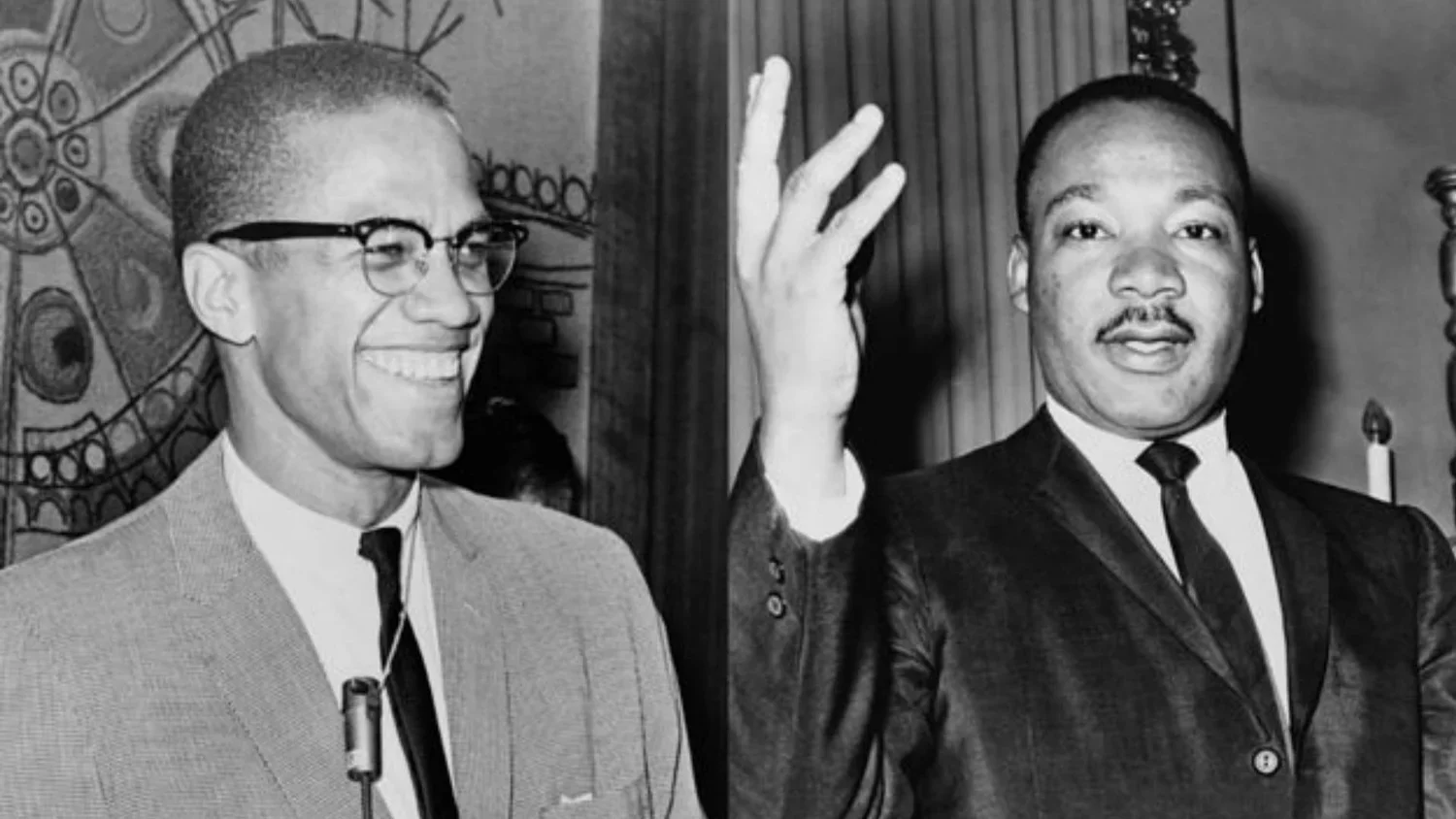
War & Peace
Martin Luther King Jr. and Malcolm X, though different in their methods, both sought to create a sense of belonging for Black Americans—King through peaceful unity and Malcolm X through empowerment and self-identity amidst racial injustice.
Born into the racial tensions of rural Mississippi in the 1940s, Mary Mudiku has spent a lifetime trying to figure out what makes some people see only differences.
By her college years, when she was the first black woman to study in the art department at what is now the University of Memphis, it was the early 1960s, a time when some black citizens were starting to take a new approach to resisting their treatment as second-class citizens, especially in the Deep South. Instead of fighting back against violence physically, they were training people to protest peacefully – to defy their treatment but to do so in a way that required others, even their persecutors, as “children of God.” They fought back on the same spiritual terms their opponents were raised to cherish.
Soon after, she was taking her brushes and paint to a church, the historic Clayborn Temple, to paint signs for protests led by people like Martin Luther King Jr. as the Civil Rights Movement spread through Memphis. She attended marches led by the visionary of the movement, following Dr. King and others through the street, and she heard his last speech, stirred by his invitation: to see a future where everyone was afforded dignity. That’s the same kind of message she’s tried to share through her artwork and also as an employee at the National Civil Rights Museum at the Lorraine Motel in Memphis, where Dr. King was killed.
“It appears passive, but it isn’t,” she says. “People were not fighting with guns or weapons. We couldn’t in this society. We couldn’t fight with any weapons. The big fight was the spiritual fight. That appealed to the world – that there was this society allowing this [mistreatment] to happen and feeling that they were correct. We showed they weren’t.”
But using a peaceful response as a method to overcome the identity block – the differences some white people saw when they looked at their black neighbors – took deliberate, careful training.
Because history books tend to oversimplify changes that required thousands of small shifts and catalysts, we often trace the beginnings of the Civil Rights Movement to the Montgomery Bus Boycott – further sifted down to the actions sparked by just one determined woman. In reality, it was a long, excruciating struggle that finally came to a head and would require diligence and determination of many to continue what Rosa Parks’ admirable stubbornness started on Dec. 1, 1955. The seamstress was actually the third black Montgomery woman that year to refuse to give up her seat, but her story lit a fire.
In the days after her arrest, the Montgomery Improvement Association formed, members voted the Rev. Martin Luther King Jr. as president, and they scheduled a boycott that was more successful than they could have imagined. More than 90 percent of the city’s black community stayed off the buses for a full day. It was clear that the community had reached a tipping point. Emboldened, the group decided to extend the boycott until the city listened.
But the months dragged on. Organizers were bombed, threatened, and arrested – and yet they didn’t return any of those with violent acts. People kept walking or carpooling. They stuck with their peaceful demands, and they waited for a Supreme Court decision to end bus segregation, which finally came in November 1956. But even then they didn’t immediately return to bus seats. The group chose to extend the boycott until the decision was officially in place.
And they had to prepare to face angry white bus drivers and riders, but in an unexpected way. This is the lesser-known part of history.
On Saturdays in the city’s churches, they went through “dress rehearsals.” Dr. King and the Rev. Ralph David Abernathy set up chairs in rows to imitate bus interiors, and boycott members would practice the return. It was ugly. Yelling. Obscenities. Slurs. The two would berate “riders,” helping them to prepare for the verbal abuse that would inevitably come.
The instructors taught them how to respond if one of them dropped her dime on the floor and the driver exploded with obscenities. They taught them to count to ten before they reacted to verbal or physical attacks and other techniques to quiet the innate impulses of sudden anger in the face of demeaning insults. They trained them, through repetition, to respond to cruel taunting with Bible quotes that most church-going white people would recognize. They taught them to march bent over, elbows in and hands over ears and temples, to protect themselves if bottles and rocks were lodged at them. The core principle was this: Don’t strike back. No matter how hard opponents work to rile you to aggression, stay peaceful. Count. Pray. Respond with kindness.
The protestors had lived the scenarios before, had sacrificed to make a statement, and then had to practice responding to the same abuses – maybe magnified now – with patience and nonviolence. It wasn’t natural; it wouldn’t be for anyone. It was practiced. It was deliberate.
When they returned on Dec. 21, 1956, the expected encounters happened – but the responses the oppressors’ expected did not. Some bus drivers harassed black patrons. One demanded a woman pay twice. On another bus, a rider slapped a woman. But none of the returning bus patrons retaliated.
The role play workshops are a part of the story that seldom garners much attention. You can find it tucked in the pages of a 1957 booklet distributed by the peacemaking group the Fellowship of Reconciliation, which promoted the “Montgomery Method” as a system of nonviolent Christian action that encourages seeing an enemy as a human being. It shows the hard work and bravery behind peaceful protests, aligns with Christian principles – the admonition from Jesus to “turn the other cheek” – and stems from Dr. King’s studies of Mahatma Gandhi. But it also happens to align with the power of identity, which is critical in creating a sense of Belonging.
Why did that provide results? Why did it help some of those white supremacists see their adversaries as more human? It helped bridge the Identity gap, the most difficult of all to cross.
We gravitate toward people who seem most like us – in age, interests, viewpoints. Unfortunately, when someone doesn’t look like us, it creates an instant barrier, unless we make a conscious decision to take it down.
The white establishment had created an image of the protestors: Angry. Violent. Dangerous. Dr. King fought back – but only through peace. He surprised the enemy by showing him that his followers were not aggressive, even in situations when almost anyone would react that way. Instead, they were kind and Christian, the way the white people saw themselves. The members of the black community demonstrated what white folks should have already known, that the black community was made of fellow human beings.
Dr. King and other movement leaders taught the protestors to break down racial barriers, the most formidable challenge to Identity, by breaking the stereotype that had been shaped of them. They did it by emphasizing virtuous character traits, like patience, that their enemy shamefully assumed was exclusive to the white race. He made them see similarity, not difference.
When we consider a relationship, we look for people who will think like us and act like us. We seek people who appear to be similar to us, who would serve as appropriate proxies for our needs and concerns. What if you don’t look like the people you’re trying to reach? What if you worship differently than them? Dress differently? What if you aren’t the same gender? What if you have a physical disability that makes you look different? That’s why obvious differences, and especially racial boundaries, are the most challenging, and the most heartbreaking, if you think of the amount of struggle and suffering they’ve caused and still cause today. Most other differences can be hidden, but not race.
On August 28, 1963, a quarter million people gathered in Washington D.C. for the largest civil rights demonstration Americans had ever seen. The crowd called for better civil and economic rights for African Americans in a walk that culminated, unforgettably, with Martin Luther King Jr. standing before the Lincoln Memorial to deliver his “I Have a Dream” speech.
After the March on Washington for Jobs and Freedom, the stalled Civil Rights Act finally moved forward, passing in 1964. The Voting Rights Act of 1965 followed it. It didn’t affect instant, dramatic change – though it is remembered as a historic moment where, finally, the silenced cries of black Americans were brought to light on a national scale. It was representative of the long, slow march of suffering African Americans had endured for centuries. There was much more work to be done. It was less than three weeks after the march that four black children were killed in the bombing of Sixteenth Street Baptist Church in Birmingham. Even then, in the continuation of the city’s mounting violence against the black race, Dr. King urged his followers to maintain their nonviolence.
Not everyone saw it his way, of course. Another young black leader had come to represent a different avenue to demand better treatment, one of hostility. Malcolm X – at the time a minister in the Nation of Islam, a religious-political black nationalist group growing in cities around the country – thought the march was a farce. Where others saw peaceful demonstrators, he saw signs that had been filtered through white establishment. He heard censored speeches and watered-down demands. He saw an event too well-orchestrated, something that turned his people into “puppets” instead of the militants.
Dr. King called on his followers to defy discrimination and oppression by holding onto nonviolence, an expression that his people were not who they were made out to be. They were nonviolent and he asked them to stay that way, even while they acted in peaceful defiance against how they were being treated. Malcolm X didn’t agree. He thought that, if white people were interested in a reconciliation, it would have happened already. He didn’t want to see them “turn the other cheek.” He worked to shock people out of their acceptance of a second-class role in society, a brain-washing he said would be no longer tolerated. He “fished” – as he called his proselytizing – outside churches, in ghettos, and anywhere he could to appeal to the open wound of mistreatment.
In the struggle for identity that black Americans faced – the constant message that they were less-than, the loss of their family roots and native culture after they were forced into slavery – Malcolm X and the leadership of the Nation of Islam attempted to help American black men understand not only who they were – people robbed of their own identity – but also who their enemy was: the “blue-eyed devil.” His group didn’t want reconciliation. He didn’t believe in “begging the white man” by “all of this sitting-in, sliding-in, wading-in, eating-in, diving-in, and all the rest …”
He was angry. He didn’t insist on unprompted aggression – but he did call for “any means necessary” to respond to cruelty and violence against his brothers and sisters. He’d seen first-hand the hardship of growing up black in America in the ‘30s and ‘40s. He’d watched his family’s home burn to ashes. His father was crushed by a street car when Malcolm was 6 years old; his mother, then a widow with seven children, believed her husband was killed by white men who didn’t want Malcolm’s father to continue spreading the teachings of Marcus Garvey, an early proponent of black nationalism. She would later be committed to a mental institution and Malcom sent to foster care.
Discouraged by a white teacher from becoming a lawyer, Malcolm turned to street life in Boston and hustled in Harlem before he was arrested and charged with breaking into a Boston home and stealing jewelry. The white women who were working with him received light sentences; he was ordered to eight to ten years at the Charlestown State Prison.
His transformation started there, when he discovered the Nation of Islam, a political and religious movement that called for a separation of black and white Americans. After Malcolm’s release, he would apply his charisma and his passion for the plight of the black man to spreading the organization’s message of black superiority in American cities, fighting back against physical and psychological oppression black folks still suffered at the hands of their white neighbors. He would come to be the most visible and controversial leader for the organization, a man quoted by frustrated black people everywhere.
For more than ten years, Malcom worked to spread the Nation of Islam’s message, but eventually a rift was forming inside the organization. Malcolm X left, seeking a deeper personal truth. He went to Mecca for the pilgrimage Muslim doctrine requires of any true follower. There, he said he experienced, for the first time, a unity beyond race. He knew his image during his 12 years with the Nation of Islam was one of anger and division. He felt something else when he wrote from the Middle East.
“Never have I witnessed such sincere hospitality and the overwhelming spirit of true brotherhood as is practiced by the people of all colors and races here in this Ancient Holy Land, the home of Abraham, Muhammad, and all the other prophets of the Holy Scriptures. For the past week, I have been utterly speechless and spellbound by the graciousness I see displayed all around me by people of all colors.”
He knew his change of heart would shock people who’d followed him so closely, who’d found hope in what he used to encourage, and he knew many weren’t ready. “The American Negro can never be blamed for his racial animosities – he is only reacting to four hundred years of the conscious racism of the American whites,” he wrote in the same letter. But he’d found something that united people in a brotherhood, something stronger than racial divides and it was heartbreakingly beautiful, to a heart-changing degree. He’d found a spiritual state of mind where commonalities were stronger than differences. For him, the tie was Sunni Islam. For Dr. King, it was a cry for peace, an invitation to see our common humanity.
Malcolm took a new name, El Hajj Malik el Shabazz, and returned a changed man, leading a new organization he’d formed, the Organization of Afro-American Unity. Less than a year later, at age 39, he was killed. Convicted in his murder were three members of the Nation of Islam. His voice – his new message – was silenced by the very people he’d once inspired to separate themselves and to take up arms if they had to do so. It was the same message the Black Panthers would evoke, counting Malcolm as a predecessor, when the militant group called for revolution.
Mary Mudiku encountered those same tensions in the black community, and even in her own mind. There were those who wanted to react violently; they’d been pushed to a breaking point. When she studied in the ‘70s at Howard University in Washington D.C., where her thesis considered an African response to the European worldview, she encountered those who saw violence as the only answer. She felt it at times, too, when she thought back to the stories of her childhood: the crying infant killed by an annoyed, white bus driver; her mother’s friend who was shot by a white man to prove to his wife that he didn’t care about her; or the fact that, when she was born, there were only a few hospitals in the entire state of Mississippi where a black woman could deliver a child. “I went through an angry period,” she says. “The anger is understandable, but it’s not effective.”
Later, when she created an art therapy program for inmates, she used those same lessons to help them focus on what they had in common with others – even past religious dogmas – in hopes that they could share a culture she worked to inspire, one that taught creativity as God-given gift, shared by all people, regardless of how they saw God. “I couldn’t go in with a Christian or Muslim format. It had to be something that would allow whatever choices people made in terms of their spiritual background, or their ethnic background. I was able to do that by bypassing what made them different and focusing on what was the same for everybody. It was culture-centered.”
***
Nothing is more powerful or central to creating a sense of belonging than identity. As our lives became more crowded and complicated during the Agricultural Revolution, we needed people who could act in our stead. We could no longer handle the details of managing every task that affected our lives – someone else might be baking our bread or looking after our sheep while we toiled away at our own chosen field. We needed a way to find people who could make decisions the same way we would. We needed people who would think like us and act like us. So we started to look for clues to help us find those people. It’s a part of our evolution that still shows up in how we act and make friends today; it’s why you’re more likely to click with someone who shares similar interests. But it runs much deeper than casual friendships. It affects not only who we strike up conversations with, but also who buys from us, who we hire and retain, who chooses to be loyal to us.
When you are working to connect with people, to bridge differences in identity, there are things you can change. There are other things you can’t (gender, race, sexual orientation) and wouldn’t want to. What Martin Luther King Jr. and his followers show us is that differences on one level don’t need to mean difference altogether. The struggle, the painful role play in church basements, were part of this brave demand: to be seen as the same. Even when it called for unnatural patience and suffering, he asked that society see what they had in common with others.
That’s where some of today’s movements falter. Compare the millennial-led Black Lives Matter movement to the ‘60s civil rights activists. A key distinction between the two is that the civil-rights movement sprung from the church. It was, at the time, a part of life for most Americans – black or white. Like the Nation of Islam and like the Black Panthers, the focus for Black Lives Matter is on what separates races, working off fear and amplifying mistrust. The civil-rights movement was an effort to find some common ground, to find the overlap where both sides could agree. It was an opening up instead of shutting out – an offer of reconciliation, rather than the expected retaliation.
If the racist white man in the Deep South in the 1950s couldn’t see a black man as a man like him, how could that be changed? The white man could at least, perhaps, come to see a black person as someone who believed the same way he purported to believe. A racist white man in Montgomery believed himself to be a God-fearing, church-going Christian. He might at least be shaken or convicted of his hypocrisy by a display of Christ-like love and forgiveness from the persecuted black man. That was something he had been raised to recognize and to emulate.
Militant and black nationalist movements moved the other direction. They confirmed the white race’s fears – and reinforced the differences they assumed came with skin color. They divided.
There’s a reason those divisive actions can backfire; they work against Belonging.
The key concept in understanding how Belonging makes our lives Easier is this: We need proxies. We needed someone to include us, to see who we were and what we needed, and to make the same decisions we would have. It made us “bigger” in a more crowded environment. To have someone who could make the same decisions we would – to think like we would and act on our behalf – we needed to find someone who was the same as us. It’s the same explanation behind the folly of trying to match couples who don’t share common interests and goals. In a relationship, including in Loyal relationships, we need someone who is as similar to us as possible.
If you want to show someone you are like them, it doesn’t mean you have to change who you are. But you do have to find where the similarities lie and do the hard work of emphasizing those shared qualities. You might have to change how you think, move determinedly past the limitations of your own nature, but it’s a higher path, one that makes for the most hard-won – but also the most precious – rewards. That’s how you build bridges instead of walls. If you’re working to spark a movement or influence that won’t fade, it’s the means to affecting lasting change.
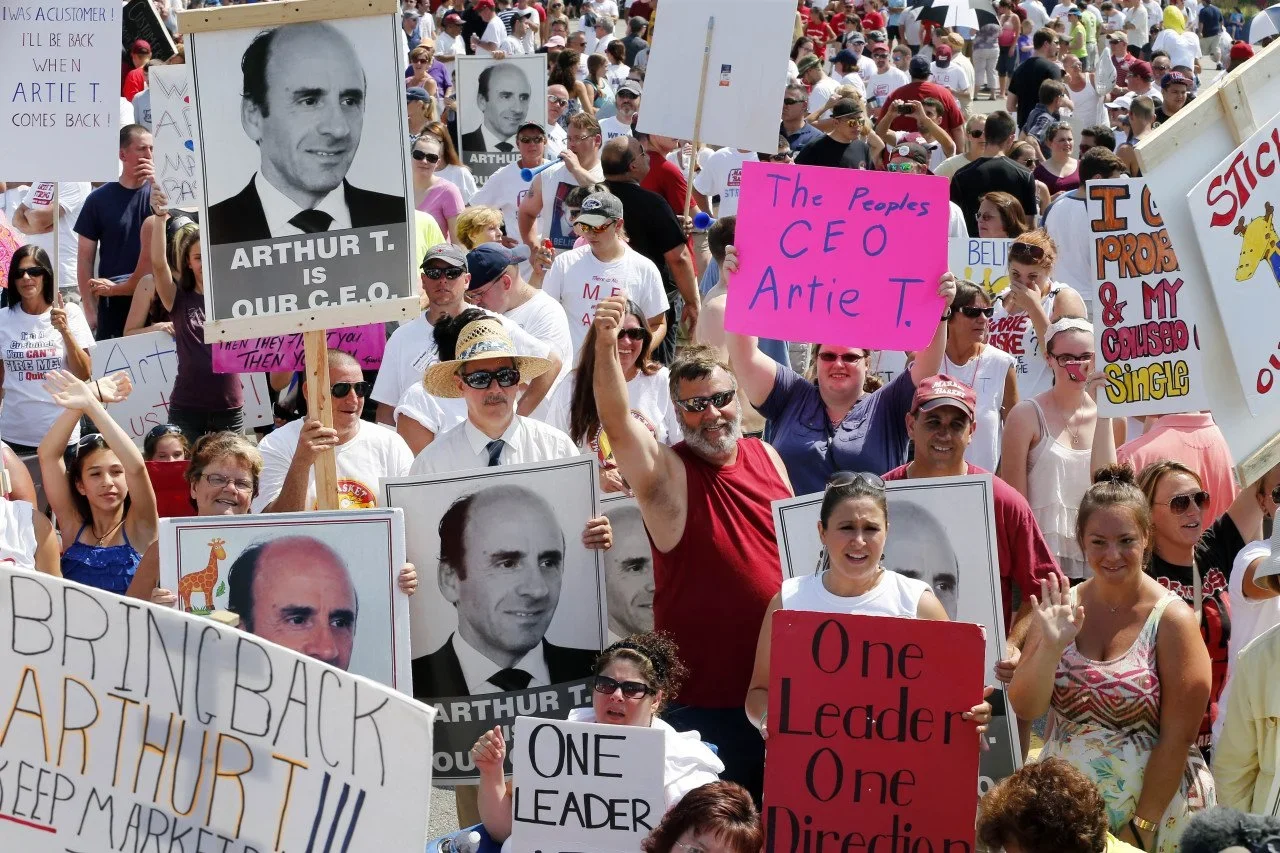
Secret Ingredients
Arthur T. Demoulas, the beloved CEO of Market Basket, inspired unprecedented loyalty through his people-first leadership. Discover how his values sparked a grassroots movement, uniting employees and customers in a fight to bring him back.
CHECK OUT GROCERY STORE JOB POSTINGS and you’ll see “deli clerk” as a frequent recurrence. They’re tough jobs to fill, or to keep filled, for most chains (and the grocery industry as a whole ranks among the top for turnover rates). It’s one of the lowest paid of grocery jobs (second only to cashiers), and the post can be grueling: long, take-a-number lines, razor-sharp slicing machines, and repetitive work with logs of processed meats and cheeses. It would depress the most earnest of laborers. Typically.
But Joanne Preveneau is different. She’s done it for 30 years and wants to do it as long as she can. In the final hours of her Sunday shift and a long weekend of work, the 61-year-old with a head full of bouncy curls was still going, happy to stop and talk with customers, even when it meant taking 20 minutes away from the work she had to get finished: unloading the pizza cart.
The deli veteran from Salem, New Hampshire, is the cheerful, devoted employee any savvy CEO would want on the front lines. She’s talented in other ways, too, an in-demand floral designer by night considering a venture into real estate in four years when she retires from a 35-year career handling meats and cheeses. Thanks to a sizeable pension, she can follow her dreams.
But she can’t quite picture leaving her employer altogether, even then. “I still plan to work here part-time,” she says, “but I’m looking forward to trying other things, getting more into crafting and maybe rental properties.” She doesn’t need to stay on as a part-timer; she just wants to. The grocery chain provided her security through the years, as she raised a son and cared for an ailing husband, and the company’s leaders reward her decades of dedication with multiple bonuses a year, competitive pay, and a well-padded profit-sharing program, one that probably would dwarf the lifetime savings of workers at any other grocery store, anywhere.
The profit-sharing plan, launched in the ‘60s, is one way the chain–Market Basket–has distinguished itself. It’s still a company that upholds its stated values: People before profit. The company has kept prices low enough to save customers, including vulnerable low-income populations, around $1,500 annually over nearby competitors, according to one comparison. It pays employees better than industry standards and hires from within, compensating some managers with six-figure salaries. Despite those investments, and perhaps because of them, it nets around $4 billion in revenues a year, so the profits are there to share.
The result? A worker like Preveneau with three decades of service under her belt might have a nest egg of more than $200,000. That’s a stockpile that never required a single penny from the individual stocker or clerk - in a post that, at other stores, might garner something around minimum wage and come with few or no benefits. “We get a letter with our bonuses that says it’s because of ‘your commitment to our company that we can give you this,’” Preveneau says, beaming in her gray deli worker lab coat. She says it’s the company’s CEO who carries on his family’s tradition of allowing employees to benefit from the stores’ success. “We work hard, but he gives back. He does everything possible to compensate us for how hard we work.”
That’s a typical employee experience at Market Basket. The boss who gives back, of course, is Arthur T. Demoulas, named among the “most popular CEOs of all time” and the man whose character inspired protests and that unprecedented, non-union work stoppage across three New England states.
But Demoulas, or Artie T., as employees call him, also has gone to more dramatic lengths to protect a people-first tradition. In the wake of the 2008 financial crisis, for example, he ensured the company made up for the profit-sharing plan’s loss—to the tune of around $46 million. He had the courage to stand up to a board looking for profits and say that $46 million of the company’s dollars should be re-routed to protect employees.
So when a shakeup among company board members jeopardized her boss’s job in 2014, Preveneau worried what might happen without him and under the direction of Artie T.’s rival and cousin, Arthur S. Demoulas, a man she says she’s never seen in person before. Those were uncertain times, when the helpful, transparent leadership she was accustomed to seemed to vanish in one swift decision. Artie T. represented safety; anyone else put that security at risk. “All of a sudden, we didn’t know what was going to happen.”
So she did something about it. She came to work early so she could take breaks to make it down the street to join protesters who were chanting and waving signs along the roadside. She did that for six weeks, eventually working in a virtually empty store mending uniforms because there was little else to do. She wasn’t alone in her activism. Shoppers had stopped shopping.
Perishables had to be sent to area food banks because they were sitting on shelves as customers boycotted the grocer, to the point of crippling the chain. At the boycott’s peak, the company was losing around $75 million a week as shoppers, who saw low prices and secure jobs for their friends and neighbors as a reflection of Artie T.’s ethical practices, made their stand, even when it hurt. They chose to pay more elsewhere rather than betray the man whose values, to them, represented Market Basket’s promise: Grocery business second, people business first.
***
MEDIA CHOPPERS SPUN IN LOW CIRCLES, a constant hum in blue sky. Affectionate cheering was reluctantly stifled as Arthur T. Demoulas began his first public address since he was fired and rehired. In a stiff-shouldered gray suit coat and striped tie, what hair he had remaining combed neatly on the sides, Artie T. looked the part of an executive when he climbed to the press conference podium. But with the spirited speech of a victor and not-so-subtle New England accent, he sounded more like a fired up Rocky Balboa. They’d fought bravely. And they’d won.
It was the first official thank you to the grocery store workers and vendors who’d risked their jobs and businesses to save his. He wasn’t some guy down on his luck, either. He was a multimillionaire, recently reinstated as CEO thanks to their efforts. After a year of escalating protests and international media attention on the New England grocery chain, Artie T. was back at the helm at Market Basket.
When he told them he loved them, the cheering started again in earnest. He told them they were heaven on earth. He praised the power of their values, their enduring human spirit, and their shared, solid moral compass. He said they showed that respect, honor, and dignity are their way of life. They had taught the rest of the world, through newspaper quotes and TV clips and academic analysis, how to be good neighbors again.
The hoots and whistles and chants—“Artie T.!”—drowned out his final words of gratitude. The standoff, a culmination of board member disputes that pit Artie T. against his cousin Arthur S. Demoulas, was over. The boss was back. But the academic and business worlds would spend years trying to piece together some kind of formula for the loyalty Arthur T. Demoulas and the “We Are Market Basket” movement inspired in 2013 and 2014.
It truly was a grassroots movement, and it hadn’t come without sacrifices. What had started as a handful of associates gathering, upset over the removal of the company’s CEO quickly multiplied—through social media and news outlets and word of mouth—into something much more, a widening show of solidarity across three states and sixty communities. Warehouse, clerical, and managerial employees stood side-by-side to oppose Demoulas’s removal, some of them walking away from their jobs. Following the lead of the disgruntled employees, vendors halted deliveries and customers chose to shop elsewhere, even though many of them scarcely could afford to do so. It meant less food on the table, less money in the bank and, for vendors and suppliers, loss of income for their own family businesses. These appeared to be extreme, self-sacrificing steps taken for a person who had far less at stake than those employees, customers, or vendors.
Non-union employees risked their jobs to band together with the deft organization and determination of labor unions in what became an unprecedented work stoppage. Media outlets followed the story, eventually working to track every step of the process, recording in detail impassioned speeches made from the backs of pickup trucks to growing numbers of crowds.
Their collective voices rose together in a tenor, not unlike a fight against unfair labor, the mistreatment of animals, environmental outrages, or mass layoffs. But the battle, this time, wasn’t against those more conventional catalysts. It was the little guy fighting to save the big guy, low-income workers and shoppers standing up for an affluent executive. Customers, employees, vendors, suppliers, board members, and residents of the stores’ communities had to choose sides. They decided whom they would follow, whose name and title was worth advocating for, to the extent of risking their jobs, their businesses, their finances, their reputations. They had to decide who they were loyal to. Why did they choose him
MIT made a 16-chapter case study of the ordeal and outlined 11 core management principles Mr. Demoulas employed—plus a host of other contributors that encompass the company’s business model. A professor at Boston University called the Market Basket story a case study for the ages. The U.S. Labor Secretary told the employees that the nation was proud of them.
Two documentaries highlight the emotion-soaked dramas that unfolded among managers and employees, the power of good people who decided to fight the good fight. The literature that proliferated in the aftermath of the six-week protest and Artie T.’s reinstatement do similar work: painting the employees in a noble light, no doubt influenced by Arthur T. Demoulas’ insistence that the praise belongs with the people. These were neighbors helping neighbors, the kind of actions we think we don’t see as often as we once did, a life-affirming glimpse of how caring people can be.
But, in the clutter of explanations and the scramble to discover how others can instill what Market Basket does, most of the amateur and professional analysts got it wrong. Even Artie T., in his humility, missed the point when he lifted his people up as self-sacrificing. The truth is, their reaction wasn’t as much about who those good neighbors were, as it was about what they needed.
There was a formula that affected the outcome, but it wasn’t a product of an MBA program or a savvy new HR initiative. It wasn’t new at all. It was an old formula, one that predates graduate schools, corporations, and even society. It was nature at work.
Blind Trust
Even stellar character isn’t enough if it doesn’t meet others’ expectations. Bernie Madoff’s perceived competency and consistency won him trust, but his deception reveals the power and danger of manipulated loyalty.
Most of us would consider ourselves individuals with upstanding, or at least acceptable, character. But that’s not enough. Even stellar character isn’t enough if it doesn’t live up to what other people expect. Trust in someone’s character can only develop when a person believes someone lives up to his own standards, when your behavior matches the kind of character shaped by his beliefs and values. The same goes for the other elements of trust: Competency, Consistency, and Capacity. You might think you’re the most competent mechanic in town, but what if your potential customers see competency as something other than having mechanics with 40 years’ experience? What if they want to see that you use the latest technology to diagnose the trouble with their brand-new BMW? You can’t assume that you know how your people define what makes them safe and expect to get the results you would with an informed strategy.
Think of Bernie Madoff, the mastermind behind the world’s largest private Ponzi scheme, a man whom authorities say scammed more than 50,000 investors, including some who lost their life savings and some charitable organizations. People have marveled that Madoff could have pulled it off for as long as he did, but he had the power of perceived competency working for him. He had long positioned himself as an expert, the “pioneer of the modern stock market” who seemed to have proven his ability through one Wall Street disaster or dip after another. And he did it for about 40 years, and with such a display of skill that, by the day of his arrest in December 2008, he was to be managing some $64.8 billion of other people’s money.
In a book that draws from research and interviews with Bernie Madoff, serving a 170-year prison sentence, journalist Diana B. Henriques carefully documents his dramatic rise out of the shaky years of the late 1970s. By the early 1980s, he had become a member of the Cincinnati Stock Exchange, the first to rely entirely on electronic trading, and he even invested his own firm’s money to help with the switch. He also became a member of the NASD committee to create an electronic system that joined regional stock exchanges with the New York Stock Exchange. In 1983, he opened a London affiliate to handle foreign securities and foreign currency accounts. In 1985, Madoff and his neighbor launched another brokerage firm, one that would funnel more investors to the Madoff business, and Madoff moved his operations to a slick new office on East Fifty-third Street in New York with room for his 50 employees. By 1985, Madoff’s firm landed in the Securities Industry Association’s top 100 list and Madoff was elected to the NASD’s Board of Governors, a title he would hold for five consecutive terms. Money was flowing in, including funds from a former accounting partnership that eventually had come to serve more than 1,000 clients and managed around $100 million, and Madoff was a recognized leader in the stock market of the future. He was a star, the voice of wisdom and reliability in the notoriously rocky Wall Street environment.
Most importantly, he delivered. To outsiders, he played the role of the competent, knowledgeable, and respected insider. To investors, he proved his ability by providing consistent returns, time after time.
He would pull through again on “Black Monday” in 1987, when the Dow Jones Industrial Average nosedived by 22.6 percent and the S&P fared about the same. Madoff’s investors didn’t suffer, though. Madoff’s firm came out looking better and stronger than all the rest, an island of safety in uncertainty. While Henriques’ sources paint Madoff as a sort of unflashy source of calm – the “good listener” instead of fast-talking con artist – what really instilled confidence was his ability. He did his job for investors, Henriques wrote, and that did the trick:
“… his whole aura of success as an investment manager was that he never failed to deliver the returns his investors expected. He had brought them profitably through all the bad times – the market’s tumble in 1962, the doldrums of the 1970s, even the 1987 crash and its rocky aftermath.”
His undoing came with a hedge fund, Ascot Partners, supposedly built on a “split-strike conversion” investment strategy, which brought double-digit returns consistently to individuals and organizations, even governments and powerful international banks, who invested tens or hundreds of millions with the man who seemed to know exactly how to handle any market conditions.
People wonder how Madoff could possibly have pulled off such a scheme for so long, even with red flags waving since the 1990s and even before, for careful observers. While Madoff’s narrow escapes likely emboldened him to believe he could get himself out of any disaster until he knew he was in too far to ever get out, those wins when others were losing demonstrated his ability, his competency. He hid losses from his clients, turning over profitable returns consistently and, on the surface, effortlessly. Even when paperwork might have seemed questionable, his investors got the money they had come to expect, and enjoy, from Madoff. Madoff’s “skill” protected investors from market volatility and made them money. That skill was uncanny – riskless gain that had to be unbelievable, really – but proven over decades of results. He kept his investors safe. He made some of them rich. For some of them, how he did it wasn’t the question – the skill was about what he delivered, what they perceived as competency and consistency – until it all came crashing down around them.
The Madoff story is two cautionary tales in one, in a sense. It shows that people who are working to earn loyalty must discover how their potential followers define the components of trust, what makes them safe in arena where they interact with you – patronize your business, work for your company, donate to your nonprofit. But it also shows the power of these innate drivers and the danger that lies in their manipulation. It seems counterintuitive to link a villain like Madoff, Henriques’s “Wizard of Lies” with loyalty. But the truth is, he won a loyal following; his story shows the influence that our individual interpretations of loyalty’s elements can wield, a reminder to be careful who we trust and consider why we trust them.
Mr. Consistency
Seth Godin’s daily blogging routine over twenty years has built an unwavering trust among his readers. His consistent effort and reliability create a safe space for creative journeys, earning him a loyal following who depend on his guidance.
Writer Patrick Rhone has always been determined to put his work into the world - and by any means possible. His ventures into alternative-publishing started when he was a preteen spreading his ideas on college campuses where his mother and grandmother were professors. He remembers the sense of accomplishment that came with photocopying and stapling handwritten poems and then the thrill of distributing his own writing. He was 10 or 11, with creativity to spare and share.
After that, he was working with fellow artists to publish “zines” – small-circulation, often photocopied counter-culture magazines – through the 1980s. Years later, when the Internet made a new platform for authors and essayists, he was all in, from the early 2000s and before. He’s written and self-published seven books so far on the topics like mindfulness and minimalism and, of course, tapped out plenty of blog posts.
But there’s one writing goal he hasn’t been able to fully realize, a habit practiced by one of his creative heroes: Seth Godin. Known for his prolific output, marketing wordsmith Seth Godin achieves that aim that feels unattainable for almost anybody who’s ever given it a try. He blogs. Every. Single. Day.
The longest Rhone has been able to do the same was a six-month stretch. “I wish I had Seth’s routine,” he says. “Here’s someone who is extremely successful. A big part of that success comes from showing up every day and writing something on the web for free and putting it out there.” Because Godin “shows up” every day, so does Rhone. He’s been a longtime subscriber to Godin’s
RSS feed, and checking in there is a must for his mornings. It doesn’t matter whether Rhone is at home in Saint Paul, Minnesota, or vacationing with his wife and daughter, he stops to read his daily dose of Godin wisdom, waiting for him in his “high priority” feed reader folder, an exclusive list reserved for Godin and four others. “It doesn’t matter where I am, if I can’t take 10 minutes to read it, then my life isn’t being lived the right way,” Rhone says. “I know I need to fix my life if that happens.”
He can’t tell you how long he’s been following Godin’s ideals; reading Godin is a habit that has become fused with Rhone’s own creative process for years. He can see it when he looks back at his work. The way Godin shapes his books, sometimes a repackaging of posts, has provided a model for how Rhone approaches his own books. When he saw the look and feel of the books produced through Godin’s publishing venture, the Domino Project, Rhone knew he wanted his to be similar. And Godin’s thoughts on finding a tribe sculpted how Rhone built an audience for one of his most successful websites and subsequent books, “Minimal Mac: What We Believe In.” Whether it’s a monumental impact, or something more gradual – some idea Godin has been building on for hundreds of posts that sharpens Rhone’s perspective – Rhone knows where to look. And he does, every day. He is a faithful follower.
How did Godin win such ardent support? It wasn’t the instant avalanche that so many aspire to when building out online messaging. Godin took the long road, blogging faithfully since 2002 or 2003 – totaling thousands of blog posts. At least once a day, sometimes twice, he speaks to his followers. One graphic that maps his “5-year overnight success” shows what is, in reality, a slow-blossoming success. The real secret to how he eventually came to garner more than 8,000 social media likes on a single post? He only took twenty two days off in the five-year stretch they measured. It wasn’t sensationalism; it was repetition and dependability.
Godin, himself, when he spoke to us, said writing daily takes deliberate effort, a choice he makes because he feels like he needs to be there for his readers. It’s about them - and not him. “I do feel responsible to my readers. I think of this every day. And I love having the privilege to speak up in this way. I’ve never seriously considered not blogging. I’ve done it for nearly 20 years, and it makes me who I am.”
His conscious decision to be there with what his followers need - and to be there himself, not using a copywriter or other avenue for producing daily content - is one part of his own philosophy on maintaining a more human connection and resisting pressures to commodify people on the receiving end of marketing. “My goal is to have my students teach other people to stand up, speak up, and make a difference. If every one of my million readers did that for just ten people, it would be quite a ruckus.”
But he had to speak with regularity before he could build a loyal base of a million potential pot-stirrers. Even before his web presence, he was known for his volumes of commentary, starting with his first big hit in the 1990s with the concept and book “Permission Marketing.” He’s now a bestselling author of 18 books so far and has upwards of 263,000 RSS subscribers to his blog, which covers ideas, marketing, and change-making in punchy 300-word bursts. It consistently ranked near the top of Ad Age’s Power 150, what was a daily ranking of the Internet’s abyss of marketing blogs. The list shut down in 2013; Godin’s blog goes on. He has become the voice with staying power in an era where most others’ best efforts seem ephemeral.
Chicago-based writer and photographer CJ Chilvers, who’s been blogging since 1998, said the daily goal still eludes him. He’s okay with that. He knows Seth Godin does something special, and he appreciates him for it. Godin’s advice, which Chilvers reads every day, has molded how he writes his own posts. Instead of aiming for in-depth, Google-optimized thought pieces, he shoots for a quick but poignant point, made in a few hundred words. Like Godin. But he’s still stumped on how to do that once every 24-hours, no matter how he breaks it down.
“I tried to look into a strategy of how he could possibly do that every day,” Chilvers said. “I started making a list of twenty or thirty ways a normal person could blog every day. I write for hours a day. He writes five blog posts a day and only publishes one.” Chilvers hasn’t been able to find any faster routes to writing, and that makes what Godin does more admirable. “He doesn’t do the
shortcuts. He actually does all the hard work.” And Godin has been able to write, and be read, for twenty years because of it.
***
Seth Godin puts in the effort. For him, it’s consistency, to a degree that other would-be competitors just can’t replicate. Because readers can count on Godin’s writing and guidance - the same way our ancestors would have looked for potential co-explorers who could do good work not just on the first day of the journey but until it was complete - he won followers who trust him to keep them safe in their creative journeys.
Once you identify what it is you do that makes your people safer, it’s not enough to do it occasionally. They have to know they can depend on you to provide it for them today, tomorrow, and the next day for years to come. And you need to show that you’ve got what it takes – the knowledge, the resources, the talent – to lead them safely into the future.