

Focus. Focus. Focus.
Warren Buffett’s lifelong focus on patience, compound interest, and a clear vision made him a trusted financial leader. His disciplined approach, free from distractions, earned him loyalty and shaped modern investment strategies.
As a kid growing up in Omaha, Warren Buffett was simply trying to improve his financial status from a nickel-a-week allowance to something more substantial.
He was constantly running tallies—calculating how long it took marbles of different sizes to wade from the bottom of a tub to its drain so he could win a race against his friends—and using numbers to make something more dynamic than what they seemed like on paper. At age 7, he got his hands on a book A Thousand Ways to Make $1,000. That got him thinking about what might happen if he could become a great salesman of penny weighing machines and figuring out how long it would take him to pay off his investment through compound interest. He was always playing with some business model or another and itching to get started. So he sold soda, gum, and magazines door-to-door. He picked up paper routes until he was delivering 500 or so on his neighbors’ doorsteps every morning and filed his first tax return at age 13. He told his family that his life goal was to become a millionaire. He relished in the highs and lows of the money-making game from as early as he can remember—but for him, it was never a race.
Of course, the investing genius became one of the wealthiest people on the planet, an internationally recognized business influencer, and a self-made billionaire philanthropist. His holding company, Berkshire Hathaway, became the fourth largest company in the Fortune 500, and Warren was the only magnate to build a company from nothing and make it to the list’s Top 10.
But Warren was never in a hurry to get there. Yes, he was hustling as a kid, but he was also reading every book on investing he could find that belonged to his father—a stock salesman who worked right through the Great Depression before he became a Congressman—and he read some of them more than once. After he finished a bachelor’s degree at the University of Nebraska and made a brief attempt to attend Harvard, he noticed that two investment gurus he’d pored over in his father’s office were not only still living, but also teaching at Columbia University. Forget Harvard. His golden opportunity—sources of insider knowledge—had arrived.
At Columbia, he returned to his lifelong pursuit of making money—not to spend it, but simply to amass as much as possible for some eventual use. He met his wife, Susan, and took a Dale Carnegie class to get over his fear of public speaking so he could one day become a voice of sanity in a sea of get-rich-quick messages. He went back home, to Omaha, to spend 14 years as general partner of Buffett Partners Ltd., a hedge-fund-type partnership he started in 1956 where he grew around $105,000 to around $7 million by 1962. Then he stumbled across a dying textile company called Berkshire Hathaway Inc. He didn’t try to revive the textile business; he used it as a holding company of sorts, a place he could mold into something that fit his vision, shared by his business partner Charlie Munger.
The two started a sensible approach: Looking for “wonderful companies at fair prices—instead of fair companies at wonderful prices.” They stuck to industries they liked and understood. And the accretion continued, at a measured pace.
Along the way, the running argument with his charitable, activist wife was when to start giving big with all those earnings. Buffett stayed steadfast in his position: Let compound interest do its work. He did—for forty years. In 2006, when his net worth reached $46 billion, he made his first large payout—$31 billion in shares—to the Bill and Melinda Gates Foundation, plus another $6 billion for four charities started by his family members.
When longtime friends Bill Gates and Warren Buffett first were set to meet in 1991, though, neither was overly enthusiastic about the upcoming encounter. Bill assumed it would be a bore; Warren wasn’t really interested in computers. But they became fast friends, despite a 26-year age difference. Eventually, they’d be campaigning for charity causes, lobbying Congress, and reading books together. When Bill’s father asked the two—at one point the richest and second-richest man in the U.S.—to each write down a single word to represent what has helped them the most, both—acting quickly and without consultation—wrote the same answer: Focus.
*
One of Warren’s favorite topics and earliest fascinations was the wonder of compound interest. It was the lure behind his daydreams of a penny weighing machine and the impetus behind his impulse to hold onto every extra penny he made. Each one of those could become so much more. He would write about the topic and call it his most important key to investing success. His lifelong focus was not just playing the money game, but playing the waiting game. It troubled him deeply when he saw others promoting fast, easy wins that could only lead to trouble for investors. That’s why he walked away from Wall Street—and what he saw as charlatans—in 1969 to chair Berkshire Hathaway. He didn’t want to be mixed in with the storm he saw coming.
Twenty years later, when one of Berkshire Hathaway’s companies wound up in a debt-laden whirlwind, Warren was able to stake his sterling reputation on righting the wrongs. It was August 1991 when he got dire news from the top officers at Salomon Brothers: The securities firm was under investigation—by the Treasury Department, the Federal Reserve, the SEC and the Justice Department—for improper treasury bond trading. The company owed $150 billion, a greater load of debt than any other private entity in the country. The trust of the public and the credibility of the American market were on the line. The situation was dire in every aspect. Then the Treasury suspended the company from participating the auction of new issues, and Warren had a choice to make and less than 24-hours to do it. He could let the company go bankrupt and let 8,000 employees go down with it, or he could plead for mercy. The second option was unlikely to get most people anywhere, but this was the man who’d preached careful and thoughtful business practices for his entire public life. Warren called U.S. Treasury Secretary Nicholas Brady in an effort to save the company. In a move that speaks volumes for Warren’s influence and the loyalty he engendered with his focus on patient and sensible business practices, the Treasury modified its order. Warren promised to make things right, and the company was spared.
Through a vision for long-term business success—one based on learning and analyzing before moving ahead—Warren has influenced how Bill and Melinda Gates approach worldwide poverty and disease. He was one of the only influencers to warn about the impending doom he saw in the dotcom frenzy, and he was right. People listen to Warren—they are loyal to his advice and approach—because he presents clarity.
To make someone’s life better, you have to inspire and offer purpose in something. You have to provide a cause, a reason, or some discovery or solution to follow before you can win followers. You have to find and share your unique cause or solution and you have to make it definite and understandable. But it won’t work if you stop or let distractions move you in other directions. You must also show that you will pursue that clear vision in every possible direction before, and in spite of, all other demands.
*
“The fox knows many things, but the hedgehog knows ONE BIG THING.”
In his 2001 best-selling book, Good to Great, Jim Collins borrowed the quote from the 7th-century Greek poet Archilochus to ask, “Are you a hedgehog or a fox?”
Collins argued that good-to-great companies were like hedgehogs— singularly focused and categorical in their approach. Unlike the fox that spends hours strategizing the perfect attack, the hedgehog has a simple plan. While rolling up into a shiny, spiny ball isn’t a masterful manuever, it is effective and keeps the hedgehog alive.
The value of clarity and focus is not to help us become the best. It is to help us understand what makes us better.
Building An Army Of Davids To Fight Goliath
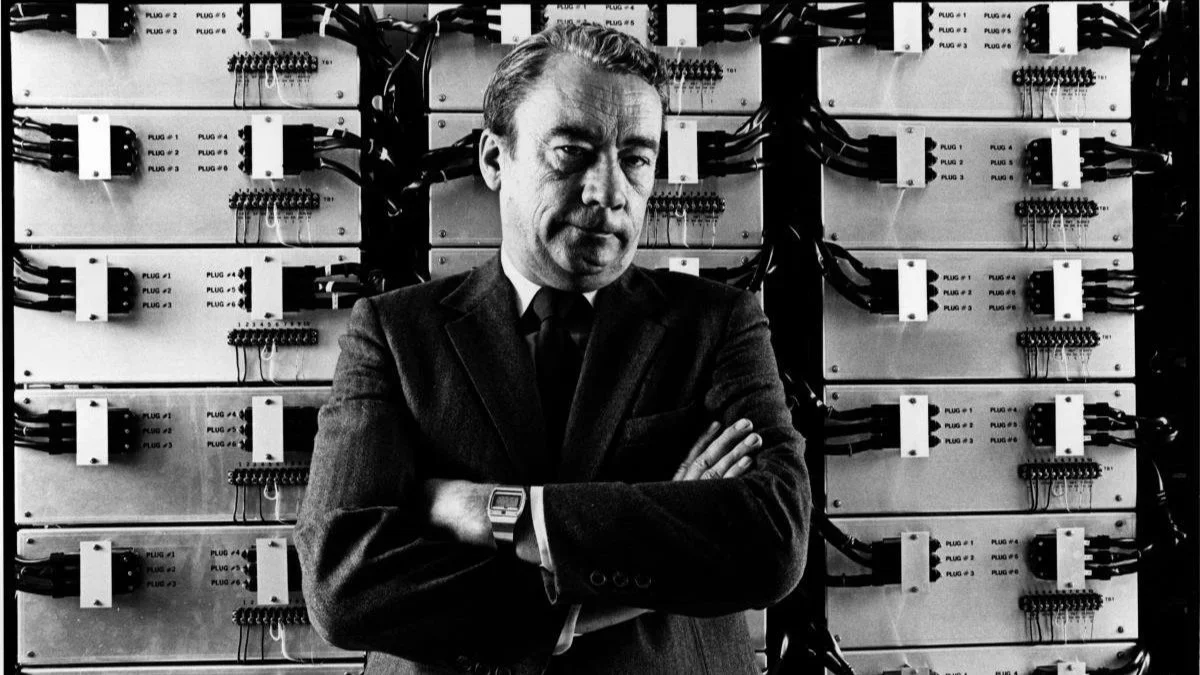
Bill McGowan’s relentless drive and visionary leadership turned MCI into a telecommunications giant, breaking AT&T’s monopoly. He earned loyalty by inspiring his team, proving he had the resources and influence to defy the odds and succeed.
When Bob Pons joined the eager recruits of MCI’s burgeoning sales force, Bill McGowan was already an American business legend. It was the early 1980s and, with McGowan leading the charge, MCI had accomplished the unbelievable – first breaking the grip of the 100-year-old telecommunications monopoly and then launching an all-out assault to win its customers.
“We all knew, growing up, that AT&T was the only source for long-distance calling. It had been so expensive, you barely made those calls,” Pons says. “When this company told us about the business model and explained to us that a call would be up to 40 percent less expensive than AT&T, I figured this is going to be the easiest thing in the world to sell. I was going to make so much money. I had no doubts.”
Of course, he was just out of college and teeming with ambition, and he’d just landed what was at the time a dream opportunity, working in a swanky Midtown Manhattan office for a company that had emerged from nothing to be among the most entrepreneurial, innovative companies in the world. By 1982, MCI had made its first billion dollars and had defeated a company that had more revenue and power than some small countries. Pons felt like he couldn’t fail; he was working for someone who had already done the impossible.
But that exhilaration was hard won.
MCI had started small, just a few microwave towers meant to offer regional service. With McGowan at the helm, a grander vision emerged. MCI aimed to break up the respected, government-backed monopoly that was Ma Bell. An absurd proposition, at the time. Pons and everyone else born before the 1980s had come to accept pricey long-distance service as a fact of modern life. AT&T had owned the entire network that supported local and long-distance phone service, as well as any equipment connected to it, including the phones in every home. People were required to have a phone, required to rent it from AT&T, and they had no choice but to purchase service through Bell companies, no matter the price. That line of thinking was so ingrained in the American way of life that, even after MCI won its landmark legal battles to allow competition in AT&T territory, Pons and other early salespeople would encounter people who asked whether it was even legal to purchase long-distance service from another provider. The phone company felt more like a government agency than a private business and had for as long as anybody could remember.
How did it change? Who could have forced competition on what seemed to be an unbreakable monopoly, an American institution? The change-maker was a tenacious, Harvard-educated businessman raised in Pennsylvania coal country. Someone who understood and appreciated the plight of the working man but also someone who believed in education and ideas. Someone who thought hard work, inspired by a shared vision, could make life an adventure. Someone who relished a fight and who managed to make people believe he could win it, too.
When he came to MCI in the 1960s to raise money for a small company fighting AT&T for the right to build a few microwave towers, McGowan already had made millions as a venture capitalist and a corporate consultant. He’d made a name for himself among certain circles as the man who salvaged companies on the brink of disaster by trying the opposite of the status quo. If companies paid their sales force on commission instead of salary, he’d reverse course. If the pay structure was opposite, he’d reverse course. He favored unconventional approaches and sought change. Soon he would take that idea that change is beneficial and apply it not to a single corporation but to an entire industry. It was attorney John Worthington who thought McGowan was the man to raise the money MCI needed to make regional service work. He saw in him a successful entrepreneur and a natural salesman - one who was also adept enough to “sell” the company’s cause to any investor and later to any potential employee MCI needed on the team.
Industry insider Larry Harris – one of the first executives with MCI and a legal expert who had managed corporate relations with AT&T, independent telephone companies, the FCC, and the White House’s Office of Telecommunications Policy – remembered McGowan’s constant search for the right answers. Here was a man who was a Baker Scholar at Harvard Business School, a man who had made millions consulting corporations on how to save their companies before he came to MCI – and yet he believed others could sometimes offer better ideas. “He was a great listener and read everything. He also never closed his door, and he let anyone talk to him about anything. When people would just drop in during one of our meetings, I would find myself thinking, ‘This is all bullshit.’ Bill’s response was classic: ‘You never know when some bullshit can save our company.’”
That was before the $1.8 billion verdict against AT&T in 1982. Before MCI won its first great battles, McGowan was able to rally an army of people to his side. “He went after bright people who had broad experience and liked a challenge,” Harris says. “They were people who had not become wealthy yet but were making good money. He was able to convince them that this was a good opportunity and they could make a lot of money.”
He came to be known as the hard-driving, chain-smoking boss who loved a challenge and who could get everyone to fight with him, a man who repeated the phrase: “A crisis is just an opportunity.” He was always opening others’ eyes to opportunities, and they trusted McGowan to take them to them because he showed that he wouldn’t stop until he found the right answers.
Gerald H. Taylor started out in 1969 as an executive assistant to McGowan and founder Jack Goeken and spent thirty years with the company, eventually rising to CEO before he retired from MCI WorldCom in 1998. Even in the early days, he knew MCI had serious potential with McGowan at the helm, constantly looking for the best new idea, no matter the rank of the person who suggested it. McGowan’s philosophy of running a flat organization - taking ideas and advice from any employee in the company - helped him ensure everyone was engaged throughout the company’s stages, from struggling against regulatory restrictions to winning market share. But he also made them owners in the business with employee stock options, a rarity in the ‘70s and ‘80s. “Those were what people worked for,” Taylor says. “It was hitched to the belief that we were going to be successful. Individually, you could make a lot of money and the options were based on the contributions you made.”
He was constantly asking employees to consider what three most important moves would make for success in the next year. His focus guided them, but his unrelenting appetite for work and knowledge inspired. Taylor would see McGowan on the weekends with armloads of books, newspapers, and magazines. “He had this amazing energy and intellect,” Taylor says. “People were in awe of him.” And that awe extended to regulators, who would play a role in the company’s fate - and employees knew it. “He was very charming and a great storyteller,” Taylor says. “People genuinely liked him and they could identify with him. Here’s a guy from a small town in Pennsylvania that really doesn’t consider himself a big shot. He won a lot of people over. Ralph Nader kind of worshipped him. He had an office down the street and Bill paid attention to him.”
Because employees saw his influence first-hand, they believed he could persuade the right people to let MCI have a fighting chance. McGowan inspired them to believe they were on the right side of history and he gave them each a stake in the outcome. And he demonstrated that he had the influence, drive, and intellect to make their collective effort victorious.
The result was a loyal team of people who, together, discovered the thrill of fighting through a challenge. And they held onto it. They won the battle of breaking into the telecommunications in a way that would have seemed unbelievable. They made long-distance calling affordable and pressed forward into other innovations: the first commercial email service and an early foray into cell phone technology and ultrafast fiber optic technology. MCI employees had a worldwide impact on telecommunications, and they did it because McGowan showed the fourth component of Trust: Capacity. He made people – legislators, employees, customers, investors – believe he was equipped with the resources to risk their careers, their money, and their reputations in a battle where the odds were stacked high against them.
If You Aren’t A Know-it-All, You Probably Should Be.
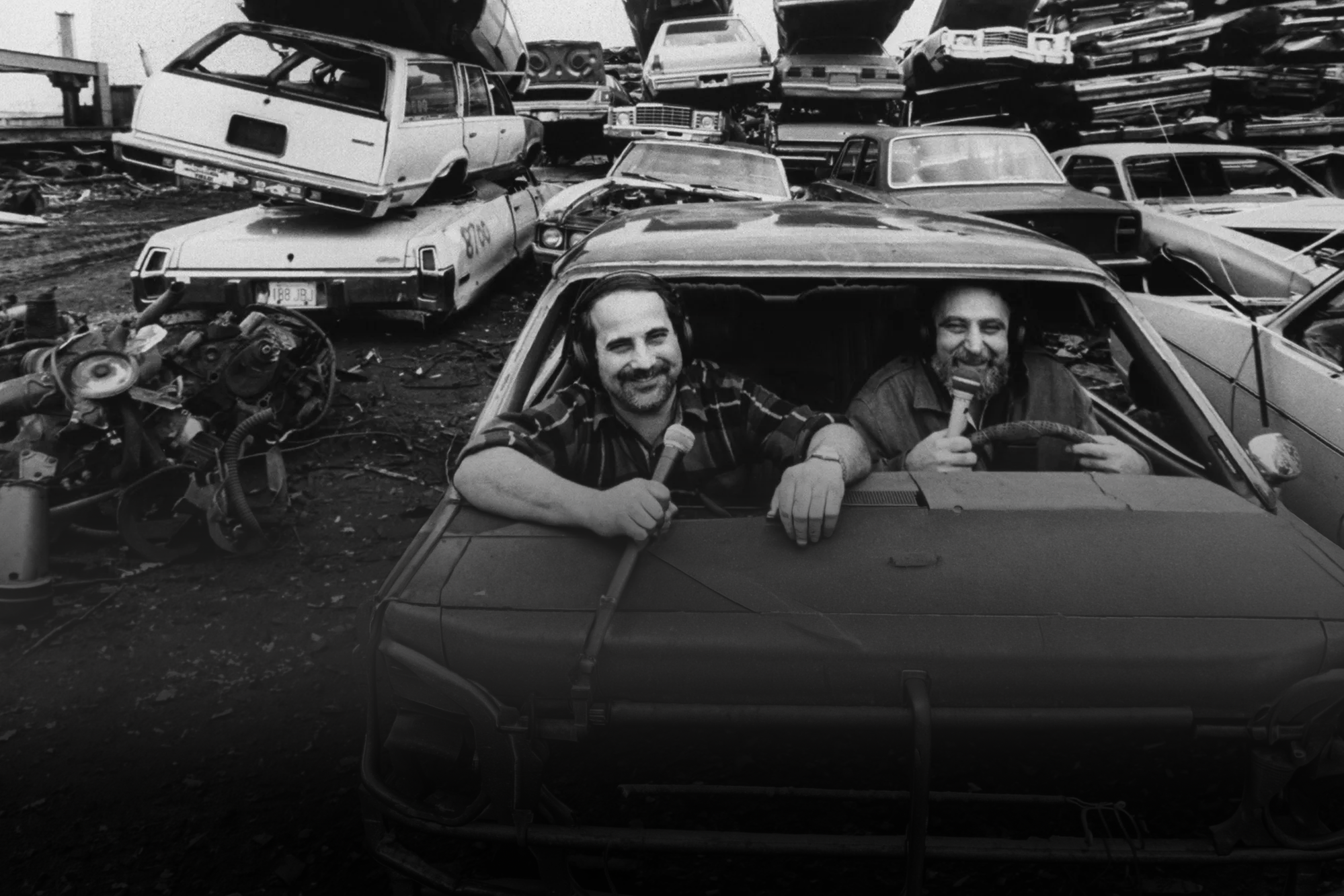
For 35 years, Car Talk’s enduring success was built on warm-hearted wit and an unwavering command of automotive knowledge. Ray and Tom Magliozzi’s brilliance lay in making complex car repairs accessible, keeping listeners informed and entertained, episode after episode.
It was the mid-‘90s and Clinton Everhart had moved out West, just about the middle of nowhere. Accustomed to the vibrant characters and intellectual stimulation of college campuses, he found the silence and the distance isolating. He didn’t even have radio reception, except for one station: NPR. His mom suggested a program she had begun listening to every week. It didn’t sound enticing; it was about cars.
He still jokes about it. “I thought, if my mom likes it, I probably won’t.” He tried it anyway, if only to humor her and stave off boredom. Within minutes, he changed his mind. His mom, he decided, was onto something.
Click and Clack. Ray and Tom Magliozzi. The Tappet Brothers. Those two reached him in the heart of the desert and hooked him from the very first program with well-informed wit and generous laughter. “They’re so goofy, but then they tell you good stuff.” Like so many others who happened upon the radio show, Everhart became a regular listener. The two brothers became his long-distance companions, providing a laugh when he needed one and always astounding him with how much they knew. They almost felt like friends, the kind you can always count on to help out in a pinch. For Everhart, the friendship became a habit that’s lasted more than 20 years so far.
He kept tuning in after his visit to his mom. A few years later, during his grad school years, he’d make them part of his weekend wind-down routine. Now, finishing his doctoral dissertation while he works as university registrar at University of Arkansas for Medical Sciences, he still makes time for them. The show went out of production in 2012, and reruns on public radio are ending, but podcasts of the show let him carry on his tradition.
While he’s never been huge into cars — he’s not a die hard for car shows or a gearhead with a garage dedicated to a muscle car collection — Everhart thinks he knows a little more than the average motorist. He’ll tinker around under the hood with smaller repairs, always changes his own oil and knows, for the most part, how to keep his 2009 Toyota Tacoma plugging away. He’s learned enough to know just how much he doesn’t know — and to recognize how much Click and Clack did. He’s always been stunned at just how much the brothers could easily recall about any make or model. “You’d hear them answer right away about an ’83 Volvo or something. Really, how the heck do you remember that?” As someone who’s spent his adult life in academic circles, Everhart appreciates that the brothers were MIT educated. But he also found them relatable and never condescending, despite their wealth of knowledge.
In some ways, it was like joining a boisterous Italian family trading good-natured jabs over dinner. He recalls listening in to the brother’s mother, Elizabeth Magliozzi, and discovering that a sense of humor ran in the family. When she died in 2003 and the brothers spoke about it during a show, Everhart was touched. When Tom died, Everhart admired Ray’s determination to go on without him, to keep the show running in his brother’s honor. Everhart felt the loss, too. He remembers it clearly, sitting in his car, listening to one half of the familiar duo, with tears in his own eyes. “These were MIT grads, very smart men, but you could always connect with them. You felt like you were part of the family.”
In a small studio in Cambridge, Massachusetts the brothers produced one of the longest-running hit radio shows of all time. Vic Wheatman was the young program director at Boston’s WBUR Radio who first pitched a concept for a new call-in show about cars and car repair. In 1977, the idea seemed timely. Because new fuel economy standards were requiring manufacturers to churn out redesigned models, car repairs suddenly were a more sophisticated and bewildering endeavor than ever before.
Wheatman and his development team picked six mechanics, assuming that the wide variety of models, systems, and potential problems required an equally broad range of expertise. Tom, who had left his family car repair business and was teaching marketing at the Boston University School of Management, accepted one of those invitations. He thought it might be a chance to drum up good publicity for the Good News Garage, the second iteration of a do-it-yourself auto-repair shop the brothers had started together in their hometown of Cambridge, Massachusetts. Then he arrived to find that he was the star of a one-person panel.
Apparent from that very first show when Tom Magliozzi and Vic Wheatman sat alone in that studio was that Tom knew as much about automobiles as an entire panel of mechanics would have. When he brought his brother Ray on board the following week, Wheatman had everything he needed. The two talkers were as proficient in diagnosing automobile woes as they come, and it spawned a 10-year local run that went into national syndication and became one of the most popular shows in radio history, with an audience of millions tuning in to 600 public radio stations.
Years later, when NPR announced the final season of “The Best of Car Talk” in 2016, the brother’s humorously packaged roadside wisdom remained one of iTunes’ most popular podcasts, with more than 2.3 million downloads a month. What made loyal listeners, even of those folks who would never dream of fixing their own wheels or who weren’t stuck on the side of the road? When Tom died in November 2014, longtime producer Doug Berman said he had an “infectious” laugh that drew people to him. And it did. Listening to the brothers laugh their way through a show was a feel-good experience in itself, but that alone wasn’t what made the show stick.
Consider how many components it takes to make a whole, functioning vehicle. Toyota says a single car has around 30,000 parts, counting down to the last screw. A screw doesn’t change, but the major systems are unique from manufacturer to manufacturer, typically with alterations among each of those manufacturer’s makes and models. So how much would Tom and Ray really have to know to give an accurate diagnosis with just a few snippets of information, often in under a minute or two? A lot.
To illustrate the expanse of expertise these two brothers would have needed, let’s perform a rough calculation of how many pieces of information they had to have at the ready. Assuming callers might have a decade-old vehicle, use just one 10-year period, 1968 to 1978.
Then take major U.S. manufacturers who were making vehicles at the time: Chrysler, Jeep, Plymouth, Dodge, Ford, Lincoln, Mercury, GM, Buick, Cadillac, Chevrolet, GMC, Pontiac and Oldsmobile. That’s 14 major U.S. manufacturers operating in that particular decade.
Taking a cue from Click and Clack’s book Car Talk, we’ll go with their “big picture” diagram of a vehicle, which includes nine major systems. That’s not considering how many smaller pieces comprise each of those systems (radiator, engine, transmission, muffler, differential, U-joint, drive shaft, catalytic converter, and clutch) and it’s not counting smaller systems. Let’s say each of the aforementioned manufacturers made, conservatively, six unique body lines during that span, and those changed mechanically every few years. So, just among those ten manufacturers selling six body lines that change three times over the course of a decade, we come up with 180 distinct body lines.
Multiply that by the nine major systems Click and Clack provided, and that means the brothers would have had instant knowledge of the unique problems — sounds and symptoms — of at least 1,620 mechanical systems to be able to answer those phone calls so confidently, so nonchalantly that they had time and imagination to throw jokes in along the way. That’s not even counting international manufacturers like Toyota or Volkswagen in an era when the Beetle was still a favorite. It’s also not taking into account the extraordinary length of time these two were giving speedy suggestions on the radio.
By the end of their career, they would have to have knowledge of some 40 to 50 years of car parts and their problems. And using our previous calculation of 1,620 per decade, we’re now talking about a span of 6,480 to 8,100 possible major systems that Ray and Tom would have had to understand. Mechanics today sometimes choose just one manufacturer to study. The National Institute for Automotive Service Excellence, an industry organization that issues certification exams by sub-specialties, such as vehicle types, repairs, and parts, offers more than 40 exams to help consumers sort the pros from the amateurs. The Tappet Brothers were ready for anything.
In the span of an hour, callers might ring in with questions about a 1982 Windstar minivan, a 1968 Alpha Romeo, a 2002 Honda Civic, and a 1975 AMC Gremlin. The brothers always proposed an answer — right away. They knew the vehicle, knew the way it was built, where things were, what problems were common, and whether they could be fixed. They also knew about how much the part or repair should cost. Take this example, where a caller has a question about his 1989 Volkswagen Golf:
Ray: Hello, you’re on CarTalk.
Caller: Hi. This is Dave. I’m up here in Hanover, Massachusetts.
Ray: Hanover?
Tom: Where’s that?
Caller: About 20 minutes south of Boston.
Tom: Oh, that’s like down the Cape, sort of.
Caller: Uh, about half way.
Tom: I’ve never been. Is it exciting?
Caller: No, it’s kind of a quiet, little sleepy town. A little suburb.
Tom: So, what’s on your mind, Dave?
Caller: Well, I have an ’89 Volkswagen Golf that I’ve had for about three years now. It’s got about 130,000 miles on it. Every once in awhile, it starts to click as you’re driving it. And then when you’re driving along, all of a sudden the whole front end will start to shake. Like the car’s about to shake apart.
The brothers go through a minute or so of questions on a problem that’s already stumped a few mechanics. They make a few jokes, and then Ray offers his conclusion.
Ray: I think what you have, Dave, is a bad constant velocity joint.
Tom: (whistle)
Ray: Which would account for the clicking and also account for the shaking. What’s happening is one of balls in there must be broken. The constant velocity joint has, on this car, six ball bearings that are embedded in a cage…and there’s a male part of the joint and a female…
After just a few questions, Ray knows, off-hand, how many ball bearings are embedded in a cage on the caller’s specific type of vehicle, a 1989 Volkswagen Golf. In the midst of all those rounds of laughter where the brothers are poking fun at each other, these two really know their stuff, down to the number of ball bearings in this particular make and model’s constant velocity joint.
* * *
Sharing what they knew seemed to come naturally to Ray and Tom, but they had to know a lot to begin with, thousands of major car systems and their potential pitfalls, and they had to stay up on the intricacies of new vehicles being released every year. The same way a talented tree carver or sailor would have made our ancestors’ journeys safer, Click and Clack offered the assurance that they knew what they were doing when they offered advice for keeping us safer in our vehicles. They were competent to an extraordinary degree, and it showed.
Click and Clack put in the effort — they knew their stuff. Research. Learn. Repeat for decades.
You need to show that you’ve got what it takes — the knowledge, the resources, the talent — to keep your relationships safe into the future. But, it’s not enough to do it occasionally. They have to know they can depend on you to provide it for them today, tomorrow, and the next day for years to come. They need you to demonstrate the third component of trust, consistency.
Patience Isn’t A Virtue. It’s A Strategy
Claude Shannon’s quirky brilliance at Bell Labs sparked groundbreaking advances in technology, from machine learning to the transistor. This post explores how Bell Labs’ patience-driven innovation culture nurtured long-term success, contrasting with today’s fleeting tech trends.
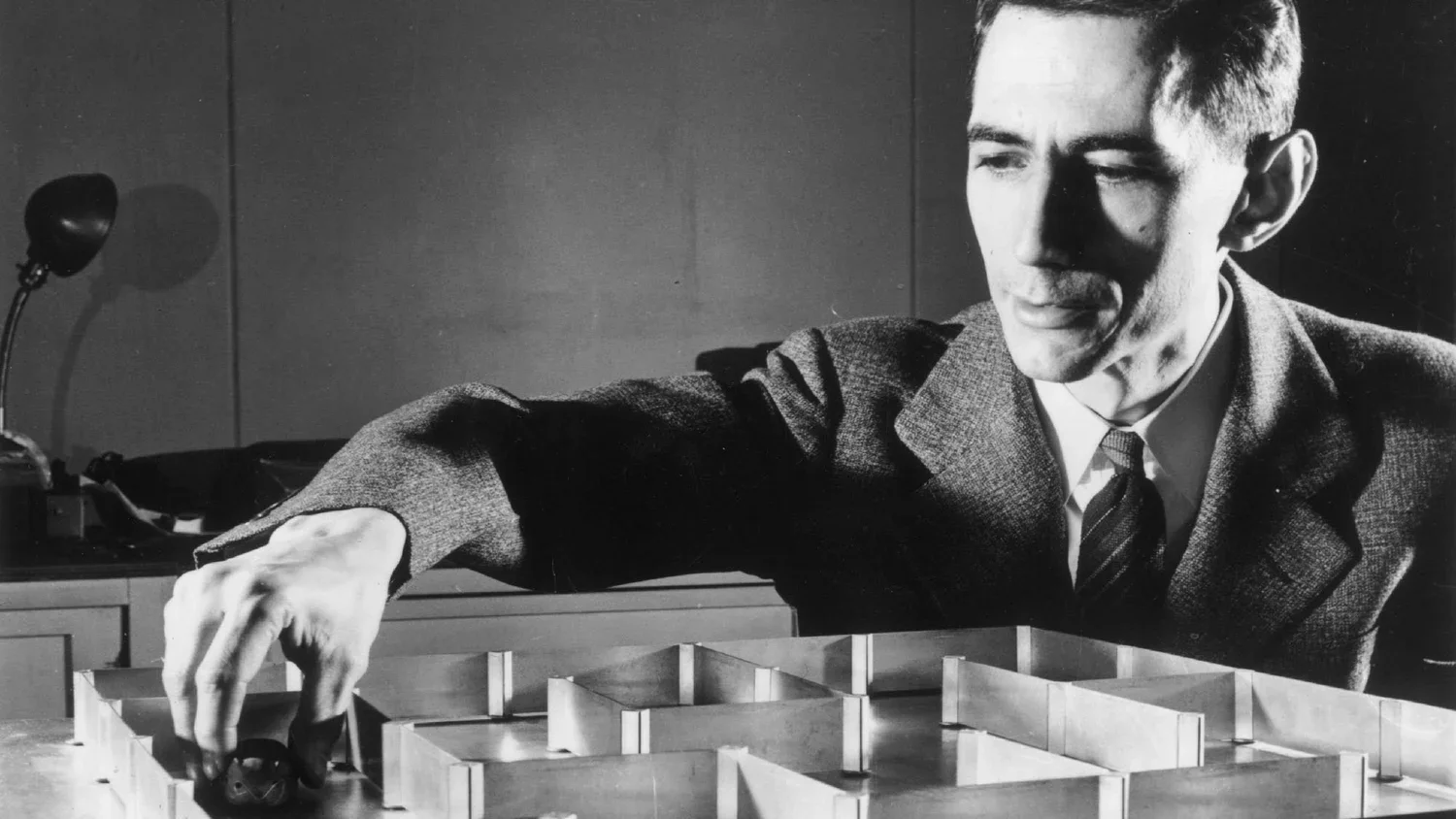
When Claude Shannon brought a prototype of a magnetic mouse to his office – which happened to be a highly respected and internationally recognized bastion for higher thinking – no one protested. The mathematician and electrical engineer had done all the work at home, including writing a paper on the machine mouse and perfecting the real brains behind the wood-and-wire rodent: an aluminum-paneled maze that, through an electromechanical relay circuit, could learn to navigate the labyrinth. Fellow researchers watched admiringly as the creature, Theseus, performed its little trick. It was actually a big trick for 1950 – the first artificial learning device.
It was also a snapshot of his broader vision of creating learning, thinking machines that could interact with people. The “father of information theory” – had an ongoing interest in machine learning that manifested in quirky ways. The mouse shenanigans weren’t out of character for Shannon (who also published a paper on chess programming and said he could envision research in game-playing machines leading to a clearer understanding of the human brain). Those close to him knew him as the seemingly absent-minded tinkerer who would ride a unicycle through hallways during breaks, sometimes while juggling. That was before he discovered the irresistible challenge of the pogo stick and added that to his break-time activities. This was a scientist who never stopped building or dreaming and didn’t see a reason to separate curiosity from science or play from progress.
Luckily for him, and for the rest of us, neither did his employer: Bell Labs.
His freedom was not just good fortune for Shannon and his pet projects. By the late 1960s, Bell Labs was providing the same supportive structure to some 15,000 employees, including around 1,200 PhDs, and had become known as a magnet for creative scientific thinkers, ushering in new and better ways of living for all of us. How? Through a more patient culture of innovation than we see today. Bell Labs’ system of slow-but-steady theory and invention cycles laid the groundwork for revolutionary advances in American discovery. Their people introduced technological leaps like communications satellites; lasers; the groundwork for optical fiber and cell phone communication; the transistor, a device that allows for the binary code that supports all digital products, including our cell phones and computers; and the Unix operating system, which made the Internet useful beyond government applications. Those are just a few – and they are in addition to revolutions in engineering and manufacturing processes as well as advances in the collective scientific community, with papers that expanded the understanding of physics, chemistry, and mathematics.
How did they accomplish so much, with sustained momentum?
While Shannon had to loosely connect his endeavors with the aim of Bell Labs (he couched his interest in artificially intelligent computing as being part of a vision that telephone systems were more computer than communications networks), he was allowed to be who he was. He was permitted to patent the mouse’s circuitry. He was given freedom to pursue a machine that could serve as a chess champion – and then opine about the concept’s broad implications. He was permitted to work with another employee – a bow-tie outfitted PhD named David Hagelbarger – to build two machines, plus one mechanical umpire, to compete against each other in guessing whether a coin would land heads or tails up in a boisterous, hours-long match cheered on by his Bell Labs cohorts.
To see them, it might have been easy to forget these were people at work or to imagine that such an unconventional workplace existed decades before Google or LinkedIn built sprawling playground-campuses meant to foster epiphany-inducing cross-disciplinary meetings. Bell Labs was the trailblazer. Its researchers and engineers set the groundwork for today’s tech firms with
the same hunger to create new products, minus the emphasis on immediacy. The organization took a more holistic approach to innovation, one that favored mixing applied science with roving scientific pursuits and melded minds from the entire development spectrum – from theory to manufacturing – to solve perplexing problems and imagine a different future.
In other words, it made stunning long-term progress because it moved more slowly. Its leaders imbued the group with a shared Purpose – discovery – and they were willing to accept that it would require them to take the long view to get there.
Everything about the company was designed with that intention in mind. Bell Lab’s Murray Hill, New Jersey, campus was a place with seemingly endless hallways where even the most brilliant had to follow an open-door policy and diversions and impromptu meetings among disciplines were inevitable. The projects from teams that resulted, and those meshed together by managers, were expected to meet the organization’s top aim, but team members also were sometimes given free rein to pursue open-ended research for years.
A culture like that doesn’t just happen. It can only be built with intention and with an eye on the long view. It requires personalities with the tenacity to see (and gently guide) a greater pattern in the sometimes frenzied and rabbit-hole ridden every day of curious characters hunting for solutions.
Former board Chairman and one-time AT&T researcher Mervin Kelly, who came from the school of physics and served as president from 1951 to 1959, was one of those personalities. He was meticulous about implementing his concept of an “institute of creative technology” – so much so, and so successfully, that he would later tour Europe sharing his formula for sustained, long-term innovation. He spent decades perfecting a systemized process, bringing together key players in discovery, development, and application. But perhaps most importantly, he knew how to help them shine. He valued people, constantly sought a “critical mass” of talented individuals working in close proximity, and he created a framework for a relationship-centric environment that allowed them to do their best work.
Bill Baker, Bell Labs president from 1973 to 1979, is remembered for his nurturing leadership style, an illustration of how Kelly’s concept helped the organization remain prolific in its output and continuously entrepreneurial, despite success. With an eye on “civilizing the future,” Baker worked to create the optimal present environment, one rich with resources and one that gave the right balance of freedom and responsibility to those helping to shape that better future.
Through Kelly’s approach, leaders like Baker worked to build the right connections with those under them and within the organization’s teams. Baker created an environment where researchers were safe being themselves, he supported them with the knowledge they needed, and he let them pursue curiosity even while he kept them trained on a bigger, long-term goal. Yes, the research needed, ultimately, to provide some improvement in communications and information handling. But those improvements could be incremental, and following knowledge and understanding – even and maybe especially through oddly-paired synergies – was fruitful in itself. The lab had to meet objectives and provide end products, but Kelly gave the human talent the space, support and time to flourish.
The next time you reach for your cell phone, and the “world of information” literally at your fingertips and your ability to communicate with almost anyone, almost anywhere, ask yourself this: How did you get it? I mean before your cell phone provider’s storefront and even before the laborers across the world who built its components. How did all of that technology – and the systems that power it – come together to rest in the palm of your hand?
It took more than a half century of research and implementation. It took sharp but creative minds with time to study, to meander into other disciplines, to theorize and test real-world applications to an extent that just doesn’t happen now, when most corporate research demands rapid innovation, when applied research has to promise products in a three- to five-year window.
The power behind the ways we communicate – and all those lean and swift startups that now run with the technology – required time. It required nurturing relationships in the right environment. It took Bell Labs, an organization willing to invest in researchers who provided more than immediate payoffs, one where managers worked to create loyal relationships with the aim of building a better engine for creativity and discovery.
Contrast that with what we see most often today. Not only do today’s version of tech titans dismiss the long-view, they take a certain pride in their ability to crash into the next newest tool or product. This hit-or-miss approach rewards only those who hit hardest and fastest and most frequently.
Think of Amazon. Founded in 1991 by Jeff Bezos, the any-and-all things retail giant won top billing on Fast Company’s list of 2017’s most innovative companies for its “bold bets” and tendency to make more and move faster. It’s another version of the hit-or-miss tactic, only Amazon has the resources to keep swinging. In Fast Company, Bezos himself admitted this, though he characterized it more as a carrot for his people to continually lunge toward in scrappy, startup fashion: “Our customers are loyal to us right up until the second somebody offers them a better service. And I love that. It’s super-motivating for us.” Compare that – or Google’s “gospel of speed” – with the purposeful patience of Bell Labs.
I grew up with several sisters who each, from ages 10 to 15, had a star of the year – a special place on the wall for the poster of their most current burning teen obsession. One year it was the Bee Gees. Then they were bumped to make room for David Cassidy. Then he was abandoned for Bobby Sherman. New year, new idol.
Those responses are infatuation, something we all go through. They shouldn’t be mistaken for genuine loyalty. For most people or organizations, you won’t achieve long-term success if you’re trying to tap into a temporary craze. Taking the long road pays off in spades in the end. The results Bell Labs achieved – in longevity and discovery – remain unrivaled, even against the innovative luster we assign to Silicon Valley and current tech leaders. Their more rowdy moves work if you happen to be fastest in the world. Or the best financed. Or the most talented. But lose your foothold for a moment, and your position at the top vanishes. You’ll lose it “the second somebody offers a better service,” as Amazon has learned, and you be cast into a ruthless, winner-take-all game.
Operating there can only encourage the scarcity mentality; there’s only one spot available, after all, and so everything becomes a zero sum arrangement. There’s no playing nice – and there is no room for a moment of error. That applies to tech firms, but also to performers, nonprofits, churches – any of those organizations that sometimes latch onto a catchy, new effort that brings people in the door, or to your website, but can’t keep them there.
The “loyalty” you can win with these “best of” technique results in something, but it’s short-term. It’s a fad or phase, red hot for a while but about as sustainable as teenage fascination.

The Church of Crossfit
CrossFit’s success lies in its powerful sense of community. By including people of all ages and abilities in the same challenging workouts, it fosters a deep sense of belonging, recognition, and lasting devotion that transcends typical gym experiences.
It’s around noon on a gloomy, overcast Monday in March, the kind of day when it would be easy to skip the gym. But 37-year-old mom Abby Bezilla isn’t losing speed. She’s almost power walking when she wheels a double-stroller through one of several metal doors at a former manufacturing warehouse in her southwestern Pennsylvania hometown. Perching her 5- and 3-year-old sons in a corner, she hands them peanut butter and jelly sandwiches and starts a warm-up routine immediately.
Her friends switch from their own chatter to greet the little ones who will be watching their workout. Pausing to pick up a kettlebell, retired elementary school teacher Suzette Burns asks them and their mom how they’ve been since she saw them last week. Instructor Michelle Preston, a full-time police officer, smiles and steps past to stretch near clusters of cast iron weights, and gradually they all check a whiteboard mounted on a cinderblock wall to see what today’s challenge is.
The kids keep snacking and watch their mom and others – a physician, a local businessman, a dog trainer – leap onto 20-inch boxes and load weights onto barbells, cheering each other on as they grunt and heave their way through front squats, thrusters, and push jerks.
The weights are different, but the workout is the same for all of the participants, no matter their personal strength. Nobody is out of place here. This is just another day, another class, at CrossFit.
The hodgepodge of teammates from the Pennsylvania countryside were gathered in the Pennsylvania at CrossFit Latrobe, one of more than 13,000 “boxes,” or gyms, around the world, where moms and college students and CEOs and retirees all face the same challenges, each of their names listed in random order on a whiteboard. Everyone is the same. Everyone is challenged. Everyone is included.
That’s an expectation for any affiliate – and key to what makes the workout program work, according to Dr. Patrick Landry, a chiropractor who found that CrossFit’s intensity and practicality best-suited his own personal fitness goals. Then he saw applications for patients at his chiropractic practice: Because the workouts are meant to be scaled to individual ability, any of his patients – regardless of age or physical limitations – can build strength and benefit. So he became a CrossFit Level 2 trainer and started using CrossFit techniques to emphasize functional movement for clients. Eventually, he swapped a floor of Nautilus fitness machines for pull-up bars and rings sets in wide open rooms to launch CrossFit Latrobe and extend skilled exercise opportunities to the rest of the community. But the reason people keep coming back, he said, is that CrossFit is structured to create the kind of togetherness that doesn’t let people slip through the cracks. “Most gyms have no anchor,” he says. “You go in for a week or a month or two but don’t come back. At CrossFit, everybody knows your name. They’re developing friendships, even if it’s a 60-year-old woman and a college student.” The workouts are tailored to strength – he has members who probably will never do a traditional pull-up but can pull off a modified version – but everyone is challenging herself and following the “W.O.D.,” a Workout of the Day that at least 4 million CrossFitters are performing across the globe.
“You push your body to the limit, and there’s a sense of overcoming with others who can relate,” he says. The result is a hard-won camaraderie is not unlike what he saw among his father and other World War II veterans. “There are bonds created when you’re all in it together, nobody’s left out, and you’re challenging yourselves, building strength under pressure.”
When Dr. Landry opened the affiliate in 2012, CrossFit still held a counter-culture vibe, a mystique that might have kept some away from what they assumed was a hardcore atmosphere. As people gave it a try, though, they discovered something unexpected. There, and at other CrossFit boxes, they found a place where no one feels excluded or unwanted. In fact, the friendships forged among even the most diverse members create accountability, Landry says. If folks miss a week or two, they’ll get a call – from a fellow member or a coach – inviting them back. And it’s designed to be accessible. Landry sets up several daily workout classes, starting at 5:30 a.m. and running through the evening every day but Sunday, so no one can claim the gym isn’t available.
No matter the location, all boxes are to align with CrossFit’s structure – high-intensity, varied exercise built around a community – outlined by co-founder Greg Glassman, the former gymnast who opened the first CrossFit in 1995 in Santa Cruz, California. Glassman had long taken an unconventional view of fitness, using a passion for math and physics to create a new formula for athletic power, and he had been perfecting his ideas since he was a teen. Training in the offseason for gymnastics in his family’s garage, he was dissatisfied with the ease and comfort of traditional weightlifting methods and decided to come up with his own challenges, like his first workout, the “Fran,” which mixes thrusters (a combination of front squats and push presses that he also devised in the garage) with pull-ups. He sought a new definition for health and fitness, one that pulled participants away from the comfort of gleaming machines and taught them to build strength and agility through routine-busting moves that changed daily.
With a flair for math and metrics, Greg Glassman devised a “power-output” calculation that helped him make fitness something trackable and set the tone for a workout that made clients compete against themselves and others. It also paved the way for a competitive drive that would lead to the CrossFit Games with hundreds of thousands of athletes competing for five weeks a year. His “Workout of the Day” – posted online since 2001 – caught on quickly, and an ongoing emphasis on the social networking, fueled with video and other shareable content, helped the company achieve astounding affiliate growth: from 13 in 2005 to more than 13,000 in 2015.
But the mechanics of his approach, routine-bucking mashups of exercises that emphasized “GPP” (general physical preparedness), and the logging and graph-making were only one piece of what made CrossFit something beyond a fad for the already muscle-bound.
Supportiveness – and inclusiveness – have become the “glue” that makes the CrossFit formula stick. CrossFit affiliates are known for their “tough-love” environments, but they’re also open to any level of athlete. Anyone can walk in and join a class, from beginners to body-builders – from college students, to moms and dads, to retirees. CrossFit’s “scaling” – tailoring moves to individual abilities – puts everyone in the same workout, no matter his skill. While it’s “high-dose” and “high intensity,” it’s also highly accessible. It doesn’t matter whether you’re 100 pounds overweight or a trained athlete, you can walk into a box and be welcomed. You’re expected to push yourself, but once you’re in, you’re in. The insider language – “W.O.D.s” and “met-cons” – become part of your world, and so does the whiteboard tracking of your personal numbers.
The sense of community that results has made for stories of cancer survivors who found new hope, discouraged and injured athletes who went from hardly walking to competing in marathons, and people like entrepreneur and therapist John Kim, who says he initially was drawn to CrossFit’s underground, “Fight Club” appeal – but stayed because he discovered a community of empowering encouragers who helped him recover after a divorce. The workouts, and the community – a “tribe” – were his own therapeutic tools. He found people who rooted for the “last-place” athletes as much as the strongest in the group. They were inclusive, and those bonds helped make him a stronger person. "I don't think we were meant to do this alone,” he says. “I think before fitness was fitness, we were very active with our tribe. So why now? We're thirsty for community, in a nutshell, I think, because we want to feel human again.”
The concept of mixing “sweat and fellowship” – the polar opposite of the impersonal, solo gym-goer experience – has elevated CrossFit to near-ecclesiastical terms by some of its devotees. Licensed psychologist Dr. Allison Belger penned a book, “The Power of Community: CrossFit and the Force of Human Connection,” that explores the community-fostered emotional healing people find among groups at CrossFit boxes, where people face their vulnerabilities in a setting based on Glassman’s “broad and inclusive” fitness standards. She’s gone as far as to call it a church, minus religion, and frames CrossFit as a connector that brings together diverse sets to find fellowship within the walls of a box, and outside it too. Those workout communities found wellness beyond physical improvements. She saw people who had found where they belong.
CrossFit regular the Rev. Matthias Martinez, a priest at St. Vincent Archabbey in western Pennsylvania, said CrossFit creates an atmosphere that works the same way healthy congregations do, where people encourage instead of isolate: “You welcome people where they are and then walk with them.”
When Glassman spoke to Harvard Divinity School students in 2015 to host a talk, “CrossFit as Church?!” he said there’s no conscious attempt to create a church fellowship feeling – but “it’s there in a huge way.” CrossFit communities help each other through tragedy and triumph, he said. “This community is tight. The tribes are closely allied, but within the tribe is where all the love is.”
And there is a lot of love. Members are so notoriously enthusiastic, they’ve been jokingly been accused of being part of a cult. Some have linked CrossFit’s popularity with a broader fixation with extreme fitness, likely aided by CrossFit’s unofficial mascot, Pukey the Clown. But it’s not all grit and grimace and pushing to the limit. Glassman puts “community” in his top three benefits for members of CrossFit affiliates, one he lists alongside personal transformation and accountability. While healing and wellness are the outcomes he’s been able to quantify, he said “community” is among the results of immeasurable value, and it’s one that has provided staying power in an industry known for fads and failures.
***
How does CrossFit earn such lasting devotion? How does it build Belonging comparable to the fulfillment and bonds of a church family? How does it resonate as much with young parents and retirees as it does in military and law enforcement circles?
CrossFit includes. It takes people of different ages, body shapes, and abilities and give unified training in a group setting. One group doesn’t get jumping jacks while the rest lift weights. Everyone does the same thing – the “Workout of the Day.” Coaches make a point to learn new members’ first names, a gesture of Recognition, so no one feels like an anonymous gym member.
Members are greeted when they walk in the door, and they can expect a call if they skip out. All members’ progress goes up on the same board – so they can see they are part of a whole. And it’s not just one group. It’s happening across the world. Those gestures – I recognize who you are and will make space for you to participate with us, no matter who you are - create Inclusion, and that’s the reason CrossFit has been successful and the reason people don’t give it up. That’s the secret to CrossFit.