
Some Final Thoughts About Trust & Safer
There’s a squirrel that waits for me to fill the bird feeder outside my office window every morning.
We’ve developed something of a routine. I put out the birdseed, the squirrel eats most of it, and the birds stare at me as though I’m not only aware of the theft but somehow getting a cut of the proceeds.
The squirrel is perfectly content with this arrangement, stuffing its cheeks with sunflower seeds while displaying a remarkable indifference to the fact that the food wasn’t intended for it.
But every so often, a sound comes from the nearby shrubs, and the squirrel scurries away.
It doesn’t matter whether the noise came from a hawk, our resident fox, or a branch that fell to the ground. The squirrel abandons an otherwise excellent breakfast and runs for its life.
I understand.
Food is important, but only if you’re alive to eat it. That’s a calculation every living thing makes.
Plants do it. Fungi do it. Even single-celled organisms, which have no brains at all, manage to figure out when it's time to make a run for it.
We inherited the instinct, too.
(I once mistook a hotel bathrobe for a stranger in my room and panicked far more than my squirrel ever does.)
But most of what scares humans doesn’t hide in the shrubs.
We worry about losing money, looking foolish, being rejected by people we care about, or handing what matters to someone who might drop it.
And the more a relationship matters to us, the more we have to lose when something goes wrong.
That’s the part the squirrel never has to figure out. It can flee the scene whenever something sets off its alert. We can’t. We need other people: what they know, what they can do, what they have, and their willingness to help.
But getting those benefits means accepting the risks that come with depending on someone else.
So our brains keep a running tally, weighing what we stand to gain against what we stand to lose. They look for evidence that this person, right now, is safe enough to lean on. We almost never notice it happening.
We do have a name for it, though. A short one.
Trust.
I’ve spent the past four weeks trying to explain what trust really is (not necessarily what you've been taught), and I hope it’s changed the way you think about what your relationships are actually looking for.
Because trust isn’t the objective. Making someone safer is.
We’ve come to think of being trustworthy as a virtue, something like honesty, generosity, or kindness. But trust isn’t a reward for being a good person. It happens when what you offer matches what someone else expects. Their standards may be reasonable or ridiculous, admirable or appalling. They may be entirely different from yours. But they’re the preferences you’ll be judged against.
When someone doesn’t trust you, it doesn’t necessarily mean there’s something wrong with you or they don't like you. It may simply mean you can’t provide what matters to them.
Don’t take it personally. They’re just trying to be safe.
And that’s what I hope you’ll consider in every relationship. What is this person putting at risk? What could they lose by including me in their life or work? And am I actually making them feel safer?
The four dimensions we’ve explored (Character, Competence, Consistency, and Capacity) give you a way to investigate those questions. Not to reassure yourself that you’re a good person, but to examine your behavior against the standards that matter to someone else.
They turn a vague ambition into something you can measure, understand, and deliberately improve.
Which brings me back to that squirrel.
I can buy the finest birdseed, provide the most comfortable feeder, and convince myself I’ve created a squirrel paradise. But if something in my yard makes that squirrel feel unsafe, none of my kindness, generosity, or sparkling personality will persuade it to stay.
I can try to be trustworthy, but I can’t decide that I am.
Only the squirrel can do that.
P.S. A Little Something to Try
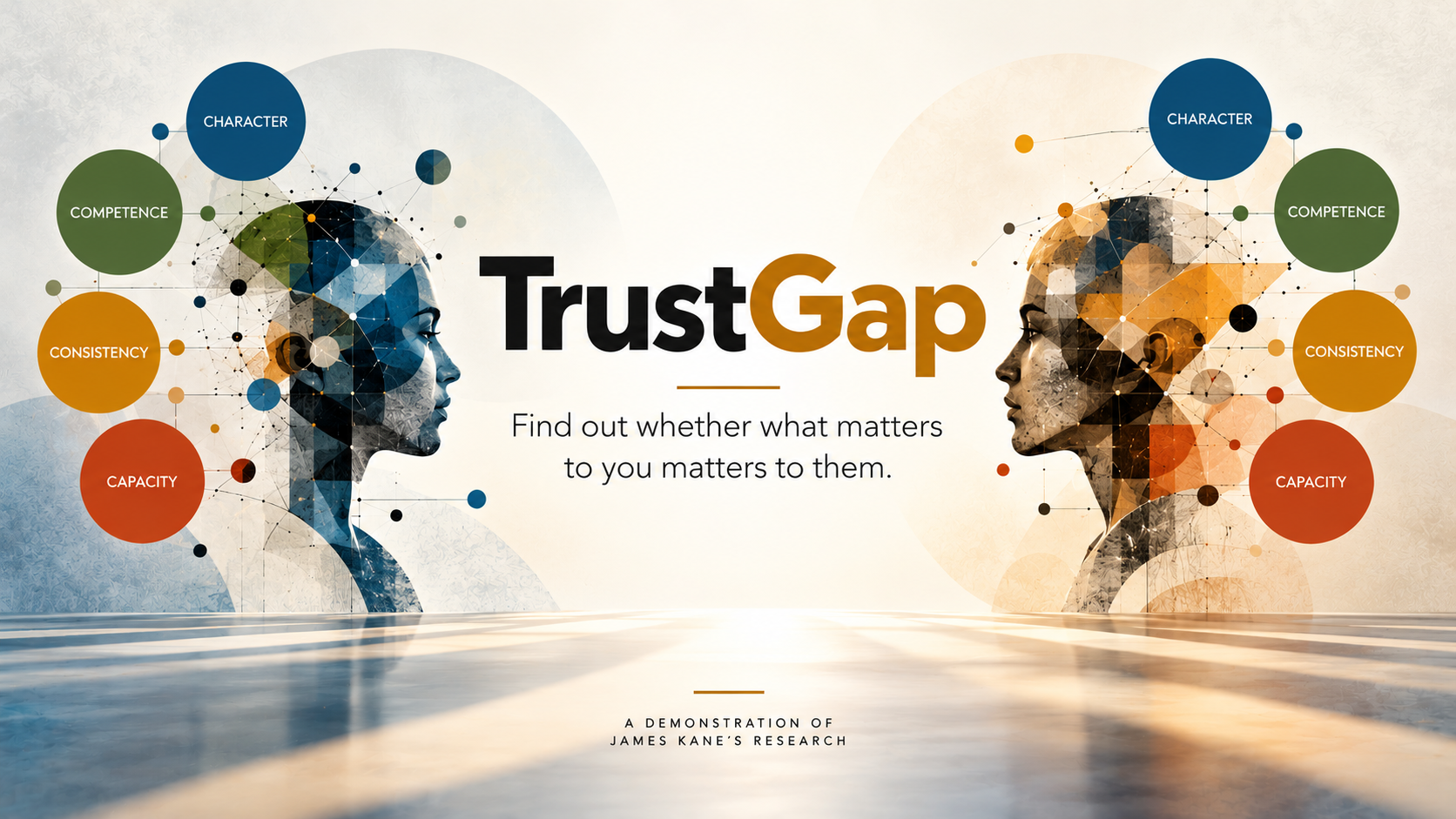
If these essays have left you wondering how to put all of this into practice, I’ve created something that might help.
It’s called TrustGap©, and it’s a simplified version of the approach I use to help organizations understand and build trust.
As we’ve explored, trust is one of the mechanisms our brains use to determine whether a relationship makes us safer. And one way to understand whether someone trusts you is to turn the question around: What are they willing to put at risk by depending on you?
TrustGap© helps you explore that question through Character, Competence, Consistency, and Capacity. I’ve even included an AI prompt that allows you to conduct some abbreviated research on a client or organization, make an educated guess about what matters most to them, and compare what you discover with your initial assumptions.
It won’t tell you definitively whether someone trusts you. No tool can do that. But it can help you identify possible gaps between what someone needs to feel safe and what you’ve demonstrated to them.
And you don’t even need to use one of your own clients. Pick an organization you’ve always been curious about. Make one up if you’d like. Experiment.
One other thing: I don’t ask for your name, track who’s using the tool, or collect and save your responses. I have no idea whether you’ve tried it, what you’ve entered, or what you’ve discovered. Just remember that if you use the AI prompt, the AI service you choose has its own privacy policies.
[Try it: https://www.jameskane.com/trust-gap]
Think of it as a starting point for understanding where trust may be lacking, and what it might take to earn more of it.
Next week...on to Easier.